Most Australian organisations already invest in digital marketing, yet many still struggle to connect that investment to measurable business outcomes. The gap is rarely about effort; it is about structure, channel selection, and the ability to adapt as privacy regulation, AI-driven search, and audience fragmentation reshape the landscape. This guide provides a practical framework for understanding digital marketing channels, building a strategy that delivers results, and choosing the right platform for your organisation's specific conditions.
What is digital marketing and why does it matter for Australian organisations?

What is digital marketing?
Digital marketing encompasses every marketing activity delivered through digital channels (search engines, social media, email, websites, mobile apps, SMS, and digital out-of-home) to reach and engage audiences where they already spend time.
In Australia, the challenge is acute. Organisations operate across vast geographic distances with dispersed audiences in metro, regional, and remote areas. A retailer headquartered in Melbourne serving customers in Cairns and Kalgoorlie cannot rely on local print or broadcast alone; digital channels offer the most cost-effective path to reach those audiences with relevant messaging at the right moment.
Anyone from a solo marketing coordinator at a mid-size retailer to a CMO at a national bank encounters digital marketing decisions daily, from setting paid search budgets to approving email campaign workflows. The discipline is not confined to a single team; it touches product, sales, customer service, and IT whenever those functions interact with customers through a screen.
Why does digital marketing matter for your organisation?
Without digital marketing, organisations default to broadcast channels with declining reach and no feedback loop. They spend more to learn less about what actually drives conversion. A national outdoor campaign might generate brand awareness, but it cannot tell you which creative variant prompted a customer to visit your website or which suburb delivered the highest response rate.
Digital marketing solves this with measurable attribution: you can trace a dollar spent on a paid social ad to a specific lead or sale, something impossible with traditional print or outdoor campaigns. For a mid-tier bank running a home loan campaign, that means knowing whether a Facebook lead-gen ad or a Google Search ad delivered the lower cost-per-qualified-application, then reallocating budget accordingly within days.
Scalability across states is another practical advantage. A campaign launched in Sydney can be adapted for Perth or Darwin audiences within hours using audience segmentation and geo-targeting, with no new print runs and no media-buying renegotiations. And because digital assets are living artefacts, a landing page can be A/B tested and improved mid-campaign, reducing wasted spend and improving ROI continuously rather than waiting for a post-campaign debrief.
What types of digital marketing channels should you consider?
Choosing channels without understanding trade-offs leads to budget fragmentation, with small investments spread across too many platforms and none reaching the threshold needed for meaningful results. The table below compares the major channel types across three dimensions:
Channel
Primary goal
Typical cost model
Best-fit organisation type
SEO
Awareness / Consideration
Time + content investment
B2B services, long sales cycles
PPC (Search & Shopping)
Conversion / Immediate visibility
Cost-per-click
Retail, product launches, seasonal
Content marketing
Awareness / Consideration
Production cost
SaaS, professional services
Email marketing
Nurture / Conversion
Platform subscription
Subscription, e-commerce
Social media marketing
Awareness / Engagement
Organic + paid hybrid
Retail, hospitality, FMCG
Affiliate marketing
Conversion
Commission-based
E-commerce, comparison services
Influencer marketing
Awareness / Trust
Fee or contra
Fashion, beauty, lifestyle
Video marketing
Discovery / Engagement
Production + distribution
Any (short-form for social, long-form for education)
Mobile marketing (push, in-app)
Retention / Re-engagement
Platform cost
Apps, banking, utilities
Display advertising
Awareness / Retargeting
CPM or CPC
Brand campaigns, remarketing
Marketing automation
Nurture / Conversion
Platform subscription
Mid-market to enterprise
Audio / Podcast marketing
Awareness / Affinity
Sponsorship or production
Niche B2B, lifestyle brands
SEO suits organisations with long sales cycles because organic rankings compound over time, and a B2B consultancy investing in thought-leadership content today builds an asset that generates leads for years. PPC, by contrast, delivers immediate visibility for product launches or seasonal retail campaigns but stops the moment you pause spend.
Content marketing and email marketing work in tandem: content attracts the audience, email nurtures them through the buying journey toward conversion. This pattern is especially effective for subscription businesses where audience targeting precision determines whether a prospect receives a relevant offer or an irrelevant one that triggers an unsubscribe.
How does digital marketing differ from online marketing?
Many marketers use the terms interchangeably, which creates confusion when scoping budgets or briefing agencies. If your brief says "online marketing" but your agency delivers only SEO and PPC, you may miss high-performing channels that sit outside the browser.
Online marketing requires an internet connection because SEO, PPC, social media, and email all depend on connectivity. Digital marketing is broader: it includes offline digital channels such as SMS, digital billboards, in-app push notifications, and even QR-code-triggered experiences that function without a live browser session.
For most Australian organisations, the practical implication is that a "digital marketing strategy" should account for mobile push and SMS, which are channels with high open rates in regional areas where mobile data coverage is more reliable than fixed broadband. A utilities company sending outage alerts via push notification is practising digital marketing, even though no website is involved.
What challenges do digital marketers face today?
Signal loss from third-party cookie deprecation forces organisations to invest in first-party data strategies. Those without a customer data platform or consent framework risk losing audience targeting precision entirely. Retargeting pools shrink, lookalike audiences degrade, and attribution models break down.
AI-generated content flooding search results raises the bar for quality. Organisations must produce genuinely expert, experience-backed content to maintain organic visibility. Generic "top 10" listicles no longer differentiate; search engines increasingly reward depth, originality, and demonstrated expertise.
Privacy compliance under the Privacy Act 1988 and Australian Privacy Principles (APPs) means every data-collection touchpoint (forms, pixels, cookies) must have a lawful basis and transparent disclosure. Non-compliance risks enforcement action from the OAIC and reputational damage that erodes the trust digital marketing depends on. With the ongoing review of the Privacy Act proposing stronger individual rights, organisations that delay compliance investment face compounding remediation costs.
Talent scarcity compounds these challenges. Organisations in regional Australia struggle to recruit specialists across all channels, making platform consolidation and automation critical for maintaining campaign velocity with lean teams. A three-person marketing team in Townsville cannot operate seven disconnected tools effectively, and they need fewer platforms that do more.
How do you build a digital marketing strategy that delivers results?
Too many strategies begin with channel selection rather than business objectives, resulting in activity without accountability. A structured approach prevents this:
Step 1: Define measurable objectives tied to business outcomes (revenue, pipeline, retention) not vanity metrics like impressions. Every channel choice should have a clear success criterion before a dollar is spent.
Step 2: Map your audience's customer journey from awareness to advocacy, identifying which channels dominate at each stage for your specific vertical. LinkedIn may drive B2B consideration; Instagram may drive retail discovery. The journey map determines channel priority.
Step 3: Audit existing assets and gaps. Most organisations already have content, email lists, and social profiles. The strategy should leverage what exists before investing in new channels. AI-powered content creation tools can accelerate asset production at this stage, enabling lean teams to produce personalised variants at scale without proportional headcount increases.
Step 4: Allocate budget using a 70/20/10 model (70% to proven channels, 20% to scaling experiments, 10% to emerging platforms), adjusting quarterly based on attribution data.
Step 5: Implement measurement infrastructure (UTM parameters, conversion tracking, dashboards) before launching campaigns. Without this, optimisation is guesswork. Organisations that skip this step routinely discover, months later, that they cannot attribute results to specific activities, and by then, budget has already been misallocated.
What digital marketing trends will shape the next two years?
Answer engine optimisation (AEO) is emerging as a discipline alongside traditional SEO. As AI-powered search surfaces direct answers, organisations must structure content for citation in AI responses, not just blue-link clicks. This means clear, factual statements, structured data markup, and authoritative sourcing become ranking factors in a new sense.
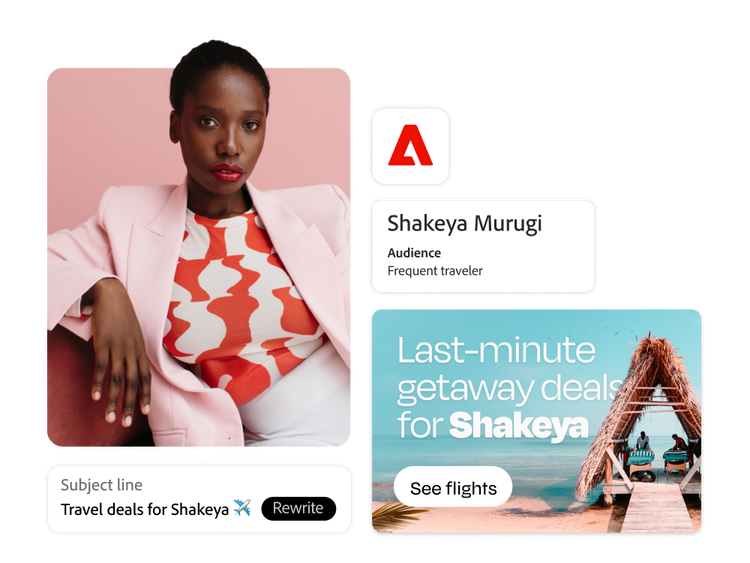
Hyper-personalisation powered by real-time data unification is accelerating. Organisations that connect behavioural, transactional, and declared data into a single profile can deliver contextually relevant experiences across every touchpoint, such as a welcome email that references the product category a customer browsed yesterday, not a generic greeting.
Video-first content strategies are no longer optional. Short-form video now drives discovery on social platforms, and organisations without a video production workflow risk losing share of attention to competitors who invest early. Even B2B organisations are finding that a 60-second explainer outperforms a 2,000-word whitepaper for top-of-funnel engagement.
Privacy-preserving measurement (server-side tracking, data clean rooms) is replacing client-side pixel reliance. Organisations that delay migration will face growing blind spots in attribution as browsers and operating systems restrict tracking further.
Which digital marketing platform fits your organisation's needs?
If your organisation operates fewer than three channels with a small team, a lightweight tool combination (email platform plus social scheduler) may suffice. But you will outgrow it as audience targeting demands increase, data silos multiply, and personalisation expectations rise.
If you manage multiple brands, regions, or customer segments and need unified data plus AI-driven personalisation, an integrated platform like Adobe Experience Cloud consolidates content creation, journey orchestration, and analytics into a single ecosystem, reducing tool sprawl and enabling real-time optimisation at scale. For organisations already investing in data analysis and visualisation tools, the value of native integration between analytics and activation cannot be overstated: insights translate directly into action without manual data exports or reconciliation.
When evaluating platforms, prioritise these criteria:
- Native data unification (CDP): Can the platform build a unified customer profile from multiple sources without custom development?
- AI content generation and personalisation: Does it offer AI-assisted content creation and real-time decisioning for personalised experiences?
- Cross-channel journey orchestration: Can you design and automate multi-step journeys across email, push, web, and paid media from one interface?
- Enterprise-grade privacy and consent management: Does it support consent collection, preference management, and compliance with the Privacy Act 1988 and APPs natively?
- Integration with existing martech: Does it connect to your CRM, commerce platform, and data warehouse without extensive custom middleware?
Organisations that delay platform decisions often accumulate technical debt (disconnected tools, duplicated data, and inconsistent customer experiences) that becomes exponentially more expensive to resolve.
Explore Adobe Experience Cloud to see how an integrated platform can unify your digital marketing channels, personalise every customer interaction, and deliver measurable results at scale: https://business.adobe.com/au/.
Recommended for you
Title
What is digital marketing? A complete guide for 2025.
CardDescription
Learn what digital marketing is, explore the key channel types, and discover how to build a strategy that drives measurable results for your organisation.
cardDate
2026-09-09
cardImage
primaryTag
caas:content-type/blog
Tags
caas:content-type/blog, caas:topic/trends, caas:blog-author/adobe-for-business-team