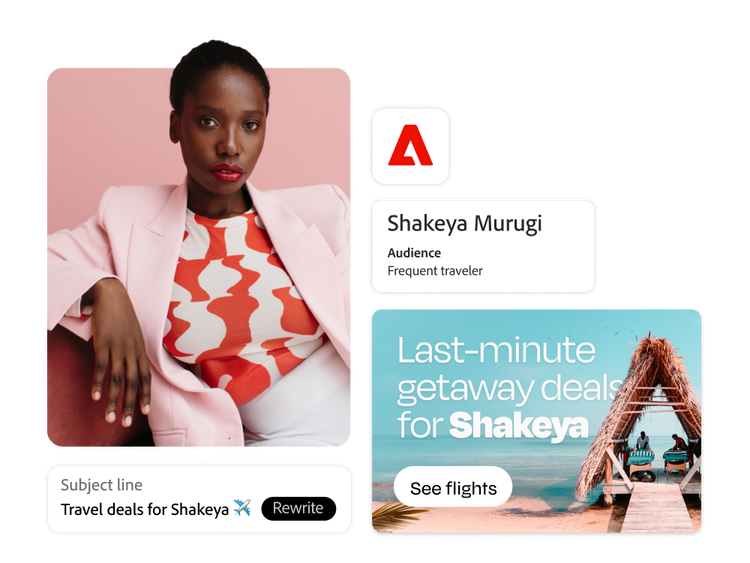
When campaign performance plateaus and customer acquisition costs climb without a corresponding lift in lifetime value, the diagnosis is often the same: broad targeting has hit diminishing returns. Market segmentation offers a structured path out of that plateau, but only when it is grounded in clean data, clear objectives, and a decision framework matched to your organisation's maturity. Tools such as Customer Journey Analytics can help teams unify cross-channel insights to support more effective segmentation.
What is market segmentation and how does it drive growth?

What is market segmentation?
A national retailer operating across metro Sydney and regional Queensland cannot run the same campaign in both markets without wasting budget on irrelevant messaging. The audiences differ in lifestyle, media consumption, and purchase triggers, yet many organisations still default to one-size-fits-all targeting until the numbers force a rethink.
Market segmentation is the practice of dividing a broad audience into smaller groups that share specific characteristics, whether demographic, geographic, behavioural, or attitudinal, so that marketing, product, and sales teams can tailor their approach to each group's distinct needs.
Ownership of segmentation is cross-functional. Marketing teams typically initiate the work, but data and analytics teams supply the inputs (behavioural signals, transaction histories, survey data), and leadership uses the outputs to allocate budget across channels and regions. Treating segmentation as a siloed marketing exercise almost always produces segments that look elegant in a slide deck but never reach a live campaign.
Segmentation becomes urgent when broad campaigns stop delivering incremental returns, when cost-per-acquisition rises quarter on quarter without a matching improvement in customer lifetime value.
Why does segmentation matter more than ever?
Australian consumers interact with brands across email, social, in-store, and app touchpoints, and inconsistent messaging across those channels erodes trust while inflating cost-per-acquisition. Without a segmented view of the audience, marketing teams cannot distinguish a high-intent prospect from a lapsed customer, and they end up spending equally on both.
Organisations that segment effectively can reallocate spend from underperforming broad campaigns to high-intent micro-audiences. Consider a financial services marketer who shifts budget from generic display advertising to a segmented email nurture sequence targeting customers whose fixed-term deposits are maturing within 60 days. The messaging is timely, relevant, and measurable, and conversion rates improve because the offer matches the customer's immediate context.
The risk of not segmenting extends beyond wasted spend. Without clear audience boundaries, personalisation efforts become guesswork. Teams may inadvertently target lapsed customers with acquisition messaging, or send irrelevant offers that trigger opt-outs, compounding data loss. Under the Australian Privacy Principles, every opt-out represents a permanent reduction in your addressable audience, making each misstep more costly than the last.
What are the core types of market segmentation?
Choosing the wrong segmentation type wastes analytical effort and produces segments that cannot be activated. The five core types each suit different business contexts:
Type
Signals
Best suited for
Example
Demographic
Age, income, education, job title
B2B targeting by seniority or B2C by life stage
A SaaS vendor targeting CFOs at enterprises with 500+ employees versus marketing managers at SMBs, because purchase authority and budget cycles differ fundamentally
Geographic
Location, climate, urban/rural density
Multi-state operations with regional variation
A campaign for metro Melbourne that would fail in regional WA due to different infrastructure and media consumption patterns
Psychographic
Values, attitudes, lifestyle
Brand positioning and messaging tone
A sustainability-focused brand segmenting eco-conscious consumers from price-driven buyers to tailor channel selection
Behavioural
Purchase history, engagement frequency, loyalty status
Retention and conversion optimisation
An e-commerce retailer identifying high-frequency browsers who never convert and serving them a distinct retargeting sequence
Firmographic
Industry, company size, revenue, technology stack
B2B marketers selling into government and private sectors
Segmenting by procurement process type, since Australian government tenders operate on fundamentally different timelines and compliance requirements than private-sector purchasing
The trade-off between these types is practical, not theoretical. Demographic and geographic segmentation require the least data infrastructure and suit organisations early in their segmentation journey. Behavioural and psychographic segmentation demand richer data pipelines and analytical capability but yield more precise targeting. Firmographic segmentation is essential for B2B organisations operating across both public and private sectors in Australia, where a single go-to-market motion cannot serve both.
How do you segment your market effectively?
Many organisations build segments that are statistically interesting but operationally useless, because they skipped the step of defining what business question the segmentation must answer.
Step 1, Define the objective. Start with a specific question: "Which customers are most likely to churn in the next 90 days?" or "Which prospects have the highest propensity to upgrade?" Without this anchor, segmentation becomes an academic exercise.
Step 2, Audit available data. Identify what first-party data you hold across CRM, web analytics, and transaction history, and where gaps exist. Teams assessing their data readiness benefit from data analysis and visualisation tools that surface coverage gaps before segmentation begins.
Step 3, Choose segmentation variables. Select variables that are measurable, accessible, and actionable. A segment you cannot reach through any owned or paid channel has no marketing value regardless of its statistical validity.
Step 4, Validate segments. Test whether each segment responds differently to messaging. If two segments behave identically in A/B tests, merge them, over-segmentation fragments budget and complicates execution.
Step 5, Activate and iterate. Deploy segments into campaign platforms, measure performance per segment, and refine boundaries quarterly as customer behaviour shifts.
Underpinning every step is data quality. Without consistent data normalisation, segments built on inconsistent fields, mismatched date formats, duplicate records, unstandardised job titles, will produce misleading clusters that degrade campaign performance rather than improve it.
Which segmentation approach fits your organisation?
The most common failure mode in segmentation is not choosing the wrong type, it is choosing an approach that exceeds your organisation's data maturity and then abandoning it when results disappoint.
If your organisation has fewer than 10,000 contacts and limited data sources, start with demographic and geographic segmentation using spreadsheet-based analysis. The overhead of a customer data platform is not justified until you have the volume and channel complexity to warrant it.
If you manage 100,000+ contacts across multiple channels, behavioural and psychographic segmentation powered by a customer data platform becomes essential to avoid manual bottlenecks. Adobe Real-Time CDP ingests behavioural, transactional, and demographic data into a single unified profile, enabling real-time segment activation without manual CSV exports between systems, particularly valuable for multi-brand portfolios operating across Australian states.
If your team lacks dedicated data analysts, prioritise rule-based segmentation with clear, simple criteria over algorithmic clustering that requires ongoing maintenance and interpretation. Adobe Customer Journey Analytics can help analytical teams visualise cross-channel journeys and explore segment patterns without requiring data-science expertise.
Before committing to an approach, run through this checklist:
- Does each segment have a distinct, reachable channel?
- Can you measure differential response between segments?
- Is the segment large enough to justify dedicated creative?
- Do you have data governance processes to keep segment definitions current?
Static segments decay in accuracy within months as markets shift and customer preferences evolve. Build a quarterly review cadence into your segmentation governance to prevent drift.
Get started with market segmentation
Segmentation is a continuous discipline, not a one-off project. The framework above gives you a starting point, but sustained value comes from operationalising segments in a platform that keeps pace with your customers' behaviour in real time.
Ready to turn your segments into real-time, personalised experiences? Explore Adobe Real-Time CDP and see how unified customer profiles power smarter targeting across every channel.
Recommended for you
Title
Market segmentation made simple.
CardDescription
Learn what market segmentation is, explore the core types, and discover a practical framework for segmenting your audience to improve targeting and ROI.
cardDate
2026-09-09
cardImage

primaryTag
caas:content-type/blog
Tags
caas:content-type/blog, caas:products/adobe-real-time-cdp, caas:topic/customer-data-management, caas:blog-author/adobe-for-business-team