Most Australian marketing teams hit a ceiling with manual ad buying long before they realise it. Campaigns that span metro Sydney, regional Queensland, and everything in between demand speed, precision, and scale that phone-and-email negotiations simply cannot deliver. This guide breaks programmatic advertising into plain language, walks through how it works, and gives you a decision framework for choosing the right approach for your organisation.
Programmatic advertising made simple: what it is and how to get started
What is programmatic advertising and who needs it?
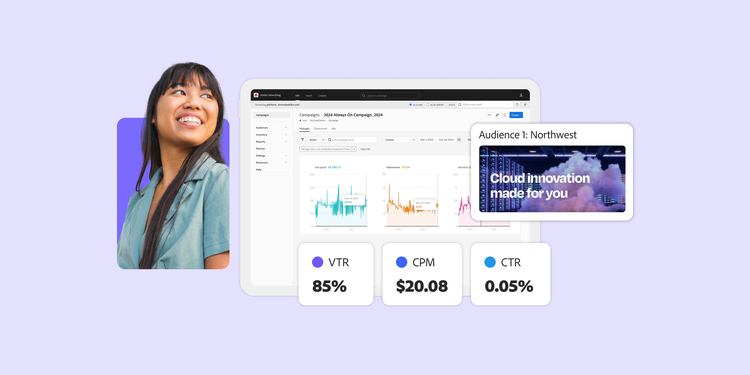
Many marketing managers still associate "programmatic" with opaque jargon and ad-tech complexity. In practice, programmatic advertising is the automated buying and selling of digital ad inventory in real time. Instead of a media buyer negotiating placements publisher by publisher, exchanging insertion orders over email, waiting days for confirmation, software handles the transaction in milliseconds based on rules you define.
Three groups encounter programmatic most often: marketing managers allocating display budgets who need to stretch spend across channels; digital leads tasked with scaling campaigns across multiple Australian states without proportionally growing headcount; and procurement teams evaluating whether automated buying delivers better cost efficiency than legacy processes.
Programmatic becomes relevant once your manual process cannot keep pace with the volume of placements required. If your campaigns span more than two or three channels, or if you target audiences across geographically dispersed markets, metro centres plus regional and remote Australia, manual buying introduces delays and inconsistencies that erode performance.
How does programmatic advertising work?
The core problem with manual buying is fragmentation. Each publisher negotiation is independent, pricing is inconsistent, and audience targeting is limited to whatever demographic data the publisher provides. For organisations running multi-state campaigns, say, a national insurer promoting different products in Victoria, New South Wales, and Western Australia simultaneously, this fragmentation compounds quickly.
Programmatic solves this through a real-time auction cycle that completes in approximately 100 milliseconds:
- The advertiser sets targeting parameters (audience segments, geography, time of day, device).
- A demand-side platform (DSP) submits a bid on the advertiser's behalf when an eligible impression becomes available.
- A supply-side platform (SSP) on the publisher's side evaluates all incoming bids.
- The winning ad is served to the user, before the page finishes loading.
Component
Role
Who interacts with it
DSP (Demand-Side Platform)
Executes bids on behalf of advertisers based on targeting rules
Media buyers, campaign managers
SSP (Supply-Side Platform)
Manages publisher inventory and evaluates incoming bids
Publishers, ad operations
Ad Exchange
Marketplace connecting DSPs and SSPs in real time
Both sides (automated)
DMP (Data Management Platform)
Stores and segments audience data for targeting
Data analysts, marketing strategists
Understanding these components matters because each represents a point where your organisation either controls or loses visibility over spend and targeting precision.
How does programmatic differ from traditional display advertising?
Dimension
Programmatic
Traditional Display
Buying method
Automated, auction-based
Manual negotiation, insertion orders
Targeting precision
Audience-level, layered signals
Publisher-level demographics
Speed of optimisation
Real-time, mid-flight adjustments
Post-campaign reporting, manual changes
Pricing transparency
Bid-level visibility
Bundled rates, limited breakdown
Scalability
Thousands of placements simultaneously
Limited by human negotiation capacity
The trade-off is real: programmatic offers speed and precision, but it requires data infrastructure and governance. Organisations activating first-party audience data must ensure compliance with the Privacy Act 1988 and Australian Privacy Principles (APPs), particularly when segmenting customers using personal information collected through CRM or loyalty programs.
Consider a national retailer running an end-of-financial-year campaign across metro Sydney, Melbourne, and regional Queensland. With programmatic, bids adjust by geography in real time, shifting budget toward regions where conversion rates spike as EOFY approaches. Traditional display would have locked in placements and rates weeks ahead, with no mechanism to respond to live performance data.
What are the benefits and common use cases?
Efficiency gain. Automated bidding eliminates the manual workload of managing dozens of insertion orders. Media teams reclaim hours previously spent on administrative coordination, redirecting effort toward strategy and creative development. Teams already automating repetitive design tasks in their creative workflows find programmatic a natural extension of that efficiency mindset.
Precision targeting. Layering first-party CRM data with contextual signals lets organisations reach high-value segments without wasted impressions. A financial services firm, for example, can target pre-approved loan candidates across display and video inventory, serving relevant messaging only to audiences with genuine purchase intent.
Real-time optimisation. Campaigns self-correct mid-flight, shifting budget toward placements that convert. This is critical for time-sensitive promotions like EOFY sales, where a two-week window leaves no room for post-campaign analysis and relaunch.
Regional reach. Government digital transformation teams use programmatic to reach citizens in remote and regional areas where traditional media buying offers limited inventory. Programmatic aggregates supply across hundreds of publishers, making it possible to achieve meaningful reach in markets that manual buying would overlook entirely. Understanding the full customer journey helps teams identify where programmatic fits within broader personalised marketing campaign engagement strategies.
What best practices should you follow when setting up a campaign?
The most common failure mode for first-time programmatic buyers is launching without clear KPIs, defined audience segments, or brand-safety controls, then burning through budget in the first month with little to show for it.
Follow this sequence to avoid that outcome:
- Define your campaign objective, awareness, consideration, or conversion, and attach a measurable KPI to each.
- Build audience segments from first-party data, CRM lists, website behaviour, purchase history, ensuring each segment is large enough to deliver meaningful reach.
- Set frequency caps, limiting how often a single user sees your ad prevents ad fatigue, protects brand perception, and reduces cost-per-acquisition.
- Configure brand-safety and contextual exclusions, specify content categories and domains where your ads must not appear.
- Launch with a test budget, allocate a controlled portion of spend to validate targeting and creative performance before scaling.
- Optimise based on mid-flight data, use data analysis and visualisation tools to monitor pacing, attribution, and audience overlap in real time.
Before activating audience segments that include personal information, ensure your data governance frameworks satisfy obligations under the Privacy Act 1988. This is not a compliance afterthought, it is a prerequisite for sustainable programmatic operations.
Which programmatic approach fits your organisation?
Not every organisation needs an enterprise-grade platform on day one. The right choice depends on campaign complexity and data maturity, not vendor reputation alone.
Decision matrix:
- If your organisation runs fewer than five campaigns per quarter and targets a single state: a managed-service DSP may suffice. The provider handles execution; you supply briefs and budgets.
- If you operate multi-channel, multi-state campaigns with first-party data at scale: an enterprise platform with integrated analytics and audience management is the better fit. The operational overhead of coordinating multiple point solutions outweighs the cost of consolidation.
Evaluation criteria:
- Integration with existing martech stack, a DSP that cannot ingest your CRM or analytics data forces manual workarounds that negate programmatic's speed advantage.
- Data governance compliance, the platform must support consent management and data residency requirements relevant to Australian privacy law.
- Real-time reporting depth, surface-level dashboards delay optimisation; you need impression-level transparency.
- Support for Australian privacy requirements, platforms built for US-only markets may lack controls for APP-compliant audience activation.
Adobe Advertising is one enterprise-tier option worth evaluating. It integrates natively with analytics and content workflows, enabling teams to connect ad performance data to customer journey analysis through bi-directional data sharing with Adobe Analytics and Customer Journey Analytics. For organisations already operating within the Adobe ecosystem, this eliminates the integration tax that fragments insight across disconnected tools.
The key takeaway: match your platform choice to where your organisation sits today and where it needs to be in twelve months. Starting with a managed service and migrating to an enterprise platform as data maturity grows is a legitimate path, provided you choose a managed service that does not lock your data into proprietary formats.
Discover how Adobe Advertising helps Australian organisations simplify programmatic campaigns at scale. Learn more.
Recommended for you
Title
Programmatic advertising made simple: what it is and how to get started
CardDescription
Programmatic advertising made simple for Australian marketers. Learn how automated ad buying works, its benefits, and how to launch your first campaign.
cardDate
2026-09-09
cardImage
primaryTag
caas:content-type/blog
Tags
caas:content-type/blog, caas:products/advertising, caas:topic/campaign-management, caas:blog-author/adobe-for-business-team