Customer acquisition.
Demonstrating incremental business growth by identifying the most valuable prospects, in cost-effective ways.


A proven strategy for driving customer acquisition, conversion, engagement, and growth.

The evolving market calls for a unified customer experience platform — and Adobe leaders have created a proven playbook for engagement at speed and scale. In this guide, you'll learn about the following:
Please share some contact information to download the guide.
JUMP TO SECTION
The evolving market demands a UCX platform
Market challenges are creating demand for UCX
The opportunity to unify CX at Adobe
The challenges we wanted to overcome
How we tackled the challenges of unifying our CX
Overcoming hurdles on the road to success
A new ecosystem and early use cases
Unified customer experience (UCX) is all about bringing people, data, and technology together to deliver personalization at scale. Yet many organizations are falling short — missing opportunities to meet customer expectations and build stronger, long-term relationships. This guide gives you an inside view into how Adobe unified its customer experience — breaking down silos, integrating data, and aligning teams around a shared vision. The transformation delivered a single, connected view of the customer that powers real-time, personalized experiences — resulting in accelerated time to value, new growth opportunities, significant cost savings, and a proven model for customer state-based personalization that you can apply to your own business.
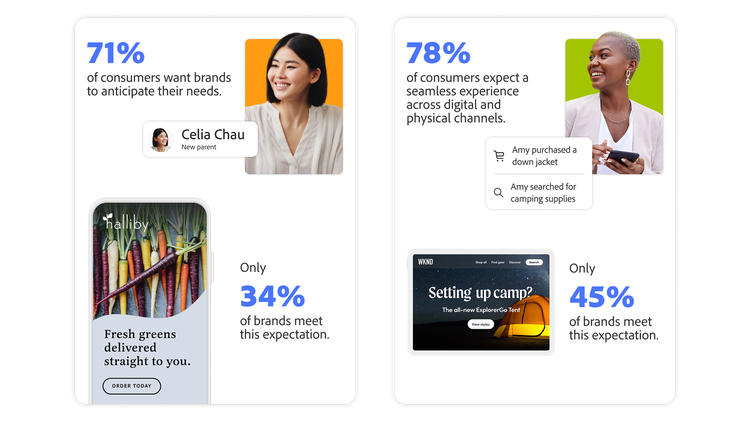
Unified customer experience (UCX) is the next frontier of personalization. The goal of UCX is for our organizations to become more conscious about our customers on an individual level so that we can deliver the experiences they want, when and where they want it. It brings together real-time customer profiles and audiences, segmentation, insights, and omnichannel customer journey orchestration — all powered by the organization’s content supply chain — so every customer experience feels genuine, timely, and relevant. UCX is a holistic approach that enables organizations to unify around the customer, transitioning from a one-time mindset to a lifetime value mindset. In today’s highly competitive market, UCX is essential for driving engagement, conversion, loyalty — and ultimately growth.
The foundation of UCX lies in understanding customers on a deeper level, from their demographics and data points to their preferences, behaviors, and activities, wherever and whenever they engage with our brands. Better data, deeper context, smarter tools, and more timely insights allow us to give our customers more of what they want from each interaction — be that information, technical specs, specific products, offers, a holistic solution, or a partnership — and help them get there faster.
Yet many organizations are falling short, missing opportunities to meet customer expectations and build stronger, long-term relationships. What consumers are saying:

of companies meet their basic expectations for a cohesive customer experience.

deliver timely and relevant offers or communications.
Demonstrating incremental business growth by identifying the most valuable prospects, in cost-effective ways.

Evolving one-time value into lifetime value by putting the customer’s unique needs at the center of their journey, across the entire lifecycle.

Increasing engagement and conversion by delivering connected, highly personalized journeys and experiences across channels and devices.
1. Brands are struggling to identify which customers and audiences to target most effectively to drive new customer acquisition.
Many marketing teams lack the resources (including people, technology, and AI-powered tools), strategic partners, measurement frameworks, and insights to effectively identify and target audiences. As a result, marketing spend is wasted, acquisition costs go up, and conversions remain low.
Contributing factors include:
2. Without real-time insights, enterprises are left to create engagement through inefficient, sweeping marketing campaigns that fail to meet customers where they are in their journey.
Enterprises need tools to advance personalized experiences and fine-tune marketing campaigns and journeys with each successive interaction.
Contributing factors include:
3. Customer data and profiles are locked up, with data spread across disconnected systems, making it nearly impossible to keep customer profiles accurate, up to date, and relevant.
Enterprises need integrated systems, data, profiles, and applications to create a unified view of the customer and deliver engagement across channels. Most companies have some form of customer profile, but they’re often built using slow-moving data, impacting the ability for personalization. The challenge is less about having all the data than about rapidly accessing, processing, and discovering insights from the right data.
Contributing factors include:
Adobe is a global enterprise that performs B2B and B2C marketing across every digital channel, content type, and format. We market over 100 products, applications, and platforms, and we have dozens of teams and agency partners responsible for producing the content and campaigns behind every customer experience.
There are many individual organizations within Adobe. Our Global Marketing Organization (GMO) consists of more than 1,100 employees across brand strategy, insights, creative production, program management, website development, social and paid media, localization, and more. Many teams used their own workflows and processes, as well as a unique mix of solutions and identity management systems. This has resulted in overlapping data silos and incomplete or redundant customer profiles and user identities. In addition, varying budgets, priorities, programs, and other costs added up to tens or even hundreds of millions of dollars.
Unifying all of this around any single strategy, technology, or process is a tall task — but one we hoped would deliver rewarding outcomes for both us and our customers.


Acquiring new customers without properly targeting the right audiences was not only creating impersonal, inconsistent, and irrelevant customer interactions, it was also costing us more resources and marketing dollars.

Customer engagement was falling short of our investments — not enough customers were coming back to consider more products. The lack of immediate and complete data signals prevented us from gathering the insights needed to drive in-the-moment customer engagement.

Our customers reported receiving inconsistent messages from different teams across the company. To create consistency and improve experiences, we needed better ways to unify data and connect customer journeys across channels.

Fragmented teams, data sources, and systems were making analytics workflows and journey orchestration even more challenging. Data was slow moving and not actionable in real-time actionable — we needed to move data into low latency for it to be useful. Varying priorities were causing teams to advocate for different products and roadmaps.
At various points in our journey to developing a UCX strategy, Adobe leaders performed a maturity assessment to evaluate our status and create a roadmap to success. These are common criteria we often use when working with our customers. An organization’s maturity for a given initiative can be better understood based on where it stands across these five categories:

Determining if we had an organizational mandate based on support from four critical players in our UCX quest — martech, business unit, our partners, and IT. Is everyone on board?

Evaluating the state of IT readiness by assessing technology needs across alignment, adoption, expertise, and documentation. Do we have the right tech stack?

Understanding the path to value of UCX was critical for securing buy-in across many teams and leaders, as well as defining goals, measurement, and use cases. Does everyone agree on how to get there and why this is important?

Accurately estimating the resources required, from stakeholder bandwidth to dedicated teams and the expertise needed for successful implementation. Do we have the people to pull this off?

Taking a big-picture view of the forces we needed to marshal, from adoption steering committees to change management and data teams. Providing our people with training, role clarity, and a clear path to innovation. Have we empowered our people to get the job done?
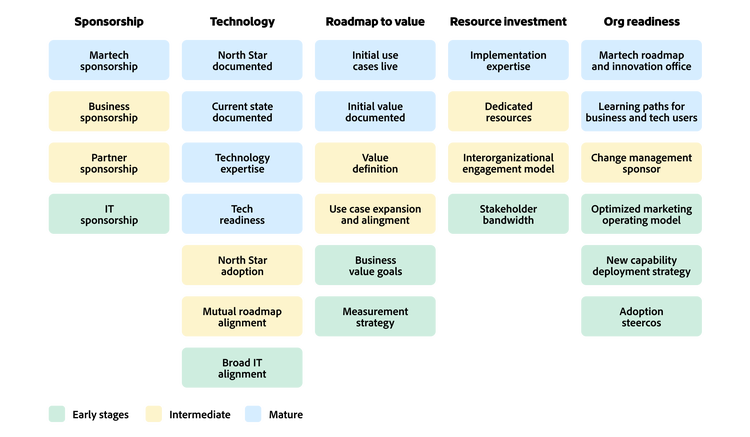
Of course, our own maturity assessment and the scale for each of the five components did not come into focus all at once, but only after several leaders and teams were already working to bring the vision to life. While we had the IT infrastructure, tools, and expertise, aligning them all to the same cause and processes was an entirely different challenge. But an analysis like the visual above can be a useful tool for organizations to understand where they are and how far they still have to go.
The task force built a roadmap of products and their overlapping use cases, including Adobe Experience Platform applications, Adobe Real-Time Customer Data Platform (CDP), Adobe Journey Optimizer, Adobe Customer Journey Analytics, and others. They needed to understand what would be required from a technical standpoint to unify a fragmented ecosystem, develop an operations plan, and consider potential organizational restructuring And of course, there was also the challenge of getting approval for resources — both funding and people.
The task force created two timeline options: one aggressive, estimating about a year to implement all changes, and another more flexible, incremental approach based on each team’s priorities. Both plans would require hundreds of people.
Engineering leadership from Adobe Experience Platform presented the plan to senior leadership, explaining the challenges and what would be required to achieve success. Executive leadership fully bought in to the plan and momentum shifted. The task force became an official team called the Data and Growth Platform team (DGP). They clarified their focus around three core initiatives.
In our case, our customers were the many teams, departments, channels, and employee users at Adobe. As the company grew over the years, many IMS were created. Each team was using their own mix of technologies, applications, systems, and processes. As a result, departments had separate views of customers — leaving us with a dozen or more views of itself. Progress was being made in pockets, but it was not until the strategy to unify customer profiles emerged that the Experience Cloud Platform engineering team, which supports our Digital Media go-to-market (GTM) strategy, could work toward a truly centralized view.
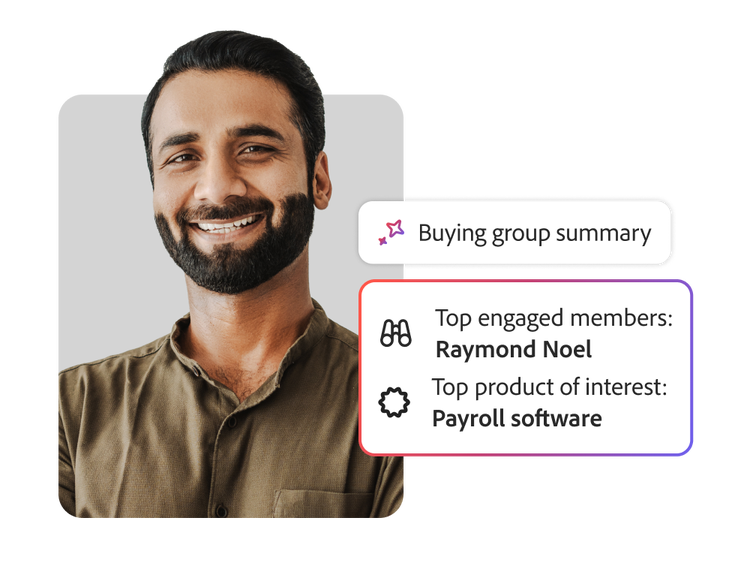
The DGP team developed a plan to build and manage core pipelines for the data that would be collected and used in the new unified customer profile. To improve data quality and develop more in-house expertise, the DGP team partnered with the core data team, as well as teams with specialized expertise in data science, data engineering, and machine learning.
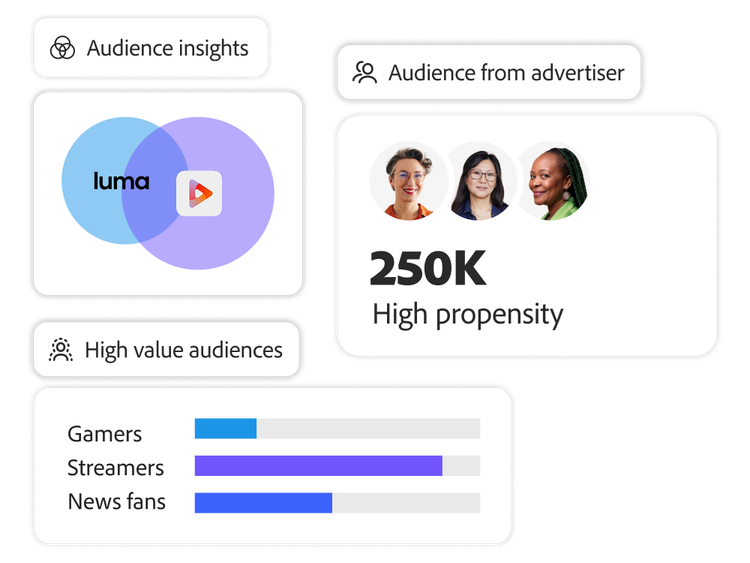
Another area of focus was building desktop software developer kits (SDKs) for core enterprise applications, like those that existed for Adobe Photoshop, Adobe Acrobat, and others. SDKs help Adobe collect data and support our analytics products, and are used to send in-app messages, deliver offers, product updates, and support. While some Adobe customers had added personalization within their desktop apps, it was not common. The team felt this was an area where personalization needed to be leveraged to unlock deeper insights for Adobe and create better experiences for customers — ultimately boosting retention, renewals, and revenue.
But personalization is typically page-based (based on web activity), not customer profile-based. Given that, the DGP team worked with the SDK team to port SDKs to new languages that work on desktop. Journey Optimizer, Customer Journey Analytics, and Adobe Target would be the primary products supporting these SDKs with tracking, measurement, and analytics.
Whenever changes are made on a large scale — impacting roles, budgets, reporting structures, and other factors — resistance is expected. Leading the effort to overcome this resistance and orchestrate change were leaders from the Analytics team and the Growth Marketing and Insights team.
The first was to run the project on Adobe Experience Platform to unify data across Adobe applications. Using Experience Platform with direct connection to Real-Time CDP, Target, Adobe Analytics, and others would be essential to unlocking personalization capabilities. Using Journey Optimizer would provide teams with more cross-surface journeys and omnichannel decisioning. Customer Journey Analytics, in tandem with Analytics, would be used for advanced reporting on all customer activities across the journey.
Another decision was to create a new center of excellence apart from our GMO. GMO teams that had been running their own ecosystems would now become ’super clients’ of this new ecosystem. All major changes, expenditures, and approvals would now funnel up to the DGP team. At first, some teams resisted losing a portion of their independence. But as they began to realize the benefits of central governance and fewer big-picture stuff to worry about — they embraced the mission.
Around 20 to 30 people representing approximately 60 teams began meeting on a weekly basis. Their early focus was on how to build the new core customer profile and figure out which datasets would be available first. Teams put forth their proposals, and the combined view was one of a ballooning customer profile that was both costly and unwieldy. The DGP team recognized the need to establish an ecosystem mentality of people working together, not just the convenience of a common data store.

After much collaboration, the new, central ecosystem allowed everyone to make requests, share ideas, and add their own pieces of the data puzzle in ways that others could consume it. This collaborative ecosystem became a testing ground for a user experience that would one day, hopefully, work for our customers.
Leaders on the task force reached alignment on which IMS they would use as their model. On the data side, the team settled on entitlement data streaming and web analytics. This combination enabled the team to conduct more sophisticated personalization testing for customers and produce a few early use cases that showcased the promise of the broader shift to UCX.
Some of the early use cases delivered results for the Adobe web team, which had been operating in something of a bespoke environment separate from other teams. Under the new structure, they were able to retire a legacy customer profile and adopt new processes for paid media, triggered email, and abandoned cart use cases. Other examples included supporting customers at the start of a subscription for a smooth adoption and ensure renewal at the end of the first month.
The new integration allowed GMO to scale these efforts to new heights and unlock significant revenue. Once the teams saw the gains that could be achieved with better data, advanced targeting, and products functioning better together, they were excited to move forward with additional integrations.
The common element in these early use cases was UCX. More than simply reaching customers through paid media or email, teams were connecting with customers in real time or at the most relevant times, in what one leader called moments of micro-personalization.
Replicating this strategy across the organization would require more resources, both in terms of people and funds. Leadership would need to create an onboarding program to help everyone learn how to use the new tools and implement the architecture and processes.
Once they were aligned with the CIO’s organization and the GMO, Adobe Technical Services took ownership of the implementation and met with leaders from the DGP team two or three times per week to establish the new business unit along with its roles, teams, and responsibilities. For much of 2024, it was a struggle to get the roles, planning, change management, and the technical roadmap in place. The team risked missing the planning cycle to secure resources for 2025, but leadership’s plan was eventually approved.
The DGP is a multifaceted team with a direct revenue responsibility for subscriber retention — they are the business engineering team that sits within the GTM team. As such, they were uniquely empowered to drive change and partner across layers within Adobe, including:

This included approximately 50 application teams, each with their own analysts, product growth marketers, developers, and in-house quality assurance.

These experts provided the team with engineering capabilities around Journey Optimizer and Customer Journey Analytics. They knew how to set up campaigns and journeys and worked side by side with growth marketers to help them architect and implement their use cases.

These included data science, data engineering, machine learning, and the core data team (defined as data used by many teams). The core data team built common datasets and delivered machine learning models and scores integrated into the Real-Time CDP profiles. This entire process was overseen by a small but mighty team of data product managers.

The entire platform is run by our IT organization reporting to the CIO, who oversees enterprise architecture and integrations and ensures the team follows all software standards. In addition, the IT organization manages data operations, provides 24/7 support and user administration, and maintains governance.
The foundational piece in our transformation journey was to get better core data. To accomplish this, we bypassed the data at rest in our warehouse and went directly to source systems, where we could access fine-grain data. This allowed us to keep pace with evolving features and products.
We used Experience Platform to orchestrate our customer journeys and empower our marketers with this better understanding of our customers, enabling them to align the customer state with the right marketing.
Using the more nuanced customer state framework we developed, we saw higher engagement, click-throughs, and customers returning more often. That’s when we knew we had found something that resonated and would help us use content more efficiently.
At the highest level, leaders at Adobe identified the critical changes and steps taken to deliver on the promise of UCX. These included:

Consistently delivering the right messaging to the right customers at the right time laid the groundwork for UCX.

Transformation required not just technology but alignment of people and processes, with executive buy-in, top-down leadership alignment, and an influential leader to bridge gaps and drive support.

To do this type of platform work, our growth marketer and product leadership teams had to make some real-world trade-offs. The integrations were critical and required significant resource investment. Ensuring that all teams involved understood the vision, the value, and the use cases allowed them to take ownership of the impact on their business.

Getting leaders and teams to agree upon a strategic framework ensured that everyone was talking about the same things in the same way, with all eyes on the end-state goals. Once this was established, operational processes became clearer and easier to follow.

Shifting from a simple customer state framework of only three groups — active, dormant, and canceled users — to a much more detailed framework gave us the agility to reach customers with better messaging as they moved from one state to another.

We improved practitioner experience and productivity by infusing generative AI and machine learning throughout use case workflows. AI and automation tools accelerated time to market and optimized customer engagement, allowing people to work more independently, self-sufficiently, and efficiently.
The results of our UCX transformation included accelerated time to value, new opportunities to generate growth, and massive cost savings — along with strong validation of customer state-based personalization.

Foster long-term customer relationships by shifting from campaign-centric engagement to customer-centric engagement, optimizing for lifetime value and loyalty across technologies, people, and processes.

Integrate systems, data, profiles, and applications to create a unified view of the customer and deliver engagement across channels. Implement a centralized customer data platform to consolidate data from various sources, ensuring all teams have access to the same, up-to-date customer information. This unified view enables more coordinated and consistent interactions across all touchpoints.

Use AI and automation tools as essential components of your CX solution mix. Analytics is a critical and complex component of CX. Without AI assistance, teams spend too much time combing through data, creating and optimizing content, and piecing together complicated customer journeys.
Lowering customer acquisition costs begins with the right approach to data and utilizing advanced tools to identify the right customers faster and rapidly measure and optimize campaigns.
Integrate solutions powered by AI.
Use AI and automation to quickly generate, compare, and adjust multiple campaign budget plans using previous incremental ROI data to maximize cost savings within and across channels. Leverage advanced analytics and AI to identify high-potential customer segments and tailor marketing efforts to meet their specific needs, thereby reducing acquisition costs and improving conversion rates.
Adopt a first-party data strategy.
Focus on building robust, first-party data collection mechanisms that respect privacy regulations while providing valuable insights. Enrich and expand first-party data for better prospecting, retargeting, and audience suppression through strategic partnerships.
Modernize measurement.
Implement a modern measurement framework to access timely insights across full share-of-wallet investments against every level of granularity within a campaign.
Accelerate optimization.
Optimize campaigns through data-driven planning, audience segmentation, real-time adjustments, and comprehensive performance measurement to drive better conversions.
Business impact.
Adobe applications to support customer acquisition.

Enterprises need tools to fine-tune marketing campaigns and journeys with each successive interaction. Real-time data analytics and customer journey mapping can help organizations understand where customers are in their lifecycle and deliver personalized, timely content that resonates.
Unify customer engagement applications.
Experience Platform brings together customer data, insights, orchestration, and omnichannel delivery to break down functional and organizational silos, delivering more connected and consistent customer experiences.
Automate workloads with AI.
Use AI to target the right segments with the right messages, offers, and journeys for audience-based engagement. Deliver highly personalized, consistent, and contextual customer engagement across any channel with omnichannel insights, intelligent targeting, and personalized, real-time journeys to drive customer growth and lifetime value.
Business impact.
Adobe applications to support customer-centric engagement.
Establish a content foundation to support scale, enabling marketers to create, repurpose, and manage content while ensuring consistent experiences with on-brand content. Dynamically activate relevant, personalized content across channels based on attributes, preferences, behaviors, and real-time signals. Understand which content attributes and elements engage and convert customers to optimize performance.
Activate omnichannel content.
Deliver connected, personalized content across channels by leveraging centralized content management, dynamic activation, and content insights to drive engagement and conversion.
Business impact.
Adobe solutions to support personalization.
While the DGP team and their many partners have made tremendous progress, laying the foundation for UCX by organizing the necessary people, processes, and technology is just the beginning. Everyone is preparing for an ongoing evolution while many unknowns remain. There are many layers still to be integrated and many questions yet to be answered, such as:
While all the teams involved in this project are encouraged by the early results, use cases, and revenue increases, perhaps the biggest takeaways are rooted in the culture, leadership, and people working to support UCX.
The real win for Adobe is rediscovering how opportunity comes from change, risk, disruption, and daring to reimagine everything. If our quest to unify CX has taught us anything, it may be that people, processes, and technology can always work better together — especially when they’re committed to putting the customer first and pursuing a mission greater than any one of its many, many parts.
2026 AI and digital trends in high tech.
Understand what high-tech organizations must do to turn AI maturity into measurable go-to-market impact and agentic B2B customer engagement.
Adobe 2026 State of AI Readiness Report.
Explore Adobe’s global study of what separates organizations that scale AI and how they turn deployment into sustained business value.
AI and digital trends in healthcare.
Understand the actions healthcare organizations must take now to turn AI ambition into connected, personalized customer experiences.