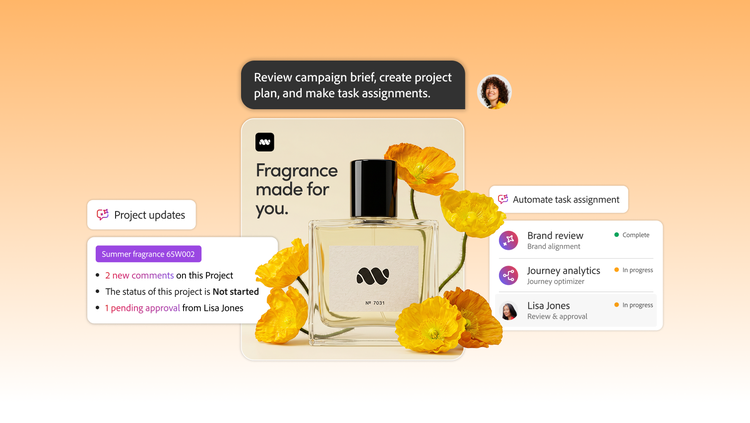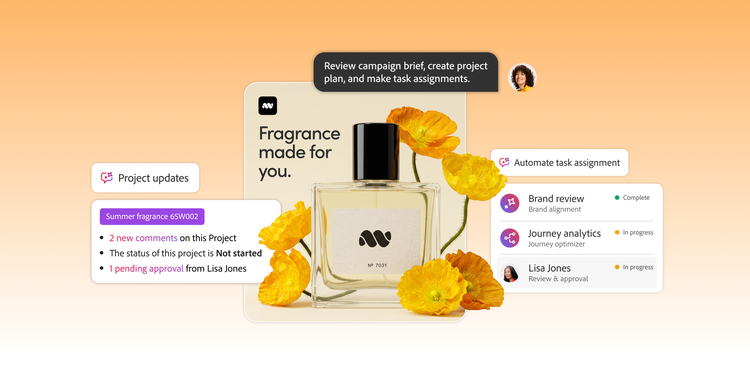
Enterprises are shifting to a new operating model where agents participate in work with marketers to complete tasks and return with final results instead of suggestions.
We call this human-agent work. Rather than a copilot that gets consulted, agents act as true participants and operate in the same systems, draw on the same context and are held to the same standards as your team. However, few enterprises — and even fewer marketing organisations — have the infrastructure ready to adopt this new model.
A capable agent dropped into a marketing operation, without knowing how you operate, what's worked before or who needs to approve what, is essentially a brilliant stranger. It can't absorb organisational knowledge the way a new hire does, so workflows break and every output requires a second look.
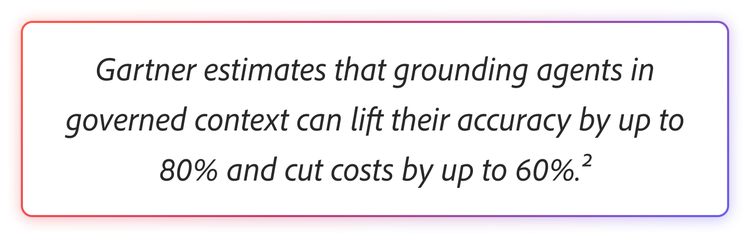
BCG found that turning an agent from a brilliant stranger into a trusted partner is what separates enterprises that are seeing returns on their AI investments from those that aren't. Organisations that gave agents the shared context they need saw roughly a threefold increase in productivity and cut cycle times by up to 80%.1 Skipping this step leaves enterprises stuck spending more time checking an agent’s work rather than reducing the overall time spent.