Today, customer interests shift quickly and engagement patterns evolve across channels, causing new trends to rise and fade within days. While most organisations can spot these trends, they often struggle to act quickly. With the increase in the number of digital channels, reaching customers where they are is more difficult than ever. Now, traditional workflows can’t keep up with the volume of signals that must be captured and acted upon in real time. To stay relevant, brands must shorten the time between insight and execution, enabled by AI trend analysis and agentic workflows.
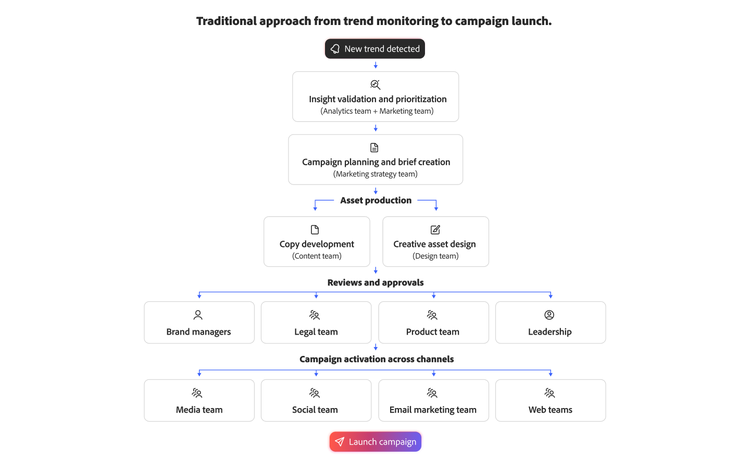
The journey from trend detection to campaign launch is often too slow. Momentum is lost across multiple handoffs, including planning, creative production, asset approvals and cross-channel activation. By the time your campaigns reach the market, the opportunity may already be gone. Adobe reports, in a survey of 150 marketing leaders, that 84% of organisations missed at least one marketing opportunity last quarter because their workflow couldn’t respond in time and 29% missed six or more.
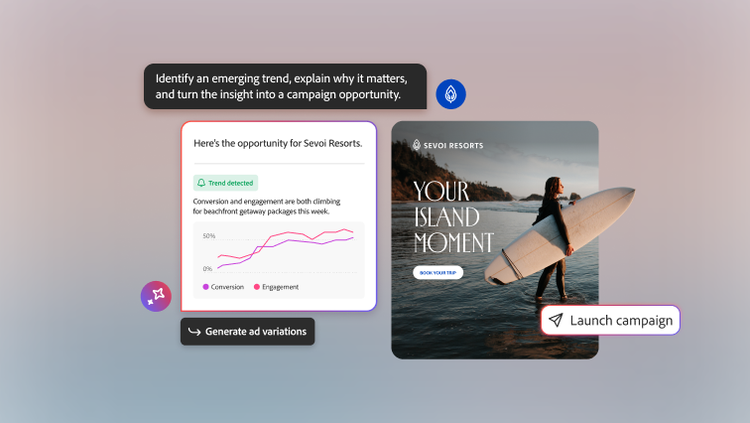
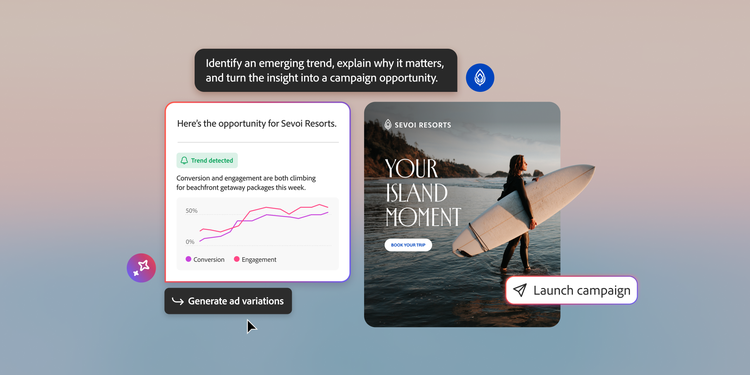
To reduce idea-to-market latency, teams need faster, more connected ways of working. This is fuelling interest in agentic AI-driven workflows. These AI systems coordinate actions across content operations, allowing you to respond at the speed of the market. They monitor signals, surface insights and streamline campaign execution in a continuous loop. The result is a more proactive, insight-driven approach to marketing that helps you to capitalise on opportunities while they still matter.
To understand how these intelligent workflows connect people, tools and processes, let’s explore the key concepts behind them.