Section 1
Rising momentum meets uneven maturity.
Where operational readiness lags and what it takes to keep pace.


In The State of Marketing in an AI-Driven World report, we examine how the measure of AI success in marketing is shifting from outputs to better outcomes, and what it takes for organizations to move from adoption toward business impact. The findings reveal that while AI use is accelerating, the operational maturity needed to convert it into measurable performance is lagging, and the cost of that gap is showing up in missed opportunities and unrealized value. More than 8 out of 10 marketing teams missed an opportunity last quarter because they could not respond in time, and only 7% have embedded AI in ways that deliver measurable business results. The following ten insights show why that friction persists, where value is emerging, and what it will take to close the gap between AI activity and consistent marketing performance.
The relentless pursuit of speed and scale in marketing now comes with an equally urgent demand for proof of value. Teams face growing pressure to drive revenue growth and greater efficiency at the same time. That would be a difficult mandate in any environment. It is even harder in one where customer expectations shift quickly, channels evolve in real time, and the window for marketing response keeps shrinking.
AI is increasingly seen as the lever that can make all this possible. Yet most organizations are still in the early stages of turning that promise into results.
Our global survey of marketing leaders and practitioners shows strong optimism about scaling AI, but only a few organizations have been able to weave it into the flow of work in a way that delivers business impact. For the vast majority, AI remains a tactical layer on top of existing processes rather than a source of structural advantage.
Meeting this moment requires a broader redefinition of AI value. The question is no longer how much activity AI can accelerate, but how well it can turn creation, activation, and optimization into a connected performance engine. Organizations that build toward that kind of orchestration will be best positioned to capture AI’s value and create the high-performing interactions modern customers now expect.
Section 1
Where operational readiness lags and what it takes to keep pace.

Insight 1
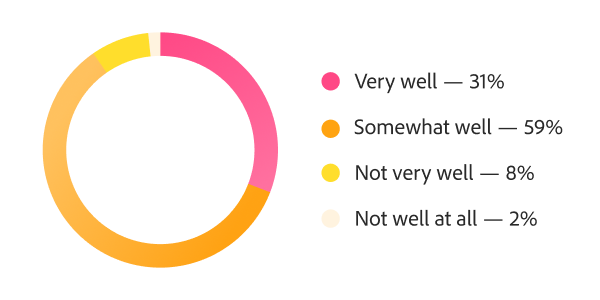
Marketing teams say they have learned to keep pace with rapid campaign cycles. But for most, that speed depends on workflows that are stretched, manual, and hard to sustain.

say their workflows can support rapid or high-frequency campaign cycles.

say doing so causes strain, is challenging, or is not possible at all.
TAKEAWAY
Marketing teams are finding ways to launch campaigns faster, but often by absorbing increasing pressure in their workflows. For most organizations, AI has accelerated content creation more than the surrounding steps, which still operate separately and at their own pace. The strain shows up when creative assets move slowly through review and compliance checks, when handoffs between teams and tools delay activation, and when performance insights sit separately from the ideation and creation process rather than feeding back into it. To move faster without overloading teams, organizations need to rethink workflows with AI at the center, so teams can more seamlessly create, review, activate, and optimize across a connected lifecycle.
Insight 2
TAKEAWAY
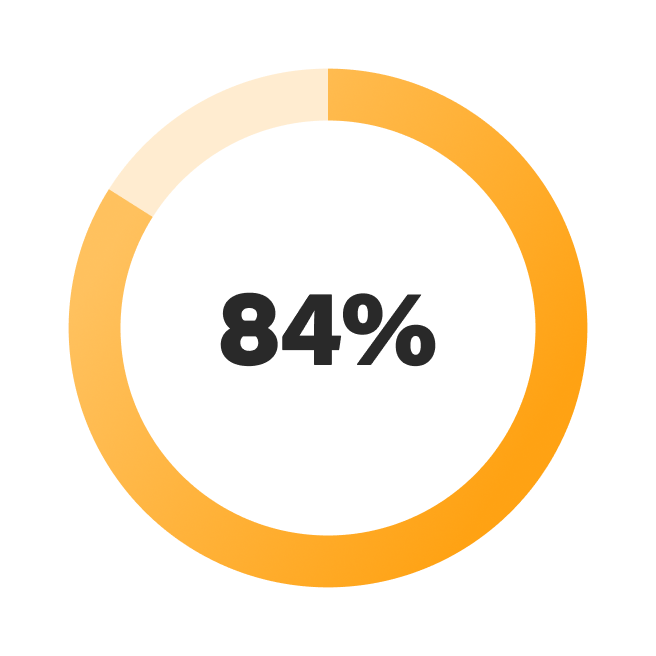
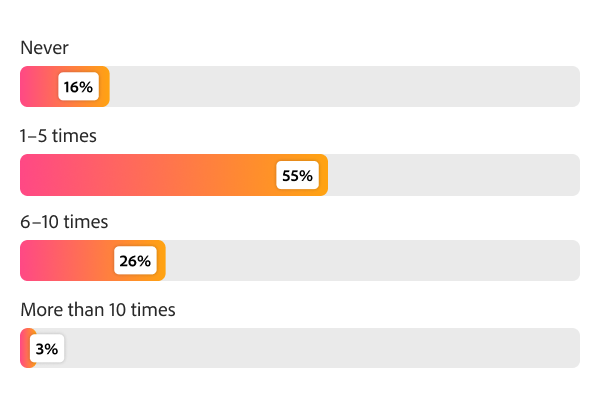
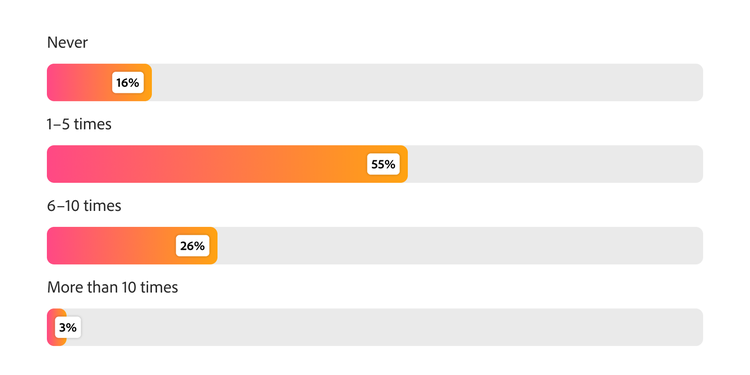
Cross-team handoffs, approval delays, and lack of data availability are places where marketing momentum consistently breaks down. For teams running in-moment campaigns, continuous experiments, and ad refresh cycles, those delays have a direct cost in engagement and revenue. To sustain the agility required to deliver results, marketers need to be able to produce, personalize, and remix content in a controlled, governed way, without falling back into backlogs or fragmenting workstreams.
Insight 3

of organizations will increase AI investment over the next 12–24 months.
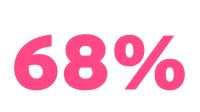
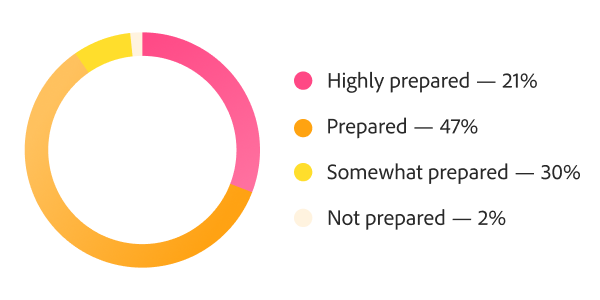
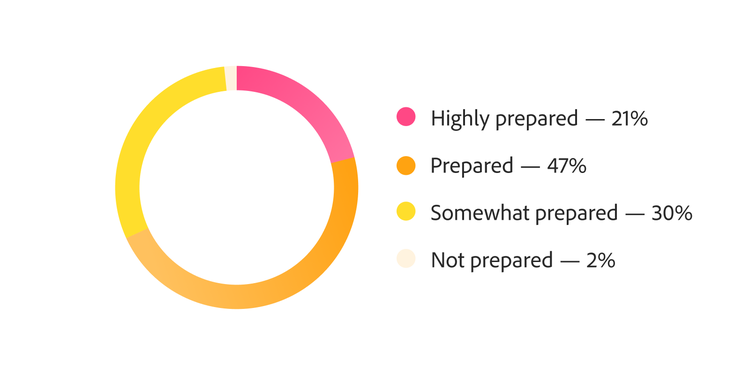
say they are prepared or highly prepared to scale AI in the next 12–24 months.
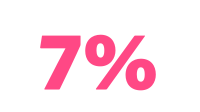
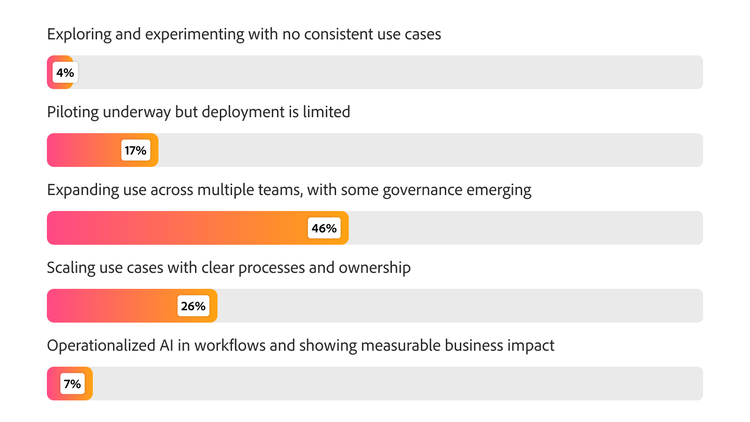
have embedded AI in workflows and are delivering measurable impact.
Graph 1
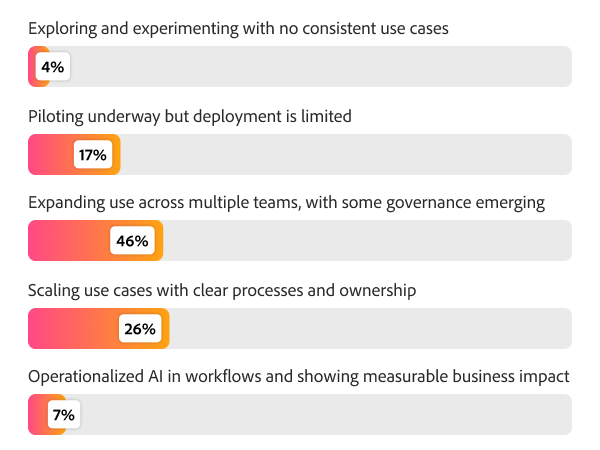
Graph 2
TAKEAWAY
Most marketing organizations have moved past early AI pilots. Multiple teams are experimenting, investment is growing, and confidence in scaling is high. But AI use remains largely ad hoc and siloed. Content is created in one place, reviewed in another, activated in a third, and performance data sits separately from all of it. Until teams can close the loop between performance and creation, using real-time insights to inform the next best creative and activation, the gap between adoption and measurable business impact will persist.
Section 2
Use cases, capabilities, and the shift from output to outcomes.

Insight 4
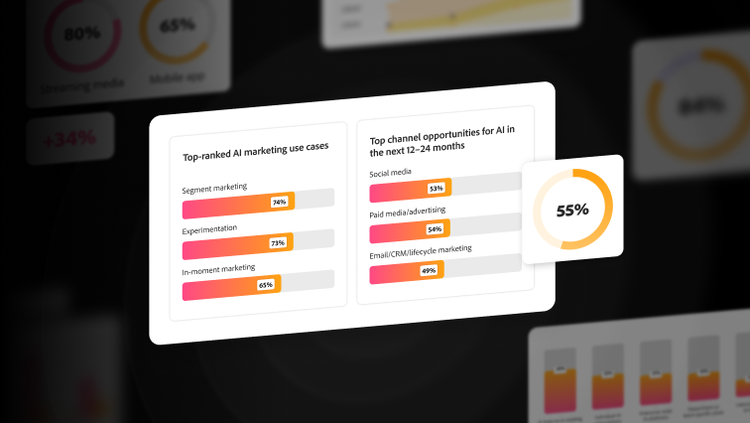
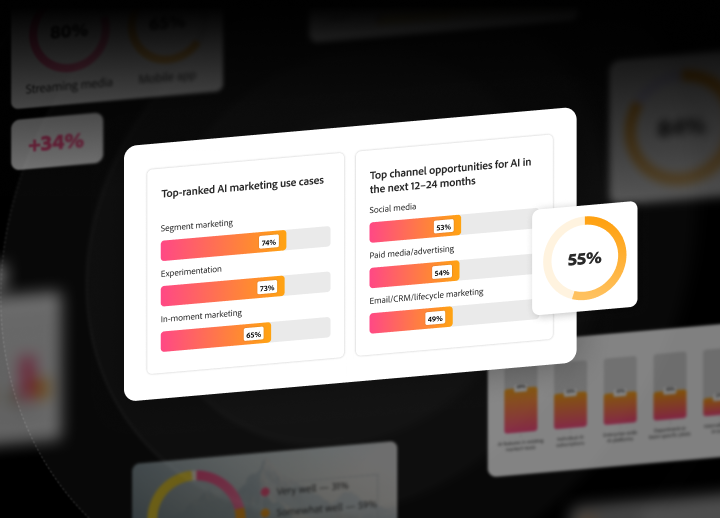
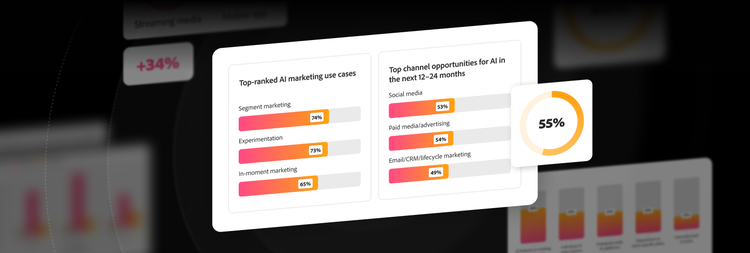
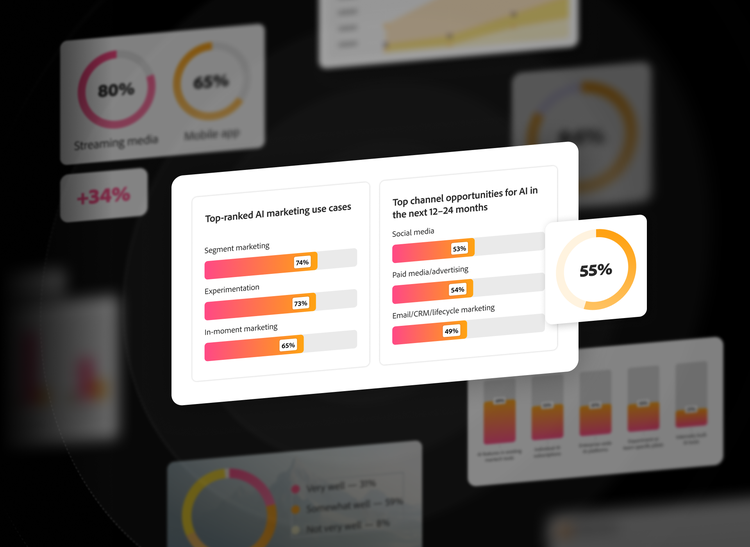
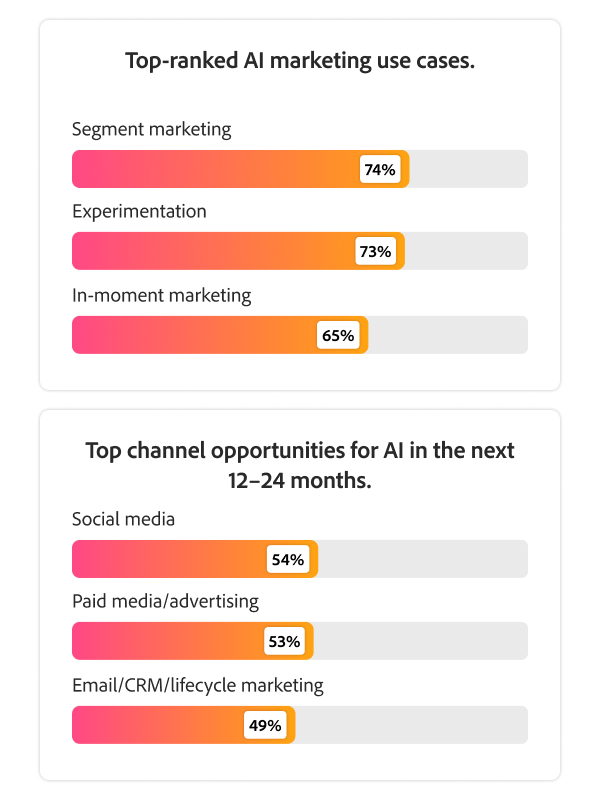
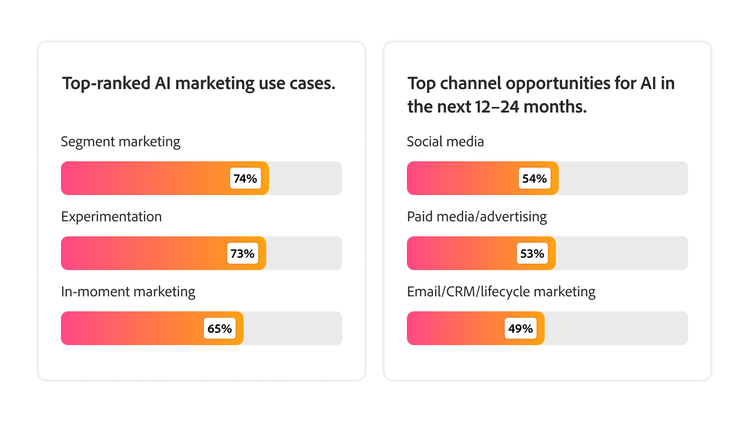
AI is most valuable where teams can target, test, and optimize quickly. That’s why the biggest channel opportunities cluster around performance-heavy environments.
TAKEAWAY
Segment marketing, experimentation, and in-moment marketing rise to the top because they sit closest to performance outcomes, bringing together precision, speed, and iterative optimization. But they also demand a lot in execution. That may explain why executives and practitioners see AI’s value differently.
Executives rate experimentation as a high-impact use case at a much higher rate than practitioners do (85% vs. 60%). Practitioners are closer to what rapid testing and optimization require: clean metadata, consistent asset naming, and real-time performance signals. Without those foundations, the speed AI enables breaks down before it turns into results.
Insight 5
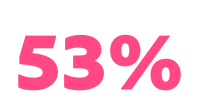
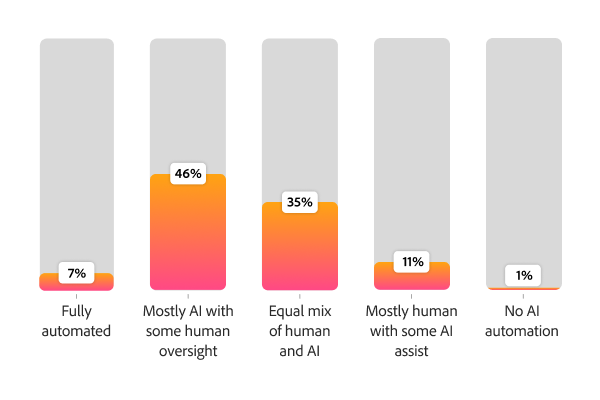
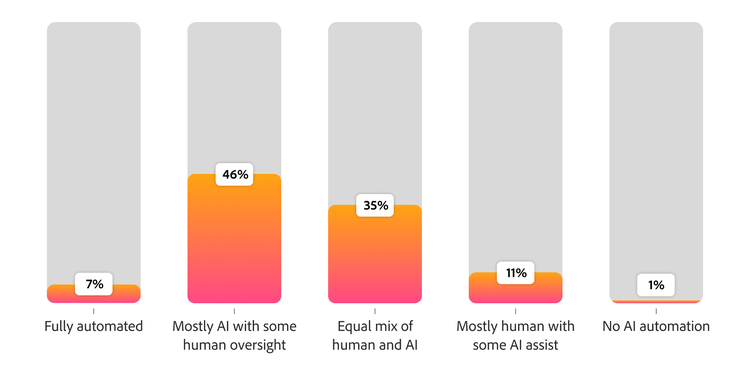
expect AI to take primary responsibility for generating multi-asset or multi-channel content variations in 2026.
TAKEAWAY
AI is increasingly taking on the production role behind content creation at scale. The shift is not simply toward faster content, but toward AI being able to do the work needed to tailor content without the manual overhead that has historically made true personalization impractical at scale. What matters now is whether AI can make that variation usable in practice, with the controls and workflow support needed to generate variants quickly, adapt content for different markets, personalize for audiences, and accelerate asset reuse and assembly across formats and channels.
Insight 6
TAKEAWAY
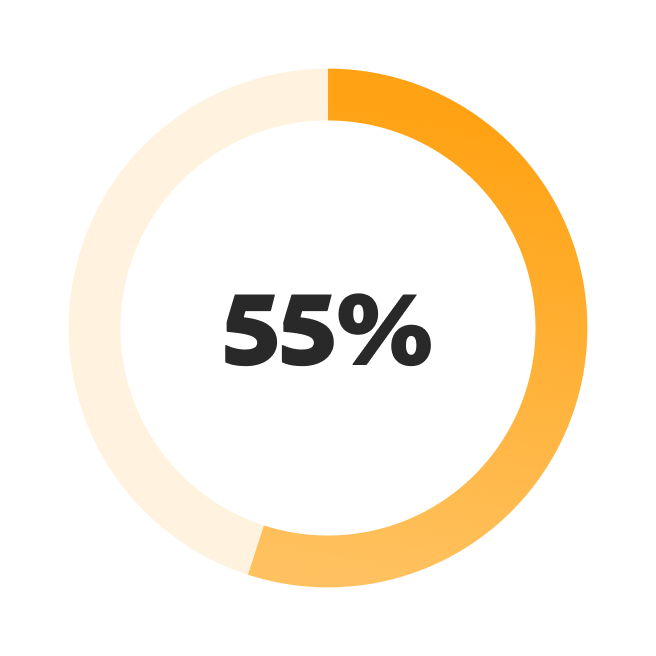
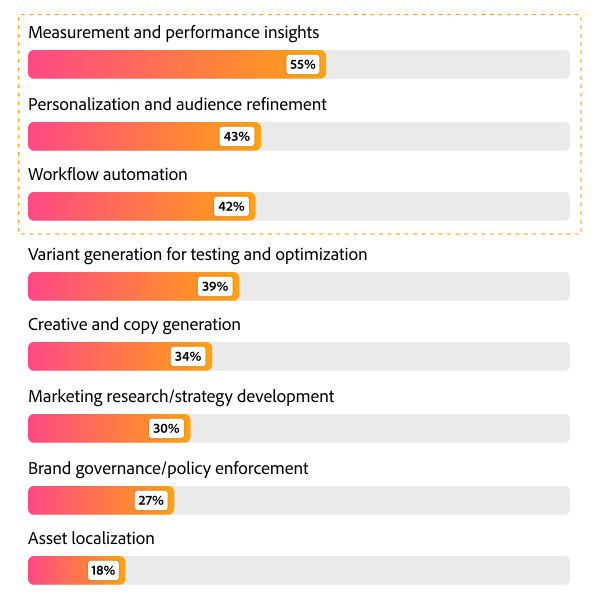
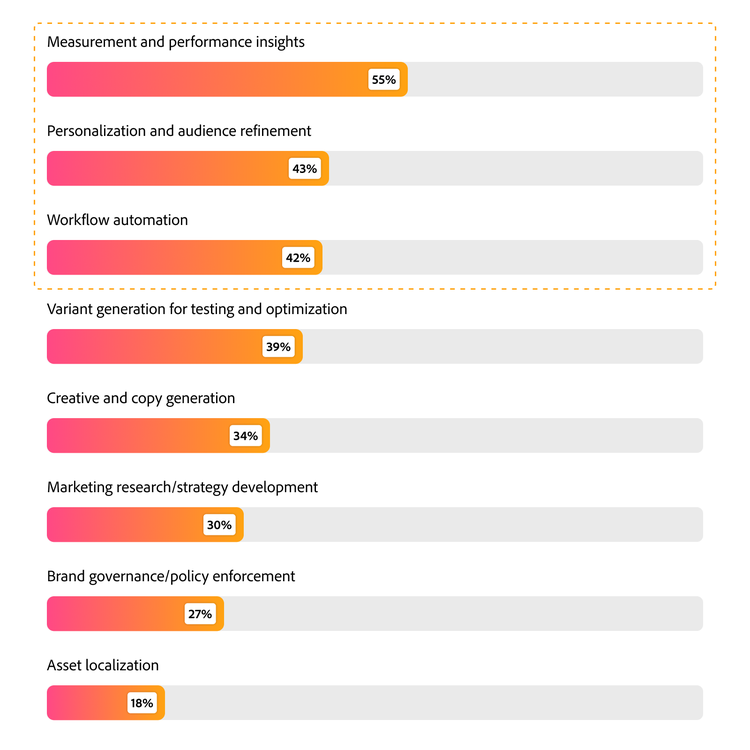
As AI multiplies content volumes, the ability to measure what is working becomes the harder and more valuable problem to solve. Leaders want AI that goes beyond production by helping teams close the loop between creation, activation, and performance by attributing results to creative decisions, surfacing what is driving outcomes, and informing the next best action in real time. Most organizations are still building toward that capability, but the direction is clear: organizations are moving toward a more mature view of AI that is defined less by content novelty and more by accountability.
Section 3
What it takes to connect AI across teams and workflows.

Insight 7

of marketing teams say driving revenue growth is the top mandate for 2026.
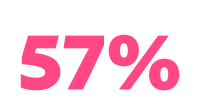
are expected to improve marketing efficiency at the same time.
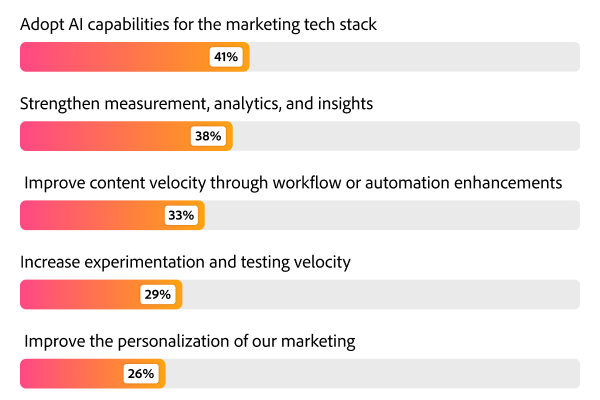
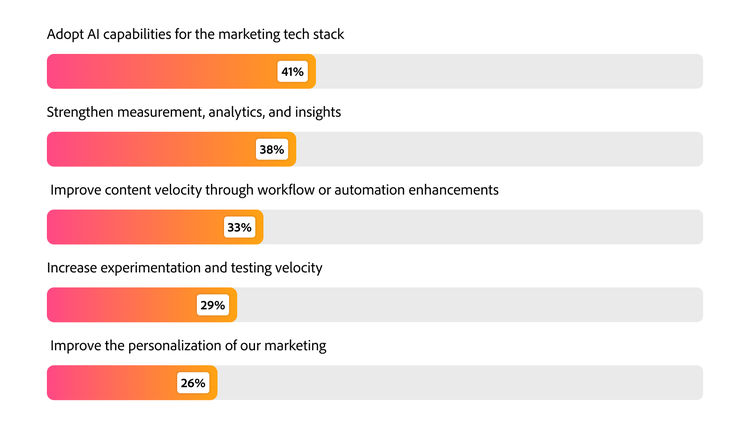
TAKEAWAY
Marketing teams are no longer being evaluated on activity alone. The mandate is financial outcomes — revenue growth, efficiency gains, and measurable returns. Content is one of the most direct inputs into those outcomes, and teams need AI that gives them greater control over how it is produced, approved, activated, and optimized. That connects directly to why measurement and performance insights rank as the most valued AI capability, and teams are already directing investment toward AI adoption and stronger measurement. What they need from that investment is operational control over the full content workflow, so every output can be connected to a business outcome.
Insight 8
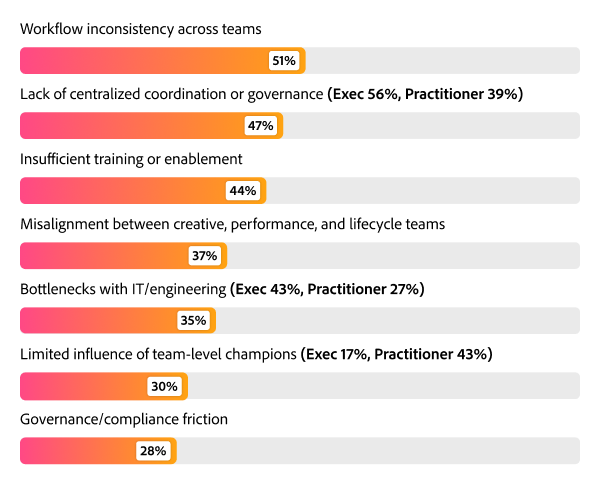
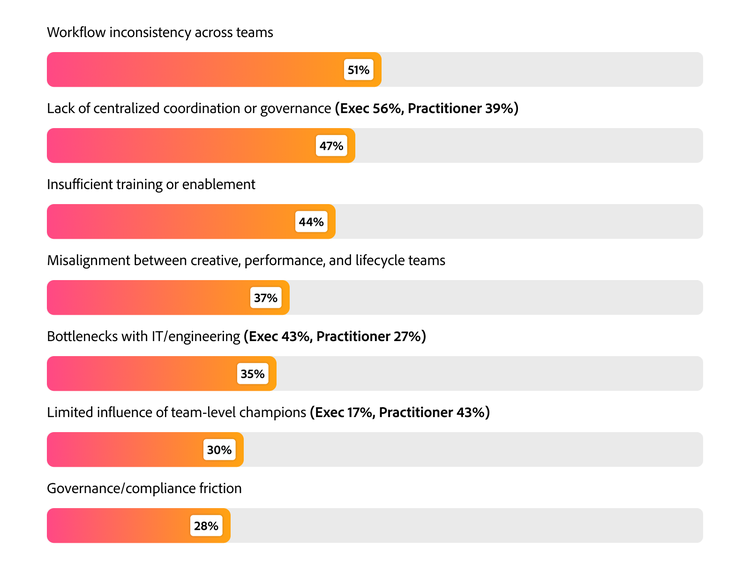
Confidence in scaling AI is high across industry. In practice, expanding AI beyond initial teams exposes organizational friction around workflows, governance, and enablement.
TAKEAWAY
The confidence most companies express about scaling AI may not fully account for what expansion reveals in practice. As AI use extends across teams, the biggest barriers are not new ones introduced by the technology. They are long-standing weaknesses in workflows, approvals, governance, and coordination that AI makes more visible as volumes and complexity increase.
Executives tend to see the challenge as a governance and infrastructure problem, while practitioners feel the day-to-day limits of weak team-level influence. Both are right. Scaling AI requires operating model coherence as much as innovation, and organizations with stronger standardization and coordination will be better positioned to expand it with less friction.
Insight 9
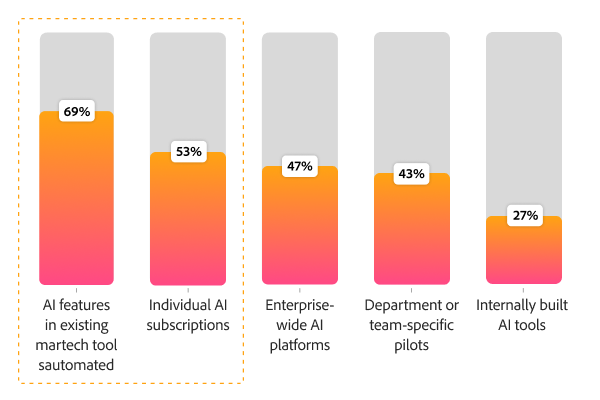
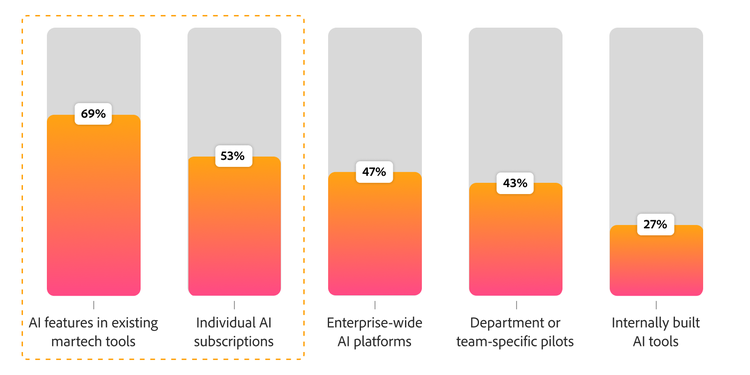
use individual AI subscriptions.
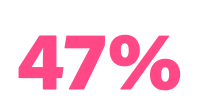
use enterprise-wide AI platforms.
TAKEAWAY
As AI usage accelerates, many marketing organizations are not rethinking their operating model. Instead, they’re extending what already exists and engaging with AI through tools they already use or individually. The result of adoption through this path of least resistance is that AI can only improve individual workflows without necessarily connecting across them. This leads to disconnected outputs, inconsistent governance, and difficulty measuring impact. The organizations that get the most from AI will be the ones that move beyond access and toward orchestration.
Insight 10
Team-level champions are playing a meaningful role in spreading AI, though their influence is more often moderate than deeply cross-organizational.
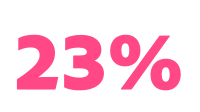
of organizations say AI champions have a strong influence across many teams.

say champions moderately influence AI adoption beyond their teams.
TAKEAWAY
AI champions have emerged organically as individual teams experiment with tools and demonstrate value, but grassroots adoption has a natural ceiling. Without system-level support to amplify their signals, champions can only influence how some teams work without changing how the organization works. The model that goes furthest combines two levels: a senior sponsor who creates the conditions for AI to scale, and a practitioner champion who drives day-to-day adoption. Together, they close the gap between influence and impact.
The research tells a consistent story: investment is rising, AI use is spreading, and confidence in scaling is growing. What is lagging is the ability to turn that momentum into connected execution that translates into measurable business performance.
The distance comes down to three unresolved tensions.
The report makes it clear that AI’s value in marketing is not defined by how much content it can generate. It is defined by whether organizations can operationalize AI across the work that happens around it in a way they can scale.
This is where Adobe GenStudio for Performance Marketing closes the gap. Built for the pace and complexity modern marketing demands, its AI-first workflows connect the speed of content production to the activation, measurement, and governance infrastructure that makes it sustainable.
For marketing teams under pressure to move faster and prove more, it means generating on-brand creative variations on demand, activating directly into paid and owned channels, and turning performance data into better creative decisions continuously.
The result is a workflow where speed and performance reinforce each other. Teams move with greater precision and agility, while maintaining brand consistency and performance visibility to ensure that AI activity translates into business impact.
This report is based on research conducted by Advanis on behalf of Adobe between December 2025 and January 2026.
A total of 150 marketing leaders and practitioners across the United States, United Kingdom, Canada, France, and Germany completed the survey online.
All respondents were pre-qualified to ensure active involvement in marketing strategy or execution within their organizations.