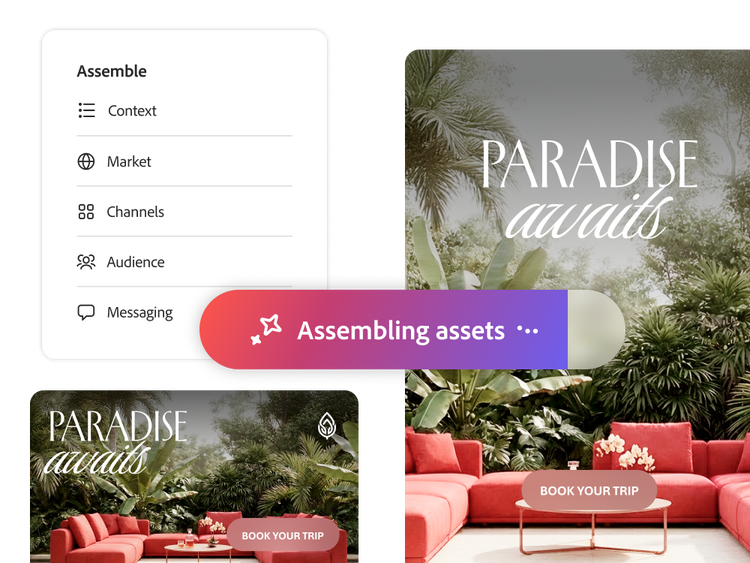
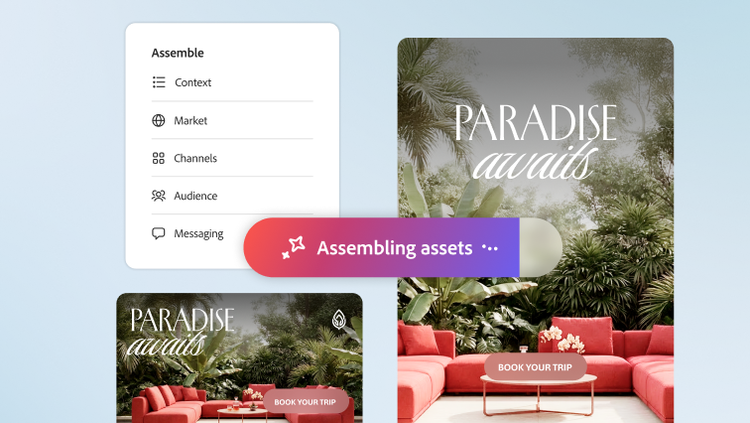
Content assembly in Adobe Brand Intelligence creates new asset variants from governed creative inputs. It interprets campaign intent, selects best-fit approved or tagged imagery and copy and combines those elements with prebuilt layouts and components. Each required format or placement needs a corresponding base creative or template. Content assembly does not invent an entirely new layout when no suitable template exists.
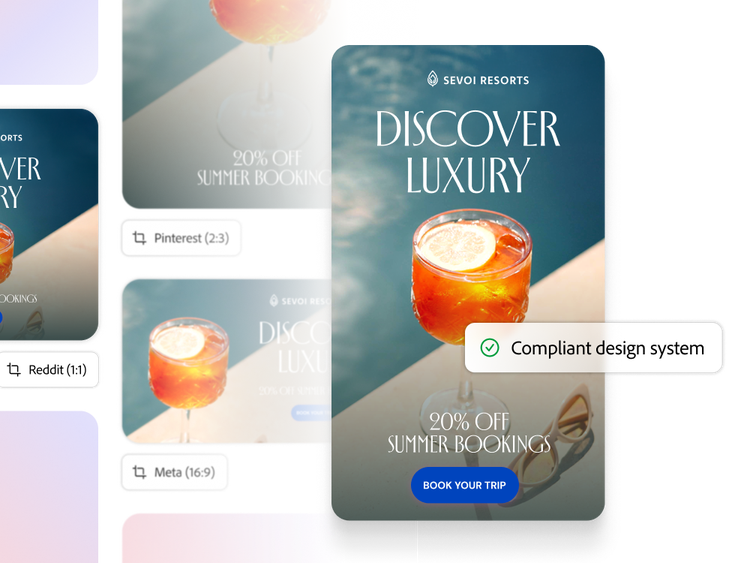
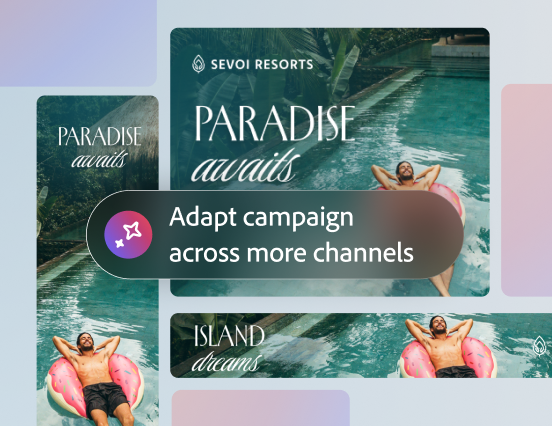
Content assembly supports the channel and format combinations defined in a campaign’s templates, base creatives and production specifications. The current assembly workflow includes market and channel selection, with channel format examples including Display, Meta, TikTok, Snapchat, Reddit, Pinterest, Paid Search and YouTube. Format specifications reflect common placements and may change. Confirm requirements with each platform. Third-party names are trademarks of their respective owners and are used for identification only.
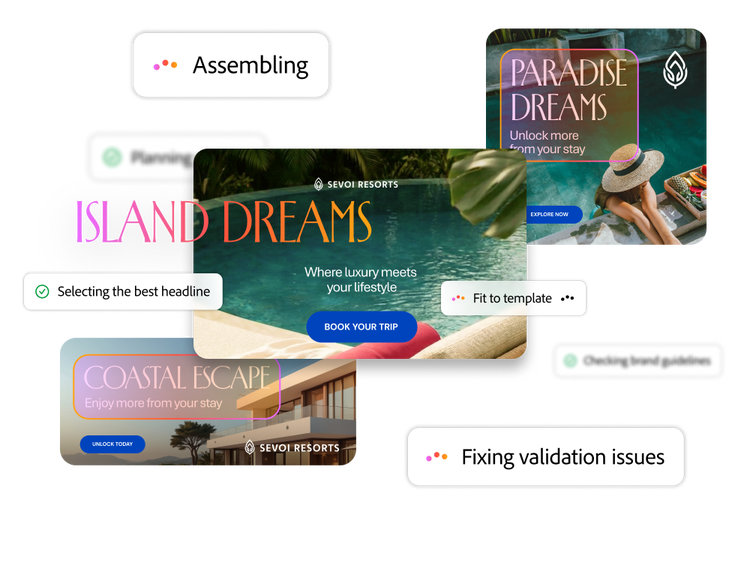
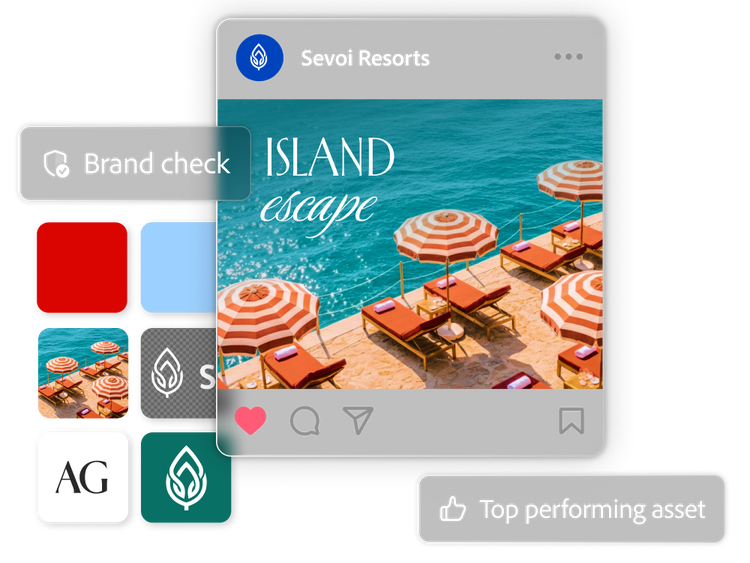
Content assembly applies Brand Intelligence throughout the assembly process instead of relying only on a final manual review. It uses documented brand guidelines, campaign requirements, approved or tagged assets, layout rules and learnt brand decisions to guide which elements are selected and how they are combined.
The workflow can rank candidate imagery, preserve focal points and safe zones, apply campaign styling, check brand guidelines and refine eligible issues during assembly. For enterprise governance, a completed assembly run should not be treated as a substitute for final approval. Regulated campaigns and deliberate exceptions should continue through the organisation’s established validation, review and approval workflow.
Yes. Content assembly can create market, language and channel-specific variants from a single campaign context. Teams select the relevant markets, countries or languages and channels; the workflow then applies the corresponding campaign content, guidelines and output specifications. This supports scalable localisation and can contribute to transcreation workflows when approved market-specific copy, legal language, imagery and brand rules are provided. Regional marketing and legal teams should review language, claims, imagery and market-specific exceptions before activation.
The number of variants depends on the combinations defined in the brief and campaign specification, including markets, languages, channels, templates, messages and approved creative inputs.