A/B Testing Landing Pages for AI-Referred Visitors

A/B testing landing pages for AI-referred visitors.

Traditional search journeys were built around keywords, rankings, and clicks. Conversational AI is changing that path by allowing buyers to ask detailed questions, compare options, refine criteria, and receive summarized recommendations before they ever visit a website.

For enterprise marketing, experimentation, and CRO teams, this shift changes how landing pages should be tested. A/B testing still needs to measure messaging, calls to action, and user experience. But AI-referred visitors also require testing for context, continuity, and alignment with the conversation that brought the visitor there.

This article will cover:

Visitors coming from AI platforms impact landing page behavior.

Visitors arriving from AI assistants behave differently than those clicking through from traditional search results. Traditional search visitor expectations are often shaped by a keyword, a search result, and a click. AI-referred visitor expectations are shaped by previous conversations.

In a traditional search journey, a buyer might search “best enterprise analytics platform,” compare several organic results, click into a few pages, and begin forming an opinion from there. In an AI-assisted journey, that same buyer may ask an AI assistant to compare enterprise analytics platforms for a global retail company, narrow the list by integration needs, ask which vendors support real-time personalization, and then click a cited or recommended source. By the time the visitor clicks through, the conversation with that AI assistant has already shaped their expectations. All landing pages need to meet those expectations quickly and clearly.

AI-referred visitors often arrive at landing pages with higher intent and greater specificity. They have already described their needs, received contextual information, and chosen to continue their research based on an AI-generated response. If an AI-referred visitor sees that your brand has a generic landing page headline that doesn’t meet their needs, they will choose to continue their journey with other brands.

AI assistants and answer engines shorten discovery journeys. A visitor who has already compared vendors or reviewed product categories with an AI assistant expects the landing page to answer the next logical question immediately. For example, a buyer who arrives after asking about “AI personalization tools for financial services” may want proof of industry fit, governance controls, integration details, or measurable outcomes instead of a broad explanation of what personalization is.

AI-referred visitors also evaluate trust differently. They often arrive with a summary, recommendation, or comparison already in mind, so they look for signals that confirm what they just learned. Both website content and structured data must be correct to minimize the likelihood that an AI platform will incorrectly cite brands.

AI-assisted journeys often unfold across several touchpoints. A buyer may use an AI assistant to narrow options, visit a landing page to validate a claim, review a third-party source for comparison, and return later through branded search or direct traffic. To optimize AI conversion rate, a landing page should not be judged only by what happens in one session. It should be evaluated by how well it supports the visitor’s next step, even when the conversion happens later.

Where traditional A/B testing falls short.

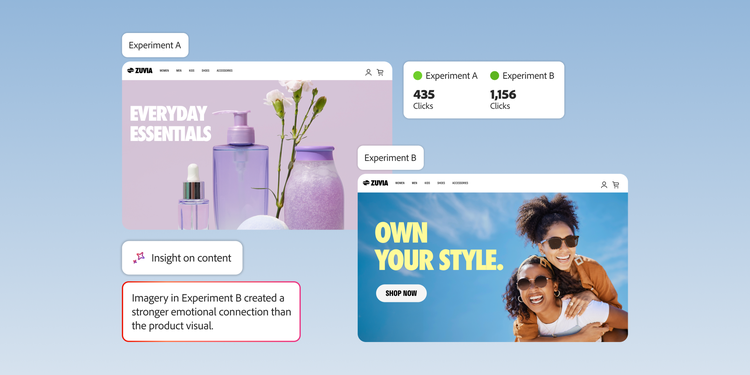
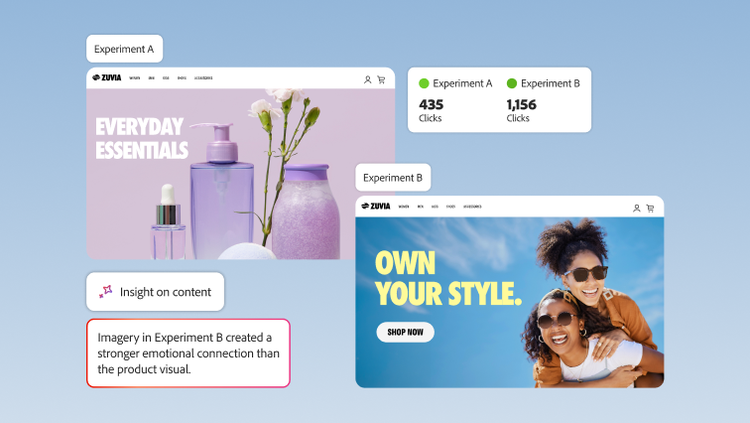
Conventional A/B testing frameworks were designed for a different discovery path — one where visitors arrived through keyword searches. People now research, compare, and evaluate options differently through AI platforms.

Traditional landing page testing often segments traffic by broad demographic or behavioral categories. But AI referrals can carry more specific intent signals. Two visitors may look similar in analytics yet arrive with very different intent based on the questions they asked, the options they compared, or the recommendations they received.

Static experience testing can also fall short. Conventional landing page split testing often compares a small set of variants across a broad audience. AI-referred visitors expect a page to relay the information they found while researching, not a one-size-fits-all experience.

Linear funnel assumptions create another gap. Traditional frameworks often measure success through a user view, click, and conversion. AI-assisted journeys are less direct. A visitor may engage with a page, return to an AI assistant for clarification, compare another source, and convert later through a different entry point.

Last-click attribution can make that journey harder to understand. When a conversion follows multiple AI conversations and site visits, crediting only the final touchpoint can undervalue earlier interactions that shaped the decision.

Accurate attribution matters more as customer journeys become non-linear. Teams need to test for intent alignment, content relevance, and continuity between the AI answer and the landing page.

Testing and optimizing landing pages for AI-referred visitors.

A/B testing landing pages that are optimized for AI-referred visitors requires more than headline, layout, and CTA tests. Enterprise teams also need to test whether the page matches an AI-referred visitor’s intent and successfully continues an AI-assisted conversation without creating inconsistency or risk.

Conversational intent alignment

AI-referred visitors often arrive with a clearer sense of what they need because they have already asked questions, compared options, or narrowed their criteria with an AI assistant. For example, a visitor who asks an AI assistant, “What is the best customer data platform for a global retail brand?” may need a broad solution overview, industry use cases, and integration details. A visitor who asks, “Which customer data platforms support real-time personalization and consent management?” may be further along and looking for proof of specific capabilities.

Enterprise teams can test different page experiences for these intent levels. One variant might have a high-level product explanation and customer outcomes. Another page experience may emphasize technical capabilities, compliance signals, and a CTA linking to a demo. The goal is to learn whether AI-referred visitors respond better when the page meets users where they are in the customer journey.

Context continuity

Context continuity measures how well the landing page matches the previous information a visitor was given before clicking. In AI-assisted journeys, the visitor may arrive with a summarized recommendation, product comparison, or specific claim already in mind. The page needs to make that information easy to confirm.

For example, an AI assistant may recommend a solution because it supports enterprise personalization, integrates with existing commerce systems, and includes governance controls. If the landing page opens with generic brand messaging and buries integration and governance control details, the visitor may question whether this potential solution is the right choice.

Teams can test direct-answer-first page structures against more traditional landing page formats. A direct answer version might open with the core capability, audience fit, proof points, and next steps. A traditional version might begin with the broader business challenge before introducing the solution. For AI-referred visitors, the optimal experience is usually the most direct transition between the AI-generated summary and a brand’s respective landing page.

This also applies to how AI systems interpret the page. Testing semantic HTML, schema markup, clear headings, and structured content can help teams understand whether their pages are easier for users and AI systems to read, summarize, and represent accurately.

Adaptive experiences

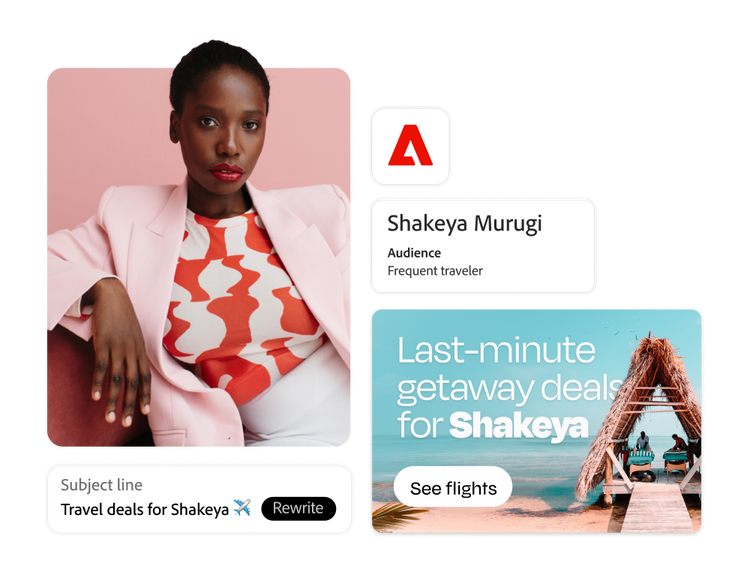
Traffic that comes from AI platforms also creates new opportunities for adaptive landing page experiences. Instead of showing every visitor the same page, teams can test whether referral source, campaign context, or intent should influence the message, CTAs, or content narrative.

A comparison-driven visit might call for proof points near the top of the page, such as customer results, differentiators, or a clear path to compare solutions. A "How to" visit may perform better when the page leads with practical guidance, implementation steps, and a CTA that invites the buyer to speak with an expert.

These experiences should still operate within clear governance guardrails. Personalization can improve relevance, but too much variation can create brand inconsistency, fragmented reporting, or experiences that feel overly tailored. Enterprise teams should test where personalization adds value and where a consistent landing page experience performs better.

AI can also support the experimentation process itself. Teams can use AI tools to generate test hypotheses, draft variant messaging, summarize performance patterns, or identify content gaps. Human review remains essential to ensure brand standards are adhered to.

Measuring landing pages optimized for AI-referred visitors.

Optimizing landing pages for users who find websites through AI platforms requires A/B testing to measure more than immediate conversions. Traditional metrics such as conversion rate, click-through rate, bounce rate, and time on page still matter, but they do not always show whether a conversion on a landing page was supported by an AI platform.

Start by segmenting AI referral traffic. Teams should understand which AI platforms are sending visitors to your website, which landing pages they reach, and how those visitors perform compared with traditional search, paid media, email, and direct traffic.

Assisted conversions also matter. A visitor may arrive from an AI assistant, review a landing page, leave to ask follow-up questions, and convert later through branded search or direct traffic. Last-click attribution can miss the role an earlier AI platform played in the conversion.

Teams should also measure intent-based engagement. A visitor who clicks into pricing, integration details, comparison tables, FAQs, or customer proof points may be validating a specific need, even without converting immediately. These signals can show whether the page answered the next question in their journey.

Finally, track repeat visits and source paths for returning visitors. AI-assisted journeys often flow between AI tools, websites, third-party sources, and return visits. Multi-session behavior can help teams understand how landing pages contribute to a longer evaluation process.

Ensure landing page A/B testing is ready for AI-driven discovery.

AI-driven discovery is changing the goals a landing page needs to deliver. Visitors tend to arrive with clear expectations, which shortens the time it takes to purchase a product or solution. The best landing pages will continue the journey that started in an AI platform. Enterprise teams need to ensure intent alignment, good user experience, clean layout, narrative flow, accurate messaging, and clear next steps with calls to action.

Landing page optimization needs to adapt because AI is a frequently used mode of discovery for website visitors.

See how Adobe Target helps teams test and personalize experiences for AI-referred visitors.

Let’s talk about what Adobe can do for your business.

Get started

I'm the Adobe Assistant. How can I help you today?

1