Email remains the only digital marketing channel where the organisation owns the audience relationship outright, and no algorithm change can reduce reach overnight. Yet many UK teams still treat email as a broadcast tool rather than a strategic asset, leaving measurable revenue on the table. This guide to email marketing provides a principle-first framework covering funnel-stage mapping, AI-driven personalisation, UK-specific compliance, and a maturity-based decision model for choosing the right approach.
A strategic guide to email marketing for UK organisations
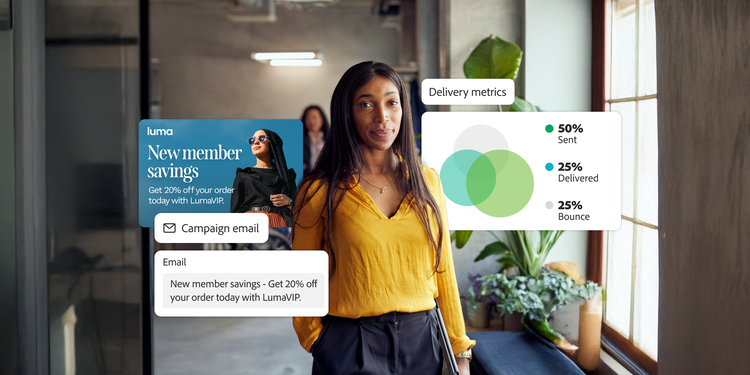
Which types of marketing emails deliver results at each funnel stage?
The principle governing email type selection is alignment between message format and the recipient's current relationship with the brand. Misalignment, such as sending a promotional discount to a subscriber who has not yet engaged with educational content, erodes trust and inflates unsubscribe rates.
Funnel stage
Email type
Primary objective
Example use case
Awareness
Newsletter
Sustain brand salience between purchase cycles
Weekly market commentary from a wealth management firm
Consideration
Lifecycle / nurture sequence
Educate and build preference
Onboarding drip moving new account holders to first cross-sell within 14 days
Decision
Promotional
Drive conversion with a time-bound offer
Personalised product bundle for basket abandoners
Post-purchase
Transactional
Confirm action and reinforce trust
Order confirmation carrying a subtle 'customers also bought' recommendation
Transactional emails consistently achieve the highest open rates because recipients expect them; embedding a single relevant cross-sell link within a dispatch notification feels helpful rather than intrusive. Lifecycle emails reduce churn by re-engaging dormant subscribers, and triggering a 're-discover' sequence after 45 days of inactivity typically recovers a measurable share of at-risk accounts that would otherwise lapse permanently.
What strategic benefits does email marketing offer over other channels?
The ownership principle is foundational: an email list is a first-party data asset the organisation controls. As third-party cookie deprecation accelerates across Chrome and Safari, channels reliant on behavioural tracking lose precision, while email, built on explicit opt-in, retains its targeting accuracy.
Email consistently outperforms paid social and display on a cost-per-acquisition basis because it addresses opted-in audiences with demonstrated interest. For multi-brand or multi-region teams (a UK retailer operating across England, Scotland, and Wales, for instance) email enables segmentation by region, personalisation by local inventory, and scheduling by timezone without duplicating campaign infrastructure.
Measurability strengthens the case further. Email provides closed-loop attribution from send to conversion. Click-to-open rate (CTOR) isolates content relevance from subject-line performance, giving a cleaner optimisation signal than aggregate open rates alone. This is a distinction that matters when iterating creative at pace.
How should your organisation build an email marketing strategy from first principles?
The governing principle is that strategy precedes tactics: every email program should begin with documented audience segments, journey stages, and success metrics before a single template is designed.
Start with behavioural segmentation. Segmenting by 'visited pricing page twice in seven days' yields higher conversion than segmenting by job title, because behavioural signals indicate purchase readiness. Effective audience targeting strategies combine behavioural triggers with firmographic data to prioritise the contacts most likely to convert.
Next, map the customer journey so that awareness-stage subscribers receive educational content, consideration-stage contacts receive comparison guides and social proof, and decision-stage leads receive personalised offers with urgency triggers.
Set measurable KPIs before launch: define success by CTOR, conversion rate, and revenue per email rather than vanity metrics like list size. A/B test one variable at a time (subject line, send time, or CTA placement) and run tests for a minimum of 48 hours to account for engagement patterns across weekdays and weekends. Teams that skip this discipline often optimise on noise rather than signal.
How does AI-driven personalisation transform email performance?
The principle underpinning AI personalisation is the shift from static, rule-based segmentation to predictive, individual-level content selection. Where a manual approach might create five audience segments and five corresponding templates, AI models evaluate engagement history at the subscriber level and assemble the most relevant content blocks dynamically, automating repetitive design tasks that previously consumed hours of production time.
Send-time optimisation analyses individual engagement patterns to deliver emails when each recipient is most likely to open, eliminating the guesswork of blanket 'Tuesday 10am' scheduling. Predictive content selection surfaces the most relevant product recommendations within a single template. For example, a professional services firm can show different case studies to different segments without building separate campaigns.
Adobe Marketo Engage uses AI models to score leads and trigger automated nurture paths. A subscriber who opens three emails in a week but has not clicked can be routed to a re-engagement sequence with a different content angle, reducing manual triage. Teams adopting this approach have reported halving production cycles while improving CTOR, and the mechanism is fewer irrelevant sends, not more sends.
Why does UK email marketing compliance require proactive governance?
The governing principle is that compliance is a governance discipline, not a one-time checkbox. The Privacy and Electronic Communications Regulations (PECR) and UK GDPR impose distinct but overlapping obligations on email marketers, and failure to treat them as ongoing operational requirements exposes organisations to enforcement action.
PECR requires prior consent for unsolicited marketing emails to individuals. The soft opt-in exception applies only where an existing customer relationship exists and the product marketed is similar to what was originally purchased. This is a narrow carve-out that many teams over-apply.
UK GDPR, enforced by the ICO, governs how subscriber data is collected, stored, and processed. Lawful basis must be documented, and data subjects retain the right to erasure, meaning suppression lists must sync across platforms in real time. The ICO has issued enforcement notices to organisations that could not demonstrate valid consent at the point of collection.
Practical safeguards include implementing double opt-in for all new subscribers, maintaining a centralised suppression list, and auditing consent records quarterly. Organisations that treat compliance as an afterthought often discover gaps only when a subject access request arrives, by which point remediation is costly and reputational damage is already in motion.
Which email marketing approach fits your organisation's maturity?
The decision principle here is proportionality: the right platform and strategy depend on organisational conditions, not on feature lists alone.
If your list is under 10,000 contacts and you send fewer than four campaigns per month, a lightweight platform with template builders and basic automation is sufficient. Over-investing in enterprise tooling at this stage creates unnecessary complexity and slows execution.
If you manage multiple brands, regions, or complex lifecycle journeys across 50,000+ contacts, an enterprise platform with AI-driven orchestration, real-time segmentation, and cross-channel integration, such as Adobe Campaign, reduces operational complexity and unifies reporting. Organisations at this scale benefit from data analysis and visualisation tools that surface performance patterns across segments.
If your team lacks dedicated email developers, prioritise platforms with drag-and-drop editors and pre-built compliance features (unsubscribe handling, consent tracking) to reduce legal risk.
Before vendor evaluation, document: list size, send frequency, number of segments, integration requirements (CRM, e-commerce, analytics), compliance obligations, and internal technical capability. Organisations that skip this audit frequently outgrow their platform within 18 months and face a painful migration.
Explore how Adobe Marketo Engage helps organisations orchestrate personalised email journeys at scale: Adobe Marketo Engage.
Recommended for you
Content as a Service v3 - marketo-engage - Tuesday, 1 October 2024 at 16.09
Title
A strategic guide to email marketing for UK organisations
CardDescription
This guide to email marketing covers strategy, compliance, and AI-driven personalisation for UK marketers building scalable, high-performing campaigns.
cardDate
2026-09-09
cardImage
primaryTag
caas:content-type/blog
Tags
caas:content-type/blog, caas:products/marketo-engage-bizible, caas:topic/campaign-management, caas:blog-author/adobe-for-business-team