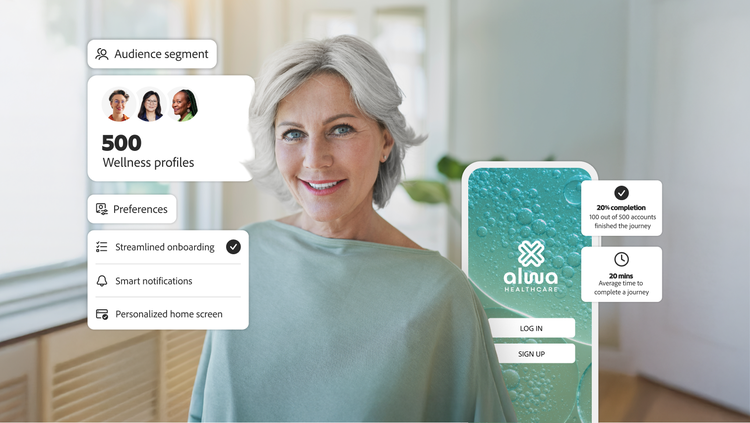
In today's digital-first space, chief marketing officers (CMOs) are under constant pressure to demonstrate ROI, drive revenue growth and build lasting customer relationships. Mobile app development has evolved from a technical function into a critical strategic lever for achieving these goals. A well-executed mobile strategy does more than just put your brand in a customer's pocket. It creates a powerful channel for personalised engagement, rich data collection and increased customer lifetime value.
This guide moves beyond the code to explore mobile app development. We will cover how a strategic app development process and thoughtful mobile application design can improve your customer engagement and deliver measurable business impact.
This post will cover:
Why mobile app development is a strategic imperative for enterprises.
At its core, mobile app development is the process of creating software for mobile devices, encompassing everything from the initial code to UX testing and customer marketing. For a CMO, a mobile application is a direct, ownable channel that connects a consumer with your brand. It's a strategic platform where your marketing teams can:
- Manage and disseminate personalised content.
- Share special offers and drive e-commerce.
- Make unique services available to build value and loyalty.
For a CMO, investing in a mobile presence is about securing a competitive advantage and building a resilient marketing ecosystem. A mobile application is a direct line to your most engaged customers and a powerful tool for achieving core business objectives.
- Deeper customer relationships: Mobile apps provide a platform for personalised, real-time interactions that build loyalty and reduce churn. By leveraging unified customer profiles, you can deliver tailored content, offers and experiences that make every customer feel understood.
- Increased revenue and lifetime value (LTV): A seamless mobile experience directly affects the bottom line. Brands see higher conversion rates and increased loan sales among mobile users thanks to real-time personalisation. By optimising the in-app journey, you can drive repeat purchases and significantly boost LTV.
- Rich, first-party data collection: A mobile app is a prime source for collecting valuable behavioural and preference data, which fuels your entire marketing strategy — from audience segmentation to journey orchestration.
The modern app development process.
For a CMO, the app development process isn't about coding languages, rather it's about a strategic workflow that aligns technology with business objectives.
- Define business objectives and KPIs: Start with the ’why’. Are you aiming to increase direct sales, reduce customer support calls or boost loyalty programme engagement? Establish clear KPIs — such as conversion rates, session length, retention rates and LTV — to measure success against your strategic goals.
- Unify and analyse audience data: A successful app is built on a deep understanding of the customer. Leverage a customer data platform (CDP) to create unified, real-time profiles that combine online and off-line data. Use analytics to map the complete customer journey and to identify pain points as well as opportunities that your app can address.
- Strategic mobile application design: Focus on the user experience (UX) as a driver of engagement. This phase involves creating an intuitive, valuable and seamless journey for the user. Ensure the design is not only visually appealing but also optimised for speed and performance, as even small delays can affect engagement and conversion.
- Orchestrate cross-functional collaboration: Effective mobile app development requires seamless collaboration between marketing, product, creative and IT teams. A work management solution can centralise workflows, automate review and approval cycles. It can also provide leadership with full visibility into project performance — ensuring strategic alignment and faster time-to-market.
- Launch, measure and optimise: The launch is just the beginning. Continuously monitor app performance against your KPIs using advanced analytics. Apply A/B testing and AI-powered personalisation tools to iteratively optimise every aspect of the in-app experience.
Key considerations in mobile application design for maximum impact.
Thoughtful mobile application design is what separates a functional app from an indispensable one.
- Personalisation at scale: Deliver 1:1 personalisation by leveraging AI and machine learning to serve the most relevant content, offers and product recommendations to each user. By connecting to real-time profiles, your app can adapt to a user's behaviour and context in the moment.
- Omnichannel consistency: Your mobile app should be a seamless part of a larger omnichannel strategy. Ensure the customer experience is consistent — whether they are interacting on your website, in-store or within the app. Data and insights should flow between all touchpoints to create a single, cohesive customer journey.
- Frictionless user journeys: Use journey analytics to identify where users drop off in key funnels, such as onboarding or checkout. By pinpointing these friction points, you can refine the design and workflow to create a smoother, more intuitive experience that guides users toward conversion.
Tying mobile app development to ROI.
For a CMO, every investment must be justified by its return. A mobile app offers a wealth of data to prove its value.
- Analytics and reporting: Utilise powerful analytics tools to monitor user behaviour, track funnel conversion rates and measure engagement with new features. A comprehensive analytics solution provides insights into how the app is contributing to overall business goals.
- Experimentation and optimisation: Go beyond static reports by creating an optimisation programme. Continuously run A/B and multivariate tests to improve key metrics. AI-powered tools can even automate the process of finding the best-performing experience for different audience segments, ensuring your app is always performing at its peak.
- Connecting in-app behaviour to business outcomes: The ultimate measure of success is connecting in-app activity to downstream revenue and LTV. By integrating your app analytics with a holistic customer journey analytics platform, you can see how mobile engagement influences long-term loyalty and profitability.
The future of mobile experiences.
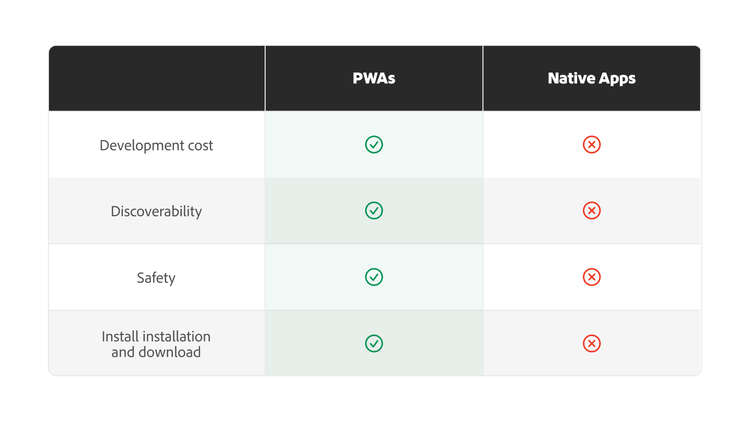
While native apps offer the richest experience, they're not the only option. Progressive web apps (PWAs) deliver fast, app-like experiences directly in a mobile browser, offering a cost-effective way to engage users without requiring a download from an app store. The strategic decision, native app, PWA or a hybrid approach, should be driven by your specific audience needs and business goals. Modern content management systems can help to create web properties and convert them into a PWA for easy mobile consumption.
As technology evolves with faster 5G and 6G connectivity, the possibilities for richer, more immersive AR and VR experiences on mobile will grow, making a strong mobile foundation more critical than ever.
Engaging customers in the moments that matter.
Mobile app development is a powerful strategic tool for CMOs focused on growth. By aligning your app strategy with core business objectives, leveraging unified data for deep personalisation and continuously optimising the user experience, you can create a high-performing marketing channel that drives revenue, loyalty and a significant return on investment.
Adobe Experience Cloud provides an integrated suite of solutions to manage, personalise and optimise your mobile app experiences. From unifying customer data with Adobe Real-Time CDP to personalising every interaction with Adobe Target and understanding the entire journey with Adobe Customer Journey Analytics, Adobe gives you the tools to turn your mobile vision into business results.
Recommended for you
https://business.adobe.com/fragments/resources/cards/thank-you-collections/generic-dx