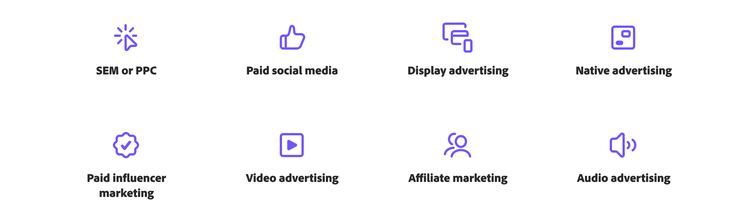
The paid media ecosystem offers a wide array of options tailored to suit varied marketing goals and budgetary constraints. Let's explore the most prominent types:
Search engine marketing (SEM) or pay-per-click (PPC).
SEM, often used interchangeably with PPC, revolves around bidding on specific keywords within search engines like Google and Microsoft Bing. When users search for those keywords, your ads are displayed prominently at the top or bottom of the search results pages, clearly marked as "Ad" or "Sponsored."
Social media advertising offers unparalleled targeting capabilities and a variety of engaging ad formats. Each platform presents unique opportunities and requires a tailored approach:
- Meta ads: Meta boasts an incredibly powerful targeting engine, allowing you to reach users based on a vast array of demographics, interests, behaviours and even customised audiences built from your existing customer data. Meta offers a diverse range of ad formats, including image ads, video ads, carousel ads and engaging story ads.
- LinkedIn ads: LinkedIn is the premier platform for B2B marketing. Its targeting options are specifically designed for reaching professionals, allowing you to filter by job title, industry, company size, seniority and even specific skills. LinkedIn offers various ad formats, including sponsored content, sponsored InMail, text ads and dynamic ads that personalise content based on user profile data.
- X ads: X, formerly Twitter, is an excellent platform for driving brand awareness, generating website traffic and fostering engagement with your target audience. Targeting options include keywords, interests, followers of similar accounts and tailored audiences created from your own data.
- TikTok ads: If your target audience skews younger, TikTok is a quickly growing platform to consider. It specialises in short-form video ads and offers a variety of creative formats and targeting options based on demographics, interests and behaviours.
- Pinterest ads: This visually driven platform is ideal for driving traffic and sales, particularly for ecommerce businesses. Pinterest users are actively seeking inspiration and are in a buying mindset.
Display advertising.
Display advertising encompasses the placement of banner ads, image ads and video ads on websites across the Internet. A significant portion of modern display advertising is driven by programmatic advertising, which utilises automated technology to buy and place ads in real-time.
Native advertising.
Native advertising seamlessly integrates with a website or platform's content, matching its format, tone and style to create a more engaging and less intrusive experience. Unlike traditional ads, which stand out as promotions, native ads appear as organic content. For example, a financial services company might publish a sponsored article on a business news site, offering investment tips while subtly promoting its financial planning tools.
Paid influencer marketing.
Paid influencer marketing leverages the credibility and reach of individuals with highly engaged audiences on social media or other platforms. By partnering with influencers, brands gain access to a trusted network, allowing them to authentically connect with target consumers. This approach enhances brand awareness, drives engagement and increases conversions, as recommendations from influencers often carry more weight than traditional advertising.
Video advertising.
Video advertising encompasses a range of formats, including pre-roll ads, mid-roll ads and in-stream ads on platforms like YouTube and other video hosting sites. Video is a highly engaging medium, making it a powerful tool for brand building and driving conversions.
Affiliate marketing.
Affiliate marketing operates on a performance-based model. You partner with individuals or businesses who promote your products or services and earn a commission for each sale or lead they generate.
Audio advertising.
With the popularity of podcasts and music streaming services like Spotify, audio advertising has become an increasingly important channel. Audio advertising allows you to reach audiences in a captive and engaging environment.