Scaling AI in creative workflows requires a thoughtful, measured approach. PwC's AI Business Survey notes that organisations that succeed typically begin with heavy experimentation, investing significant time in testing different tools, workflows and use cases before committing to enterprise-wide implementation.
- Task identification: Teams must determine which tasks AI can support effectively, such as generating initial concepts, producing asset variations or resizing content for different channels. They also need to identify the work that still requires human creatives, including strategic planning, brand interpretation and final quality assurance.
- Feedback loops: Creative teams should establish reliable methods for sharing what is effective and what is not. When designers, marketers and AI tool developers can evaluate outputs together, they can refine workflows, improve prompt strategies, provide feedback to improve backend performance and increase the quality and relevance of AI-generated creative over time.
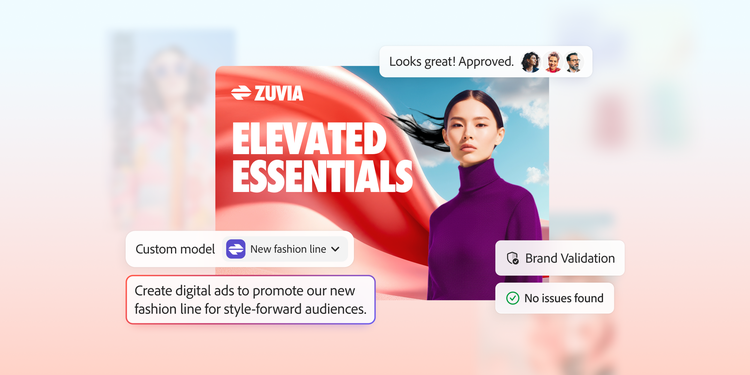
- Interoperability and governance: Teams need to integrate AI tools with existing systems for asset management, project tracking and content distribution. Governance frameworks should also address intellectual property, usage rights, approval workflows and brand review standards before AI-generated assets move into broader production.
Structured access for non-designers — Generative AI for creative teams can also help marketing coordinators, product managers and other non-designers create basic assets within approved systems. This can expand creative capacity, but it should be balanced with clear guidelines around what can be self-served and what requires professional creative oversight.
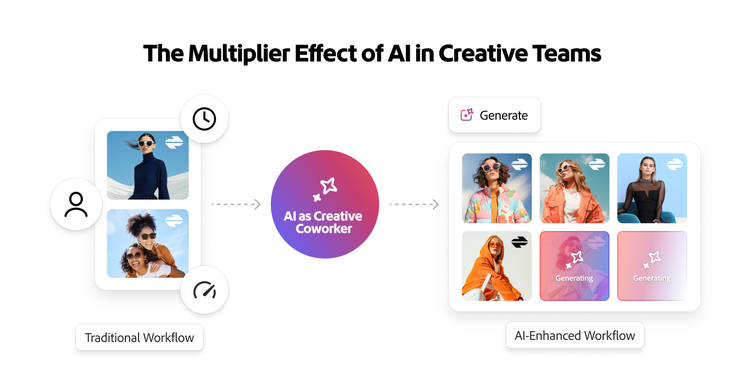
Together, these practices help creative departments move from isolated AI experiments to a more connected content workflows. Instead of treating AI as a stand-alone tool for individual tasks, teams can embed it into a broader system for planning, producing, reviewing, approving and distributing creative assets.
Establishing an efficient content supply chain requires balancing creative direction, AI-automated production and human enhancement at every stage. The most effective enterprises build feedback and refinement into their workflows, continuously optimising based on results, governance needs and evolving AI capabilities.
The future of creative work with AI.
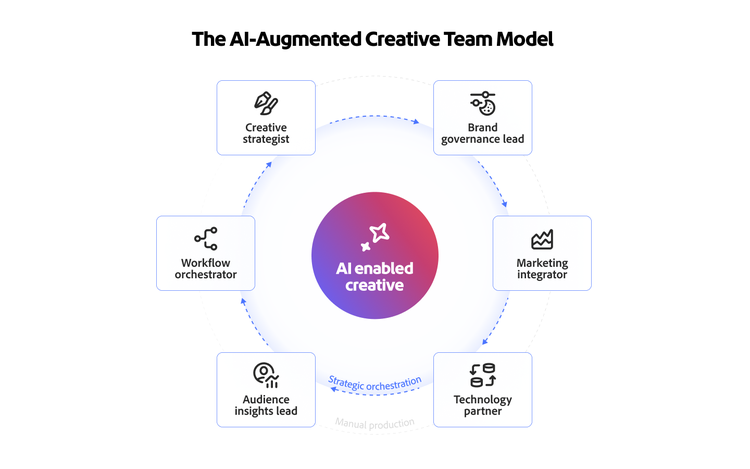
Creative work, when paired with AI, changes how individual creatives and teams operate. AI, when tested and configured effectively, adds measurable value to creative teams while transforming individual roles and team structures. Creative teams will anticipate needs, identify opportunities and drive strategic initiatives that use enhanced production capabilities.
The creative professionals who thrive in this environment will be those who view AI as an amplifier of their capabilities rather than a threat to their relevance. By focusing on strategy, originality and human connection, creative teams can deliver work that no AI system can replicate and produce at scale.
Explore Adobe Firefly's generative AI capabilities to prepare your creative teams for a higher demand for content from your customers.