
An annual business plan serves as a strategic roadmap for a company and its employees. Built around a series of progressive milestones, it guides the organisation towards a broader vision – defining where the business aims to be by the end of the year.
Annual business plans allow organisations to allocate resources effectively, improve performance, and work towards defined objectives over the coming year. In essence, annual planning functions as a strategic guide for the year ahead – translating long-term vision into an actionable, short-term plan.
Whether working from an annual business plan template or building one from the ground up, a company will review its performance from the previous year. The result is an annual plan that gives everyone in the organisation a clear understanding of the direction ahead and how they will get there.
In this guide:
Why annual planning is crucial for businesses
An annual business plan is a yearly framework that empowers teams to set specific business goals aligned with the company’s overarching strategy. It holds teams accountable for delivering stated objectives – which in turn promotes consistent progress tracking. The annual plan connects directly to where a company wants to be in three to five years, defining what needs to be achieved over the next year to advance towards longer-term targets.
A well-formulated annual plan also fosters collaboration within internal teams, incentivising greater productivity. Additional benefits of an annual business plan include:
- Providing a stronger connection to the strategic plan.
- Putting the mission of the organisation into daily practice.
- Giving employees a clear sense of direction within their departments or roles.
Aligning teams and departments towards a common goal boosts communication and camaraderie – but just as importantly, it sets short-term expectations. Short-term expectations can give teams clear direction without getting lost in the detail of five-year plans.
Annual planning also gives your organisation the agility to remain adaptable. Through ongoing planning, you can respond to unforeseen events, re-evaluate priorities, and address changing circumstances – all without losing sight of your longer-term goals.
With benefits spanning team direction, market adaptation, managing unforeseen challenges, and strengthening strategic execution, an annual plan is essential for businesses of all sizes.
Creating an annual plan: A step-by-step guide
Before drafting an annual plan, teams should first examine historical data to establish a baseline for goal-setting. Reviewing previous annual plans and evaluating their outcomes equips your team with the insight needed to shape an effective plan for the year ahead.
Before creating an annual plan
- Step 1: Analyse past performance. Before developing an annual plan, analyse past performance to set realistic goals, respond to any shifts in the market, and confirm your direction. Don’t focus solely on areas for improvement – consider your achievements too, and how everything connects back to your business objectives. Use data to inform your decisions, as the choices you make here will have a bearing on everything that follows.
- Step 2: Identify your goals. With your past performance analysed, use those insights to define your goals. As you set each goal, consider whether it is realistically achievable within the given timeframe. Drawing on historical data from your performance review, you should be better placed to understand what is required to achieve your goals compared with the previous year.
- Step 3: Determine your budget. Knowing your budget is essential to building an accurate annual plan. There is no need to allocate it at this stage – simply establishing what you have to work with enables you to define which objectives are within reach.
- Step 4: State your core values. Core values are the principles, beliefs, and philosophies that shape your organisation’s culture and underpin its long-term vision. Your goals should always align with these values. Annual plans are valuable, but an organisation that is perpetually reactive risks drifting from its original strategy. When defining your annual plan, refer back to your core mission and vision statements to ensure continued alignment.
- Step 5: Consider key problems and issues. Reflecting on the challenges and setbacks of the previous year allows you to address them directly in your annual plan, improving the prospects of better outcomes going forward.
Creating an annual plan
- Step 1: Define goals and objectives. Clear goals are the foundation of any annual plan. Once defined, they can be broken down into actionable objectives, transforming your plan from concept into something concrete and achievable. Consider using goal-setting frameworks such as SMART goals or stretch goals to structure your approach.
- Step 2: Develop strategies and initiatives. Consider how you will achieve each goal in practical terms. For instance, if you want to increase footfall in your store, what specific actions will drive that? Your plan needs concrete strategies, targeted initiatives, and clear steps that move you closer to each goal.
- Step 3: Allocate resources and assign responsibilities. This step involves distributing your budget, assigning roles, and establishing clear accountability. Where possible, responsibility should sit with those directly involved in delivering specific goals. Skipping the budgeting step will make this considerably harder and may compromise the results you achieve.
- Step 4: Implement and communicate the plan. With your goals, objectives, initiatives, and resource allocation confirmed, it’s time to bring everyone on board. Roll the plan out across the organisation using clear, consistent communication channels. To build genuine momentum, go beyond the occasional email – bring teams together, communicate goals clearly, and ensure everyone understands where responsibility lies.
- Step 5: Monitor, evaluate, and adjust. Rolling out your annual plan is not the end of the process. Regular progress checks, KPI reviews, and a readiness to adapt are all essential – it is rare for any plan to unfold exactly as intended.
Key components of an effective annual plan
There are many annual business plan templates available to help structure your plan. In general, the key components of an effective annual plan comprise the following elements:
- Performance review: Sound decision-making and goal-setting in an annual plan depend on solid analysis. Reviewing the previous year’s successes and setbacks – supported by data and reports – provides a clear, objective picture of what needs to change, free from bias or instinct alone.
- Goal frameworks: Putting your annual plan together is one thing; delivering it is another. Goal setting frameworks provide structure and direction, helping to ensure you meet the plan you have set out. They also break goals down into manageable objectives, supporting both clear direction and accountability.
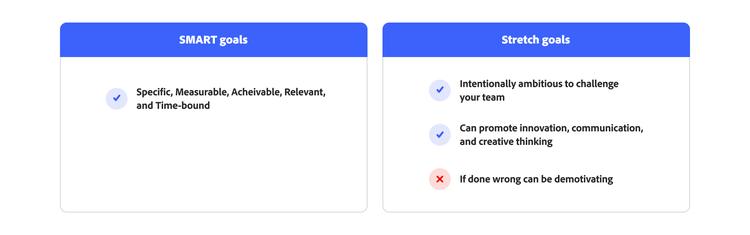
- SMART goals: SMART goals are a goal-setting framework centred on defining objectives that are specific, measurable, achievable, relevant, and time-bound.
- Stretch goals: Stretch goals are deliberately ambitious targets designed to challenge your team. Used well, they can foster innovation, communication, and creative thinking; however, when poorly implemented, they risk becoming demotivating. Stretch goals can be a worthwhile complement to other goal-setting frameworks.
- OKR: OKR stands for objectives and key results. The OKR goal-setting framework centres on defining a goal (your objective), identifying the results that contribute to that objective (key results), and then monitoring progress. The outcome is clear, measurable results that connect to the broader whole.
- KPI: KPI is an abbreviation of key performance indicator(s). A form of performance measurement, KPIs provide a means of evaluating areas such as revenue, profit margins, customer satisfaction and client retention – to name a few.
- Strategic action plan: The strategic action plan is best understood as an informational roadmap – a set of specific actions needed to achieve your Annual plan. It is not the idea itself; it is the answer to ‘How do we get there?’
- Resource management: Resource management centres on planning the budgets, personnel, and tools required to meet your goal. Accordingly, you need a clear goal in mind and a sound understanding of how you intend to achieve it.
- Milestones and checkpoints: To reach where you want your organisation to be within the year, break your larger goals into smaller targets set against specific timelines. When setting your deadlines, include metrics that indicate how successfully you have achieved your goals.
- Contingency and buffer plans: Should your organisation’s cash flow come under pressure, it is wise to establish emergency financial reserves before they are needed. Maintaining a cash reserve or preserving capacity within a line of credit are both sound contingency measures. Compare your actual financial results against your projections throughout the year, so you can identify financial challenges before they spiral out of control.
Creating an Annual plan is more straightforward when you have the right tools. These may include an annual business plan template to organise your planning efforts, along with a range of software solutions for drafting business and strategy plans and tracking goals.
Annual plan vs. strategic plan
In the strategic planning process, an organisation articulates or reaffirms its mission, establishes a vision of what it seeks to achieve over the coming years, and sets strategic priorities to bring that vision to life.
The strategic plan and the annual business plan work in tandem. The strategic plan establishes an overarching vision of what the organisation aims to achieve, whilst the Annual plan provides the practical detail of the work to be done over the coming year.
The annual business plan draws its priorities from the strategy, whilst the strategy relies on the Annual plan to put its ideas about the organisation’s vision, mission, purpose, and goals into practice. Logistics, projects, resource allocation, and timing are all addressed within the Annual plan.
Getting Started with Annual Planning
The right tools make annual planning considerably more straightforward. These may include an annual business plan template to organise planning efforts, along with a range of software solutions for writing business and strategy plans.
As you execute your annual plan, a work management platform with strategic planning tools can prove invaluable – enabling your team to collaborate productively, create content, allocate resources, track milestones, and manage complex processes. With features such as Workfront’s scenario planner, you can simplify the annual planning process, adapt to market shifts through continuous planning, compare scenarios for risk and effectiveness, and stay ahead of the competition. Workfront Goals enables you to share, enact, and monitor goal-setting frameworks and results.
With the right tools, plans, and processes in place, you can develop a well-conceived and effectively executed annual business plan – one that ensures the year ahead lives up to your expectations.
Recommended for you
https://business.adobe.com/fragments/resources/cards/thank-you-collections/workfront