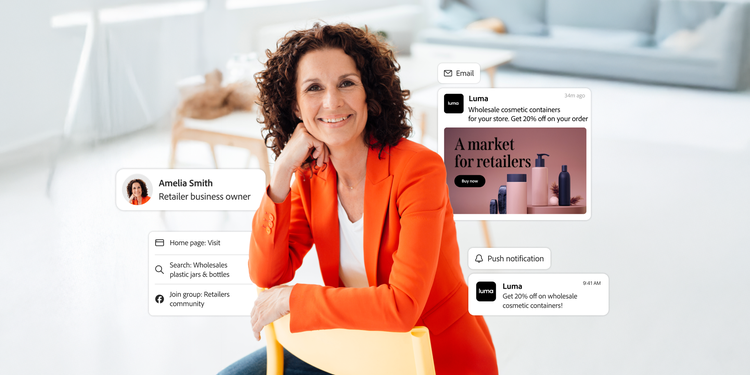
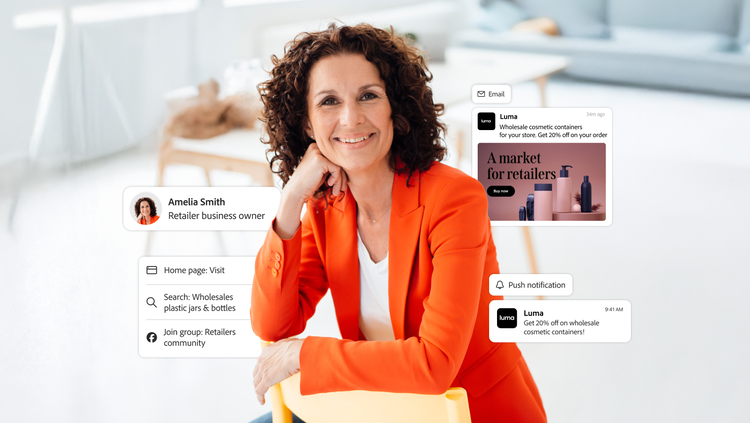
Quick definition: Cross-channel marketing is the ability for brands to connect with their customers across multiple communication channels, including email, social media, SMS, and mobile apps.
Key points to note:
- Cross-channel marketing enables brands to reach customers on the most relevant and preferred channels throughout the customer journey.
- Brands should avoid siloing their teams by channel to orchestrate cross-channel campaigns more effectively.
- Cross-channel marketing can help address issues with inconsistent messaging across different channels and over- or under-communication
This post will cover:
- What is cross-channel marketing?
- What is the difference between cross-channel marketing and multichannel marketing?
- What problems can a cross-channel strategy solve?
- What are the benefits of cross-channel marketing?
- How does a company launch a cross-channel marketing campaign?
- How can companies better understand how to reach their customers?
- How will cross-channel marketing continue to improve in the future?
What is cross-channel marketing?
Cross-channel marketing enables marketers to reach customers across a range of channels, including:
- Web
- Mobile
- Apps
- SMS
- Call centre
- In-store
- Direct mail
Cross-channel marketing serves a dual purpose: acquiring new customers while maintaining ongoing dialogue with them across the channels they use throughout the customer lifecycle – from acquisition through to loyalty and retention. Marketers must ensure they can create cross-channel experiences that are relevant to each stage of the buying journey.
Difference between cross-channel marketing and multichannel marketing
Cross-channel marketing connects customer experiences across different channels within a single campaign. For instance, if a customer creates an online account with a brand, the next step in the cross-channel strategy might be to send them a follow-up email. The aim is to make the onboarding experience as effective as possible.
Multichannel marketing, by contrast, is broader and less integrated. A company may use multiple channels to engage with its customers, but these efforts typically span more than one campaign.
What problems can a cross-channel strategy solve?
Inconsistent messaging is a common challenge for companies. They may send customers a 50% off voucher one day, followed by a 20% off voucher the next – creating a confusing and disjointed customer experience. A cross-channel strategy addresses this by ensuring consistent communication across all channels.
Beyond inconsistent content, contact frequency can also become problematic when teams operate in silos. Without visibility into how each team is managing customer communications, a company risks sending customers redundant or poorly sequenced emails and SMS messages – ultimately frustrating them and driving them towards unsubscribing.
What are the benefits of cross-channel marketing?
- Communicate on preferred channels with personalised offers.
- Increase conversions with engaging experiences.
- Deliver seamless interactions tailored to each stage of the journey.
- Differentiate messaging for new vs loyal customers.
- Gain deeper insights to respond in meaningful ways.
How does a company launch a cross-channel marketing campaign?
Launching a cross-channel marketing campaign requires careful strategic planning. Begin with the right technology and a clear understanding of your customers, teams, and channels. Here’s how to build a strong foundation:
1. Evaluate the current technology stack
A thorough audit of the existing technology stack is the natural starting point for any marketing team. It is not uncommon for organisations to rely on legacy marketing technologies that have been in use for decades. One team might use a dedicated platform for mobile messaging, while another operates an entirely separate system for email – and so on. This fragmented approach frequently proves ineffective, as marketing messages become inconsistent, off-brand, or disjointed. Furthermore, customer data remains siloed across these disparate systems, preventing a unified view.
2. Map technologies across all channels
The first step for marketing teams is to establish a clear picture of which technologies serve each channel. It is equally important to review team structures, as separate teams may be responsible for email, mobile, and direct mail – and these internal teams often operate in isolation from one another.
3. Analyse customer data
Organisations must think carefully about how they approach their customer data. A customer may respond more effectively to a direct mail campaign than to an email campaign – but if the company’s technology is siloed, that preference will never come to light. Cross-channel marketers need to understand not only who their customers are, but also where those customers sit in the journey and which channels they use. The key question marketers should ask is: What channel will generate the highest conversion rate for a given customer segment?
4. Build a phased rollout approach
A phased approach to cross-channel marketing gives organisations the best foundation for success. The starting point is identifying a small number of channels to improve or prioritise. If the focus is on improving email campaigns, for example, the first step might be tailoring email content to reflect where the customer sits in the journey. Once that foundation is established, additional channels that best serve the audience can be introduced progressively as marketing maturity develops.
Cross-channel marketing examples
The following examples illustrate how organisations across different industries can use cross-channel marketing to create cohesive customer experiences that deliver measurable results:
- Telecommunications: A telecoms company sends an SMS inviting users to enter an online competition for free data. The link directs them to a landing page, followed by a personalised email featuring exclusive offers based on their browsing activity.
- Ecommerce: An online fashion retailer targets Instagram users with ads for a new collection. Shoppers who click are retargeted via email with cart reminders and a discount code, followed by in-app push notifications about similar items.
- B2B: A software company promotes a new whitepaper via LinkedIn ads. Once downloaded, the lead enters a nurture flow comprising email follow-ups, a personalised webinar invitation, and an outreach call from the sales team – with each touchpoint reinforcing the same message.
- Healthcare: A healthcare provider emails patients about flu jab availability, follows up with SMS reminders to book appointments through its patient portal, and shares educational content on its mobile app and social channels.
- Retail: A department store sends loyalty members an in-app push notification for an exclusive in-store sale, follows up with an email coupon, and shares real-time updates via social media.
- Technology: A tech company announces a product launch via email, shares feature teasers on X (Twitter) and LinkedIn, delivers an in-app walkthrough for current users, and posts support Articles for further education.
These cross-channel strategies deliver consistent, personalised experiences that increase engagement, loyalty, and performance across the customer journey.
How can companies better understand how to reach their customers?
Understanding customers is fundamental to effective brand strategy. Brands need to build a comprehensive picture of their audience – not just who they are and how they engage with the brand, but also demographic details such as location and preferred language. In practice, brands can track actions such as email opens or responses to text notifications, and use this data to identify meaningful patterns in customer behaviour.
How will cross-channel marketing continue to improve in the future?
Cross-channel marketing is evolving rapidly, with artificial intelligence (AI) and machine learning (ML) at the heart of its future. As of June 2025, AI is increasingly embedded into marketing platforms, enabling brands to deliver smarter, faster, and more personalised experiences across every touchpoint.
In the coming years, significant improvements are expected in:
- Real-time personalisation: AI will make it easier to deliver tailored messages instantly, based on a user’s behaviour, preferences, or location – whether they are browsing a website, opening an email, or using an app.
- Predictive customer journeys: Machine learning models will anticipate the content or channel a customer is most likely to engage with next, enabling marketers to adapt their strategies proactively.
- Automated content generation and optimisation: Generative AI will assist in producing copy, images, and offers optimised for each channel and audience segment – saving time and improving performance.
- Unified customer profiles: Cross-channel data will be automatically consolidated and analysed, giving marketers a clearer picture of each customer and enabling consistent experiences across marketing, sales, and support.
Ultimately, AI will help brands become more responsive, data-driven, and customer-centric – turning cross-channel marketing into a truly real-time, adaptive discipline.
People also view:
Other glossary terms:
Customer Journey Orchestration
Related Adobe products:
Let’s talk about what Adobe can do for your business.
FAQs
What is cross-platform marketing?
What is a cross-marketing strategy?
A cross-marketing strategy is a collaborative approach in which two or more businesses partner to promote each other’s products or services to their respective customer bases. This type of partnership enables all participants to expand their reach, raise brand awareness, and drive greater sales by engaging new and complementary audiences.
Example: A fitness clothing brand partners with a health supplement company to co-promote products through social media campaigns and email newsletters, reaching both brands’ customers with relevant offers.
What is a cross-channel sales strategy?
Recommended for you
https://business.adobe.com/fragments/resources/cards/thank-you-collections/generic-dx