Search Engines vs. AI Search Engines: Key Differences | Adobe Australia

Search engines vs. AI search engines vs. AI platforms.

With AI search, customers are finding answers before they ever reach a website — and the platform delivering those answers may not be one that brands have optimised for. Buyers may scan a traditional results page, read an AI-generated summary, ask a follow-up question in a chatbot or use a voice assistant to get a quick recommendation.

These experiences often overlap, which is why the terms can get confusing. A search engine can include AI-generated answers. An AI assistant can search the web. An AI platform can power the tools behind both.

But they are not the same thing. Search engines, such as Google and Bing, help users find information. AI search engines help users get synthesised answers. AI assistants, such as Adobe for Business AI Assistant, help users ask questions or complete tasks through conversation. AI platforms give organisations the infrastructure to build and manage AI-powered systems.

For enterprises, the distinction matters because customers may encounter a brand in any of these moments. Visibility now depends on whether your content can be found, understood, cited and trusted across multiple discovery paths.

In this article, you will learn about:

Search engines.

Search engines such as Google, Bing and Yahoo remain one of the primary ways people find information online.These indexing-based systems help users search the web, compare sources and move from a question to a set of relevant results.

Traditional search engines work through three core steps: crawling, indexing and ranking. Crawlers discover web pages and follow links across the web. Search engines then organise those pages in an index, which is then retrieved by someone who enters a query. When results are shown, the search engine ranks pages based on how relevant and useful they are for that query.

Many signals can influence how pages appear in search results, including relevance, content quality, site structure, links, freshness and trust. Google’s quality guidance uses the concept of E-E-A-T (Experience, Expertise, Authoritativeness and Trustworthiness) to help evaluate whether content is helpful and reliable. For brands, these signals are especially important because search visibility depends on more than just matching the right keyword. The content also needs to demonstrate that the brand is a credible source on the topic.

Historically, search performance was closely tied to rankings and website visits. A user entered a query, reviewed the results, clicked a link and continued the journey on a brand’s website. Search still drives traffic, but the results page now includes more than traditional blue links. Users may also see featured snippets, knowledge panels, local packs, shopping modules, video results and AI-generated summaries. These elements can influence what users learn, which brands they notice and whether they decide to click through.

Generative AI is the newest extension of this shift. In Google Search, features such as AI Overviews and AI Mode can synthesise information from multiple sources and support more complex questions. In Microsoft Copilot Search, AI summaries and visual search provide similar benefits. These features are different from an AI-native search tool, where the experience is built around a generated response. In traditional search, AI is being added to a system that still includes ranked links, search features, ads and source pages.

This distinction is important for enterprises. A brand may influence a customer before earning a click, especially if it appears in a snippet, a local result, a cited source or an AI-generated summary. A user may notice the brand, compare it with others, search again later or return through another channel. They may also get the information they need without clicking a webpage (a traditional blue link) at all.

That makes measurement more complex. Clicks and rankings still matter, but they do not tell the full story.With the rise of zero-click searches, enterprise teams must monitor impressions, visibility, citations, engagement and assisted conversions. Search is now about whether your brand is present at all stages of the customer journey.

AI search engines.

AI search engines are built around direct responses. Instead of starting with a list of links, they generate an answer to a user's question and may include citations, source links or suggested follow-up prompts.

While many AI search engines provide direct answers, they are not all designed for the same purpose. Some focus on retrieving and synthesising information from the web to deliver sourced responses. Others function as broader AI assistants, combining search with capabilities such as content creation, workplace integrations, task automation and advanced reasoning.

Tool
Primary role
Common use case
Perplexity
AI answer engine
Web research, source-backed discovery and topic overviews
ChatGPT
AI assistant
Writing, research, analysis, planning, coding and multimodal assistance
Gemini
AI assistant connected to Google’s ecosystem
Search-supported answers, multimodal reasoning and Google-connected workflows
Claude
AI assistant
Long-form analysis, writing, document review and coding
Microsoft Copilot
Workplace AI assistant integrated with Microsoft 365
Productivity, document analysis, meetings and email assistance
Grok
AI assistant with search and real-time information features
Conversational answers, trending topics and current events

Many AI search systems use retrieval-augmented generation (RAG), which means the system retrieves relevant information from available sources and then uses a language model to generate a response. When the answer includes citations, users can review where the information came from. For brands, the sources behind the answer matter because visibility may come from being cited or summarised, rather than from only earning a click.

User behaviour also changes in AI search engines. Traditional search queries are often short, averaging around three to four words. AI search engine prompts are usually longer and more conversational, averaging about 23 words. A traditional query might be “best customer analytics platform,” while an AI search prompt might ask, “What are the best customer analytics platforms for a global retailer that needs real-time personalisation and strong governance?”

For enterprises, this creates a new visibility challenge. A brand may rank well in traditional search but doesn't rank well in AI-generated answers. It may also appear in an AI answer without earning a traditional click, which means the performance metrics brands need to track are different. Teams need to understand not only where they rank, but also whether AI search engines can accurately recognise, summarise, recommend and cite the brand.

AI platforms.

AI platforms are the infrastructure organisations use to build, deploy, manage and improve AI-powered systems. A user prompts a conversation with AI assistants, while an AI platform is the software environment that provides the infrastructure to build, deploy, manage and improve AI-powered systems.

AI platforms can support machine learning, generative AI, model management, data workflows, governance, testing and business applications. Platforms used by technical teams, data teams and business teams to create AI-powered processes can include IBM watsonx, Google AI development tools and Microsoft Azure AI.

In an enterprise setting, teams need data, workflows, permissions, monitoring, testing and ways to connect AI outputs to real business needs. AI platforms often support capabilities such as:

  • Orchestration to bring data, models, tools and workflows together in one shared environment.
  • Decision support to evaluate scenarios, compare outputs, surface insights and recommend next steps.
  • Visual modelling to help teams build, test and refine models through visual interfaces, notebooks or open-source frameworks.
  • Content generation to create text, images, summaries and other assets using approved business data and rules.
  • Automated classification to organise customer feedback, support tickets, documents and other unstructured content at scale.
  • Data extraction to pull key details from long documents, reports, transcripts and datasets so teams can act faster.

The practical difference is clear: AI search engines and assistants support discovery and task completion, while AI platforms help organisations build, manage and scale AI-powered systems across the business.

Key differences between search engines, AI search engines and AI platforms.

The table below summarises how each category functions in practice.

Category
Search engines
AI search engines
AI platforms
Primary function
Help users find web pages and other online results.
Help users get direct answers, often with sources.
Help teams build, manage and improve AI systems.
User experience
Users enter a query and review results, snippets, ads and search features.
Users ask a question and receive a summarised answer with follow-up options.
Teams use tools, data, models and workflows to create AI-powered applications or processes.
Output type
Ranked links, snippets, maps, images, videos, shopping results and AI-enhanced search features.
Natural-language answers, citations, summaries, comparisons and recommendations.
Models, applications, workflows, dashboards, classifications, generated content and extracted data.
Source usage
Relies on crawled and indexed web content, along with other structured data sources.
Retrieves and summarises information from web pages, connected data or indexed sources.
Uses enterprise data, models, APIs, development tools and governance settings.
Interaction model
Usually starts with a keyword, phrase or natural-language query.
Usually starts with a longer, more specific question or prompt.
Usually starts with a business need, technical workflow or application build.
Business impact
Helps brands earn visibility, traffic, awareness and demand through search results.
Helps brands appear in direct answers, citations, comparisons and AI-generated recommendations.
Helps organisations build AI use cases that support operations, customer experiences and decision-making.

These categories can overlap. Search engines can include AI-generated summaries, assistants can search the web and AI platforms can power search or assistant experiences behind the scenes. The simplest distinction is their purpose: search engines help users find information, AI search engines generate answers and AI platforms help organisations build and manage AI-powered systems.

How AI assistants fit into enterprise search behaviour.

AI assistants give users a more conversational way to discover answers or complete tasks. Some are built around voice, like Siri, Alexa and Google Assistant. Others, including ChatGPT, Claude, Gemini and Copilot, are more commonly used through text-based prompts, workplace tools or web interfaces. Tasks can range from setting up a timer or checking the weather to summarising a document, drafting an email, comparing vendors, finding a nearby store or answering a question based on web results.

AI assistants can change the starting point for discovery. Users may ask for a recommendation, summary or shortlist before ever visiting a search results page. In those moments, the assistant helps decide which information is surfaced first.

For brands, accuracy and consistency matter more in assistant-driven discovery.When an assistant summarises a company, recommends a product category or answers a local question, it relies on clear information. It’s always important to verify the sources that AI assistants provide, as they can make mistakes.

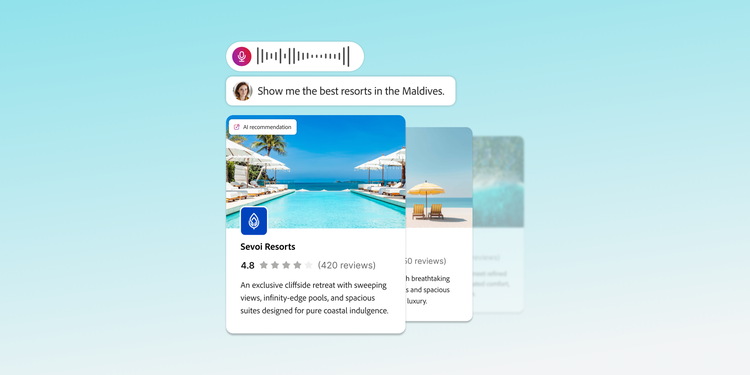
While AI assistants can be accessed through voice or text, voice interactions often create different search behaviours and user expectations.

How voice search differs from other modes of AI.

Voice search is often used in moments when users want a fast, direct response, such as on a phone, in a car, through a smart speaker or on a connected home device. These queries tend to be more conversational than typed searches because users speak in full questions.

A typed search might be “cybersecurity IT support San Jose.” A voice search is more likely to sound like, “What IT companies near me specialise in cybersecurity?”

That phrasing changes what the user expects. Voice searches tend to use phrases such as “near me,” while a typed search may use a specific location or city. B2B buyers may be looking for software vendors, checking technical requirements for software, finding pricing information or comparing options between vendors. In the B2C space, consumers typically are interested in getting a quick solution to their issue, such as finding directions, checking store hours, confirming product availability or getting a quick recommendation. The user is usually looking for one useful answer, not a full page of options.

For brands, that makes accuracy and consistency especially important. Business names, locations, hours, product details, reviews and structured data should be clear and up to date. When a voice assistant has limited space to respond, unclear or inconsistent information can make a brand easier to overlook.

Become cited by AI search engines and AI voice assistants.

Traditional search engines and AI search engines can both help your brand become visible when customers look for information, products, services or solutions. However, visibility alone is not the same as achieving business outcomes. While search engines and AI search experiences can connect users with your content, only an AI platform provides the infrastructure organisations need to build, manage, scale and optimise AI-powered experiences that support broader business goals.

As customer discovery shifts toward AI-generated answers and conversational interactions, brands must also adapt how they are found. AI search engines and AI voice assistants increasingly rely on AI crawlers to discover, interpret and evaluate content. Brands that fail to optimise pages for these systems risk becoming invisible in AI-generated responses, even if they continue to rank prominently on page one of traditional search engine results pages (SERPs).

To remain visible, organisations need content that is accurate, authoritative and easy for both search engines and AI systems to understand. Consistent brand information, structured data, trusted sources and clear answers to customer questions can help to improve how AI search engines and voice assistants reference and recommend a brand.

Explore Adobe brand visibility to learn how enterprise teams can become visible by LLMs and in AI-embedded environments.

Disclaimer: Adobe uses Anthropic's Claude models to power certain AI capabilities across its product portfolio. The information in this article is strictly for informational purposes, comparing models independent of the tools Adobe uses, which utilise Anthropic’s Claude models.

Let’s talk about what Adobe can do for your business.

Get started