Personalised ecommerce experiences can delight customers while driving serious results for the companies that deliver them. However, customers’ perceptions of “great” experiences are quickly evolving — and are guided by the very best brand experiences out there. Today, customers want to feel consistently known, understood and served with uniquely contextualised experiences across touchpoints and channels, all in real time.
Unfortunately, many companies struggle to deliver real-time one-to-one personalisation that customers have come to expect. Without a clear path to success, ecommerce merchants often try to fill gaps in their customer experience with stand-alone tools — creating a fragmented stack of marketing and commerce solutions, resulting in more complexity, data silos and a lacklustre experience. Further, in the current economic environment, companies are facing shortages of talent and other resources. In fact, 74% of companies said they lack the full range of in-house talent needed for effective personalisation at scale.
Personalisation is hard — a clear AI strategy can help
If we look at companies that are delivering superior experiences today, they excel in doing two things to manage this challenge:
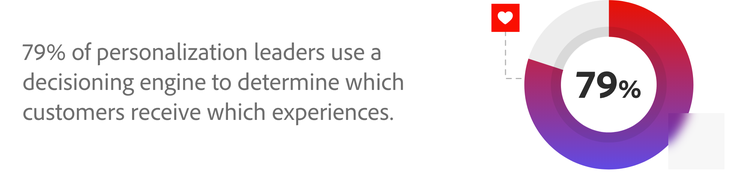
- They have a clear personalisation strategy — 75% of personalisation leaders have dedicated time and energy to set their personalisation strategy.
- They rely on artificial intelligence (AI) and machine learning (ML) models to help them to deliver personalised experiences at scale. As Deloitte Digital highlights, “It’s about leveraging the best of humans with machines to deliver the most relevant messages and experiences, automatically.”
Starting with a clear strategy and supporting employee efforts with AI enables companies to get more value out of fewer resources and deliver personalised shopping experiences to every customer, every time. In this article, we explore five ways to use AI to implement personalised shopping experiences at scale. With this knowledge, ecommerce merchants will be empowered to set their own AI strategy and seek out solutions that are most relevant for them, driving results for their business — and engagement from their customers.
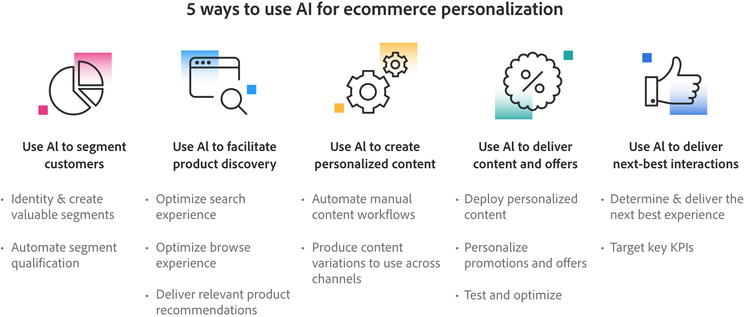
Strategy 1 — Use AI to segment customers
At its core, personalisation is about using customer data to create and deploy experiences tailored to customers’ unique needs and contexts. Segments serve as the critical bridge between customers’ data and the experiences they receive. Today, many ecommerce merchants segment their customers manually based on basic demographic data — like location, age and gender — and limited behavioural data. Unfortunately, that process is slow, lacks granularity for hyper-personalised experiences and may not consider other valuable data types, such as real-time behavioural or transactional data — for example, items viewed on the site, categories browsed, historical purchases and more.
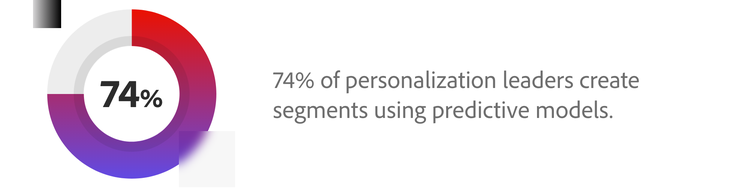
Using AI to identify and create valuable segments
Personalisation leaders use AI models to easily identify and create segments without involving data analytics teams. AI tools feed customer behavioural data (ads clicked, emails opened, in-store activity), ecommerce data (product views, preferences, past purchases, returns) and data from other sources (loyalty data from CRM systems) into models that score customers’ likelihood of taking certain actions in the future. This number is called a propensity score.
For example, an AI model could identify customers who previously returned products and haven’t visited the site in six months as “high propensity to churn” and turn that output into a segment. The merchant can then re-engage customers in that segment through customer support, targeted discounts, ads or other mechanisms. While some AI solutions operate in a black box, the best solutions provide transparency along with automation, showing the reasoning behind propensity scores — such as “customer has not viewed product pages in a certain category.”
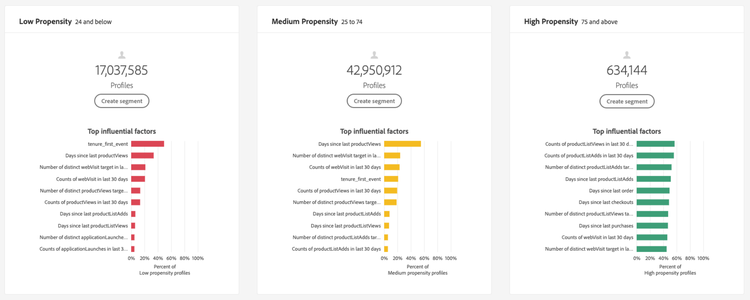
Propensity scores and factors driving each score are created using Customer AI in Adobe Real-Time CDP.
Automating segment qualification in real time
In addition to using AI to identify and create powerful segments, personalisation leaders often automatically shift customers from one segment to another in response to real-time behaviours. For example, if a customer has only shopped in the “men’s” category, but on Valentine’s Day shops in “women’s,” that customer could be automatically added to a “women’s gifts” segment in real time and immediately receive a different site experience during that browsing session to highlight best women’s gifts and related holiday promotions.
As a shopper, if you’ve ever purchased a one-time product — such as new winter boots — then received endless ads and promotions for those same boots you just bought, you know the headache of backward-looking, poorly designed segments. Instead, propensity-based AI models can understand your past purchase behaviour and place you in a high propensity segment for complementary products, such as thick socks that match your boots, empowering the brand to deliver a much more relevant and helpful experience to you.
With AI identifying and creating impactful segments and automating customer segment qualification, merchants can save time while creating more powerful, personalised experiences for their shoppers.
Strategy 2 — Use AI to facilitate product discovery
When shoppers arrive on ecommerce sites, merchants have only seconds to present the most relevant products to them. There are three opportunities that are most impactful for showing customers what they are looking for — site search, category browsing and product recommendations. AI can play a role in all three to show every customer the right product to drive conversion.
Optimise the search experience
Nearly 40% of visitors use the search bar to find the right products. And those customers convert nearly twice as much as non-searchers — so getting search right is critical. However, over half of top-performing ecommerce sites have weak search performance and most of those gaps can be addressed with AI-driven capabilities that personalise and optimise ecommerce site search.
Strong search solutions provide suggestions as customers type, seamlessly handle typos and offer synonyms in cases when a shopper uses different terminology than the brand uses — like searching for “jacket” instead of “coat.” Even more powerfully, AI-powered search solutions can use shoppers’ behavioural actions taken on the site to deliver the most relevant products to each shopper. For example, if a shopper spends time in the “running gear” section of the site, when they search “pants” AI algorithms can re-rank search results to put running pants ahead of denim pants for that shopper in real time.
When searching for a product in a large catalogue, shoppers often need help narrowing their search to the products they are looking for (colours, sizes, materials, types and more). Merchants often set up filters in a sidebar to enable customers to narrow their results and find what they need. AI-powered search solutions dynamically suggest filters depending on the search. For example, a hardware ecommerce store could show “screw length” as a dynamic facet for a search for “screws” rather than a standard set of colour, material or other less useful filters.
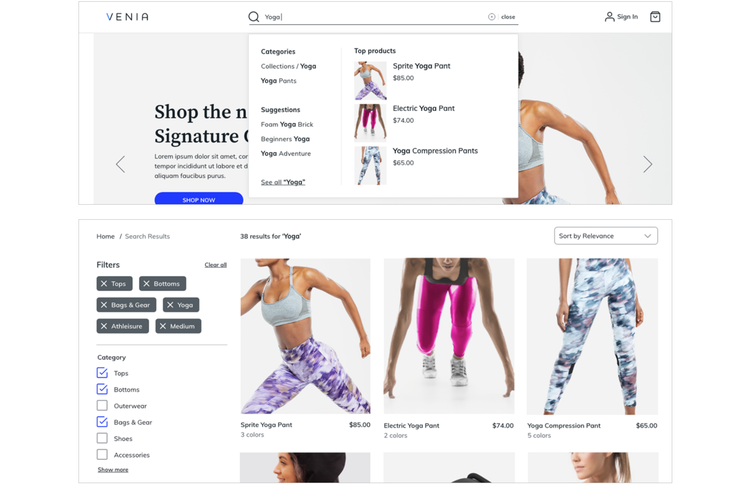
Live Search in Adobe Commerce suggests searches as shoppers type and uses AI to surface the most relevant filters for each search.
These AI capabilities create a powerful search experience that allows customers to find exactly what they are looking for, every time.
Optimise the browsing experience
While many customers turn to the search bar, 60% of shoppers prefer using on-page navigation to find the products they need. So, using AI to deliver a sophisticated, personalised browsing experience is important to boost conversion and customer satisfaction.
Many ecommerce merchants use manual merchandising, setting positions of products on category pages or using drag-and-drop tools to set up the experience. However, setting the order of products in this way is often static, meaning that it doesn’t change depending on the customer or context. Instead, AI can be used to dynamically re-rank products for each customer using current and past shopping behaviours taken on the website. Depending on where customers spend time on the page, AI models score category and product affinities and use them to show customers the products they care about most.
Using those same category affinities, ecommerce site navigation can also be personalised to the shopper. For example, if a shopper only looks at “women’s” categories, those categories can be positioned first in navigation menus to expedite a shopper’s hunt for relevant products.
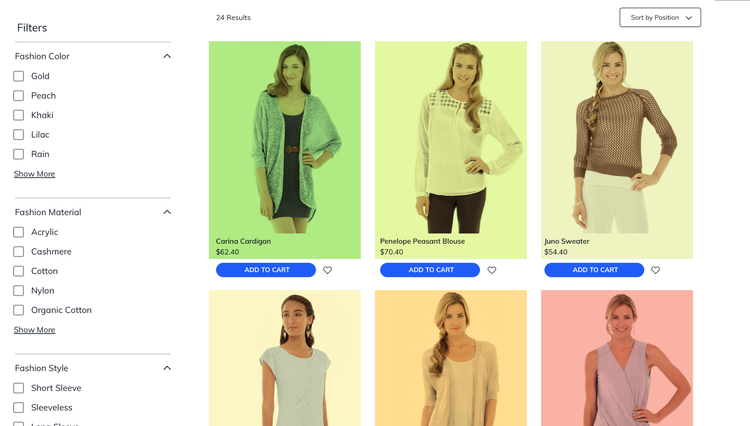
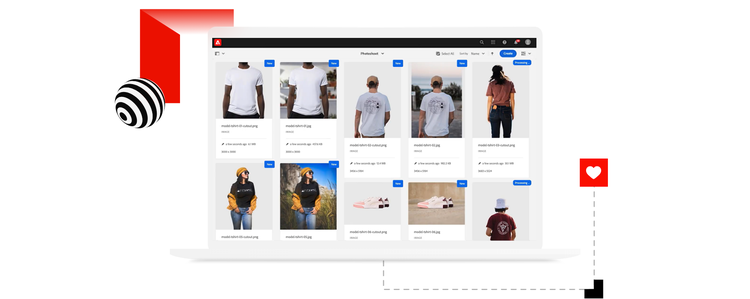
Products can be adjusted up or down on category pages based on AI algorithms.
Deliver relevant product recommendations
Product recommendations are the third piece of the product discovery puzzle and provide an excellent opportunity for AI optimisation. Many companies today do not use any customer segmentation to inform their product recommendations. Using segmentation to deliver highly relevant product recommendations in response to shopper behaviour is incredibly powerful. To take our earlier example of a customer who shops for running gear, that shopper may be placed in a “runner” segment. The site would then update product recommendations to prioritise running apparel in each category the shopper visits.
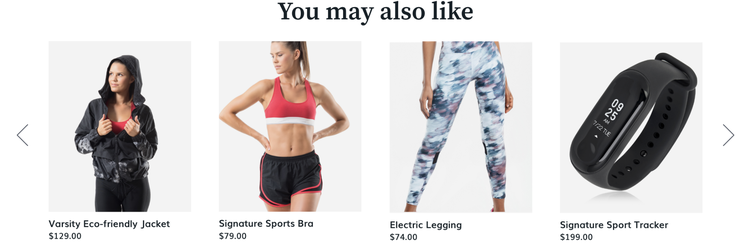
Product Recommendations in Adobe Commerce present recommendations for each individual shopper.
91% of customers say they are more likely to order from brands that present relevant product recommendations and offers. Leveraging AI to guide accurate and helpful product recommendations can drive significant business impacts.