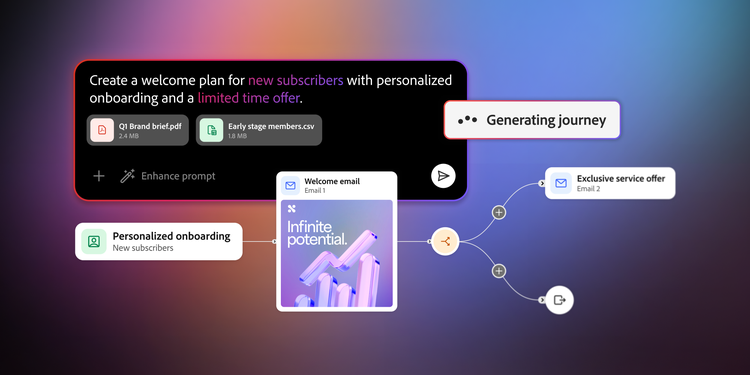
From a single prompt, Adobe CX Enterprise Coworker for teams removes the heavy, manual work of campaign drafting. By detailing your vision in a strong prompt, it can build your campaign plan, shape the audience strategy, create a journey structure, and generate the content that brings it to life.
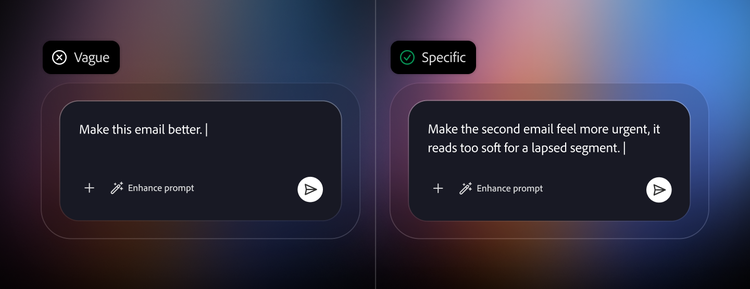
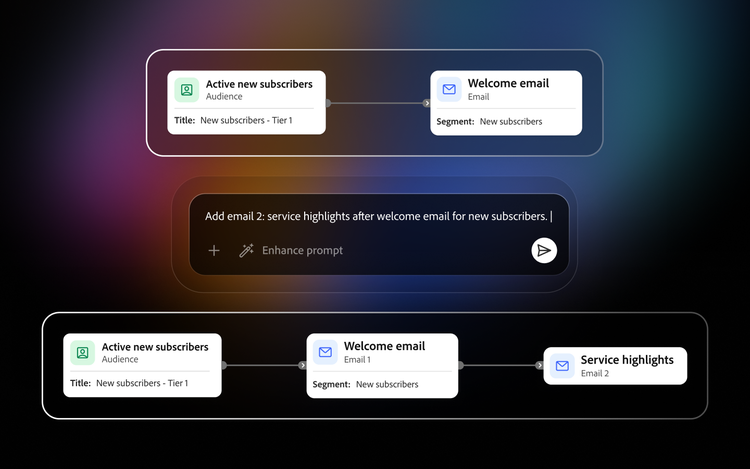
This article covers what to put into that first prompt, how to fine-tune the email copy once it’s drafted, and how to reshape the journey itself when the fix is bigger than one message.
The better the prompt, the better the draft.
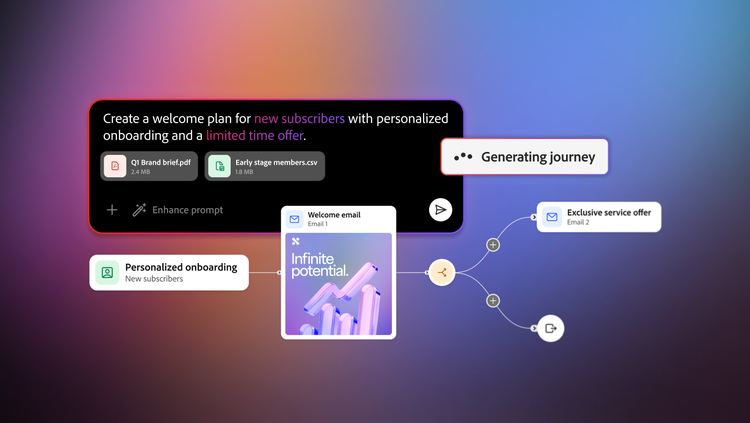
You don’t have to start every journey from a blank prompt. Coworker for teams offers ready-made campaign templates to get you started quickly. You can always start by 'remixing' campaign templates to build new campaigns with a single click. It’s a faster way to get a well-shaped starting point instead of specifying every detail from scratch each time.
The great news is that you don’t have to fit every campaign requirement into the prompt itself. If you already have a campaign brief, audience definition, messaging framework, launch plan, or other supporting material, upload it alongside your request. Coworker for teams can use that information as additional context when generating the campaign, helping it produce a journey that is closer to your goals from the start and reducing the number of revisions needed later.
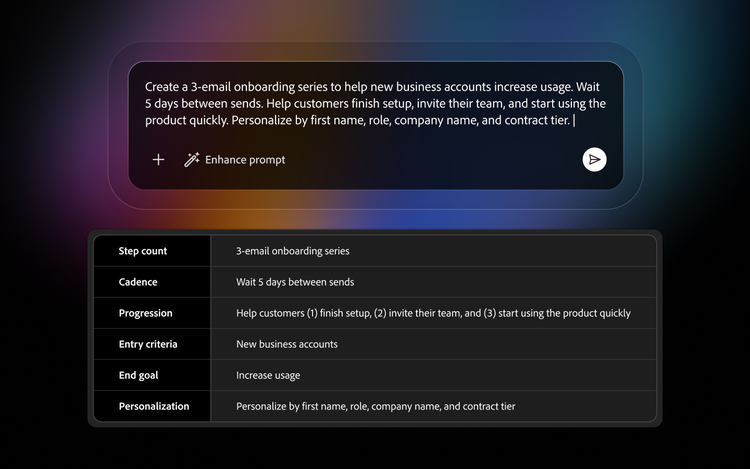
When you are writing the prompt yourself, though, there are certain pieces of information that will help you get a better output and reduce future adjustments. Below is the anatomy of what should go into a great first prompt.
- Step count: Describe how many touchpoints you want in your journey.
- Cadence: Tell Coworker for teams how far apart, over what timeframe, or even the specific dates you want emails to be sent.
- Progression: Clarify what changes from one step to the next, not just what stays the same. This is especially critical because it can influence the email copy. Think about what each touchpoint contributes. The first might introduce an idea, the next might address common objections, another could reinforce value with proof points or examples, and the final message might encourage action. A clear progression helps the journey feel intentional rather than repetitive.
- Entry criteria: Explain who starts the journey and why. This can help Coworker for teams identify emotional triggers or audience needs.
- End goal: Identify what you want to happen by the last step.
- Personalization: Coworker for teams will automatically generate personalization in the HTML when you request it, provided you include these fields in your audience data.
But don’t worry, if you’re not able to follow some of these steps, Coworker for teams will still try to fill in the gaps.