Imagine a fan waking up on Sunday morning and opening an app that feels built just for them: their favorite team, where they are, and how they can watch the game. For the National Football League (NFL), creating that kind of experience starts with signals — thousands of them flowing across clubs, channels, markets, and fan interactions.
Every fan interaction creates data about where fans are, what they watch, which teams they follow, and how they engage. The challenge is not just collecting that information, but understanding what matters and responding in ways that feel timely and personal.
Fans generate an extraordinary volume of signals — far more than people can manage or interpret alone. We need AI to help us understand them. But understanding the signal is only the first step. The more important question is what to do next. How do we bring fans deeper into the experience, whether in the stadium, at home, or through the right message at the right moment?
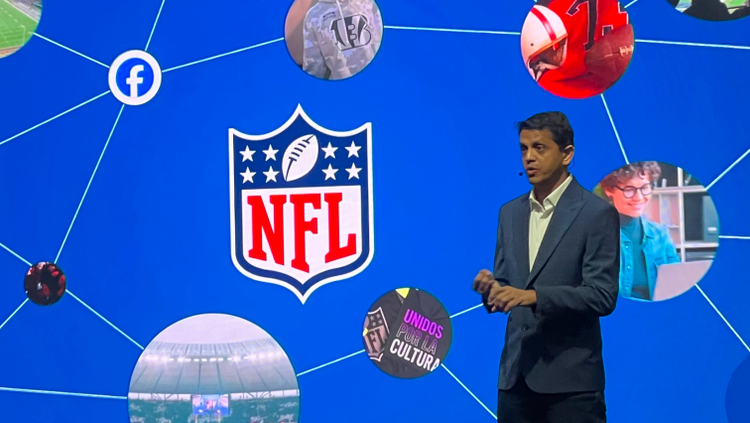
At Adobe Summit, I shared what that balance looks like in practice — how AI systems help us process signals, build audiences, and orchestrate experiences at scale while marketers bring the judgment and emotion that make experiences truly meaningful for fans. That perspective was shaped by the work that led to being named the Experience Maker of the Year at Adobe’s Experience Maker Awards, which recognize leaders delivering exceptional customer experiences with measurable impact using Adobe.
Turning signals into fan experiences.
There are 272 games in a regular NFL season. That means, at minimum, the league needs to deliver 544 game-day communications — one for each of the two teams playing. And that’s just the start.
At the NFL, marketing starts with signals. AI systems help us understand where fans are, what they care about, and how they want to engage — whether they’re at home, in-market, or following from elsewhere in the world.
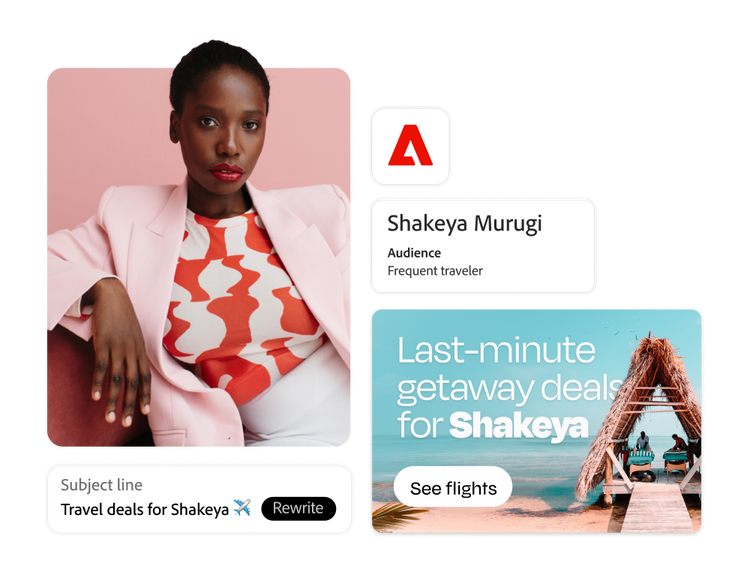
From there, the next step is the audience strategy. Our marketing teams are hyper-focused on personalization and decide how best to serve each fan, while AI agents can help us identify who should receive which message, but human teams still decide how best to serve each fan.
Then comes the content. At the NFL’s scale, that means producing a high volume of content in different formats and ratios for different channels. Generative AI helps create that content more efficiently, but marketers still shape it, infuse it with emotion, and ensure it reflects the game’s energy.
And finally, there’s timing. AI agents help determine the right moment to reach a fan, whether that’s leading up to game day, during halftime, or moments before kickoff. That’s critical because the goal is to enhance the experience, not interrupt it.
Orchestrating fan experiences at NFL scale.
In response to the influx of fan signals, my team got to work on what we call our “fan engagement engine” — a harmonized model that connects the NFL’s tech stack with those of all 32 clubs. Working with Adobe, we’ve built a system that provides a unified view of the fan experience — online, in the app, in the stadium, and beyond.
This engine highlights opportunities in every fan signal and helps our team act on them. The result has reduced over-communication by 30% across teams while helping address the 60% overlap of fans across clubs.
But as powerful as the league’s engagement engine is, technology is only part of the story.
AI reads the signal. Humans decide the play.
AI systems can process signals, build audiences, and help automate campaign execution. But it’s still marketers who decide what kind of experience a fan should have. Should a fan be nudged toward attending a game in-stadium or tuning in from home? Should the moment feel urgent, helpful, or celebratory?
While AI helps us work at the pace and scale the NFL requires, humans are the ones who add context, judgment, and emotion. I’ve found that experiences shaped by humans not only do a better job of engaging people, but they’re also more likely to be recognized, interpreted, and surfaced consistently across AI-driven experiences.
Content at NFL scale.
Content operations for the NFL require marketing to be an intelligent, always-on system. AI is part of the driving force behind the system, but humans give it meaning.
And at this scale, amid the flood of signals, marketing must become more precise, contextual, and coordinated to feel truly personal at scale. We’re orchestrating experiences for a massive global audience — but engagement only works when it feels personal. That calls for local language, fan-specific content, and delivery tailored to each fan’s preferred way of engaging.
When you’re capturing the energy of one of the world’s biggest leagues and cultural events, every detail has to be just right. Whether it’s Monday night in Miami or Sunday evening in Madrid, we’re working with Adobe to ensure fans get the NFL at its best.
Explore more ideas from Adobe Summit on how AI is reshaping discovery, trust, and marketing strategy in our full wrap-up blog.
Amit Khare is a marketing technology leader focused on driving innovation in fan engagement. He serves as director of marketing technology at the National Football League, where he brings together marketing, data, and AI to create connected fan experiences.
In this role, Amit leads strategic initiatives that leverage next-generation technologies to build a scalable marketing ecosystem. His work powers omnichannel personalization and bridges physical and digital fan engagement across stadium and digital platforms. He focuses on transforming how fans interact with the game through data-driven insights, emerging technologies, and innovative marketing platforms. With more than 20 years of experience in digital marketing and marketing technology, Amit has architected and delivered modern marketing platforms that help organizations evolve their digital capabilities, unlock the value of their data, and drive measurable business outcomes.