Monitor and route opportunities.
Agents can monitor high-intent accounts, detect predefined workflow triggers, route qualified opportunities to the right team and escalate stalled deals when intervention is needed.



JUMP TO SECTION
What is AI for commerce and how it accelerates the sales pipeline
How conversational commerce and product discovery reduce friction
How AI lead generation accelerates pipeline qualification
Why human validation in agentic commerce is necessary
What enterprise AI commerce needs to succeed
Enterprise teams are under pressure to create more connected buying experiences while reducing the time it takes customers to move from discovery to purchase.
In this guide, learn how generative AI, predictive AI and agentic AI work together to help enterprise teams accelerate product discovery, improve qualification, automate workflows and shorten the path from buyer intent to completed transaction.
From helping buyers find the right products faster to identifying high-intent opportunities, generating sales materials and coordinating approved next steps, discover how these AI capabilities can reduce friction across the entire sales pipeline. Also explore why governance, oversight and trust are required for agentic commerce to succeed and how to implement it. Finally, get insight into the metrics and operational foundations needed to measure pipeline velocity and scale AI-powered commerce effectively.
AI is transforming commerce, but not in the way most organisations expected. Initially, conversations about AI in commerce focused on product recommendations, chatbots and ecommerce personalisation. While these are valuable use cases, the existing friction in sales pipelines remains a key challenge.
Buyers spend time separately searching for products, comparing options, waiting for responses, reviewing proposals, navigating approvals and completing procurement formalities. Each individual process takes significant effort and coordination. Meanwhile, teams manage handoffs across marketing platforms, commerce systems, CRM environments, analytics tools, sales workflows and approval chains, each potentially leading to delays and friction.
The larger opportunity for enterprises lies in using AI to reduce this time between a buyer's first interaction and a completed sale. Recent Adobe Digital Insights data from the 2025 holiday season also demonstrates that AI-assisted buying journeys are becoming increasingly valuable for ecommerce.
AI-referred traffic produced:

increase in conversions compared to other traffic sources

more revenue per visit

more time on site

more pages per visit
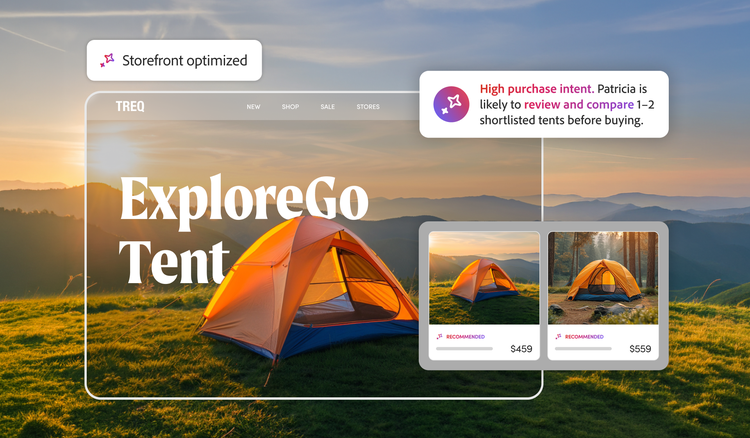
AI for commerce and sales pipelines is the use of artificial intelligence to help businesses guide buyers whether they are discovering products or completing a transaction. It can support personalised commerce experiences, lead qualification, sales prioritisation, proposal drafting, pipeline monitoring and agentic workflows that move buyers through different steps in the sales process.
The most effective AI commerce strategies do not rely on a single AI capability. Instead, modern commerce and sales pipelines use generative AI, predictive AI and agentic AI for different tasks. While generative AI creates, summarises and personalises content, predictive AI scores, forecasts and prioritises buyer behaviour to deliver the right content at the right time. Agentic AI monitors, initiates and acts on approved decisions within governed rules.
Used together, these capabilities help organisations connect fragmented commerce, marketing, customer data and sales systems into a more responsive operating model that reduces manual effort and helps buyers move from one pipeline stage to the next.
Generative AI helps teams create, personalise, summarise and translate content faster across the buyer journey. Its value extends from customer-facing materials to proposal support and sales documentation, helping teams move work forward with less manual effort. The scope of the generative AI use cases below varies by buying model.

Use case: Generative AI can help teams create or adapt approved content for different buyer roles, industries, goals and purchasing contexts. This includes personalising product summaries, buying and comparison guides, industry-specific landing pages, personalised email outreach and other sales collateral.
Outcome: No extra manual production effort to adapt structured content for different buying scenarios.
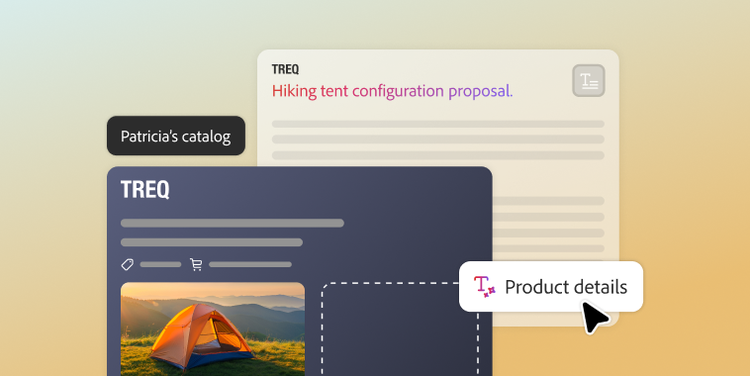
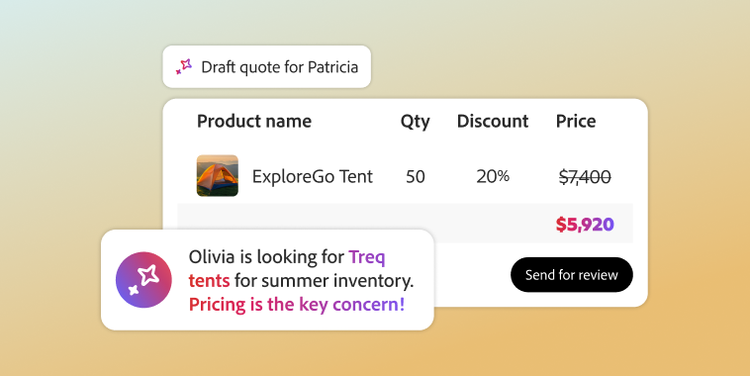
Use case: Generative AI can accelerate the sales pipeline by helping teams prepare proposal drafts, quotes and contract summaries, renewal recommendations and product configurations.
Outcome: An informed first draft based on product data, historical wins, approved templates and account context.
However, teams should include human review for pricing, contractual language, customer commitments and other sensitive content to remain fully compliant.
Use case: Generative AI can automatically summarise discovery calls, customer objections, buying committee discussions, action items and follow-up commitments.
Outcome: Fewer administrative tasks and less CRM maintenance while preserving institutional knowledge between meetings, handoffs and approvals.
Merchandisers can improve productivity when using generative AI for content creation and experimentation workflows.
While generative AI creates content, predictive AI helps teams determine what they should prioritise and where their attention should be. Its role is to identify probability, timing, opportunity and risk. The predictive AI use cases below vary by buying model.
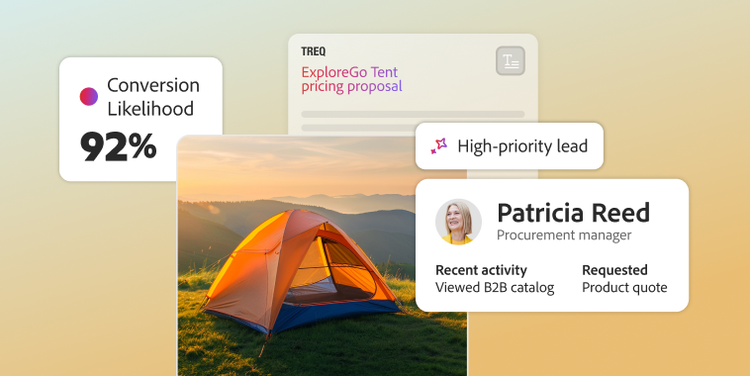
Use case: Predictive AI can evaluate engagement behaviour, product interest, historical conversion patterns, account fit, firmographic attributes and buyer intent signals to assess which leads are most likely to progress.
Outcome: Sales teams can focus their attention on higher-potential opportunities instead of treating every lead equally.
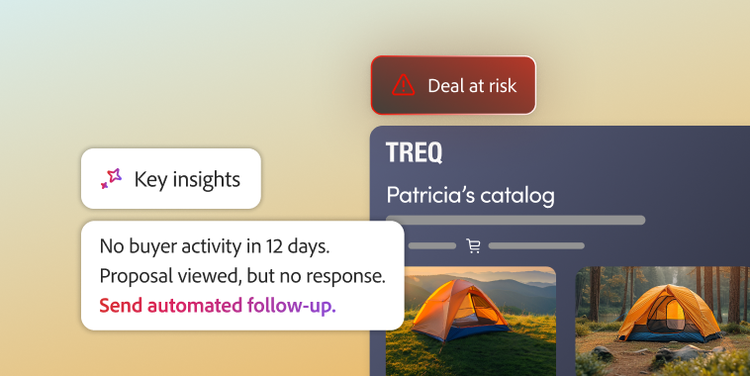
Use case: Predictive AI can identify accounts that stop engaging — including high-intent buyers who request demos but never respond — as well as abandoned opportunities. It can also identify delayed evaluations, churn risks and stalled approvals.
Outcome: Sales teams can proactively intervene when warning signals appear and can improve pipeline velocity where it matters.
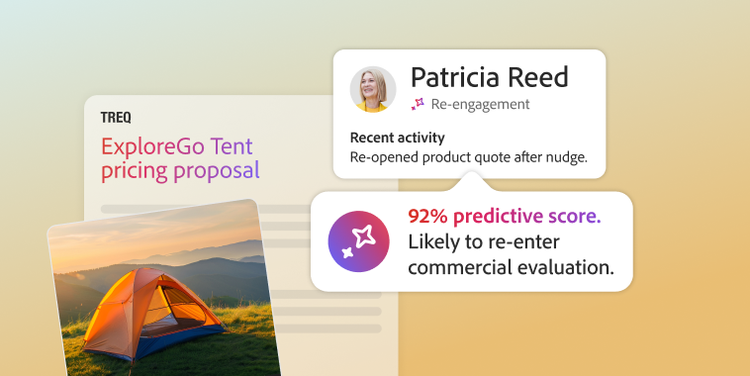
Use case: Predictive AI can estimate what a buyer is likely to do next, including requesting a demo, engaging procurement, seeking pricing information or needing technical validation.
Outcome: Sales teams can allocate resources earlier and shorten each step of the buying process.
Agentic commerce is a form of AI-assisted commerce where AI agents help business buyers and procurement teams complete purchasing tasks. These agents can help buyers at each stage of the buying process, including searching for products or services, comparing vendors and contract terms, applying company policies and buyer preferences and building baskets. They can also initiate approval and procurement workflows and support checkout or order submissions, all within predefined rules, budgets and authorisation requirements.
Agentic commerce also operates on the seller side, helping enterprise teams move routine pipeline tasks forward when defined conditions are met.
Use cases vary based on buying models. Within enterprise sales environments, agentic AI can:
Monitor and route opportunities.
Agents can monitor high-intent accounts, detect predefined workflow triggers, route qualified opportunities to the right team and escalate stalled deals when intervention is needed.

Coordinate sales engagement.
Agents can trigger approved follow-ups, schedule demos and prepare relevant context or proposal inputs, so sales teams can respond without waiting for each next step to be initiated manually.

Prepare proposals and support renewals.
Agents can assemble proposal inputs, initiate approval steps and coordinate the handoffs needed to move an opportunity toward the next stage. For repeat or existing customer motions, the same approach can support renewal workflows.
Unlike generative AI or predictive AI, agentic AI can initiate actions. Because of that capability, governance becomes essential. Teams need to establish controls around pricing, customer data, contracts, discounts, payments or other binding commitments. The more consequential the action, the stronger the oversight should be.
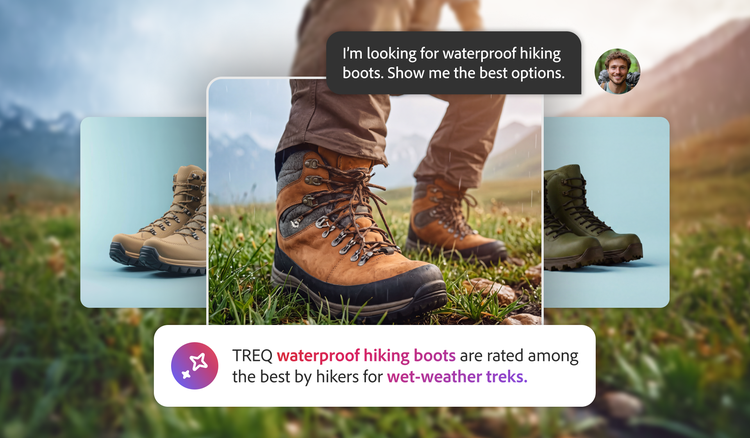
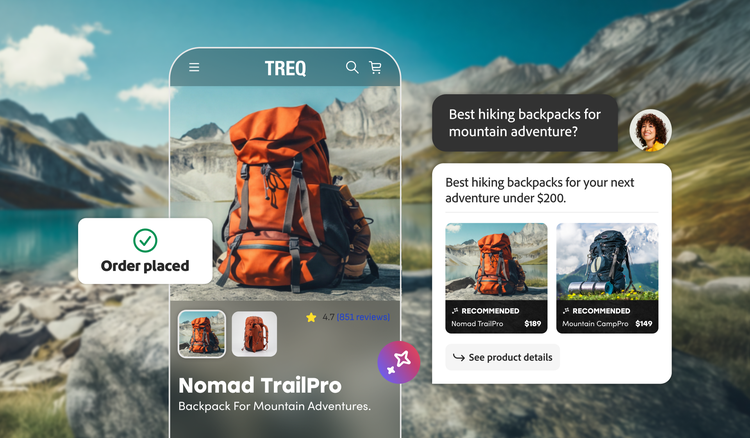
Many buyers now begin their purchasing journey through conversation rather than navigation. Instead of clicking through menus and filters, a buyer may ask:
Conversational commerce and AI help answer those questions immediately, leading to faster product discovery. This capability is becoming increasingly important as AI-assisted buying expands, because it reduces early-stage friction and educates the buyer faster. According to the Adobe 2026 AI and Digital Trends report, 25% of customers already use AI as their primary source of research and recommendations.

of customers already use AI as their primary source of research and recommendations.
The most time-consuming part of the purchasing process is often before buyers even speak to a sales representative. They need to research products, compare features and understand configurations before engaging sales. This requires them to navigate large product catalogues, pricing structures and other technical processes, creating cognitive friction that can delay progress in the buying journey.
Conversational commerce reduces that friction by allowing buyers to interact with products and services using natural language. Instead of navigating categories, filters and complex menus, buyers can describe their goals, constraints and requirements directly.
Guided product discovery tools, including AI shopping assistants, product advisors and voice interfaces, can translate buyer questions into relevant recommendations, comparisons and educational guidance.
For enterprises, this is more than an usability improvement. It helps buyers self-educate earlier in the journey, reduces reliance on manual sales interactions for basic information and accelerates movement from initial consideration to active evaluation.
While guided discovery responds to what buyers ask directly, personalised recommendations use behavioural, account and contextual signals to anticipate what may be relevant next.
Traditional recommendations such as "customers who viewed this product also viewed..." often rely on broad behavioural patterns. Modern AI commerce systems that combine generative AI and predictive AI can go much further. To predict what a buyer most likely wants next, AI can analyse a combination of behaviour signals, firmographic attributes, industry context, product interests and engagement and purchase history.
For example, a prospective buyer evaluating usage documentation may receive recommendations that focus on deployment services, onboarding packages or technical resources. A procurement stakeholder may receive information about pricing structures, contract terms or purchasing options. A retail customer browsing the website may be presented with video reviews or product highlights of similar products.
When buyers receive product recommendations that match their current questions and responsibilities at each stage in the buying process, they spend less time searching for information and more time evaluating solutions.
AI can also dynamically adapt recommendations as buying signals change. As engagement deepens, recommendations may evolve from educational content to user guidance, account-specific resources, product bundles or sales-assisted buying opportunities. These continuous adjustments help create a journey that feels responsive to buyer needs while reducing friction between interest and action.
Not every high-intent buyer begins their journey by filling in a form or identifying themselves. In many enterprise sales cycles, significant research occurs anonymously. Buyers often explore products, evaluate vendors, consume content and revisit resources long before they engage with a sales team.
This creates a challenge for many commerce and sales teams. Important buying signals exist, but they are frequently scattered across multiple digital interactions. AI helps connect these signals to create a clearer picture of potential intent.
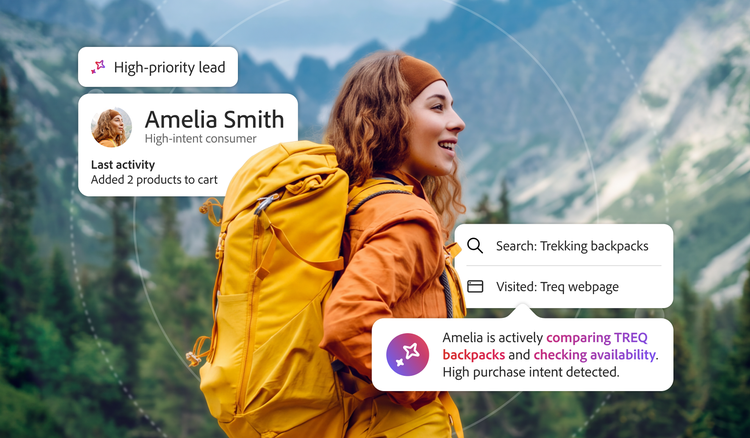
Traditional lead capture often relies on a narrow set of signals, such as form submissions, demo requests, webinar registrations or content downloads. As explained above, the challenge is that buyers frequently reveal important qualification information long before they formally identify themselves. And they often do so across multiple touchpoints.
AI-assisted lead capture helps organisations extract meaningful information from these interactions and convert it into usable pipeline intelligence. AI can help surface product interests, business objectives, budget indicators and preferred next steps for each individual buyer at different stages.
This creates a more complete qualification profile before a sales conversation begins. AI-assisted lead capture reduces the time sales teams spend gathering foundational information and allows them to enter conversations with greater context and relevance.
For sales teams often operating with limited time and resources, the challenge is identifying which opportunities deserve attention first. Predictive lead and account scoring help address this problem by analysing historical conversion patterns, buyer behaviours, engagement signals, account characteristics and pipeline outcomes to estimate the likelihood that a prospect converts.
Rather than treating all opportunities equally, predictive AI helps organisations prioritise based on probability. For example, two accounts may have downloaded the same resource; however, one account may have also:

Repeatedly visited pricing content

Engaged with product comparisons

Included multiple stakeholders

Requested implementation information
One of the most valuable capabilities of AI is its ability to distinguish curiosity from intent. Not every visitor is ready for a sales conversation. Some are gathering information while others are actively evaluating solutions and preparing to make a purchasing decision. AI can help to identify the difference. Buyer readiness models analyse a combination of signals, such as:

Pricing-page engagement

Product comparisons

Demo interactions

Return visits

Buying-focused questions

Procurement-related content consumption

Stakeholder participation
As AI becomes more embedded in commerce and sales operations, governance becomes just as important as automation. Lower-risk AI outputs in commerce include email drafts, meeting summaries, product comparisons and follow-up recommendations. These can save significant time, but they still benefit from human review. It ensures accuracy, maintains quality and preserves context before information reaches buyers or becomes part of the official sales record.
Organisations should ensure their teams can trace outputs back to source information, edit AI-generated content where needed and maintain clear records of changes and accountability. When implemented correctly, review-before-send workflows allow teams to automate routine administrative work while retaining confidence in buyer-facing communications.
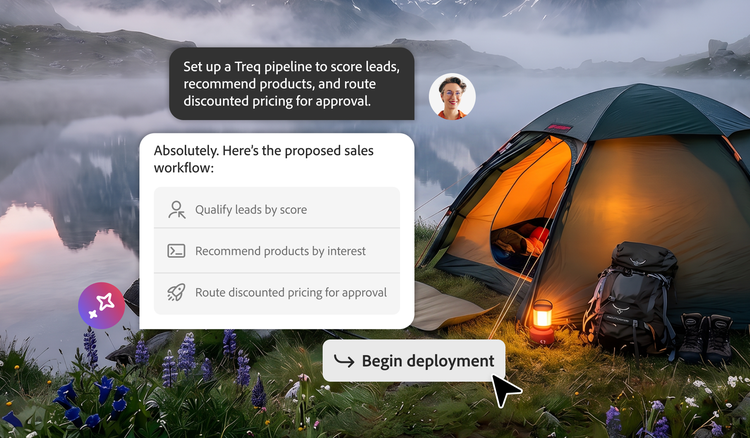
Humans need to define the actions AI agents are authorised to take, the conditions that trigger those actions and the exceptions that require escalation. Examples include defining boundaries for actions like routing leads, triggering follow-up sequences, assigning accounts and scheduling meetings.
Because of this increased responsibility, organisations must establish explicit approval frameworks. Humans should define:
The objective is to eliminate delays without removing accountability. When AI agents can handle routine operational decisions, teams can spend less time waiting for administrative review and more time progressing through the pipeline.
The highest level of oversight should be reserved for high-risk actions. These are actions that create financial, legal, contractual or customer-facing commitments. Examples that vary by buying model, include:

Pricing approvals

Contract terms

Discounts

Payment authorisations

Service commitments

Procurement agreements
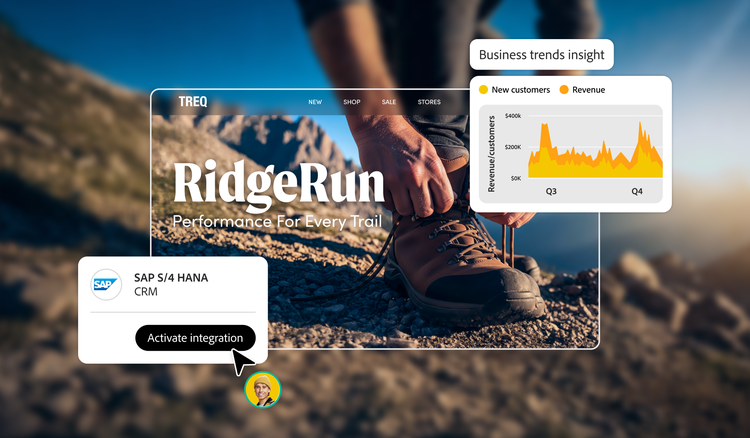
AI is only as effective as the systems and information supporting it. When customer data, product information, marketing engagement, sales activity and governance records are spread across separate systems, it can be hard for AI agents to access all information needed to make commerce and pipeline decisions. Successful enterprise AI commerce initiatives require access to:

Customer and account data
Including engagement history, CRM records, buying committee information, consented behavioural data and account status.

Product, pricing and availability data
Including catalogues, inventory information, configuration rules, contract options, bundles, discounts and eligibility requirements.

Sales and marketing workflow data
Including campaign engagement, chat interactions, proposal status, opportunity progression, meeting history and handoff workflows.

Governance and auditability controls
Including permissions, approval histories, escalation paths, access controls, workflow logs and rollback procedures.
Organisations often evaluate AI using isolated metrics such as clicks, engagement or leads. While useful, these measurements do not fully capture whether AI is improving business outcomes. A stronger approach is to measure the movement of buyers through the pipeline itself. Rather than only asking whether engagement increased, Sales teams should also ask whether buyers completed a transaction faster and with less friction.
Measuring how much AI reduces the time between a buyer’s first anonymous interaction and a completed transaction helps teams evaluate whether AI is accelerating the efficiency of the full sales pipeline, which is more substantial than solely improving isolated metrics.
Measure AI's impact across the pipeline:
The future of AI commerce is not about deploying a chatbot, automating a workflow or generating more content. It's about creating a connected system that helps buyers move from discovery to transaction with less friction.
Start by identifying where buyers stall. Then, map those bottlenecks to the appropriate AI capability. Establish clear human validation checkpoints and measure whether AI is reducing pipeline delays.
When generative AI, predictive AI and agentic AI work together, organisations can identify intent earlier, prioritise opportunities faster, create relevant content at scale and automate approved workflows while maintaining strong governance to move buyers through the pipeline more efficiently.