2026 AI and Digital Trends in Retail and Consumer Goods
The Path to AI-Powered Customer Experiences for Retail and Consumer Goods
Explore the top industry insights from Adobe’s 2026 AI and Digital Trends research to understand the actions brands must take now to convert AI investment into personalised, trusted, end-to-end shopping experiences.
How Retail and Consumer Goods Brands Are Turning AI Ambition into Customer Experience Advantage
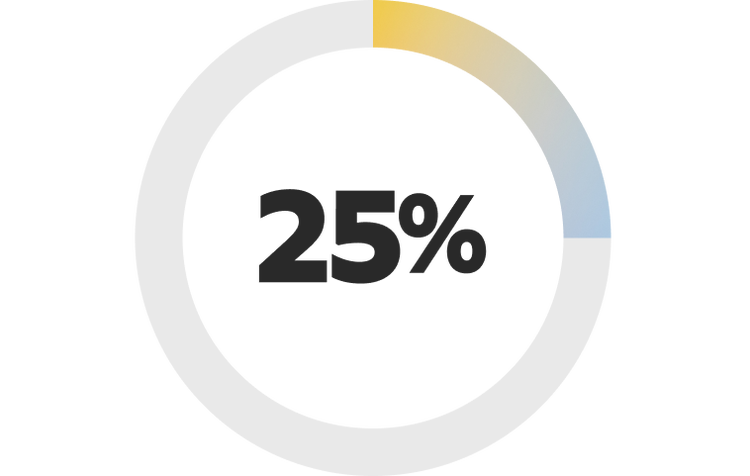
The retail and consumer goods industry is evolving as AI increasingly influences how shoppers discover, evaluate and purchase products. Brands are already deploying AI to drive personalisation at scale, optimise workflows and accelerate content velocity. Meanwhile, one in four shoppers now turn to AI-powered platforms ahead of brand websites when making purchase decisions. To stay competitive, brands must turn AI innovation into agentic experiences that consumers embrace and trust.
This overview explores the Adobe 2026 AI and Digital Trends findings across three critical areas for retail and consumer goods brands: winning visibility and engagement in the age of AI, scaling AI with speed and impact and turning AI ambition into consumer confidence.
style
center, grid-width-8, l spacing bottom, no spacing top
#F5F5F5
Section 1
Winning Visibility and Engagement in the Age of AI
Retail and consumer goods brands are responding to rising expectations for relevance, leading other sectors in AI-powered personalisation and connected consumer journeys. The opportunity now is to extend those gains into conversational experiences, engaging consumers wherever they search, discover and shop with interactions that are on-brand and in the moment.
Consumer expectations have reset around relevance and speed.
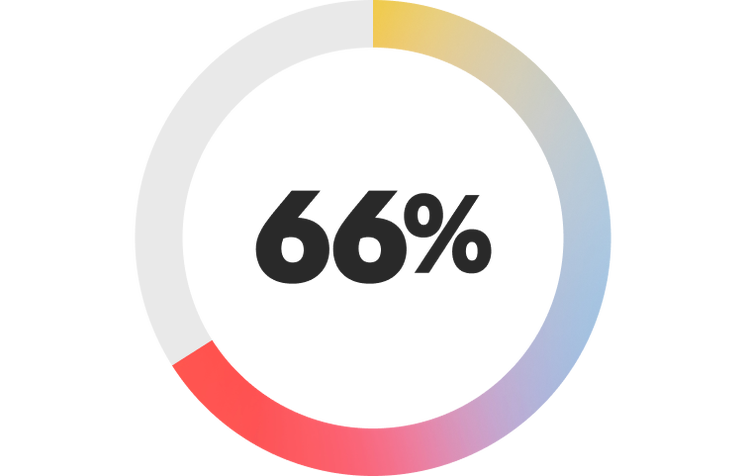
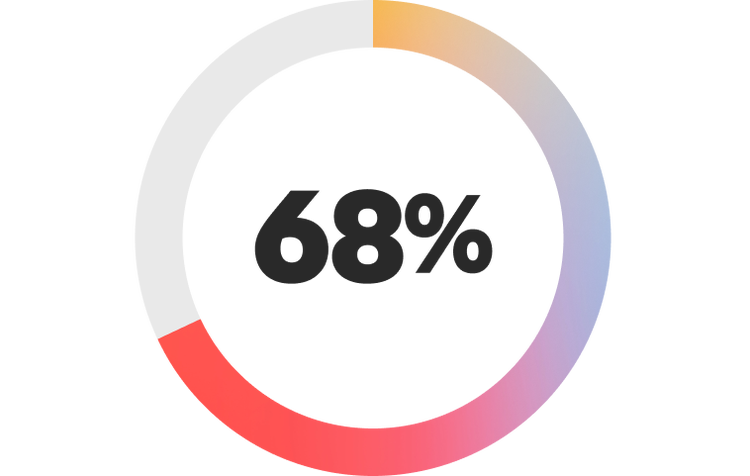
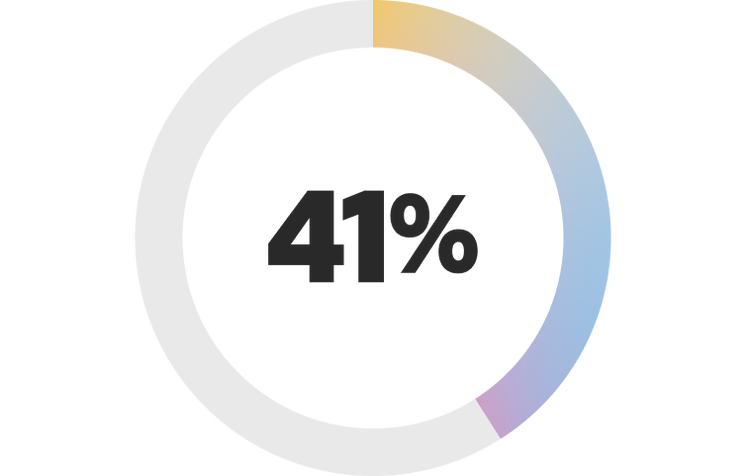
of consumers say a brand has five seconds or less to capture their attention.
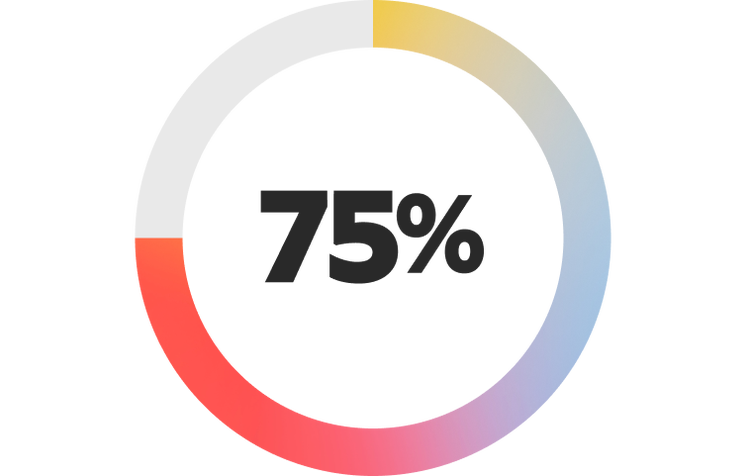
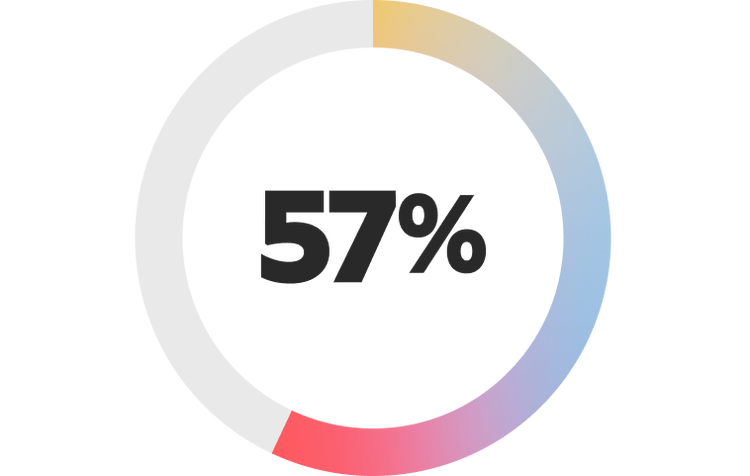
of brands say highly personalised interactions that anticipate consumer needs in real time will define breakthrough customer experiences in the next two to three years.
style
grid-width-10, two-up, xl-gap, xxl spacing bottom, l spacing top
style
Divider, container
background
#D8D8D8
Consumers say personalised content that feels irrelevant or “off” is the top reason they would stop interacting with a brand.
style
Divider, container
background
#D8D8D8
Brands are investing in AI-powered personalisation at scale.
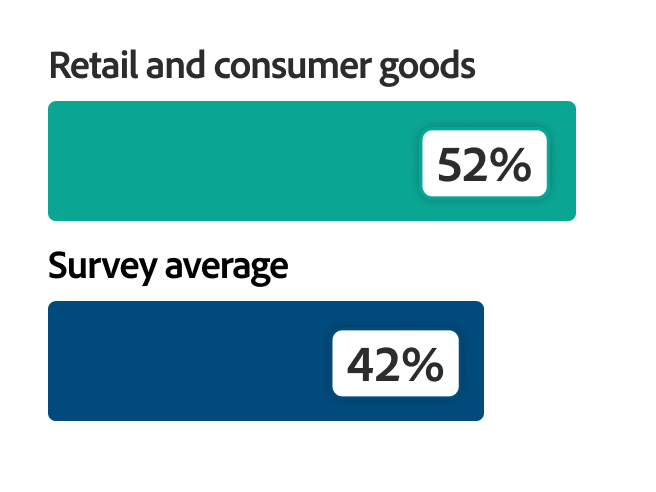
The industry leads in its use of agentic or generative AI for journey design and omnichannel activation to achieve personalisation at scale.
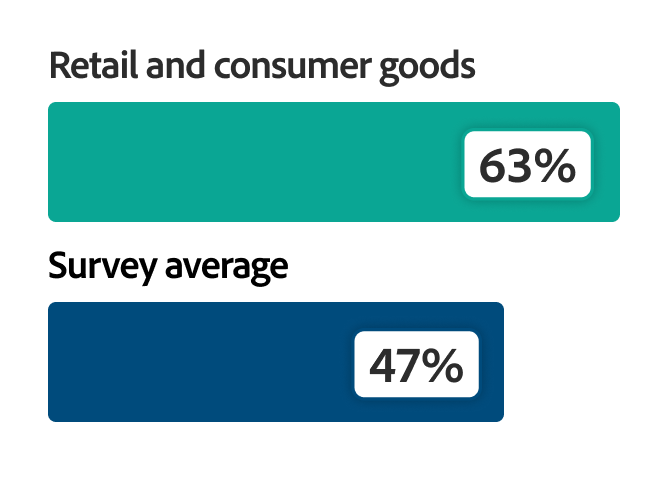
Over half of brands plan to design distinctive AI agent personalities for different audiences, outpacing the broader survey average.
style
Divider, container
background
#D8D8D8
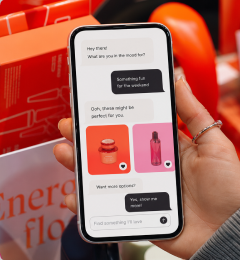
Conversational shopping is becoming the baseline for discovery.
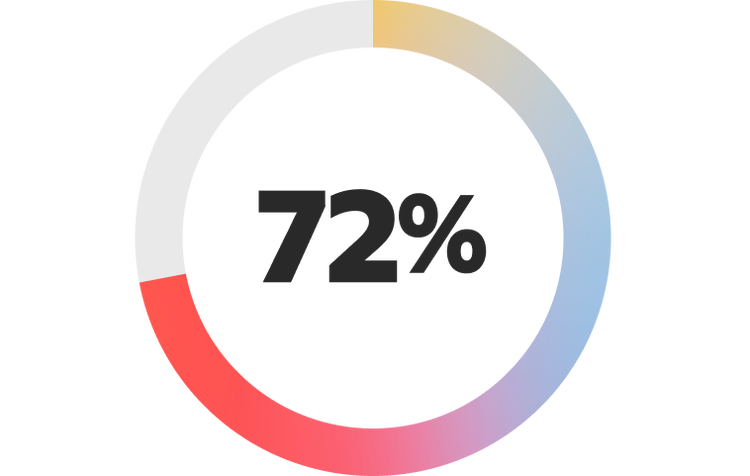
of consumers cite AI-powered platforms as a top source for finding information, making purchasing decisions and getting recommendations — ahead of brand websites and online reviews.
of brands say their future customer experiences will need to be designed as conversational first.
style
Two up, xl spacing top, l spacing bottom, grid-width-10, center
Generative AI is already delivering measurable returns and brands are pushing agentic AI deeper into both consumer-facing and back-office workflows. But AI ambition is outrunning the data, infrastructure and organisational readiness required to support it.
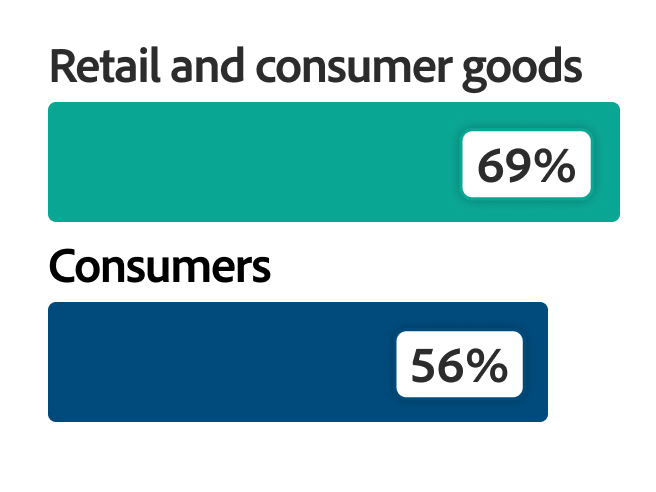
Generative AI is paying off across the workflows that drive growth.
Percentage citing “significant” or “moderate” improvements from generative AI in the following workflows:
Volume and speed of content ideation and production
Data-driven decision-making
style
Two up, m spacing, grid-width-10, center
Consumer engagement and support (e.g., service interactions)
Revenue growth from marketing initiatives
style
Two up, m spacing, grid-width-10, center, xxl spacing bottom
style
Divider, container
background
#D8D8D8
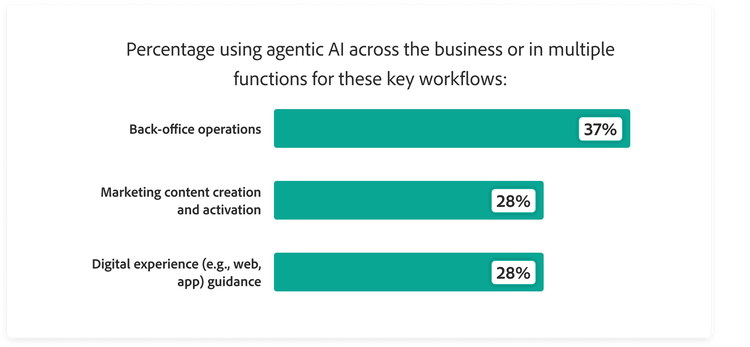
Brands are actively deploying agentic AI across both back-office and consumer-facing workflows.
style
Divider, container
background
#D8D8D8
Yet scaling agentic AI to enterprise value still faces real headwinds:
Retail and consumer goods brands are optimistic about AI’s potential to improve experiences and consumers see the benefits as well. But with comfort around agentic experiences still evolving, brands have an opportunity to build trust through transparency and human oversight.
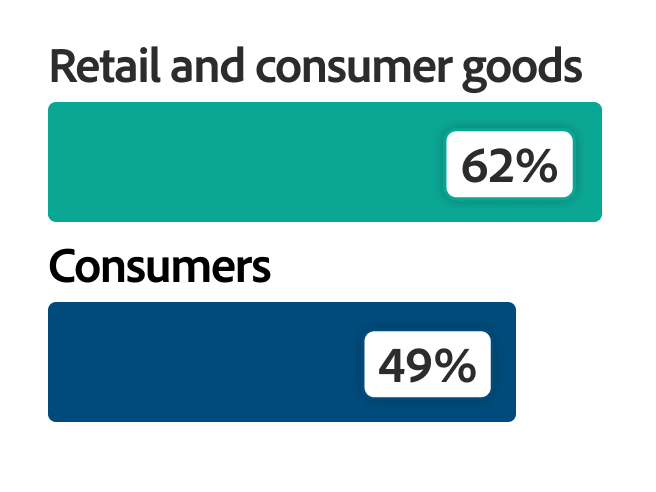
Brands see significant benefits in AI-powered experiences — and consumers do too.
Percentage agreeing with each statement:
“AI will improve experiences for consumers.”
“AI will help consumers save money and increase their purchasing power.”
style
Divider, container
background
#D8D8D8
Yet the industry may be overestimating consumer readiness for fully agentic AI experiences.
believe consumers will want AI agents to become their primary way of interacting with brands — but only 19% of consumers agree.
expect consumers to be comfortable with their personal AI agent working directly with a brand’s AI agent — but only 35% of consumers say they’d be comfortable.
style
Two up, m spacing, grid-width-10, center, xxl spacing bottom
style
Divider, container
background
#D8D8D8
To maintain consumer trust in agentic AI, the industry prioritises these three actions:
Clear disclosure when consumers interact with AI
Easy escalation to human support
Human-in-the-loop review and quality controls
style
Three up, m spacing, grid-width-10, center, xl-spacing-bottom
The path forward requires translating early AI wins into scalable, on-brand experiences that consumers trust.
Brands that rise to meet evolving consumer behaviours, build the foundations to scale and earn consumer trust in agentic experiences will turn AI ambition into lasting advantage. Here are the top three action items for retail and consumer goods brands:
Data and measurement readiness, automated content pipelines and workforce skills separate brands that scale AI from brands stuck piloting it. Build the infrastructure to turn today's momentum into tomorrow's return.
Match ambition to consumer readiness.
Consumers are increasingly embracing AI-powered experiences, but comfort with fully agentic interactions is still evolving. Earn trust through transparency, human oversight and experiences that feel unmistakably human.
For Adobe’s 16th annual AI and Digital Trends research, Oxford Economics, in partnership with Adobe, conducted global surveys of 3,000 executives and practitioners and 4,000 customers to better understand how organisations are leveraging AI to capture customer interest, build brand loyalty and augment customer experience (CX) workflows — and how customers are responding to these changes. The surveys were fielded online and via computer-assisted telephonic interviewing (CATI) from October through November 2025. “Retail and consumer goods” refers to a global set of executives and practitioners from organisations in the retail and consumer goods industries. This group makes up 17% of respondents and represents a wide range of business sizes. View the 2026 AI and Digital Trends report for more on the full research methodology.
style
center, grid width 8, l-spacing-top, m-spacing-bottom
Understand the actions retail and consumer goods brands must take to turn AI investment into personalised, consistent, end-to-end shopping experiences.