Sales is a complex, nuanced practice. But it ultimately comes down to one thing: matching products and services with customers who see value in them.
What’s tricky, though, is that a seller’s competitive advantage in a given deal is not always obvious. And, although request for proposals (RFPs) lay out requirements, these documents don’t always give the full picture of a prospect or what is most important to them.
Historically, sales teams have had to do their best to brush up on all available information and then play their best hand. Today, AI empowers sellers to summarize and synthesize thousands of pages of information about both their products and prospects, enabling them to uncover insights and connections that help to craft winning proposals.
“One problem teams face is information overload,” says Job Chanasit, Senior Manager of Product Marketing at Adobe. “There are so many documents that people need to read and consume, and those can take hours to digest. The real value of AI is unlocked when you take multiple documents and generate insights that you need to create something new. One of my favorite examples is sales representatives using the technology to create a sales proposal.”
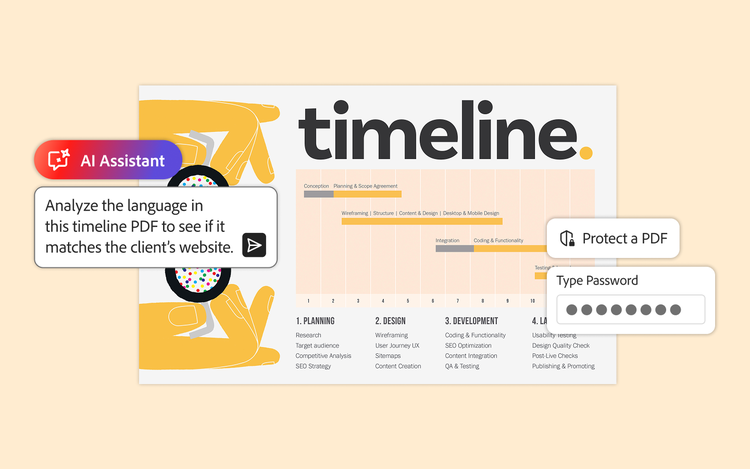
Adobe Acrobat Studio, built on the Adobe Acrobat PDF platform, integrates AI capabilities into a trusted, enterprise-grade suite that helps sales teams land on customer-converting proposal language.
Going beyond RFPs.
The benefits of AI for sales teams aren’t just hypothetical. In a January 2025 analysis, Forrester found that Adobe Acrobat AI Assistant, a tool within Acrobat Studio, increases the efficiency of content generation for documents and proposals by 30%. Over three years, those efficiency gains could be worth between US$359,000 and US$569,000 to a composite organization, according to Forrester.
According to the analysis, AI Assistant contributes to revenue growth by helping a composite organization’s sales team leverage background documents to better understand prospects and deliver more personalized content, messaging, and proposals.
“That increased understanding of prospects and their requirements is key to crafting proposals that not only tout the benefits of a seller’s products and services but also tailor them specifically to customers’ needs,” Chanasit says. “Rather than only gathering information from RFPs, sales teams can upload annual reports, links, news articles, and other resources to Acrobat Studio, creating a more holistic and nuanced picture of customers. Additionally, sellers can upload their own documentation about their products and services to find hidden fits,” notes Chanasit.
PDF Spaces, the knowledge hub within Acrobat Studio, allows users to upload up to 100 documents with up to 600 pages each.
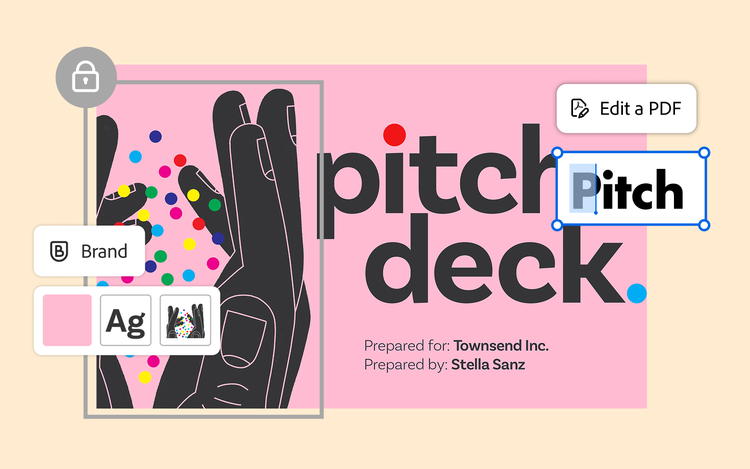
Chanasit notes that Adobe Express, another tool within Acrobat Studio, can help sales teams easily align proposals with approved branding and design. “AI Assistant can help create a draft,” he says. “And then, once you have your draft, teams can go to Adobe Express, pick out a template, and start populating their text and building out their sales proposal.”
Business-class reliability and security.
Like all knowledge workers, sales professionals are facing incremental pressure to use AI to become more effective and efficient. However, many commercially available large language models (LLMs) lack business-class protections and reliability. This has led to high-profile incidents in which professionals — such as attorneys and journalists, whose work rely heavily on factual accuracy — have submitted briefs and articles containing incorrect information generated, or “hallucinated”, by AI tools. This is a critical concern for sales teams, who risk damaging customer trust if they inadvertently insert false details in pitch decks or sales proposals.
“Acrobat Studio is a generative AI tool that leverages an LLM,” Chanasit says. “The difference is, Acrobat Studio only looks at the documents you tell it to. It doesn’t go out onto the web and pull in inaccurate information.”
Additionally, Acrobat Studio does not use customer data to train its AI model. This means sales teams don’t have to worry about accidentally exposing their information or that of their customers, which in turn helps prevent violations of company policy, regulatory requirements, and nondisclosure agreements.
Learn more about Adobe Acrobat Studio for sales teams.