Marketing is entering a new phase — brands are no longer designing journeys for a single audience segment but for multiple individuals, humans and agents, moving through the same experience.
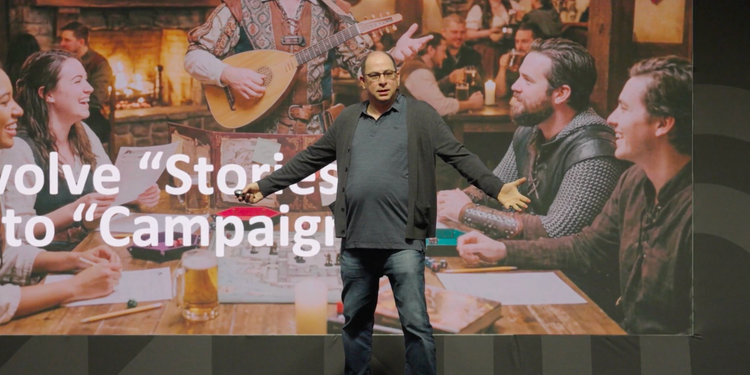
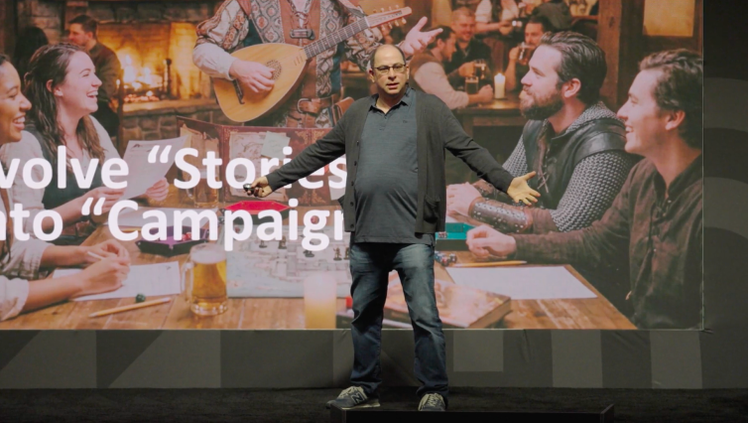
To explain what that means, I often use a simple analogy from Dungeons & Dragons. Like the game, every group has two types of players: those driven by story and those driven by rules.
Today, marketing has both. Humans are driven by emotion, context, and narrative. Agents are driven by logic, structure, and efficiency. The challenge isn’t choosing between them. It’s building experiences that work for both.
In my role as global lead for the Creative Technology Group at VML, I spend a lot of time thinking about the full journey — from first impression to purchase and beyond. What’s increasingly clear is that it’s no longer shaped by just one participant. We now have both human audiences and agents influencing the same journey.
One party means more content.
When journeys include both humans and agents, a single static story is no longer enough. Each audience is looking for something different:
- Humans want meaning and emotional connection.
- Agents need content that is structured, interpretable, and trustworthy.
That doesn’t just increase the volume of content required. It raises the bar for how that content is organized. Without strong systems for structure and consistency, the experience breaks down.
This is why disciplines like UX, information architecture, and journey design are now core to marketing execution, not optional layers.
Don’t expect consistency in return.
One of the biggest shifts teams will underestimate is this: human and agent behavior won’t look the same. Don’t expect consistency.
Humans and agents will not move through journeys the same way. One may prioritize emotional fit. The other may prioritize efficiency. Those inputs can look contradictory.
But contradictory does not mean unrelated.
That is the part I think organizations need to prepare for now. If a human and an agent are both acting on behalf of the same need, they are not separate customers. They are still the same party, which means your systems need to connect those signals — not treat them as noise.
That creates front-end experience challenges, but the real complexity sits in the back end.
How will your CRM handle that? How will your data model connect interactions that may appear disconnected but still belong to the same person? These are not minor operational questions. They shape whether the experience feels coherent or fragmented as this behavior becomes more common.
Stories have to become campaigns.
Marketers already understand storytelling. But in this environment, stories need to evolve into something bigger.
Not one-off campaigns, but Campaigns with a capital C. Connected systems of content and customer experience orchestration that:
- Maintain a clear narrative.
- Scale across touchpoints.
- Stay coherent across fragmented interactions.
Both audiences need continuity. If the story disappears, humans will disengage. If the structure disappears, the agent loses the thread. The job is no longer just to create more assets. It is to design a connected system with enough consistency and flexibility to work for multiple players moving through the same game in different ways.
This is a people strategy, not just a tech strategy.
There’s a common assumption that AI reduces the need for people. In reality, it increases the need for the right capabilities.
As content volume grows and journeys become more complex, distinctly human skills become even more valuable:
- Clear writing
- Strong storytelling
- Structured thinking
- System design
The future isn’t built by replacing creatives, copywriters, strategists, or UX designers. It is built by asking them to work even more closely with technologists and data engineers like me. That combination is what makes it possible to build experiences that work for both the lore player and the number cruncher, the human and the agent.
The real opportunity is to start now.
Consumers are already beginning to rely on agents to research, compare, and evaluate on their behalf — and that behavior will only accelerate. Better to start building the map now, while there’s still time to shape the journey instead of reacting to it later.
Explore how other leaders are building for humans and AI — full wrap-up coming soon.
Jason Carmel is the global lead for the Creative Technology Group at VML. With more than 20 years of digital product and marketing experience, Jason has worked with clients such as Ford, Coca-Cola, and Microsoft to craft compelling, emotional, and innovative experiences based on behavioral data. Jason manages a team of data scientists, creative technologists, and coders to support global marketing initiatives with cutting-edge technology, focusing more specifically on AI in the past five years.