Artificial intelligence isn’t just transforming advertising — it’s redefining how creative is produced, how content is discovered, and how campaigns are executed. Yet despite AI’s outsized influence in industry conversations, one fundamental question has remained surprisingly unanswered: How big is AI’s actual footprint in the advertising economy today?
A new analysis from Madison & Wall brings rare clarity. By sizing AI’s impact end to end — across creative, content, and execution, the research highlights an ecosystem in rapid transition. At Adobe, these findings echo what we see across our customers: AI is shifting from a set of isolated tools to a connected tissue that fundamentally changes modern marketing.
Below, we break down the study’s key findings and how Adobe is helping brands turn this shift into a competitive advantage.
AI is accelerating creative work and unlocking new scale.
Madison & Wall estimates that $18 billion in U.S. creative production and services is “realistically exposed” to AI-driven substitution today. This aligns closely with what we hear from the world’s largest brands: creative demand is exploding, timelines are compressing, and teams need new levels of scale.
How Adobe is helping brands keep up.
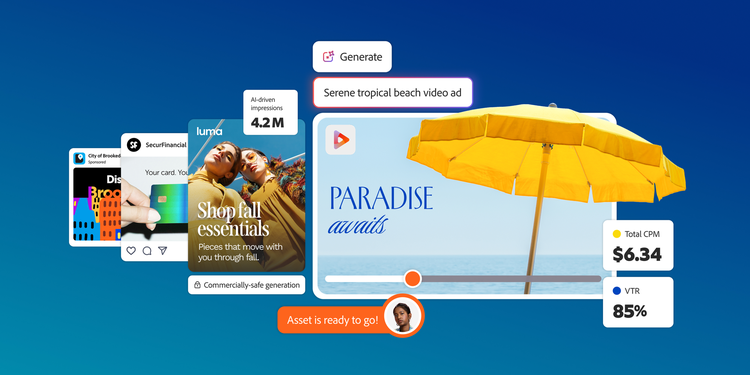
The Adobe Firefly family of models was built for this moment. Designed on a creator-first foundation, Firefly accelerates ideation, creation, and production while ensuring brand consistency and enterprise-grade governance.
Firefly-powered tools now embedded across Adobe Creative Cloud, Adobe Express, and Adobe for Business help teams:
- Generate concepts in seconds.
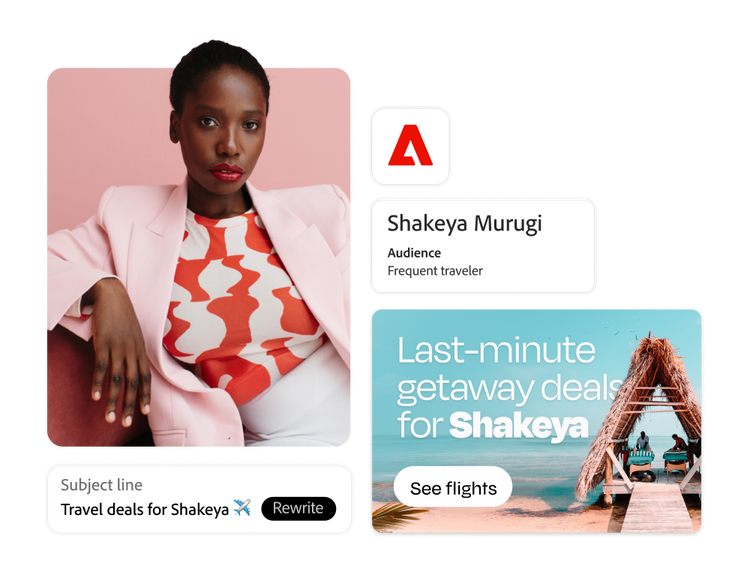
- Produce and adapt content for every audience and channel.
- Maintain brand integrity at scale.
- Speed up workflows that previously required multiple teams and tools.
And as agentic AI matures, Firefly’s roadmap expands further — toward intelligent systems that understand goals, streamline workflows, and collaborate with teams, all while keeping creators firmly in control.
The rise of Generative Engine Optimization (GEO).
Search behavior is changing again — this time toward LLM-powered answers, not links. Madison & Wall highlights the growing importance of Generative Engine Optimization (GEO) as brands compete in AI-powered discovery environments. If AI systems cannot interpret, read, or cite your content, it may simply disappear from search results.
Solution by Adobe for agentic brand visibility.
Adobe Brand Visibility, formerly Adobe LLM Optimizer, gives brands proactive insight into how and where they appear in AI-generated answers. With it, marketers can:
- Understand how LLMs surface their content.
- Benchmark against competitive visibility.
- Optimize structured data, product information, metadata, and longform content.
- Continuously adapt as LLM behavior evolves.
SEO shaped the last decade of digital storytelling. GEO will shape the next — and Adobe is helping brands make that leap confidently.
A major contribution of Madison & Wall’s analysis is its precise definition of AI-powered advertising — spend that flows through systems where AI autonomously manages targeting, bidding, budget allocation, placement, and optimization. By that definition, AI powers ~8% of U.S. ad spend today and will reach ~26% by 2030.
Where is this growth happening?
- Search and social, where automated buying tools are already well-scaled
- SMBs, which adopt simplified tools faster than large enterprises
- Walled gardens, rather than open-web or cross-platform systems
Preparing for the agentic era.
Madison & Wall is clear. No true agentic advertising system exists today. And for good reason, cross-platform autonomy requires new levels of trust, governance, and transparency. For true agentic advertising, an AI would need to autonomously:
- Set multichannel goals and strategies.
- Build creative variants.
- Select publishers across walled gardens.
- Monitor performance.
- Reallocate budgets across platforms.
- Escalate to humans only for business-level decisions.
But the foundations are emerging.
Adobe Agent Orchestrator gives enterprises a safe, governed environment to:
- Deploy AI agents safely inside the organization.
- Connect third-party agents (Google, OpenAI, AWS, Meta, and more).
- Orchestrate actions across content, data, and customer experience systems.
- Ensure AI decisions remain auditable, reversible, and brand safe.
This isn’t agentic advertising yet. But it’s the infrastructure brands need before allowing AI to operate across budgets and channels.
What’s next in the advertising market.
Madison & Wall highlights that winners in advertising will operationalize AI across creative, content, and execution — not just in isolated tasks. That means evolving how:
- Creative is produced (AI native workflows).
- Content is structured (GEO-ready).
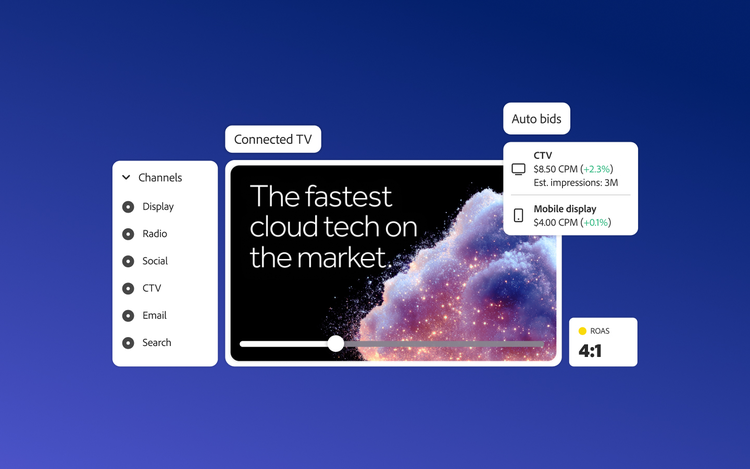
- Campaigns are optimized (automation-first execution).
- Organizations work (governed Agentic systems).
At Adobe, we believe the future of advertising is AI-first but human-guided. If your organization is exploring how to scale creative production, improve AI-driven visibility, or prepare for agentic marketing workflows, we’d love to help.
Anvita Sinha is a Principal AI Strategist in Adobe Digital Strategy Group, where she advises senior enterprise marketing and technology leaders on applying AI and agentic solutions to drive measurable business outcomes. She partners closely with global brands on data-driven strategic advisory offerings and workshops to shape AI-led transformation strategies across content, experience, and data. Anvita has 10 years of cross-industry and Adobe experience, along with an AI/ML, Statistics and Business Analytics background from Chicago Booth School of Business and University of Pennsylvania.