Master the customer journey with analytics and personalization.
Findings from our study reveal a clear truth — seamless, connected journeys build trust and loyalty. With so many customers willing to switch brands because of friction, omnichannel customer journeys have become a key driver of loyalty, conversion, and long-term relationships. As customer expectations rise, brands increasingly rely on customer journey analytics and omnichannel data insights to understand how each interaction shapes satisfaction, loyalty, and long-term value.
Understanding the customer journey means identifying the moments that build loyalty and those that break it. With tools like Adobe Customer Journey Analytics, brands can connect engagement metrics, behavioral analytics, and cross-channel data to understand these moments in real time. Addressing disconnected experiences before they push customers away, along with post-purchase silence, ignored feedback, and missed personalization opportunities, helps preserve trust and makes people feel valued.
These signals make one thing clear — organizations must unify behavioral analytics, channel data, and engagement metrics to identify friction before it breaks trust. With connected insights, brands can design journeys that feel seamless, consistent, and genuinely customer-centric.
To better understand how to optimize every touchpoint, keep brand promises, and turn more interactions into lasting relationships, we surveyed over 1,000 people. The findings highlight the need for comprehensive customer journey analytics to help brands identify, understand, and resolve the frustrations caused by disconnected experiences.
Key findings.
Our study reveals the impact of disconnected customer journeys:
- Most people (94%) have experienced disconnected experiences with brands.
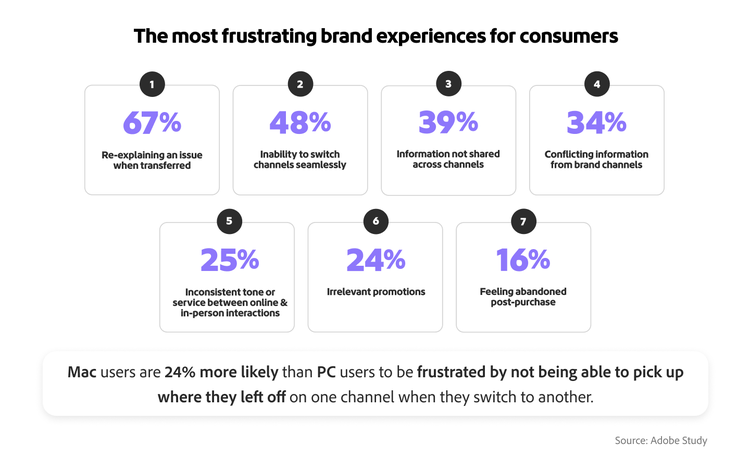
- The most frustrating disconnected experiences include having to re-explain an issue when transferred (67%) and not being able to switch channels seamlessly (48%).
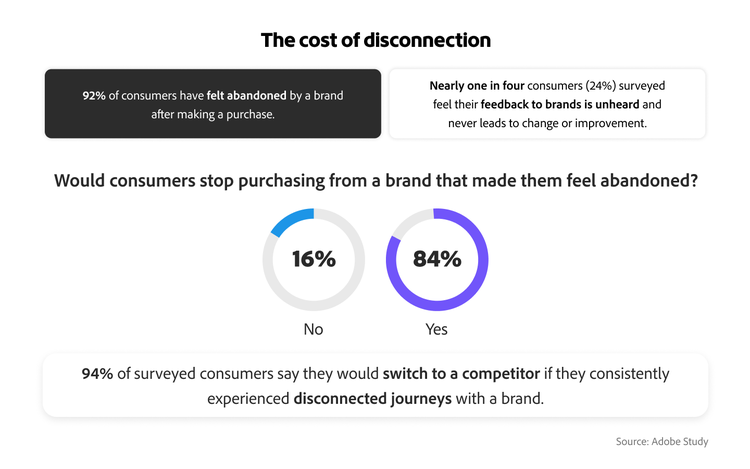
- The disconnect has a high cost — 94% of people surveyed would switch to a competitor after a consistently disconnected experience.
- More than half of consumers (56%) feel a brand's different channels compete for their attention, and 92% have felt abandoned by a brand after a purchase.
- Nearly one in four (24%) feel their feedback is unheard and never leads to change.
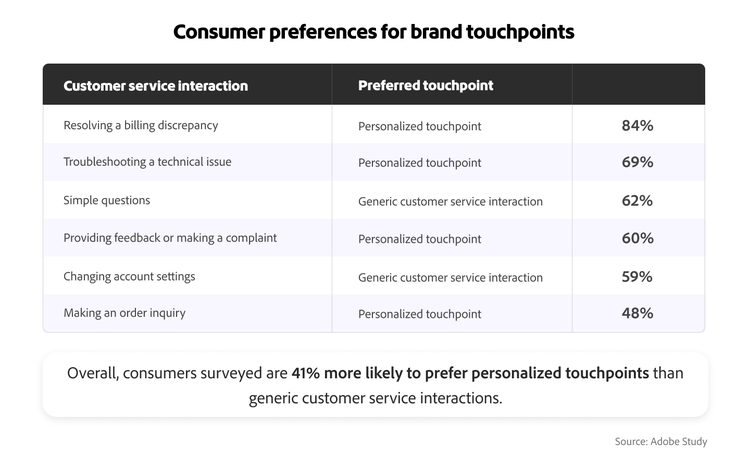
- Consumers are 41% more likely to prefer a personalized touch over generic service interactions.
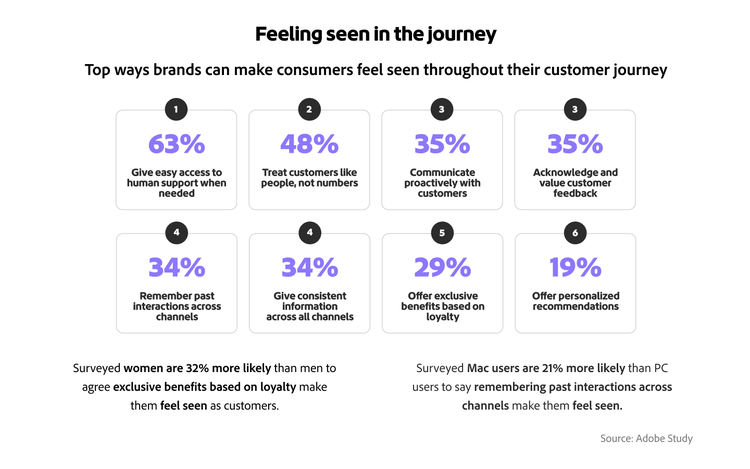
- The top ways to make customers feel seen are simple: provide human support when needed (63%) and treat them like people, not numbers (48%).
For brands, these findings underscore a clear mandate — reduce repetitive tasks, eliminate channel silos, and use real-time analytics to personalize interactions. Investing in journey visibility directly impacts customer satisfaction and retention.
The importance of connected customer journeys.
Every brand touchpoint, which is any moment where a customer directly or indirectly interacts with a brand, matters. Engagement metrics provide a window into how well these touchpoints are performing. By connecting channels through omnichannel journey analytics, even simple interactions can feel unified, preventing the friction that makes customers quick to abandon the experience and seek brands that deliver seamless, personalized journeys.
Unifying journey data is key to removing friction at scale, ensuring information is shared, context is carried across channels, and customer intent is understood.
Seamless brand interactions keep customers engaged and driving toward purchase. By eliminating gaps like repeating information or conflicting messages between channels, brands prevent the issues that can quickly derail the customer journey.
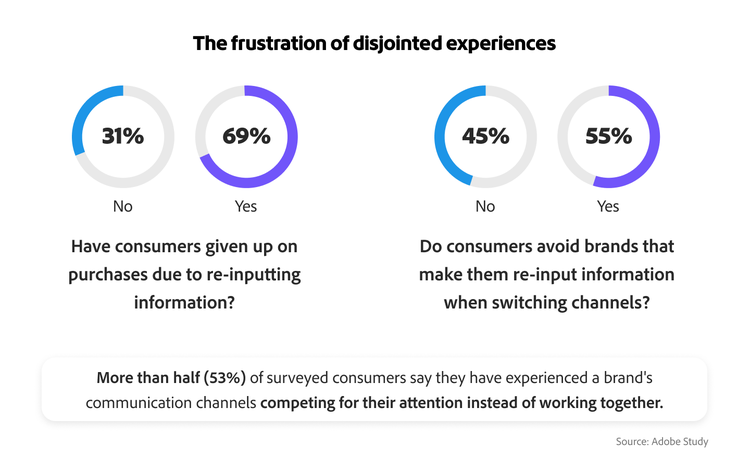
Creating a cohesive brand experience helps organizations stand out, especially given that 94% of consumers say they've encountered disconnected journeys. More than half (53%) feel a brand's different channels often compete for their attention instead of working together. Addressing this lack of cohesion is critical, as 55% of consumers avoid brands that make them re-enter information when switching channels.
Real-time customer insights empower brands to pinpoint exactly where misalignment occurs. Whether it’s gaps like inconsistent information, delays between systems, or missing data, these issues can be addressed faster by brands with these insights.
Improving the top friction points in brand experiences.
The top opportunities to improve brand interactions involve better channel coordination:
- Re-explaining an issue when transferred (67%)
- Inability to switch channels seamlessly (48%)
- Information not shared across channels (39%)
- Conflicting information from brand channels (34%)
- Inconsistent tone or service between online and in-person interactions (25%)
- Irrelevant promotions (24%)
- Feeling abandoned post-purchase (16%)
When it comes to the top issue, Gen X (72%) is reportedly the most bothered by having to re-explain an issue when transferred. Gen Z stands out for being more sensitive to conflicting brand details (42%) and inconsistent tone between online and in-person experiences (31%).
The unified data model in Customer Journey Analytics helps prevent these issues by making sure customer traits and behavioral analytics are visible in one place, reducing the handoff gaps that often trigger customer frustration.
Preventing abandoned purchases through connected journeys.
Reducing friction is essential to retaining revenue, as nearly seven in 10 consumers (69%) have abandoned an online purchase because they had to re-enter their details. It's more common than expected, with 73% saying they've had to repeat information such as cart items, shipping or billing addresses, or payment details when switching between channels. This impacts women most, being 21% more likely than men to feel frustrated when they can't pick up where they left off. Millennials are the most likely to give up on a purchase requiring re-entry of information (74%), while Gen Z is the least likely (58%).
Consumers who shop in the hospitality industry (97%) are most likely to say a brand's communication channels feel disconnected. Regardless of industry, consumers are facing disconnected journeys, and the impact is clear. For brands, addressing these abandonment patterns reclaims lost revenue that is entirely preventable. Unified customer journey analytics can expose where breakdowns occur, whether it’s data latency, missing attributes, or inconsistent messaging, allowing teams to intervene before customers drop off. Tools like Customer Journey Analytics can help brands close these gaps by unifying data across channels, giving businesses the context they need to deliver seamless experiences to their customers. With this type of journey analytics, powerful data visualization allows businesses to envision customer paths, pinpoint where friction occurs, and see which actions lead to success or abandonment.
Seamless connections directly boost customer journey performance, increase lifetime value, and remove friction at critical moments in the conversion path. With the right marketing analytics tools, brands can uncover behavioral analytics to support every touchpoint, reduce friction, and keep customers moving forward.
Features like report-time processing in Customer Journey Analytics can also make customer actions visible immediately across channels, ensuring shoppers don’t lose progress when switching devices or touchpoints, which is often a major contributor to abandoned carts.
How connected experiences drive retention.
When customers feel disconnected, loyalty erodes. This weakens the retention and advocacy stages of the customer journey, making it harder for brands to drive repeat business or inspire positive word-of-mouth. Adobe’s customer journey analytics help identify which touchpoints most impact trust, loyalty, and long-term value.
Loyalty is no longer guaranteed by a strong product alone. Customers expect continuity, acknowledgment, and context across every channel. Brands that can operationalize these insights, using real-time data to improve moments that matter, gain a significant retention advantage.
Post-purchase engagement is essential for maintaining loyalty. Ninety-two percent of consumers have felt abandoned by a brand post-purchase, with women 25% more likely than men to report it. Avoiding this feeling is crucial, as most won't give a brand a second chance, with 84% of consumers saying they would stop purchasing from a company that made them feel this way.
This is why acting on customer feedback, and doing so in a timely and relevant way, matters. Solutions like Adobe Journey Optimizer, when combined with insights from Customer Journey Analytics, allow brands to deliver tailored follow-ups that close the loop and reduce the chances that customers will feel forgotten.
The value of acting on feedback.
Of those surveyed, 91% say acting on feedback would boost loyalty. However, nearly one in four believe their feedback to brands is unheard, resulting in no change or improvement. Gen X (69%) are the least likely to feel heard by brands, while Gen Z (85%) are the most. Similarly, Android users surveyed are 29% more likely than Apple users to feel their feedback goes unheard by brands.
Acting on feedback isn’t just a courtesy — it directly influences repeat purchases and advocacy. Closing this loop with timely, relevant outreach is one of the most effective ways to reinforce loyalty and reduce churn. By using behavioral analytics, customer analytics and engagement metrics, brands can act on this feedback, strengthen relationships, and improve retention. Even small gestures, like acknowledging concerns or following up after a purchase, can make customers feel seen and heard. That recognition not only increases the likelihood they'll return to buy again but also makes them more likely to recommend the brand to others.
With Audience Analysis in Customer Journey Analytics, teams can quickly identify groups like “recent purchasers with no follow-up” and activate contextual outreach through Journey Optimizer, ensuring valuable customers don’t slip through the cracks.
Retaining customers with connected experiences.
Consistent journeys are critical for retention. Automotive consumers (97%) are the most likely to swap brands if they experience disconnected journeys. In certain states, including Texas, New Jersey, and Georgia, tolerance is nonexistent, with all consumers saying they would switch if the issue persisted.
When brands close these gaps with the right analytics, customers enjoy smoother, more consistent omnichannel experiences, which can turn first-time buyers into long-term advocates.
Guided analysis in Customer Journey Analytics can help identify the touchpoints driving churn, spotlighting friction that might otherwise go unnoticed. By identifying patterns behind drop-off, teams can prioritize improvements that meaningfully influence retention.
What customers want.
From resolving complex issues to answering simple questions, customers have clear preferences for how brands should engage.
They want brands to deliver human support for high-stakes needs, seamless digital paths for simple interactions, and personalization powered by their history and preferences. These expectations set the standard for how modern customer journeys must be designed.
How surveyed consumers prefer to engage at key brand touchpoints.
Personalized touchpoints interact with customers through direct human contact or by using their data to provide relevant, tailored support. Generic customer service interactions, on the other hand, offer the same one-size-fits-all assistance to all customers.
Personalized touchpoints.
- Resolving a billing discrepancy (84%)
- Troubleshooting a technical issue (69%)
- Providing feedback or making a complaint (60%)
- Making an order inquiry (48%)
For these higher-stakes interactions, features like Product Support Agent in Customer Journey Analytics can help internal teams troubleshoot more efficiently using natural language prompts and curated knowledge, enabling faster and more personalized resolutions.
Generic customer service interactions.
- Simple questions (62%)
- Changing account settings (59%)
Generational differences are also evident in consumer preferences for brand touchpoints. Gen Z are 21% more likely than baby boomers to prefer generic customer service interactions for brand touchpoints. Gen Z customers do still favor personalization overall, however, which likely reflects the fact that they're more AI- and tech-native than older generations. In comparison, 57% of baby boomers surveyed placed the highest value on personalization.
When looking at what makes surveyed consumers feel recognized, the top preferences include:
- Easy access to human support when needed (63%)
- Being treated like people, not numbers (48%)
- Proactive communication (35%)
- Acknowledging and valuing customer feedback (35%)
- Remembering past interactions across channels (34%)
- Consistent information across all channels (34%)
- Exclusive benefits based on loyalty (29%)
- Personalized recommendations (19%)
These preferences reinforce a core truth — recognizing customer history across channels is foundational to delivering successful experiences. Journey analytics provide the connective tissue that enables this recognition at scale.
Different industries have their own best ways to make customers feel valued. In financial services and hospitality, 69% of consumers want fast access to human support, highlighting the importance of responsiveness in these sectors. In the automotive world, customers are 66% more likely than those in retail to feel recognized when a brand uses their name and remembers past details, proving how personalization can help strengthen trust for bigger purchases.
Preferences across consumer demographics.
These preferences also shift across demographics. Baby boomers are 41% more likely than Gen Z to want to be treated like customers rather than numbers. In comparison, Gen Z is 16% less likely than older generations to prioritize human support. Women are 32% more likely than men to feel seen when offered loyalty-based benefits, and Mac users are 21% more likely than PC users to value brands remembering past interactions across channels.
When brands take the time to understand these differences, every interaction becomes a chance to strengthen the relationship. The result is smoother customer journeys that naturally build lasting brand loyalty through well-timed personalization. And with the right marketing analytics tools for personalization, brands can make sure those moments hit the mark every time.
The binding dimensions feature in Customer Journey Analytics ensures customer interactions are accurately connected across channels, helping brands remember preferences, past actions, and key engagement moments, which is the foundation of delivering consistent, on-brand experiences.
These generational and platform differences show why segmentation and adaptive journeys are essential. Effective segmentation ensures content resonates with the right audience, avoiding experiences that might otherwise feel impersonal.
Getting started with customer journeys.
Winning loyalty requires continuous, omnichannel journey optimization, closing post-purchase gaps, and ensuring every interaction reflects the customer’s history, context, and intent. With Customer Journey Analytics, brands can see the whole picture across every channel, identify gaps, and act on what customers share in real time. The result is stronger trust and more reasons for people to return again and again.
Combined with Adobe Journey Optimizer and Adobe Workfront, brands can turn these insights into action, creating a connected customer journey that feels seamless from the very first interaction to long after the purchase.
With Adobe’s unified ecosystem of Customer Journey Analytics, Journey Optimizer, and Workfront, brands can not only see the full journey but also activate improvements in real time. These capabilities transform raw insights into orchestrated, connected experiences that drive measurable business outcomes.
Explore how Customer Journey Analytics empowers teams to visualize complete journeys, identify friction, and personalize at scale. Watch the overview video to see how brands turn these insights into action.
Methodology.
To explore the customer journey, we surveyed 1,002 people. This sample size provides a 95% confidence level with a low 3% margin of error. Because this exploratory research relied on self-reported data, respondents may have biases, and discrepancies may exist between their responses and their actual experiences.