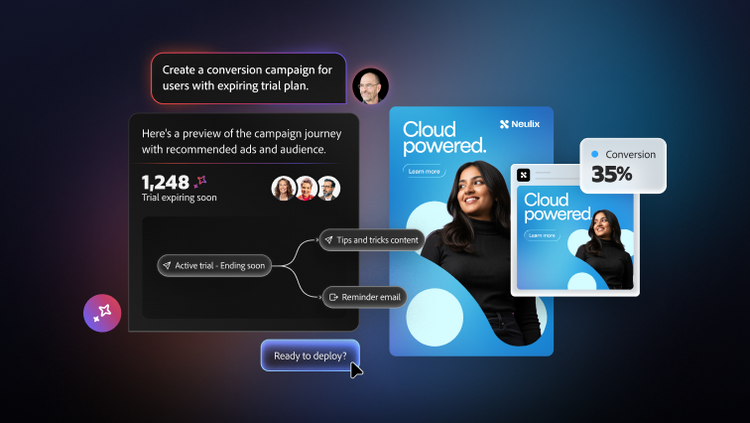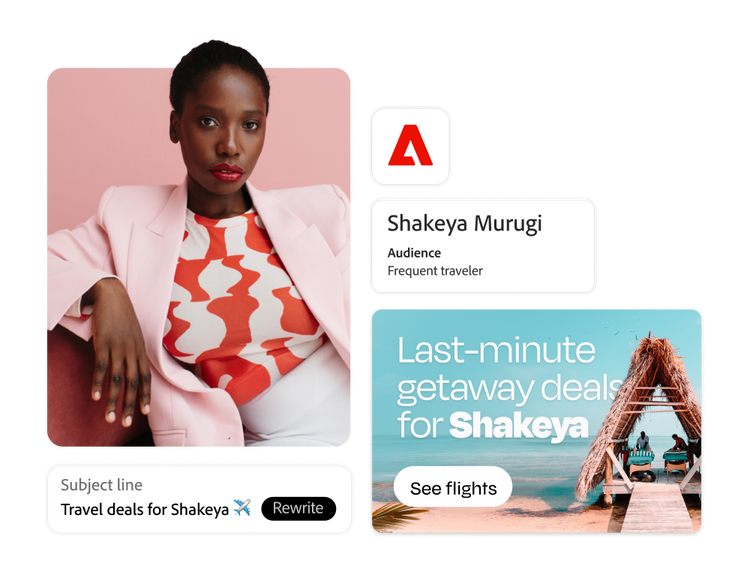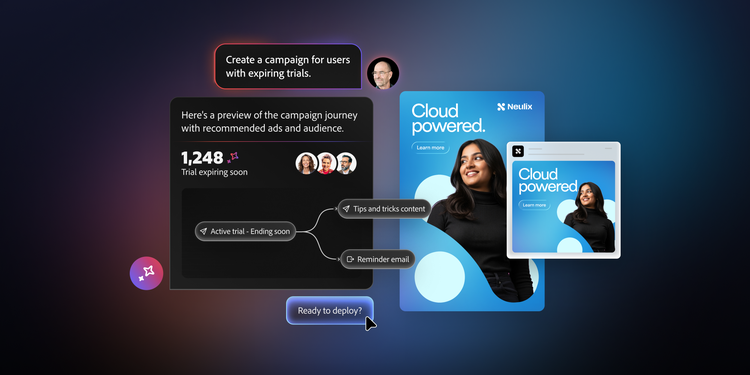
Agentic AI is a top priority for most marketing teams because it goes beyond content generation and recommendations. It can act on its own to respond to customers faster and at a scale teams can’t match manually.
Marketing leaders are excited by that ability. Their IT counterparts are more cautious about it for the same reason.
AI agents can access enterprise data, connect systems, and take actions on a user’s behalf, introducing a fundamentally different level of risk. So, IT teams have gotten much more careful about which agentic AI tools they’ll sign off on and much more specific about what they need to see before they will.
The result is that many good use cases never make it to launch. According to Adobe’s 2026 State of AI Readiness report, only 47 out of every 100 proposed AI initiatives make it through IT and security review. And as teams work to fit those into existing systems and workflows, that number drops further to 33.
For marketers, this means a compelling use case is only part of the pitch for a specific agentic AI solution. The rest is knowing what a CIO is likely to ask and being ready with the answers. The five questions below are the ones that come up most often.
1. Can you trust the data powering the agentic solution?
Marketers want a tool that can plug into their content libraries, customer records, and campaign data, and just work. CIOs need confidence in both the data behind the solution and how it handles the organization’s own data. If those foundations are unclear or poorly controlled, the agent can scale risk just as quickly as value.
That makes data transparency one of the first things to get clear on before you’re in the room with IT. Get straight answers from the vendors you shortlist on:
- What data is used to train or ground this system? Insist on a plain-language answer on how data is sourced and if there are any copyright or licensing restrictions.
- Will your data ever be used to train the underlying model without consent? Get a clear yes or no. You should have control over that choice.
- Does this work from data you control, labeled with the right context? Look for confirmation that the AI model can recognize and enforce the access controls, approvals, and restrictions you’ve set.
By the end of that conversation, there should be no ambiguity about what data the agentic solution relies on or what controls govern the use of your own data.
2. Can you see what the agentic solution is doing and stay in control?
If an agent sends the wrong email to 10,000 people or pulls the wrong customer segment into a live campaign, who catches it, and how quickly? That is the concern underneath everything a CIO wants to know about oversight.
The more autonomy an agentic system has, the more important it is that oversight is built in from the start. CIOs need confidence that the system won’t become a black box once it starts acting across workflows. That makes visibility and control the practical test. Look for clear answers on three things:
- Can you see how the agent got to the output, not just the output itself? Check whether it can show the sources and reasoning logic behind its outputs and be clear about its limits.
- Can a person step in before the agent takes an action that carries more risk? Only 5% of business leaders allow agents to make high-stakes decisions without review, so look for clear approval points.
- If something goes wrong, can you reconstruct what happened and why? You should be able to trace individual interactions, not just see an aggregate report, so you can understand where and why the workflow broke down.
Those answers will tell you whether you can go into a CIO conversation confident that mistakes can be caught before they scale.
3. Will the agentic solution work with your stack or fragment it further?
IT teams have spent years consolidating the marketing tech stack, and agentic AI is testing that discipline. Every new agentic tool can mean new capabilities, permissions, and data integrations. It's no surprise that 94% of IT leaders say AI sprawl is already adding complexity and risk, while only 12% have a centralized way to manage it.
For CIOs, the question is whether the tool fits into what already exists without adding fragmentation. Marketers can get a good read on that by looking at two things.
- Can the agent work within your systems and workflows? A good fit should plug into your existing platforms and reduce handoffs, not add one more layer to manage.
- Do your existing permissions and governance rules still apply when the agent acts? The agent should only access what it is allowed to, with the same permissions and policies enforced at every step of the workflow.
If both checks hold, the conversation with your CIO becomes much easier because the agent can stay within the marketing systems and controls that IT already manages.
4. Can the agentic solution prove its marketing value?
Ask most marketing teams how an agentic solution is performing, and adoption signals like logins and daily usage are often all they have to work with. According to Adobe’s 2026 AI and Digital Trends Report, only 31% of organizations have a measurement framework for agentic AI.
Closing that gap starts with choosing solutions that make measurement easier. To give both marketing and IT leaders the visibility they need, check whether you can see what agentic workflows are producing and how much they cost to run.
- Can the tool show outcome-level impact? Check if you can connect agentic activity to conversion, campaign performance, efficiency, or other business outcomes, not just usage volume.
- Is there a built-in way to measure ROI specifically for agentic workflows? Look for workflow-level reporting that connects outcomes with the agent’s credit consumption and costs.
- Does the vendor talk about accountability for outcomes? Ask how success is defined, who owns the result, and how to identify which workflows should scale, change, or stop.
Marketing and IT can then have a concrete basis to decide which workflows should scale and which solutions deserve more resources.
5. Has the agentic solution been tested to represent your brand safely?
Half the organizations in a recent survey said they had already shipped an AI agent that passed internal evaluations and then caused a customer-facing failure. By that point, teams would’ve already built workflows around the tool, making quality and safety gaps much harder to isolate and fix.
That makes the quality of the evaluation critical. You need to know what the vendor tested, which problems surfaced, and how those findings changed the system before launch. That requires a few more pointed questions.
- Can the vendor show evidence of bias testing? Ask which demographic groups and scenarios were tested, what disparities surfaced, and what changed as a result.
- What measures were put in place to catch harmful or off-brand outputs? Check what failure cases were identified in testing and what safeguards were added before the system went live.
- Does quality control continue after the system goes live? Confirm whether human feedback loops, in addition to errors from real-world use, inform how the model is managed and improved.
Pushing for these specifics can help marketing and IT assess whether quality, fairness, and safety are backed by real testing, safeguards, and ongoing feedback, and whether the system is ready to represent the brand consistently across campaigns and markets.
Bridging what marketing wants and what IT needs.
The five questions point to the same standard. An agentic AI solution needs to work within the systems marketers already use, maintain governance and human oversight throughout the workflow, and remain grounded in the organization’s brand and business context.
Once an agentic solution is embedded in live workflows, gaps in oversight, measurement, or brand safety become much harder to untangle. Marketers who account for these concerns while evaluating a solution are better positioned to scale agentic AI in ways that improve business outcomes.
Adobe CX Enterprise Coworker is designed around that model. It keeps work moving while routing approvals when human judgment is needed. Every action it takes remains tied to the business objectives teams have set and stays within the permissions a user already holds across connected Adobe CX Enterprise applications. This gives marketers greater speed and autonomy while preserving the oversight IT expects.
If you want to see what a governed, connected AI teammate looks like in practice, explore CX Enterprise Coworker.