For years, brands have invested heavily in influencing people — decision-makers, buyers, and customers — to shape behavior and drive demand. Now, a new gatekeeper is deciding what gets seen at all. The rise of agentic AI and LLM search is rewriting the rules of discoverability and visibility, forcing brands to rethink how they get found, trusted, and chosen.
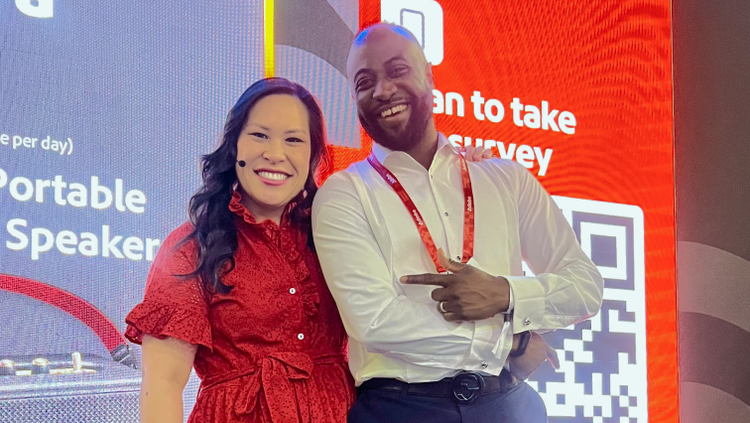
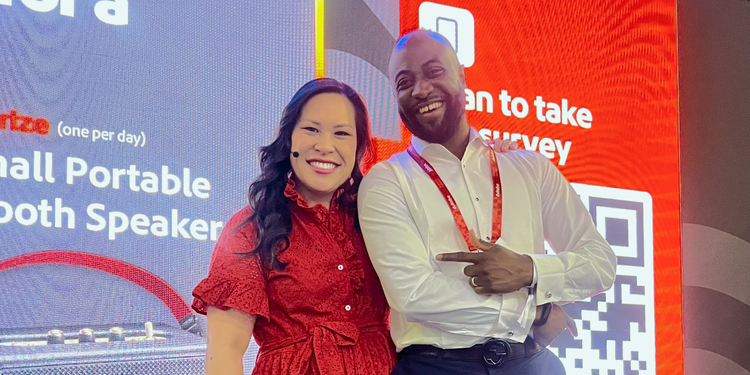
This isn’t just a technology shift; it’s a visibility shift. I had the pleasure of hosting these visionaries on the Adobe Summit stage, along with my colleague Ashley Chang, senior director of global enterprise marketing at Adobe, where they unpacked what this moment means for marketers.
On stage, I had the opportunity to speak with three leaders who are navigating that shift in real time. Each approached it differently — but together, they made one thing clear: your marketing now needs to perform for both human and agentic audiences at once. Here are the insights that matter — and how to act on them.
Tyler Gage, Leader, Creative Technology, Vanguard
Tyler set the tone by reminding the audience that brands no longer just advertise to people. They advertise to AI agents, too. “We’re not just persuading humans. We’re persuading the systems that help humans decide,” he declared.
Search has shifted from queries to conversations, and AI is increasingly influencing the answers.
In this new paradigm, AI often prioritizes third-party and community-driven content over brand messaging. Businesses don’t choose the sources that feed these technologies — the agents choose, pulling from platforms like Reddit, Quora, and online forums where many brands lack a voice. What hasn’t changed is that trust still wins. What has changed is where that trust is built.
The Vanguard response is to listen at scale. Using agentic systems and Adobe Workfront Fusion, the team analyzes real customer conversations, maps those insights to active creative work, and generates content ideas in seconds.
The result: a 23% increase in capacity and a 20% reduction in workflow time — without sacrificing creative quality.
Takeaway: If you’re not actively mining and responding to real customer conversations, you’re not shaping what AI learns or what it recommends.
Action: Invest in systems that capture, structure, and operationalize customer voice data — not just surveys, but also live conversations.
Anish Raul, Senior Marketing Lead, Sling TV
Marketers are now operating in two economies at once, according to Anish — both within a single buyer’s journey.
People still live in the attention economy, making decisions based on emotion and justifying them with logic. But AI agents operate in a retrieval economy. They don’t get persuaded — they get informed.
That shift changes what effective marketing looks like. AI agents won’t buy into a brand’s methodology. “What AI agents cannot retrieve, they cannot recommend,” Anish says, signaling the need for marketers to prove their value by focusing on three pillars in their storytelling: structured content, consistent terminology, and citation-worthy claims that can be evaluated and measured. For instance, Sling TV can’t just claim to offer “the best streaming experience for the whole family.” It needs to back it up with qualifiers like “ad-free access to 45 live sports channels, 60,000 on-demand titles, and unlimited cloud DVR.”
“Welcome to a new world,” Anish said. “One where the machine surfaces and the person decides. Your brand has two audiences now, and you need to build experiences for both.”
Takeaway: If your value isn’t structured, specific, and provable, AI won’t surface it — no matter how strong the brand story.
Action: Audit your messaging. Replace broad claims with measurable, verifiable statements AI can parse and rank.
Moria Fredrickson, VP of Brand and DX, Lumen
Moria closed out the sessions by reframing how brands think about discovery.
At Lumen — now positioning itself as the trusted network for AI — that starts with a simple shift: if AI is central to your promise, it has to show up across every workflow.
Nowhere is that more evident than in how customers engage. As Moria explained, a brand’s “front door” has moved — from traditional search to agentic AI journeys.
That shift introduces a dual audience. Humans still respond to relevance, emotion, and trust. Machines look for structure, verifiability, and clear signals they can act on.
“Brands need to embrace a strategic shift from capturing customers’ attention and persuading them to buy, to establishing themselves as trusted sources of information backed by credibility, accuracy, and usefulness,” she said.
There’s a lot we don’t know about how AI agents work, especially at the scale and speed with which they collect and query content. But, as Moria reminded the audience, these technologies are not black boxes. At least not entirely. The patterns we’ve seen in AI search results so far reveal that agents reward clarity and structure, consistency across sources, and frequently refreshed content.
That creates both an opportunity and a risk. Credibility can be built faster than ever, but it can also be lost just as quickly.
Takeaway: In an AI-driven journey, trust isn’t just earned — it’s engineered through clarity, consistency, and proof.
Action: Design content ecosystems (not one-off campaigns) that stay current, aligned, and verifiable across channels.
Make your brand AI-relevant.
Across each of these conversations, one idea came through clearly: this isn’t just a shift in tools but a change in how brands are discovered, evaluated, and chosen.
Marketing now has to work for two audiences at once. People still respond to story, emotion, and trust. AI agents look for structure, clarity, and proof.
Winning brands will do both: resonate with people and perform for AI.
At Adobe, we’re focused on helping brands build for that reality — connecting creativity, data, and AI so teams can show up with relevance in every moment.
The rules of brand visibility have changed. Learn how Adobe’s acquisition of Semrush will help businesses build and expand their reach in an LLM-powered world.
Please also see customer bylined blogs on each of their sessions: Vanguard, Sling TV, and Lumen.
Michael Benjamin is senior director of marketing at Adobe, leading enterprise and digital experience marketing across the UK & Ireland, the Middle East, and Africa. Based in London, he drives enterprise growth through customer-centric go‑to‑market strategy, AI‑powered marketing, and execution across complex B2B environments. Michael brings a global background across agency and SaaS with senior leadership roles at Intuit and Meta, where he led regional and global demand, brand, and account‑based marketing initiatives. At Adobe, he partners with regional and global leaders to translate strategy into a measurable pipeline and revenue impact.