
The State of B2B Customer Experience in an AI-Driven World
Rising Customer Experience Expectations in B2B
Strategic insights for customer experience transformation in B2B industries.
Executive Summary
For our State of B2B Customer Experience in an AI-Driven World research, we surveyed more than 1,500 senior B2B leaders across nine regions and six industries to understand how organisations are adapting to rising expectations, rapid AI advancement and the increasing pressure to do more with less.
Customer experience in B2B is shifting faster than ever. Expectations are rising, buying journeys are expanding and AI is changing how teams search, learn and make decisions. The customer journey is now a complex web of channels, tools and moments. As a result, the time customers spend with your brand is shorter. For leaders, staying ahead means adapting to buyers whose needs evolve quickly and who now turn to AI much earlier in their journey.
In this report, you will learn how B2B organisations are navigating that change across four key themes:


The New Path of B2B Discovery
The B2B landscape is reorganising around AI-driven discovery. With AI and LLMs now shaping early customer research and comparisons, organisations need to be ready to influence those first moments of discovery or risk being left behind.

Broader Discovery in Less Time
Our research shows that B2B buyers no longer follow a predictable path. Instead, they now engage in around 14 meaningful touchpoints before a decision is made, weaving through websites, reviews, analyst content, demos, internal conversations and live interactions.
Buyers expect all of these interactions to feel like a single, connected experience with context carrying across every channel. For example, an email should know who they are, what brand materials they’ve already explored, their company and role. Or a sales call should pick up where their website research leaves off. Now that AI has made this level of continuous personalisation possible, customers expect it. If experiences feel disconnected or reset from channel to channel, confidence drops.
Speed has also taken on the same level of importance. Nearly all customers are growing accustomed to immediate, accurate answers. By the time a buyer contacts a vendor directly, they’ve typically done significant research on their own and any delay feels like lost momentum. The organisations thriving in this environment are the ones that can meet buyers with context, consistency and clarity at every touchpoint.

AI Is the New Research Starting Point
As buyers take more control of their own research, a new starting point is emerging — AI-driven discovery. Buyers already prefer to look for answers on their own before engaging with the sales teams and AI fits naturally into that behaviour. These tools pull information from different sources, organise and simplify it and then highlight what matters most so buyers can move faster with more confidence.
LLMs are quickly becoming the place where early B2B research begins. Buyers are asking AI platforms to summarise options, compare vendors and explain complex requirements in plain language. Today, LLMs account for only a small fraction of B2B searches, but the research shows that number is projected to increase by nearly 1100% within the next two years.
That makes AI-driven discovery a new competitive moment. As LLMs get better at interpreting complex business needs, they will influence which vendors appear in the earliest stages of search and evaluation. Organisations that create clear content that AI can easily understand will be more likely to become a favoured source of information for LLMs. Preparing for that change now gives companies a real advantage as buyer behaviour continues to evolve.
“The numbers may seem small today, but the trajectory is unmistakable. LLM search is following the classic adoption curve of transformative technologies, just much faster. We’re betting big on this transition because the businesses that become experts in AI-ready content will dominate the next generation of B2B relationships.”
VP Strategy
Designing Content for AI Discovery
As more buyers start their research with LLMs, organisations are shaping their content so it’s easy for AI to understand and cite. More than 80% of B2B organisations plan to create content that directly answers customer questions, while only 56% are investing in tactics designed to help their content surface in AI-generated answers and recommendations (Figure 1). It’s a clear signal that traditional optimisation techniques are no longer enough.
Gaining visibility in AI systems now requires a more deliberate approach. Large language models prioritise clear, complete answers and expertise, moving away from keyword-driven tactics. With LLM use on the rise, organic web traffic continues to decline, making visibility in AI-generated answers an increasingly important path to discovery.
To show up consistently, organisations are reworking content to strengthen signals that matter to AI systems. That includes amplifying E-E-A-T — expertise, experience, authority and trust — and keeping information current. Content refreshed within months, not years, demonstrates relevance and will influence whether brands are surfaced or if they’ll be passed over.

Figure 1: What content strategies B2B organisations are taking to address LLM-based search.
TAKEAWAY
Get Discovered
The trend toward AI-driven discovery raises the bar for clarity, consistency and content that genuinely helps buyers move forward.
- Make it easy for buyers to explore on their own with self-service resources and seamless to reach a human when they’re ready to engage.
- Invest in cross-channel analytics to identify friction points, understand buyer context — what they’ve seen, done and asked — and keep messaging connected across the journey.
- Rewrite technical documentation and thought leadership in natural, conversational language that both buyers and LLMs can interpret and begin testing how content performs in AI-driven discovery tools.
- Prioritise depth, clarity and usefulness over keywords so brand expertise is more likely to be surfaced by LLMs.
Scaling AI Content with Confidence
Generative AI is making it possible for B2B teams to create more content faster than ever. But the speed it brings also raises new needs around oversight, accuracy and the systems that keep quality intact as production scales.

Governance Sets the Pace of Content
Generative AI presents a different set of stakes for B2B organisations compared to consumer marketing. A single inaccurate claim or bad review can introduce regulatory risk or slow a deal already in motion. That reality explains why many organisations are moving carefully.
While roughly 65% of businesses plan to adopt generative AI to create content (Figure 2), 75% already feel prepared to manage compliance and brand safety. This makes risk mitigation the most mature area of AI readiness. But far fewer feel prepared to scale the most impactful capabilities of AI, including personalisation (33%), multichannel co-ordinated delivery (30%) and performance measurement (32%).
The problem is that traditional models built for linear content workflows simply cannot handle the volume, variability and velocity that generative AI introduces. Just think about the content needs of B2B and how they vary widely by format and purpose, from social posts and emails to product documentation and long-form thought leadership. These use cases often require different models, review paths and levels of oversight. There is no single language model that can meet every B2B content need at an equal level of quality.
This is where governance does its real work. When it’s designed to account for different content types, varying levels of risk and the realities of how teams actually work, governance creates clarity around what’s allowed, what needs oversight and where automation can safely take the lead.
Ultimately, governance sets the pace, allowing B2B teams to move faster without compromising the standards their customers expect.
“Unlike consumer brands that need endless social posts and campaigns, our content needs are more focused on depth and accuracy. This fundamental difference shapes our AI strategy — we’re less concerned with volume production and more interested with augmenting expertise in highly specialised domains.”
SVP Marketing

Figure 2: Percentage of B2B organisations at different stages of adoption of generative AI for content creation.
Freeing Up Your Team Capabilities with AI
For teams that have begun implementing generative AI, the benefits are already visible. Organisations are seeing a 22% reduction in cost per asset and a 25% improvement in time to market, giving them the ability to respond to opportunities quicker and cover more of the customer journey. But it’s not all good news.
Quality oversight costs have temporarily risen by 40%. Another concern is that nearly every organisation encounters factual inaccuracies or hallucinated details when AI enters the workflow, especially in technical or regulated content.
Leading teams are responding by adding purpose-built governance agents to their content workflows. Instead of relying on broad, catch-all reviews, these AI agents have discrete skills designed to address a specific risk like fact checking, compliance scanning, source verification and policy enforcement.
By automating these safeguards, organisations reduce review overhead while improving consistency. That makes room for human reviewers to focus on what they do best — judgement, nuance and domain expertise. When automation and human oversight are clearly defined, teams can move at B2B speed without sacrificing quality or trust.


“We’re seeing a fundamental reallocation of resources rather than simple cost reduction. You don’t get the best results by just dropping AI into existing workflows — you have to reimagine content operations around human-machine collaboration.”
Head of Digital Marketing
TAKEAWAY
Creating Content with Accuracy
Scaling content with AI works best when speed is matched with strong guardrails and simple systems that keep accuracy and trust intact.
- Build policies that outline content authenticity standards, expert review steps and compliance requirements and test AI in small, low-risk content areas before expanding.
- Explore automated fact-checking and compliance scanning tools within existing content workflows.
- Prioritise AI-based integrations between AI tools and existing content management systems.
- Design integrated workflows with human review checkpoints supported by automated verification tools.
Reshaping the Operating Model Around Data and Teams
Businesses are still dealing with siloed information, disconnected systems and processes that slow teams down. Organisations need to examine how well their martech and organisational structure support each other and ensure data can move freely between tools and teams.

Data Integration Is Now a Competitive Advantage
Many B2B organisations know their data foundations are not where they need to be. Even if they have customer insights, those insights live in different systems or are owned by different teams. This fragmentation makes it harder to personalise experiences, respond quickly to opportunities or co-ordinate across functions in the way that buyers have come to expect.
To get more accurate customer IDs out of data, it must be unified. In industries like high-tech, consumer goods and industrial manufacturing, teams are rightfully treating data as something they can use in real time, not just store. By making data easier to access and connect, they are creating new services, offering more flexible pricing models and giving customers more helpful, predictive guidance. This also gives teams a clearer, more consistent view of customer segments, so insights can easily be shared between departments.

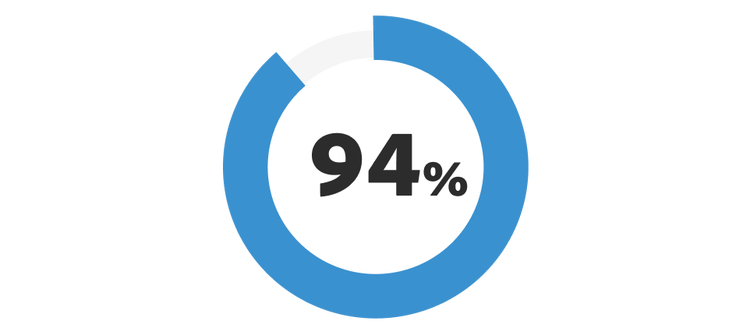
of B2B organisations believe their data rooms solutions will not meet their needs over the next 24 months.
Confidence in Martech Reveals a Journey Challenge
Even as organisations strengthen their data foundations, many still struggle to put it to work. Findings reveal most teams feel confident in their traditional content and campaign tools (Figure 3), but that confidence drops to just 33% when it comes to customer journey technology. These are the tools buyers interact with most, yet they are often the ones teams trust the least.
The very platforms that should help personalise interactions or support real-time responses often feel too complex or too disconnected from other systems. As a result, many organisations experience martech debt from investing in modern tools but struggling to implement them in an impactful way. Closing that gap usually requires better collaboration around the journey — not just the new platforms — so that customer-facing teams and martech teams work from a shared goal of how the technology should support the customer.
“We have slowly accumulated a ton of martech debt, we sometimes only use part of a system we pay for. Our old stuff won’t scale and the new stuff is really a stop gap that does one or two things well. Our tech debt is compounding and we are afraid to bite the bullet and do a meaningful transformation.”
Chief Technology Officer

Figure 3: Per Cent of B2B executives that believe their current martech platform will meet their needs over the next 24 months (top 3).
Silos Are Slowing Transformation
While the technology itself creates challenges, the biggest barriers often come from inside the organisation. Many B2B organisations still operate in structures built for a different era. Departments work separately, incentives are misaligned and teams use different systems to understand the same customer. These silos make it difficult to deliver a cohesive experience or adapt quickly to customer preferences.
The challenges themselves aren’t new. Survey respondents continue to flag familiar issues — breaking down silos, aligning marketing and sales and connecting older systems with newer ones continue to top the list of most flagged issues within B2B businesses. The tension between marketing and sales is especially revealing. When teams are measured on different goals or define success differently, it becomes almost impossible to create a unified customer journey, regardless of the technology in place.
Even so, many organisations continue to prioritise technology upgrades over structural change. Over the next 12 months, 58% of B2B organisations plan to consolidate technology platforms and 57% expect to invest in new data and analytics capabilities. Fewer are focused on changes that directly reconfigure how teams work together, such as expanding account-based marketing (42%). And only 5% plan to change incentive structures. The appeal to focus on technology changes is understandable — new platforms promise faster wins while reorganising teams, aligning incentives or redefining roles takes more time and effort. But operating models still rely on skilled teams. Without investing in them, even the best technology can only go so far.
That imbalance is already visible. Investment in training, specialised roles and new ways of working continues to lag, limiting how much value organisations can extract from their technology. But as customer expectations increase for faster responses, more personalisation and better co-ordination, the gap between modern tools and outdated operating models becomes harder to ignore.
Rising Revenue Accountability in Marketing
Nearly all organisations now expect marketing to directly impact pipelines and revenue. Our survey showed that 81% of B2B organisations agree (Figure 4). At the same time, marketing is under pressure to become more efficient. This shift from brand steward to revenue driver represents the most significant transformation in B2B marketing’s organisational role in decades.
Budget allocation has also been affected. Investments that show a direct link to performance and revenue now come first, often ahead of long-term brand health. Many teams are reshaping their data foundations — building connected platforms, standardising IDs across channels and bringing data stewards together across functions — so that insights can move quickly to the people closest to the customer.
To keep up, organisations are also rethinking how teams work day to day. Instead of large, siloed departments, more leaders are experimenting with smaller, cross-functional groups focused on a specific customer segment or journey stage. These teams share goals, use lightweight dashboards to track both customer behaviour and their own performance and test new tools and workflows before scaling them more broadly.
Yet even as expectations rise, many marketing teams still lack the strategic influence needed to shape the decisions that drive those results. Recent findings show that two thirds of organisations say marketing is expected to connect directly to revenue, yet only 42% say marketing has a seat at the strategic decision-making table. How organisations close this gap — by aligning incentives, clarifying roles and giving marketing a stronger voice in data and technology decisions — will play a major role in determining who adapts successfully in the years ahead.

Figure 4: Percentage of organisations that agree with statements about how their marketing department is evolving (top 3).
TAKEAWAY
Unifying Teams, Tools and Data
Improving customer experience in B2B isn’t just a technology challenge. It’s an operational one. The organisations making real progress are strengthening their data foundations and building ways of working where people and platforms support each other.
- Develop data platforms with flexible API layers that connect easily to other tools, set up cross-functional data governance groups and create unified customer IDs so insights move freely across teams.
- Form small customer segment teams that work across departments to improve co-ordination without restructuring the entire organisation.
- Launch pilot teams with shared incentives, align roles before investing in new technology and use simple dashboards to track both customer behaviour and internal performance.
From Adopting Agentic AI to Taking action
Agentic AI is starting to take on routine tasks, accelerate decisions and redefine how work gets done. But in B2B environments, accuracy, compliance and reliability are non-negotiable. As a result, the real differentiator isn’t just the technology itself but the governance that guides how it’s used.

The B2B Approach to Agentic AI
Agentic AI adoption in B2B remains small today, but the projected growth shows that organisations are preparing to invest heavily, from 1% in 2025 to up to 17% by 2027. The difference from B2C is the pace. Consumer-facing tools can scale quickly, but B2B teams must navigate complex integrations with existing systems and long-standing processes, which naturally slows early adoption.
Many organisations want to see how early implementations perform before expanding into more advanced use cases. It’s a deliberate pattern shaped by higher stakes, tighter governance requirements and closer financial scrutiny.
This pragmatic pace reflects the complexity of B2B environments and the need to build a foundation they can trust before moving forward with agentic AI. This makes the next step obvious — putting the governance in place to help teams move confidently.
"We're taking a 'crawl-walk-run' approach with agentic AI. The potential is enormous, but the stakes in B2B are different. When consumer apps get it wrong, it's an annoyance. When enterprise systems make mistakes, millions of dollars and customer relationships are at risk. That reality shapes our adoption timeline.”
Chief Information Officer
Governance Is the Real Growth Driver
As organisations expand their strategies to include agentic AI and agentic systems, many of the same instincts we saw earlier resurface, especially the tendency to lead with risk management and compliance. That approach made sense when teams were simply controlling output quality, but agentic AI changes the equation. Its ability to take action across workflows means governance must serve as a long-term guide while protecting brand integrity.
Where generative AI requires oversight, agentic AI requires forward-thinking strategy. These systems will change how teams work together, which means organisations need more visibility into how they operate. Impact monitoring, planning for how systems will evolve and defining decision guidelines become critical because agentic AI shapes the work itself. When governance grows in this way, it becomes a foundation that helps teams move faster with more confidence. In this environment, governance speeds up innovation and supports entirely new possibilities for business growth and the B2B customer experience.
“A key competitive advantage in AI isn’t just having the technology — it’s having a governance framework that lets you deploy it confidently and quickly. When we implemented our framework, we didn’t just reduce risk — we dramatically increased the number of use cases we could pursue. Good governance removes barriers.”
- Chief Information Officer
TAKEAWAY
Deploying Agentic AI with Confidence and Control
Governance ensures agentic AI delivers reliable outcomes at scale so organisations can capture value, not just control risk.
- Start with three high-value use cases that have clear, measurable ROI goals.
- Put practical guardrails in place early, covering accuracy checks, compliance requirements and human oversight.
- Prioritise quick wins before moving into more complex, interconnected applications.
- Build an enterprise AI inventory organised by risk level, establish cross-functional governance groups, use standardised evaluation frameworks and maintain ongoing monitoring and experimentation as systems evolve.
Recommended for you