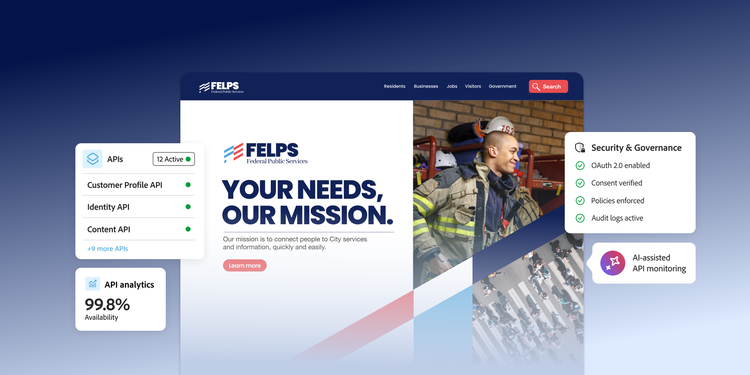
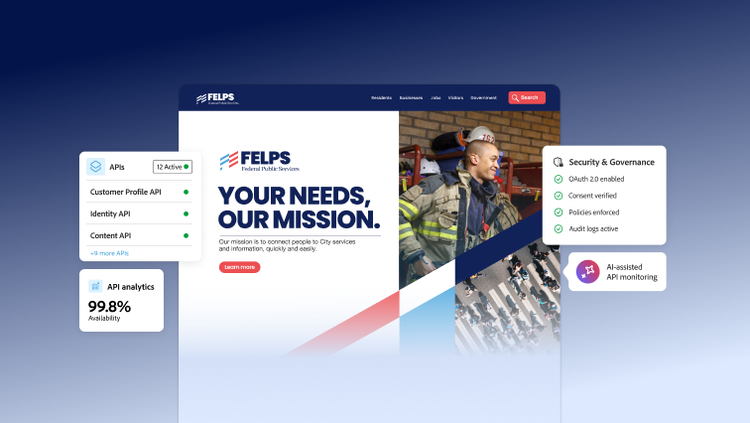
Authentication and authorization are enforced at the gateway layer using standards such as OAuth 2.0 and OpenID Connect. A backend service never receives an unauthenticated request because the gateway rejects or challenges it first. A healthcare organization exposing scheduling APIs to telehealth providers, for example, validates every provider against the same identity standard rather than relying on each backend team to maintain its own token validation.
Rate limiting and quota enforcement prevent a single consumer, whether a misconfigured internal service or a bad actor, from overwhelming a backend. Enterprise platforms allow tiered quotas: A free-tier partner might be limited to 1,000 calls per day, while a premium partner operates under a higher threshold defined in a service-level agreement.
For organizations under HIPAA (Health Insurance Portability and Accountability Act) or GDPR (General Data Protection Regulation), the platform's audit logging creates a tamper-evident record of every API call: who called what, when, with what headers, and what the system returned. A common failure mode is discovering during an audit that three months of logs were overwritten because individual services managed their own log rotation.
A consent management platform integrates at the policy layer, so consumer consent status is checked as a gateway condition before any data-bearing response is returned. If a user revokes consent for marketing data sharing, the gateway blocks responses that would include that user's profile attributes.
An AI governance platform sits adjacent to this layer when AI-generated responses are served via API, defining which models can be invoked, what data those models can access, and how outputs are logged for accountability.