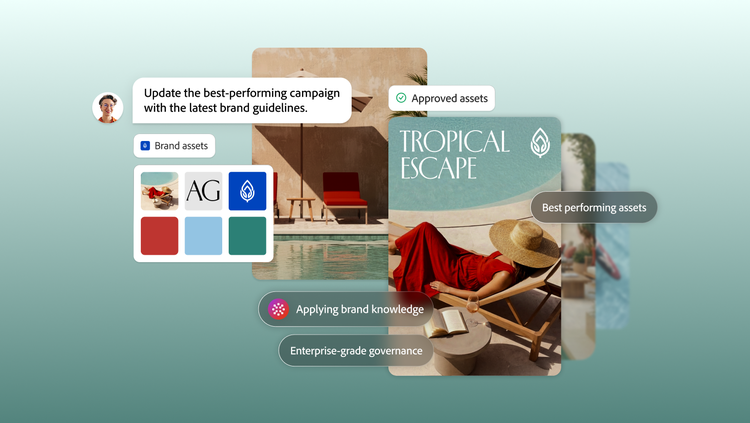
Brand teams rely on more than formal guidelines to keep work consistent. Brand knowledge comes from formal documentation as well as the decisions, approved creative, and reviewer judgment that shape how those standards are applied. As this body of knowledge grows, it can become difficult to pinpoint where work is created, managed, and reviewed.
People can often make those connections through experience and familiarity with the brand. AI systems need the relationships between brand information to be represented clearly, so they can determine what knowledge applies to a task and how that knowledge should be interpreted. A brand knowledge graph provides that structure. It connects enterprise brand information through defined relationships, helping AI identify the guidance and accumulated brand knowledge that applies to the task at hand.
Brand knowledge graphs make brand context more accessible for AI systems to interpret and use. This gives organizations a more practical way to integrate established brand knowledge into AI-assisted workflows while maintaining consistent governance.
This article explores:
What is a brand knowledge graph?
A brand knowledge graph is a machine-readable representation of the relationships within enterprise brand knowledge. While traditional knowledge graphs are designed to support search and information discovery, brand knowledge graphs serve a more focused role within brand intelligence. The information in brand knowledge graphs supports AI-assisted content creation and evaluation while helping teams apply brand standards more consistently across guideline documents, assets, campaigns, systems, and brand decisions.
A brand knowledge graph captures information from formal brand resources, as well as how employees apply that information in practice. These connections show where brand standards apply and how they have been used across the organization. For example, a guideline may govern a particular product or market, and an approved asset can show how that guidance was applied for a specific campaign and audience. Compliance requirements, design standards, and other brand rules can be represented within the same structure. Preserving these relationships creates a holistic view of how brand knowledge connects to the work it governs.
The decisions teams make over time also contribute to brand knowledge. Reviewer approvals, rejections, and feedback can show how a standard was interpreted for a particular situation and why that interpretation was considered appropriate. Capturing that judgment gives the knowledge graph access to practical guidance that may not appear in formal documentation.
For AI systems, the relationships captured in the knowledge graph help identify which brand information applies to a particular campaign. The system can also reference similar approved work to understand how those standards have been applied in practice. For example, suppose a team is adapting an existing social campaign for a new market. The knowledge graph can connect that request to the applicable market-specific guidance and reference previously approved campaign assets created for similar audiences or channels. That gives the AI system more context for how the new asset should be created or evaluated.
By connecting documented standards to how they are applied in practice, a brand knowledge graph creates a richer representation of the brand than static guidelines can provide on their own. This helps AI systems use that information to interpret established standards more consistently across enterprise workflows.
Brand knowledge graphs vs. brand ontologies.
Brand ontologies and brand knowledge graphs work together, but they represent different layers of brand intelligence. A brand ontology defines the structure that organizes brand knowledge. It establishes the concepts an organization recognizes, along with the attributes and relationships that give those concepts meaning. A brand knowledge graph applies the ontology to enterprise information while learning from and improving that knowledge through repeated iterations.
The distinction becomes clearer when the same relationship is viewed at each layer. Suppose Campaign A is designed to reach Audience B. At the ontology level, “targets” can be defined as a type of relationship that connects a campaign with an audience. The knowledge graph then records the actual relationship: Campaign A targets Audience B. Other brand information can be connected to that relationship as the organization builds knowledge around the campaign and its audience.
This knowledge mapping helps brand intelligence systems interpret information consistently. As guidelines, assets, and other brand information are integrated into a knowledge graph, the ontology provides a framework for understanding how each element relates to the rest of the brand.
How does a brand knowledge graph work?
A brand knowledge graph works by representing pieces of brand information as identifiable concepts and recording the relationships between them. Those concepts can include campaigns, audiences, guidelines, and approved assets, with each represented according to the structure defined by the brand ontology.
Consider the relationship established earlier between Campaign A and Audience B. The graph records Campaign A and Audience B as distinct pieces of brand information, along with the relationship showing that Campaign A targets Audience B. Other information can then be linked to either one. For example, approved assets may be associated with Campaign A, while audience guidance can be connected to Audience B. These stored relationships give the graph paths that AI-assisted tools can follow to retrieve information associated with the campaign and its audience.
The graph can also evolve as new work moves through the organization. A newly approved asset can be connected to the campaign it supports, while a new campaign can introduce relationships that were not previously represented. Future AI-assisted tools can use those additions when they encounter related work, allowing the knowledge available through the graph to become more detailed over time.
Because these relationships remain available across systems, the same brand knowledge can support multiple stages of the content supply chain. Guidance identified during creation can remain accessible as content moves into adaptation or review. Teams do not have to reconstruct the surrounding brand context at each stage because the relationships in the graph provide a consistent way to retrieve it.
How brand knowledge graphs support AI brand governance.
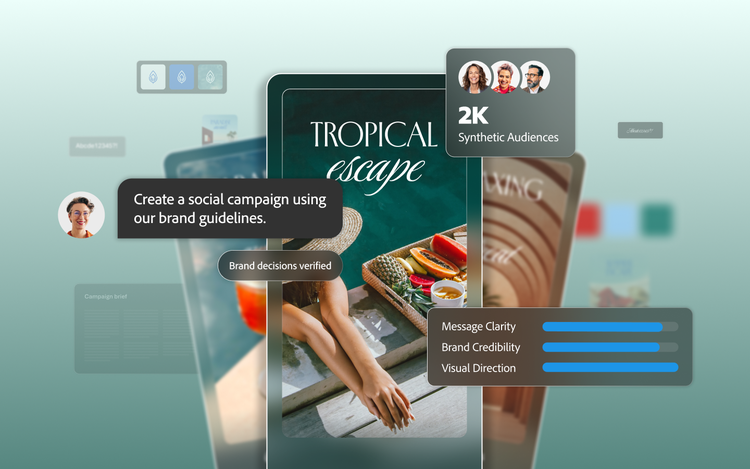
As AI increases the volume of content moving through enterprise workflows, manual review becomes harder to scale. Brand governance increasingly needs to support teams while content is being created and adapted, rather than relying primarily on checks at the end of production.
Brand knowledge graphs can bring the relevant standards into AI-assisted workflows as content is being created. The relationships within the graph help tools determine which guidance applies to an asset based on its intended use and surrounding campaign context. Giving creators and reviewers contextual information earlier allows them to address brand requirements before work reaches final approval. This can help reduce avoidable revisions and shorten review cycles.
Some work will still require human judgment. A campaign may introduce a new creative asset strategy, or a market may require an adaptation that existing guidance does not fully address. In those situations, reviewers can focus their attention on the decisions that require interpretation. Their feedback can then help clarify how the brand should handle similar work in the future.
Ultimately, these decisions can reveal where formal guidance needs to be changed. Repeated exceptions or clarifications from reviewers may point to a standard that should be refined, giving brand teams another source of information as they maintain governance practices.
Human brand expertise remains central to this process. Brand professionals make nuanced decisions and determine how standards evolve as new situations arise. Capturing those decisions in the knowledge graph allows established judgment to inform future work and provides AI systems with a stronger basis for supporting governance across growing content supply chains.
How does a brand knowledge graph support Adobe Brand Intelligence?
Brand knowledge graphs provide a foundation for Adobe Brand Intelligence by making enterprise brand knowledge easier for AI systems to interpret and apply. The relationships captured in the graph help connect content tasks to the brand guidance and organizational knowledge that should inform them, while continuously learning and applying standards as they are defined across content creation systems.
Within Adobe Brand Intelligence, structured knowledge can support the application of brand standards across AI-assisted content workflows. Brand teams also gain a clearer connection between AI recommendations and the established knowledge behind them, helping them maintain oversight as content volume grows.
Explore Adobe Brand Intelligence to learn how organizations can integrate brand knowledge into AI-assisted content creation and governance.
Recommended for you
https://business.adobe.com/fragments/resources/cards/thank-you-collections/brand-intelligence