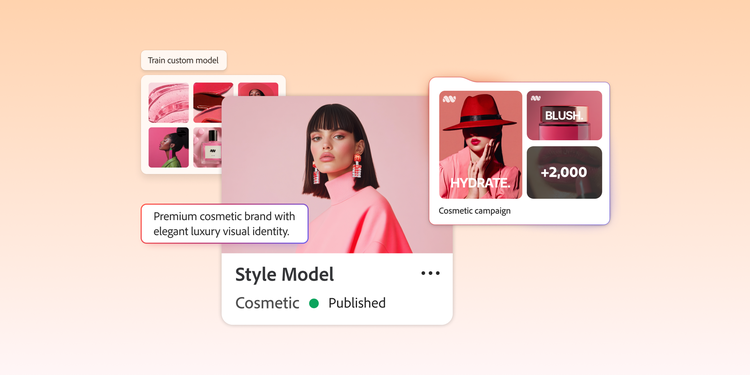
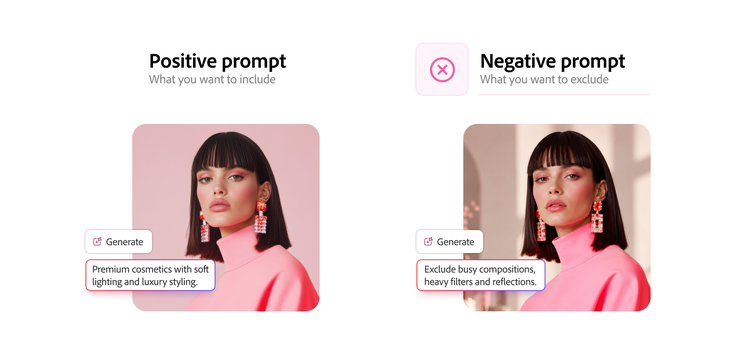
Custom models need a prompt strategy because customers need to caption their training images before a custom model is trained. These captions inform what the model learns from the training images. Having more specific captions enables the customer more flexibility in their prompt strategy
Also, custom models have "model tags," which are the common elements found between training images that reinforce consistency for style and character. With a custom model, you don’t need to repeat yourself as much in the prompt
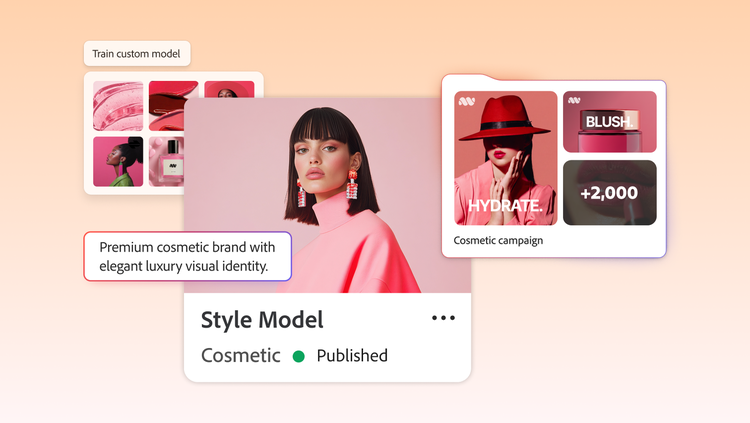
A custom AI model gives creative teams a strong brand foundation for image generation. Because the model is trained on approved images, it can produce visuals that reflect your color palette, styling, photographic approach, and overall visual identity with less guidance in each prompt. That creates a major advantage over general-purpose generative AI tools, where teams often need to restate brand requirements each time they generate an asset.
Consider a product launch campaign. The same custom model might need to generate a polished background for a hero image for a landing page, a more energetic version for social media, and a simplified version with clear copy space for display advertising. Each image should feel connected to the same brand system, but each one requires different framing, composition, and format.
Distributed creative workflows add another layer of complexity. Regional teams, agency partners, and internal creative groups may all use the same brand guidelines, but the outputs vary when each group interprets campaign direction differently. A shared custom model, along with a prompt strategy, helps align those interpretations in streamlining production.
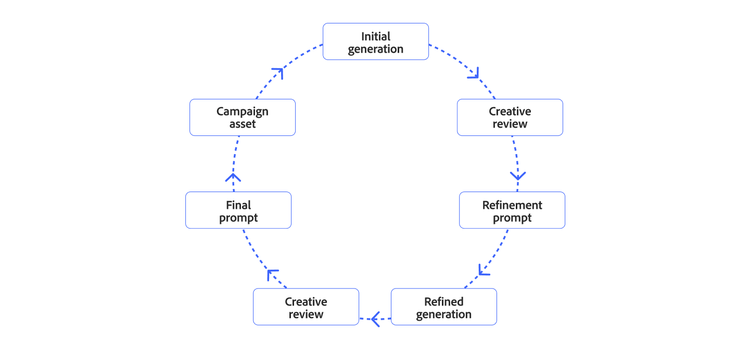
In practice, teams can think about custom model workflows in two layers: the model provides a baseline for creating visuals that adhere to brand aesthetics, and the prompt provides specific direction for subject, format, composition, and creative treatment. Effective prompt engineering helps teams speed up the creation of campaign-ready assets that scale across markets, channels, and production workflows.