Consumer attention is measured in seconds. Recent industry research reveals that brands now have a window of only two to five seconds to hook a viewer before they scroll past or skip. In this environment, video advertising has evolved from a “nice-to-have” into a core part of the digital experience.
Whether it’s a short bumper ad on YouTube, a vertical video on social media, or a high-impact spot on Connected TV (CTV), the ability to communicate a compelling message quickly is what separates brands that connect from those that get ignored.
This article will cover:
- What is video advertising?
- Video advertising benefits
- Creating a video advertising strategy
- Video advertising KPIs
- How video ads are distributed
- Video advertising challenges
- Mastering video advertising with Adobe Advertising
What is video advertising?
Video advertising is the use of video content to promote or sell a product, service, or brand across digital channels. These ads can appear on platforms like YouTube, social media feeds, websites, and Connected TV (CTV) environments.
Unlike static ads, video combines motion, sound, and storytelling to capture attention and communicate messages more effectively. It’s a versatile format that can be used to build awareness, engage audiences, and drive action at different stages of the customer journey.
Video advertising benefits.
Video consistently drives higher engagement and stronger recall than many other media formats. While organic video helps build community and long-term brand affinity, paid video advertising offers distinct commercial advantages that enable brands to scale with greater control:
Controlled audience reach.
Unlike organic content, which depends on platform algorithms, video advertising allows you to deliver your message to a defined audience. While it doesn’t guarantee attention, it provides far greater control over reach, frequency, and timing.
Precision audience targeting.
Video advertising enables advanced targeting using first- and third-party data, including demographics, interests, and behaviors. This helps ensure your budget is focused on audiences most likely to engage and convert.
Measurable performance and attribution.
Digital video campaigns provide detailed performance insights, including views, completion rates, clicks, and post-view conversions. While attribution is not always clear due to privacy and cross-device behavior, video advertising offers strong visibility into how campaigns influence outcomes.
High-impact placements.
Paid video advertisements unlock premium placements that organic content cannot access, such as mid-roll ads in streaming content, un-skippable pre-roll ads on platforms like YouTube, and sponsored placements across Connected TV (CTV) environments. These formats position your brand alongside high-quality content in highly engaging viewing experiences.
Creating a video advertising strategy.
Building an effective video advertising strategy requires an approach that matches your production with your distribution. A strategy should follow these five core pillars:
1. Defining the primary objective.
Before a single frame is shot, you must determine where this video sits in the marketing funnel. Are you looking for "Broad Reach" (Top of Funnel) to introduce a new brand, or "High Intent" (Bottom of Funnel) to drive a specific purchase? Your goal dictates the tone, length, and call-to-action (CTA) of the ad.
2. Audience mapping and contextual alignment.
Instead of targeting broad demographics alone, many strategies now focus on contextual relevance, which makes sure your video fits into the environment where it appears. For example, a quick, 15-second “life hack” style ad may perform better in fast-moving social feeds, while a more cinematic, 30-second storytelling piece is often better suited for a lean-back Connected TV (CTV) experience.
3. Channel-specific creative planning.
A "one-size-fits-all" video does not work. Your strategy must include plans for different aspect ratios and user behaviors:
- Social/Mobile: Vertical (9:16), fast-paced, and designed for sound-off viewing.
- YouTube/Desktop: Horizontal (16:9) with a strong hook before the 5-second skip button appears.
- CTV/Streaming: Horizontal (16:9), high-production value, and designed for a big-screen experience.
4. Data-driven personalization.
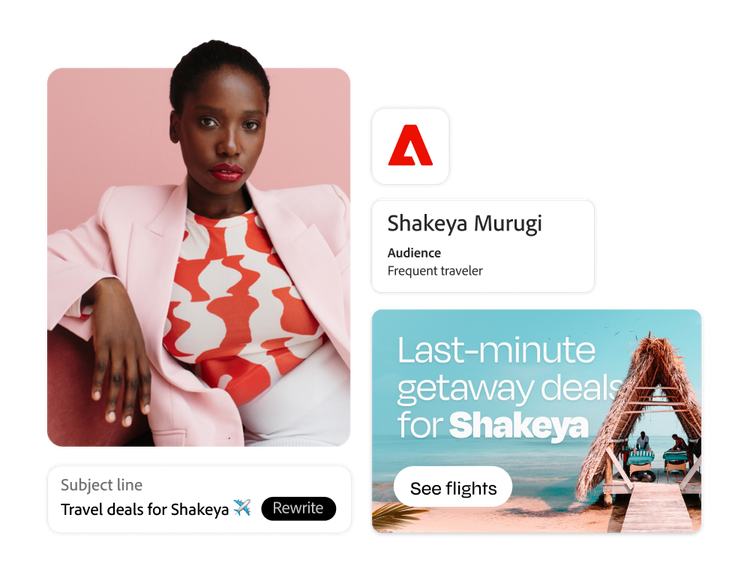
Successful video strategies increasingly rely on Dynamic Creative Optimization (DCO), which allows brands to create a single “master” video and automatically adapt elements, such as visuals, offers, or language, based on who is watching.
Personalization is becoming more advanced as AI tools evolve. Brands can now generate and optimize multiple variations in real time, adjusting content based on viewer behavior, location, or interests. As a result, personalization is becoming a core part of how effective video campaigns are built and scaled.
5. Continuous testing and iteration.
Your strategy isn't finished once the ad goes live. Use A/B testing (or split testing) to compare different hooks, music tracks, or CTAs. By analyzing real-time performance data, you can shift your budget toward the versions of the ad that are delivering the highest return on investment (ROI).
Creative best practices for video ads.
While video ads traditionally lasted 15 to 30 seconds, the rise of five-second bumper ads on platforms like YouTube and Snapchat increases the importance of getting straight to the point. Skip buttons and endless scrolling are commonplace. These features put a premium on grabbing your potential customer’s attention quickly.
To create more effective video ads:
- Lead with a narrative: Narrative-driven ads tend to resonate more than a direct, "hard-sell" approach.
- Front-load the hook: Communicate your most important message immediately before the viewer is prompted to skip.
- Prioritize clarity over depth: In shorter formats, focus on a single, impactful takeaway rather than trying to cover multiple points.
- Use humor thoughtfully: When appropriate for the brand, humor can significantly increase recall and shareability.
- Design for sound-off viewing: Many mobile users watch videos without sound, so it’s important to rely on captions, on-screen text, and strong visuals to communicate your message clearly, even on mute.
- Use interactive and shoppable videos: Many platforms now support interactive elements that allow viewers to take action directly within the video, such as clicking on products or exploring offers. This shortens the path from discovery to purchase.
Video advertising KPIs.
Measuring video performance effectively requires aligning KPIs with the appropriate stage of the customer journey. This helps avoid vanity metrics and ensures campaigns are set up to track for meaningful results, with duration guided by those objectives.
Connecting campaign length to your KPIs.
The ideal length of a video campaign isn’t fixed since it should run long enough to achieve your specific goals. The KPIs you’re tracking will determine how long your campaign should stay live:
Reach and frequency (Awareness).
If your goal is to stay top of mind, campaigns often run on an “always-on” basis. Because awareness fades over time, these campaigns continue until you reach your desired frequency, ensuring your audience sees your message often enough to remember it.
Completion rate and view time (Consideration).
Consideration campaigns typically run in defined periods, often lasting several weeks. This gives you enough data to understand how viewers are engaging, such as whether they’re watching to the end, and allows you to refine your creative or targeting based on performance.
Clicks and conversions (Conversion).
Conversion-focused campaigns are usually shorter and time-bound. They’re often tied to specific moments, like a product launch or promotion, and are optimized to user drive action quickly before performance starts to decline.
By aligning your campaign length with your KPIs, you’re making more intentional, data-driven decisions about when to scale, adjust, or stop.
How video ads are distributed.
Most companies distribute video ads through a demand-side platform (DSP), which allows advertisers to upload creative, define targeting, and deliver ads across a wide range of digital environments. Once a campaign is set up, the DSP automatically places ads based on your targeting criteria and campaign goals, helping you reach audiences where they’re already spending time.
Video ads can appear across many different channels, from traditional TV and Connected TV (CTV) devices like Roku, to mobile games, social media feeds, and video platforms like YouTube. Using a DSP helps advertisers identify and prioritize the most effective placements. Today, mobile and CTV environments are especially important, as they account for a large share of media consumption.
Choosing the right DSP.
The effectiveness of your campaign often depends on the capabilities of your DSP. A strong platform should offer flexible targeting options and clear visibility into performance, allowing you to analyze user behavior and optimize where your ads appear.
If your platform is too restrictive or operates like a “black box,” it can limit your ability to improve results. Instead, look for tools that give you control over targeting, placements, and optimization so you can identify and scale what’s performing well.
Optimizing for different environments.
To ensure a consistent user experience, video assets must be tailored to the specific technical requirements of web, mobile, and CTV environments. Beyond just aspect ratios, successful distribution relies on utilizing the right placement types for your goals:
- In-Stream and CTV: As viewers shift from cable to streaming, Connected TV (CTV) has become a premier channel. It offers high-impact, full-screen placements that combine the "big screen" experience of traditional TV with the precision targeting of digital advertising.
- Outstream video: To expand reach beyond dedicated video players (like YouTube), advertisers use outstream formats. These allow video ads to appear within article content or social feeds, creating engagement opportunities even when a user isn't intentionally "watching" a video.
Video advertising challenges.
While video advertising is powerful, it comes with specific hurdles that marketers must navigate:
Higher production costs.
Video ads have a higher up-front cost compared to other forms of advertising. You need a whole team to create and launch the ad.
Ad fraud risks.
The high CPMs (Cost Per Mille) associated with video make it a primary target for ad fraud. Without verification tools in place, advertisers risk wasting budgets on "invalid traffic" or bots that mimic human viewing behavior.
Brand safety concerns.
Companies also need to focus on brand safety when running a video ad campaign. This ensures that ads appear in environments that align with the brand’s specific values and tone. For example, a family-oriented brand might be "safe" on a news site, but the content of a specific news story may not be suitable for their creative.
Privacy and the cookieless future.
As the industry moves away from third-party cookies, advertisers are placing greater emphasis on contextual targeting and first-party data. This shift is reshaping how campaigns are planned and measured, requiring brands to balance personalization with evolving privacy expectations.
Linear limitations and engagement.
A video ad is a linear piece of content. It’s difficult to adjust it based on what the user is thinking. With other forms of advertising, you can often take a user’s reaction into account when determining what to show them. Since video ads are expensive and skippable, there is the chance you could invest a lot of money in an ad that no one watches.
Mastering video advertising with Adobe Advertising.
As video advertising evolves, with AI-driven personalization and the growth of Connected TV, campaigns are complex to manage. Brands need an integrated platform that connects content creation with programmatic distribution.
Adobe Advertising provides this by allowing marketers to plan, buy, and measure their video spend across all channels, from search and social to CTV, within a single platform. By scaling creative production and using AI-powered insights to optimize footage, businesses can ensure their video strategy drives meaningful, measurable results.
Watch an overview video of Adobe Advertising today.