

Centralized customer experience ecosystem.
Leverage a single system of truth for delivering customer experience orchestration at scale based on data, content, and journeys to effectively limit integrations and time-consuming data movement.





Drive transformational business outcomes with a single system of truth for unifying, analyzing, and activating customer data — all amplified with AI-enabled capabilities.
Whether you’re acquiring and engaging customers or managing complex journeys for business buyers, doing so at speed and scale are critical to success. Adobe Experience Platform makes it all possible.
A secure, single system of truth, Experience Platform provides shared, composable, and AI-supported capabilities — including data unification, insight generation, and more — that power Adobe Experience Cloud applications so your teams can make data-driven decisions quickly and orchestrate individual customer experiences in real-time.
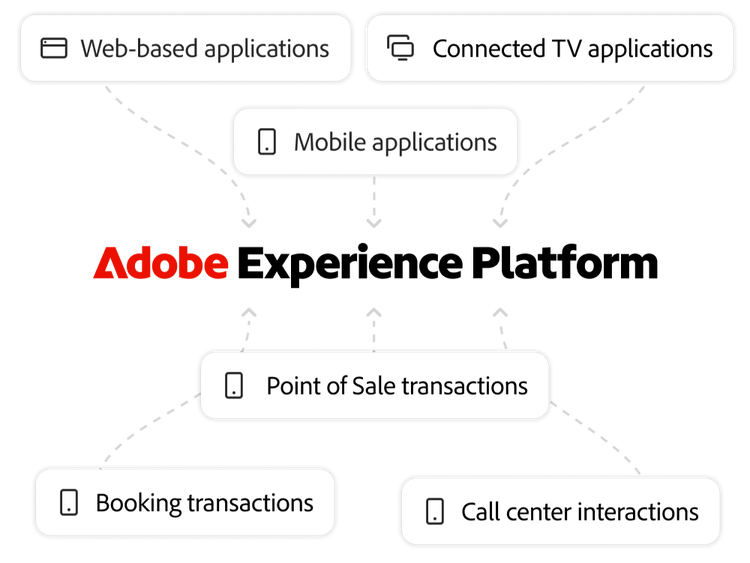
Deep insights and powerful personalization require fast, accurate, and comprehensive data collection. Adobe Experience Platform lets you collect and standardize data from client-side sources — like web, mobile, and connected TV applications — faster and easier than ever for use in Adobe applications and customer-defined endpoints.
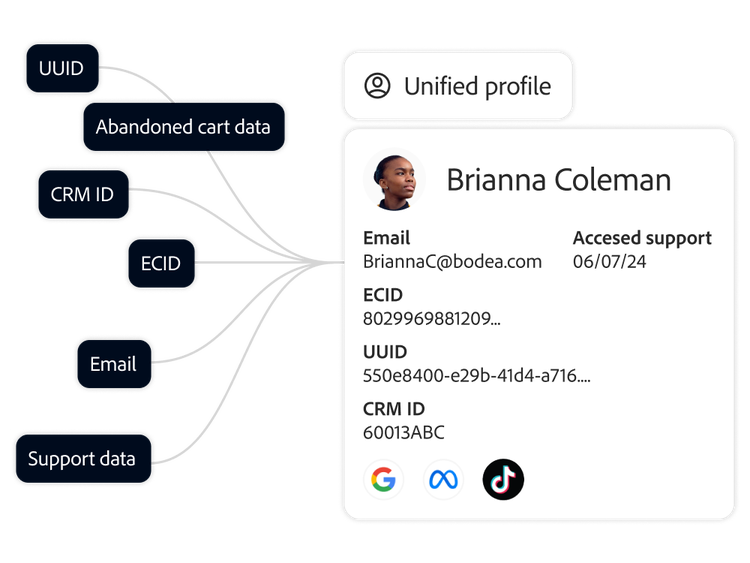
Adobe Experience Platform lets you access the right data required for powerful analysis and customer engagement. It gives you the ability to ingest, prepare, explore, distill, and manage the customer data lifecycle.
Once the data is in the appropriate structure, Experience Platform lets you unify it into real-time customer profiles that can be activated at scale across applications and channels.
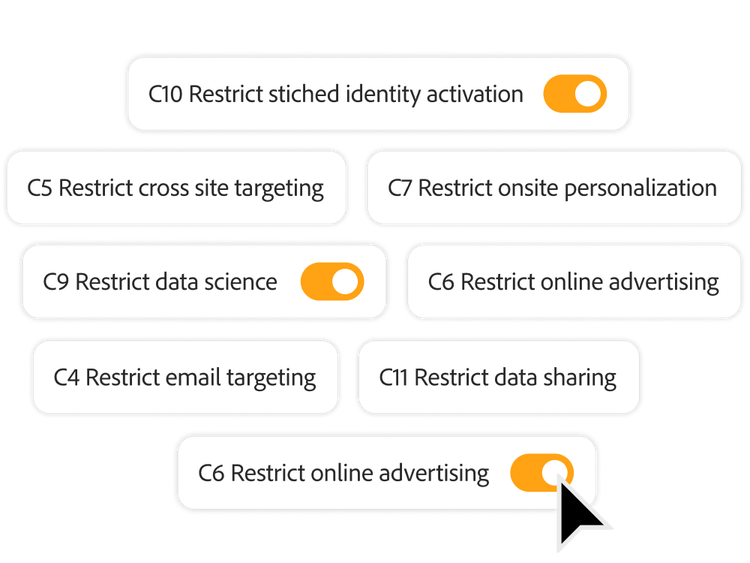
Keeping track of your data and making sure it's used appropriately is demanding and challenging. With Adobe Experience Platform Data Governance, a first-of-its-kind data governance and management framework, you have the power to classify, manage, and enforce how your data is used across the enterprise in a single location. This helps ensure your data is always used responsibly, helping you win and maintain your customers’ trust.
With Adobe Experience Platform Privacy Service, you get tools that let you use personal data while respecting consumer preferences and aligning with your organization’s governance and privacy policies.
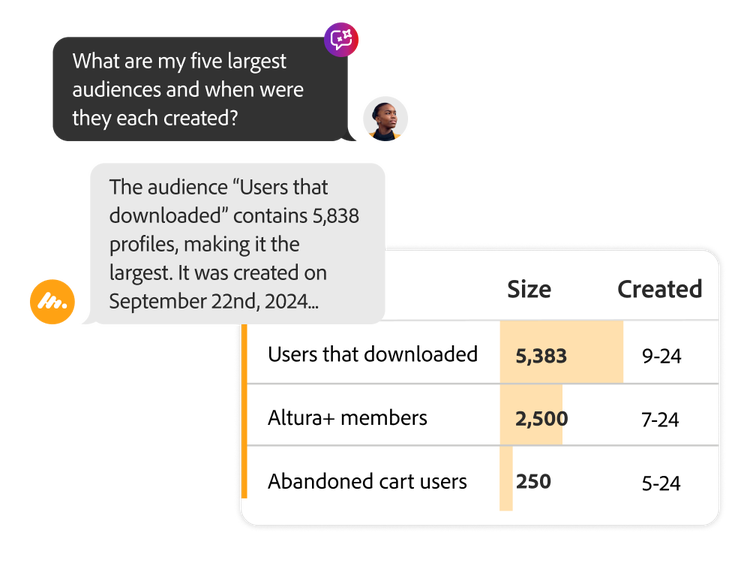
Get the insights you need to analyze, predict, and optimize customer experiences. By leveraging the predictive AI capabilities embedded in Experience Platform, you can better understand your customers, anticipate their behavior, and make informed, data-driven decisions. You can also perform analysis and create data visualizations using Adobe Experience Cloud applications or integrated third-party business intelligence tools.
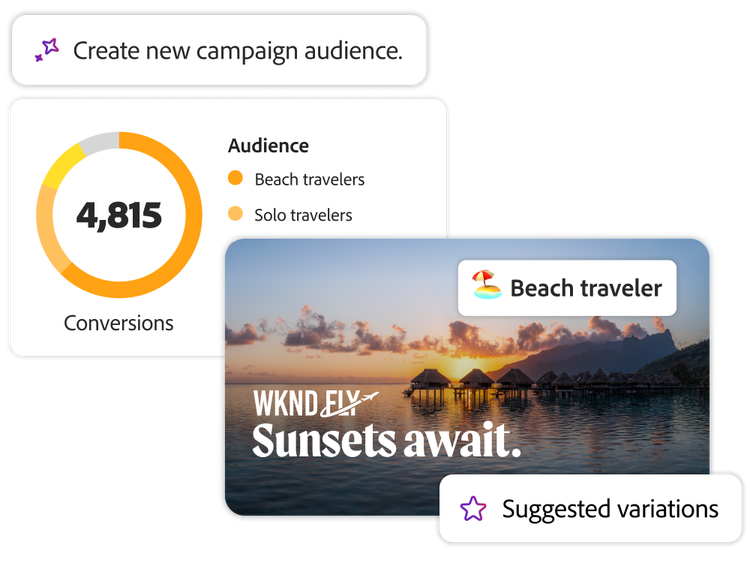
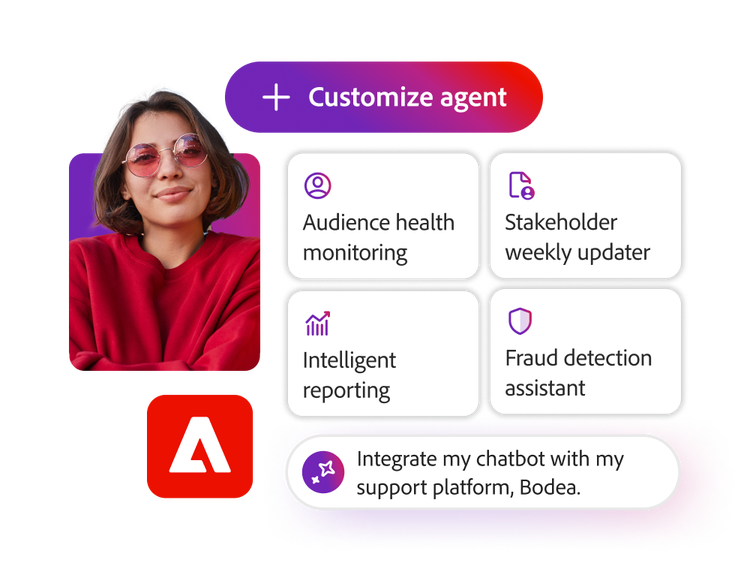
Agentic and generative AI tools — like Adobe Experience Platform Agent Orchestrator and AI Assistant — are available to help your teams take data-driven action. AI Assistant helps you quickly get marketing, data, and operational insights and improve product mastery, while Experience Platform Agents support and accelerate experience orchestration.
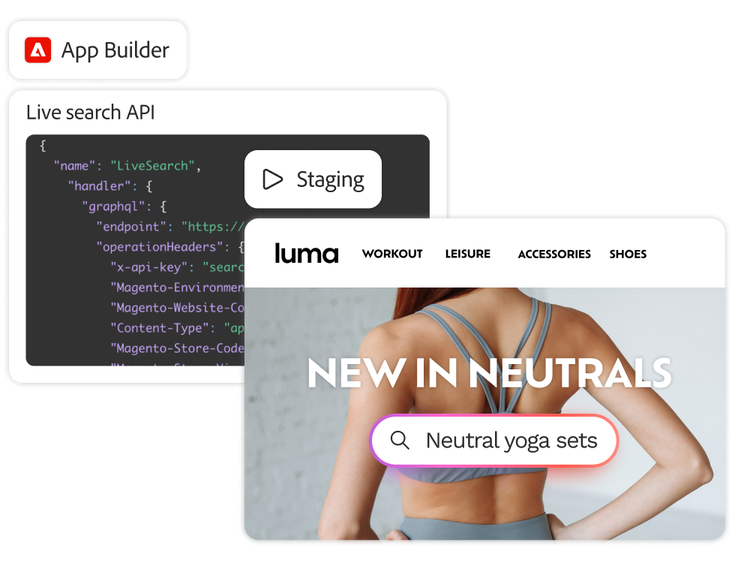
Adobe Experience Platform is developed with an "API first" philosophy and provides RESTful APIs that allow you to integrate Experience Platform into your customer experience tech stack. These integrations make it possible to programmatically perform key operations in Adobe and third-party applications, such as configuring computed attributes, accessing data and entities, exporting data, and more.
Adobe Experience Platform centralizes the components required for audience management, customer insights and engagement, and experimentation across a broad portfolio of applications. Discover how these best-in-class apps help you take customer experiences to the next level.

CX Enterprise Coworker
Automate workflows, optimize journeys, and scale campaigns to drive smarter execution with AI-powered marketing automation.
Real-Time CDP
Combine real-time data from every source to create secure, unified profiles — ready for activation.
Customer Journey Analytics
Connect both online and offline touchpoints into real-time visualizations to build better customer journeys.
Customer Journey Analytics B2B Edition
Drive results with cross-channel analysis for individuals, buying groups, accounts, and opportunities.
Journey Optimizer
Orchestrate and deliver personalized customer journeys across all channels.
Journey Optimizer B2B Edition
Engage and qualify buying groups across the entire B2B customer journey.
Marketing Campaign Analytics
Measure the impact of every dollar spent on your marketing and advertising mix using AI.
Content Analytics
Understand the image characteristics driving engagement so you can optimize content performance.
Leverage a single system of truth for delivering customer experience orchestration at scale based on data, content, and journeys to effectively limit integrations and time-consuming data movement.

Personalize campaigns based on a comprehensive and up-to-date understanding of your customers. Low latency access to unified, real-time customer profiles — which can be activated at scale across channels and systems — allow for in-the-moment insights, decisioning, and engagement.

Deliver one-to-one experiences on any scale or level of digital maturity with a modern, multi-cloud ecosystem that is continuously innovating for your current and future experience orchestration needs.

Confidently deliver experiences while honoring customer trust using industry leading trust and privacy controls to safeguard and responsibly use customer information.
Because Experience Platform allows you to normalize data from both Adobe and non-Adobe sources in real time, you can easily integrate your existing data sources with Experience Cloud applications to create the most integrated and agile customer tech stack available.

Learn to deliver the right experiences in real time

Unlock personalization to drive growth and loyalty in retail.

Learn to thrive in a world without third-party cookies

Redefining enterprise AI with Adobe Experience Platform Agents.
Real-time case support with Adobe Product Support Agent.
Experience Platform provides the shared services that every application draws on:
Turning that data into outcomes is the job of the applications built on it: Real-Time CDP for audience activation, Journey Optimizer for orchestration and messaging, and Customer Journey Analytics for cross-channel analysis. You license the platform plus the applications that match your use cases, and several applications can also run on their own.