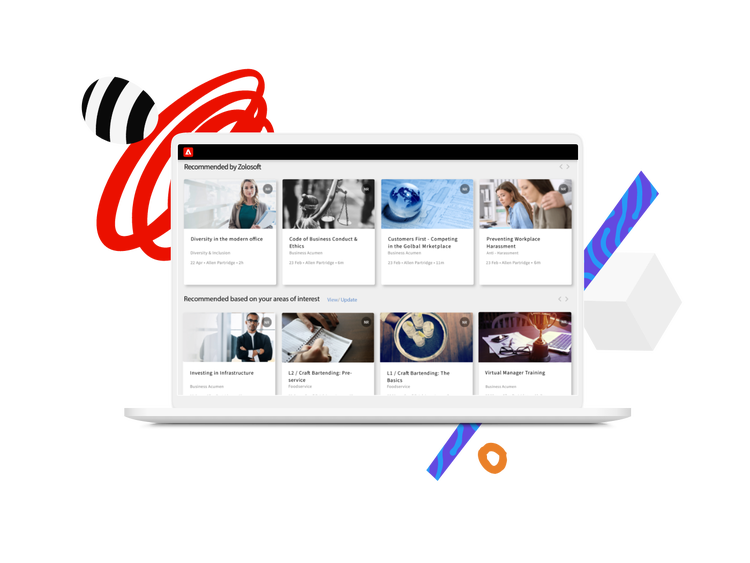
Customer education is the process of helping customers learn how to use a product or service effectively through structured training, onboarding, and ongoing learning experiences. A customer education program can include product tutorials, self-paced courses, interactive learning, and certifications that help customers build skills and achieve their goals. Using a learning management system (LMS) for customer education, businesses can deliver scalable customer training, personalize learning experiences, and track learner progress. Effective customer education can accelerate product adoption, improve customer satisfaction, reduce support requests, and strengthen customer retention.
A customer education platform is a software solution that enables businesses to create, deliver, manage, and measure training programs for their customers. Also referred to as customer education software or a customer training platform, it helps organizations educate customers through structured onboarding, product tutorials, self-paced courses, personalized learning paths, and certifications.
A customer education platform often uses a learning management system (LMS) to centralize training content, automate learning delivery, track learner progress, and measure training effectiveness. Unlike employee training systems, customer education platforms focus on external learners and help businesses deliver consistent, scalable learning experiences throughout the customer lifecycle.
By making product knowledge accessible and supporting continuous learning, customer education platforms can help businesses accelerate product adoption, improve customer satisfaction, reduce support requests, increase customer self-sufficiency, and strengthen long-term customer retention.
A customer learning management system (LMS) is a software platform that enables businesses to create, deliver, manage, and track training programs for external customers. An LMS for customer education provides a centralized learning environment for product onboarding, self-paced courses, personalized learning paths, assessments, and certifications.
While employee training focuses on internal workforce development, an LMS for customer education supports external learners with product knowledge, onboarding, and ongoing training. The same enterprise LMS may support both audiences through different learning experiences and access controls. It enables organizations to scale customer training, provide on-demand access to learning resources, automate training delivery, and track learner engagement, course completion, and training effectiveness.
By making customer education more accessible, consistent, and measurable, a customer training LMS can help businesses accelerate product adoption, improve customer onboarding, increase customer self-sufficiency, reduce support requests, and strengthen long-term customer retention.
Customer training software is designed to educate external customers, while employee training software focuses on developing the skills and capabilities of an organization's internal workforce. Unlike employee skilling, customer education requires businesses to support diverse external audiences, deliver branded learning experiences, simplify access to product knowledge, and make training discoverable throughout the customer journey.
An effective customer training platform should offer capabilities specifically suited to these needs, including:
- Branded customer learning academies: Headless capabilities and integrations with content management systems such as Adobe Experience Manager (AEM) Sites help businesses create on-brand customer education experiences that integrate with existing websites and workflows.
- Flexible access to training: Non-logged-in learning experiences allow prospective customers to discover and explore relevant educational content without mandatory registration.
- Personalized customer learning paths: AI-powered learning path recommendations help tailor customer training to individual roles, goals, and available time.
- Integrated live training: Live learning capabilities enable businesses to deliver interactive customer training while tracking attendance and course completion within the LMS.
- AI search visibility and content discoverability: Answer engine optimization (AEO) and generative engine optimization (GEO) capabilities help make customer education content crawlable, indexable, and accessible to AI-powered search experiences.
- AI-assisted customer knowledge access: Integrations with AI assistants enable customers to receive answers grounded in verified training content, extending learning beyond traditional courses.
- Customer training analytics: Learning insights and reporting capabilities help businesses monitor engagement, measure training effectiveness, and identify opportunities to improve customer education programs.
Adobe Learning Manager brings together capabilities such as Headless + AEM Sites, Learning Path Agent, Live Hub, ALM MCP, AEO/GEO, and Learning Insights Agent + Report Builder to support these customer education requirements.
While an enterprise learning management system (LMS) can support both employee skilling and customer training, customer education requires additional attention to external learner access, branded experiences, content discoverability, personalization, and scalable delivery. These capabilities can help businesses accelerate product adoption, increase customer self-sufficiency, reduce support dependency, and strengthen long-term customer retention.
Customer education helps businesses accelerate product adoption, improve customer satisfaction, reduce support costs, and increase customer retention. By delivering structured customer training through onboarding programs, product tutorials, and ongoing learning experiences, organizations can help customers build product knowledge, become more self-sufficient, and realize value faster.
The key benefits of customer education include:
- Faster product adoption: Structured onboarding and personalized customer training help users understand product features, build confidence, and adopt new capabilities more effectively.
- Improved customer retention: Continuous education helps customers maximize product value, strengthen engagement, and build long-term relationships with a brand.
- Reduced customer support costs: On-demand learning resources and accessible product knowledge help customers resolve common issues independently, potentially reducing repetitive support requests.
- Higher customer satisfaction: Relevant, role-based training enables customers to develop the knowledge and skills needed to achieve their goals.
- Scalable customer training: An LMS for customer education helps businesses deliver consistent learning experiences across geographically distributed customer audiences.
- Measurable training effectiveness: Customer training software enables organizations to monitor learner engagement, course completion, and training performance to identify opportunities for improvement.
Adobe Learning Manager supports these outcomes through branded customer learning academies, personalized learning paths, live training, AI-assisted knowledge access, and learning analytics. Its AEO/GEO capabilities also support the discoverability of customer education content across traditional and AI-powered search experiences.
An effective customer education strategy helps businesses onboard customers, accelerate product adoption, improve customer self-sufficiency, and support long-term retention. Building a successful customer training program requires identifying customer learning needs, defining measurable business goals, delivering personalized training, and continuously evaluating learning outcomes.
The six key steps to building a scalable customer education strategy are:
- Define customer training goals: Identify measurable objectives such as faster onboarding, increased product adoption, fewer repetitive support requests, and improved customer retention. Align training goals with customer success metrics.
- Segment customers by learning needs: Create training experiences based on customer roles, product knowledge, skill levels, and lifecycle stages. Different audiences may require distinct onboarding journeys, advanced product training, or ongoing education.
- Build a branded customer training academy: Use an LMS for customer education to centralize product tutorials, self-paced courses, instructor-led training, assessments, and certifications. A customer training academy should provide accessible, consistent learning experiences that reflect your brand.
- Personalize customer learning journeys: Deliver relevant learning paths based on individual customer goals and training requirements. AI-powered personalization can help customers discover appropriate courses and progress through training more efficiently.
- Make customer education accessible and discoverable: Provide on-demand learning resources and flexible access to training. Optimize publicly accessible educational content for search engines and AI-powered discovery using answer engine optimization (AEO) and generative engine optimization (GEO) practices.
- Measure customer training effectiveness: Track enrollment, learner engagement, course completion, assessment performance, and product adoption. Compare learning outcomes with customer success indicators to identify opportunities for improvement.
Adobe Learning Manager supports these requirements through branded customer learning academies with Headless and AEM Sites capabilities, personalized learning journeys with Learning Path Agent, live training through Live Hub, and learning analytics with Learning Insights Agent and Report Builder. Its AEO/GEO capabilities support the discoverability of customer education content, while ALM MCP enables AI assistants to access verified academy knowledge.
Together, these capabilities help organizations deliver scalable, personalized, and measurable customer training experiences throughout the customer lifecycle.
A learning management system (LMS) improves customer onboarding by delivering structured, personalized, and accessible customer training that helps users understand products, develop essential skills, and achieve value faster. An LMS for customer education enables businesses to create consistent onboarding experiences, scale training across customer segments, and measure learning effectiveness.
An LMS can improve customer onboarding in several ways:
- Deliver personalized onboarding experiences: Tailored learning paths help customers access training relevant to their roles, goals, and product knowledge. For example, Adobe Learning Manager's Learning Path Agent helps create personalized learning journeys based on individual learning needs and available time.
- Create branded customer learning experiences: A customer training academy provides a centralized destination for product tutorials, onboarding courses, and certifications. Platforms such as Adobe Learning Manager support branded academies through headless capabilities and integrations with Adobe Experience Manager (AEM) Sites.
- Make product knowledge easier to discover: Customers benefit from on-demand training resources that are accessible beyond traditional learning portals. For example, Adobe Learning Manager's AEO/GEO capabilities support content discoverability across search engines and AI-powered search experiences, while ALM MCP connects verified academy content with AI assistants.
- Combine self-paced and live customer training: Businesses can reinforce product knowledge through interactive sessions alongside on-demand courses. Capabilities such as Adobe Learning Manager's Live Hub support live training with attendance and completion tracking.
- Measure onboarding effectiveness: Learning analytics help businesses identify knowledge gaps, monitor training progress, and improve onboarding experiences. For example, Adobe Learning Manager's Learning Insights Agent and Report Builder help organizations analyze learner engagement and training performance.
By combining personalized learning, accessible product knowledge, and measurable customer training, an LMS can help businesses accelerate product adoption, improve customer self-sufficiency, reduce onboarding-related support requests, and strengthen customer retention.
The best customer education platform should support branded learning academies, personalized customer training, flexible content access, live learning, AI-powered knowledge discovery, and learning analytics. When evaluating customer education software or an LMS for customer education, businesses should prioritize capabilities that make product training accessible, scalable, and measurable throughout the customer lifecycle.
Key features to look for include:
- Branded customer training academies: A customer education platform should support customizable, on-brand learning experiences that integrate with existing websites and business systems. For example, Adobe Learning Manager's Headless + AEM Sites capabilities enable businesses to build branded academies using pre-built templates, widgets, and Learner APIs that connect with custom workflows and third-party systems.
- AI-powered personalized learning paths: Look for customer training software that can tailor learning journeys to individual customer roles, goals, and available time. For example, Adobe Learning Manager's Learning Path Agent builds personalized learning paths through natural conversations, helping customers discover training relevant to their needs.
- Flexible access without mandatory registration: Customer training platforms should make educational content easy to explore, even before users create an account. Adobe Learning Manager's Non-Logged In Experience, for example, allows prospective learners to browse relevant training content before signing up, reducing barriers to content discovery and consumption.
- Integrated live customer training: An LMS for customer education should support interactive training alongside self-paced learning, with attendance and completion tracking. For example, Adobe Learning Manager's Live Hub delivers AI-facilitated live training within the platform, with learning records captured directly in the LMS.
- AEO/GEO capabilities for AI search visibility: Customer education software should help make publicly accessible academy content crawlable, indexable, and discoverable through traditional and AI-powered search. For example, Adobe Learning Manager's AEO/GEO capability is designed to structure educational content for discovery and potential citation in Google AI Overviews and LLM-powered search results.
- AI-assisted access to verified learning content: Look for platforms that extend customer education beyond traditional course catalogs by connecting trusted learning resources with AI assistants. Adobe Learning Manager's ALM MCP, for example, connects verified academy content with Claude, ChatGPT, and custom AI agents to support grounded answers to customer questions.
- AI-powered learning analytics and reporting: A customer training platform should provide visibility into learner engagement, course completion, and program performance. For example, Adobe Learning Manager's Learning Insights Agent + Report Builder translates learning data into plain-language insights and custom reports, helping teams evaluate customer training programs without relying entirely on business intelligence specialists.
Together, these capabilities help businesses build scalable customer education programs that improve access to product knowledge, personalize customer training, and support better onboarding, product adoption, customer self-sufficiency, and long-term retention.
When choosing the best learning management system (LMS) for customer training, businesses should evaluate how effectively the platform supports external learners, personalized education, content accessibility, system integrations, and measurable learning outcomes. The right LMS for customer education should make it easier to scale training, improve product adoption, and deliver consistent learning experiences throughout the customer lifecycle.
Key considerations include:
- Customer experience and brand consistency: Evaluate whether the LMS can deliver a branded customer training academy that integrates with existing websites, workflows, and business systems. For example, Adobe Learning Manager supports customizable learning experiences through headless capabilities and Adobe Experience Manager (AEM) Sites integration.
- Personalization and learning relevance: Consider whether the platform can tailor training to different customer roles, goals, and skill levels. AI-powered learning capabilities, such as conversational learning path creation, can help customers find relevant training without navigating complex course catalogs.
- Accessibility and ease of discovery: Assess how easily customers and prospects can find educational content. Look for flexible access options, including the ability to explore training before registration, alongside AEO/GEO capabilities that support content discoverability across search engines and AI-powered search experiences.
- AI-assisted access to product knowledge: Consider whether the LMS can connect verified training content with AI assistants, allowing customers to access relevant, grounded answers beyond traditional learning portals. For example, Adobe Learning Manager's ALM MCP supports connections between verified academy content and AI assistants such as ChatGPT and Claude.
- Learning delivery and engagement: Evaluate whether the LMS supports a combination of self-paced courses, interactive learning, and live training. Integrated live learning experiences with attendance and completion tracking can help businesses manage customer education without relying on disconnected tools.
- Learning analytics and business impact: Look for reporting capabilities that help teams understand learner engagement, course completion, and training effectiveness. AI-powered insights and customizable reports can simplify analysis and help organizations identify opportunities to improve customer education programs.
- Scalability and operational efficiency: Consider whether the customer training platform can accommodate growing external audiences, integrate with existing technology, and support training delivery without increasing administrative complexity. Evaluate implementation effort, ongoing maintenance, and total cost of ownership alongside platform capabilities.
Ultimately, the best customer education LMS is one that aligns with your customer training strategy, makes product knowledge accessible, and provides the flexibility to evolve as customer needs change. Platforms such as Adobe Learning Manager illustrate how branded academies, AI-powered personalization, content discoverability, and learning analytics can support these requirements.
Businesses can educate customers online by creating structured, accessible, and outcome-driven customer education programs that help users understand products, develop skills, and achieve their goals. An effective customer training strategy combines self-paced learning, practical tutorials, live sessions, and on-demand resources to support customers throughout their journey.
To deliver effective online customer education, businesses should:
- Identify customer learning needs: Analyze support tickets, product usage data, and customer feedback to identify knowledge gaps and prioritize training that addresses real challenges.
- Create role-based learning experiences: Develop onboarding courses, product tutorials, and advanced training tailored to different customer roles, skill levels, and stages of the customer lifecycle.
- Offer multiple learning formats: Combine short instructional videos, interactive courses, live workshops, and certifications to accommodate different learning needs and preferences.
- Make learning accessible and discoverable: Deliver training through branded customer academies, help centers, and existing digital experiences. For example, Adobe Learning Manager supports embedding learning into customer-facing websites, while its AEO/GEO capabilities help make educational content discoverable through traditional and AI-powered search.
- Provide learning at the point of need: Make relevant product knowledge available when customers encounter challenges. AI-assisted access to verified training resources can help customers find answers without navigating lengthy course catalogs.
- Measure learning impact: Go beyond course completion rates by evaluating product adoption, time to value, customer proficiency, and recurring support issues. Use these insights to continuously improve training content and delivery.
By aligning online customer training with real customer needs and measurable business outcomes, organizations can improve product adoption, increase customer self-sufficiency, reduce support dependency, and strengthen long-term customer retention.