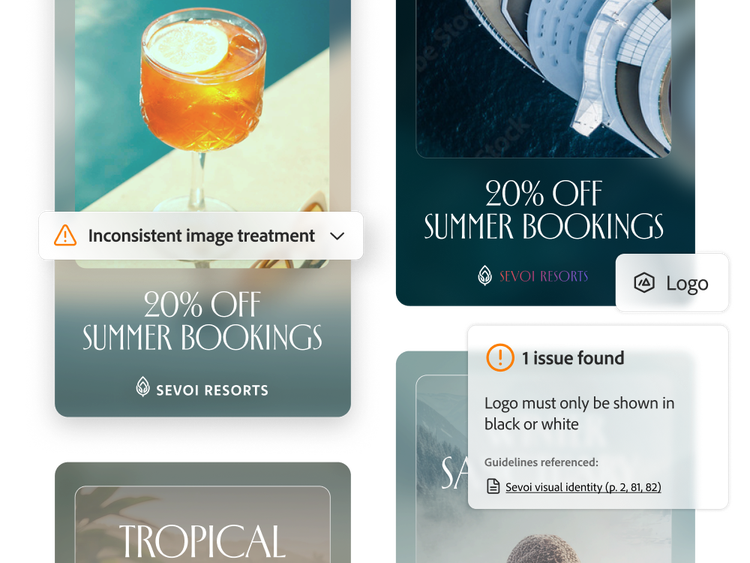
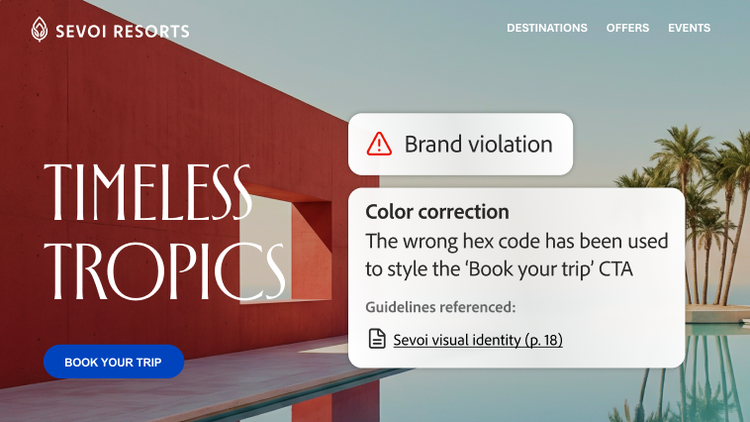
Validation is the skill within Brand Intelligence that checks content against your documented brand, campaign, and product guidelines, as well as implicit standards learned from past approvals and rejections, flagging issues before assets are published or distributed.
Brand validation can identify brand issues rooted in undocumented standards by learning from real review decisions — approvals, rejections, and annotations — rather than relying only on a static style guide. The system captures these decisions in the form they exist, whether it's comments in review and approval surfaces or creative surfaces, and structures them into a format AI can reason over.
Brand compliance monitoring is the repeatable checking of content against documented brand, campaign, product, design, and learned review standards. Brand Intelligence identifies issues at the asset-element level and explains which rule or guideline led to each finding, helping teams act before approval.
Brand compliance at scale requires consistent checks across many assets, formats, markets, and workflows. Validate applies shared brand context to images and copy, supports bulk quality checks, and directs human attention to findings that need review, instead of relying on one manual pass for every asset.
No. Validate identifies, locates, and explains potential violations; it does not auto-correct them. Creative, marketing, legal, or brand reviewers remain responsible for deciding what to change and whether content is ready to approve. This keeps automated detection in a human-led review process.
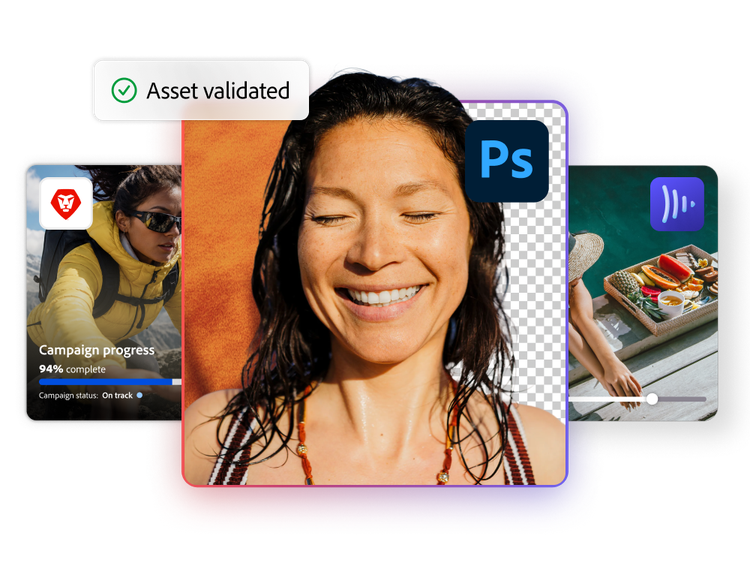
The Adobe Brand Intelligence Validate skill is available in creative surfaces such as Photoshop, Illustrator, and InDesign; review and approval surfaces such as Adobe Workfront and Frame.io for Business; and AI chat surfaces such as Adobe CX Coworker. APIs also let organizations bring brand validation into third-party applications and custom workflows, extending brand checks beyond native Adobe integrations.