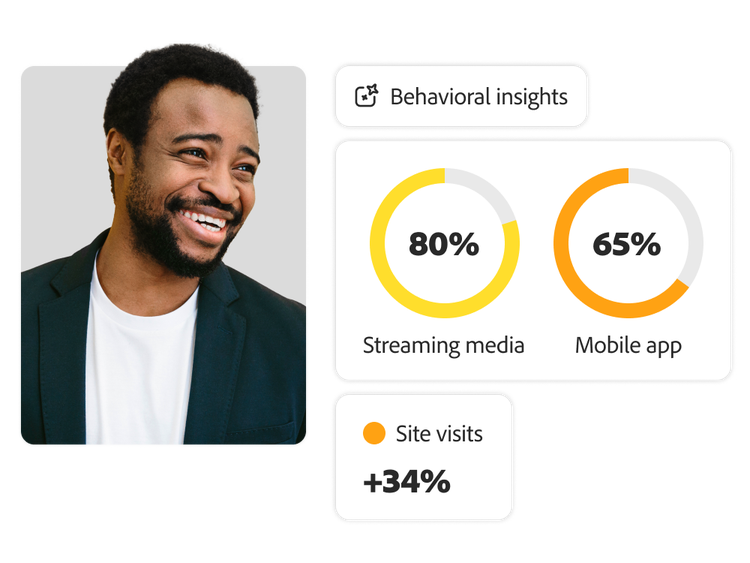
Digital analytics measures website effectiveness in
Analysis Workspace, where you build the analysis yourself instead of reading fixed reports. You segment visitors, trace paths with Flow, find drop-off with Fallout, and track retention with cohort tables, all on your own web and app behavioral data. Basic tools tend to stop at prebuilt dashboards and page-view counts. If you also need to judge effectiveness across offline and cross-channel touchpoints, that extends into Adobe Customer Journey Analytics; for the website and app themselves, digital analytics is the tool.
It measures how visitors move through your site and app and where they convert or fall away, using metrics you define. In practice you can see:
- which pages, screens, and content convert, by segment;
- where visitors drop out of a funnel (Fallout);
- the paths visitors take before and after a key action (Flow);
- how cohorts return and retain over time;
- unexpected shifts in key metrics (anomaly detection).
Because you define the segments and metrics, effectiveness is measured against your goals, not a generic template.
Yes. Advanced segmentation lets you compare effectiveness for any audience you define, by behavior, acquisition source, device, geography, or conversion pattern, so you can see what works for each group rather than for the average visitor.
Mobile and app analytics bring web and app behavior into the same analysis, so a visitor's activity across desktop and mobile is measured together rather than in separate silos.
Teams diagnose friction in a single Analysis Workspace project by combining Fallout to locate drop-off, Flow to see the paths into and out of it, and anomaly detection to flag unexpected changes before they compound. Because the analysis is self-service and visual, an analyst can move from symptom to likely cause without waiting on a data request. For forward-looking forecasting and advanced predictive modeling across channels, those capabilities sit in the wider Adobe CX Analytics portfolio, notably
Customer Journey Analytics.
You need
Adobe Analytics data collection implemented on your site and app, through the Experience Platform Web and Mobile SDKs or AppMeasurement, and access to Analysis Workspace. Once data is flowing, effectiveness analysis is self-service: analysts build segments, funnels, and paths without engineering support for each question. Most teams start with one or two high-value conversion flows and expand from there.