Adobe GenStudio for Commerce Media Networks is a commerce media application that helps commerce, retail, and media network operators give advertisers and account teams a self-serve way to create, review, and activate on-brand advertising. It’s designed for commerce media and retail media environments where retailers want to streamline campaign workflows without losing control over brand standards, approvals, or operating governance. Instead of forcing advertisers through disconnected tools and manual handoffs, it brings campaign setup, creative generation, review, and activation into a connected workflow.
GenStudio Commerce Media Networks is for retailers, retail media networks, commerce media operations, and the supplier and brand partners who sell through them. It’s especially beneficial for organizations that need to support many advertisers while maintaining consistent workflows, access controls, and brand-safe creation of personalized ads. The system is built to scale retail media networks to operate at the speed of commerce, connecting network brand guidelines with the advertiser’s own guidelines.
GenStudio for Commerce Media Networks is built for retail and commerce media network operators. It deploys white-label inside their platform, governing ad production and activation for the advertisers running campaigns on their network. The network operator controls the experience, while their advertisers interact with the network's product, not Adobe's.
GenStudio for Performance Marketing is built for a brand's own marketing teams. It runs in Adobe's environment and is designed for internal teams creating, activating, and optimizing campaign content across their own channels.
GenStudio for Commerce Media Networks addresses the gap between the purchase intent a network owns and the personalized ad experiences it should be powering. Most networks face three challenges at once: suppliers who lack the brand inputs and creative production capability to launch campaigns, creative and account teams bottlenecked by the volume of variants commerce media demands, and no feedback loop connecting ad performance back to the next campaign. GenStudio for Commerce Media Networks connects brand ingestion, variant generation, governed approvals, and performance signals into a single workflow so networks can turn supplier demand into live, on-brand campaigns at scale.
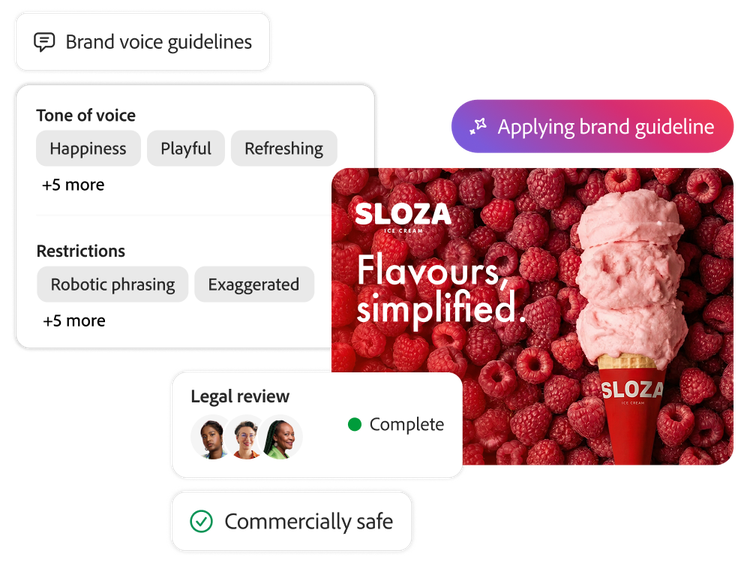
Most suppliers arrive without a brand kit, a campaign brief, or structured marketing documentation and GenStudio for Commerce Media Networks is designed to meet them at that starting point. Rather than asking suppliers to create inputs from scratch, the system infers and generates a working brand profile from existing signals like product listings, website content, and category context. The supplier reviews and confirms rather than authors from zero. From there, the network’s templates and brand guardrails take over, ensuring every ad meets the specifications before it reaches a human reviewer. The result is a supplier who can go from shelf to campaign without a designer, an agency, or a brand team.
GenStudio for Commerce Media Networks is compatible with many ad-serving-equipped networks, regardless of where they are in their technology journey. Deployment is flexible. Networks can embed GenStudio for Commerce Media Networks surfaces directly into their ad manager via SSO or connect via API to power the creative and intelligence engine behind a platform they have already built. For networks running Adobe Real-Time CDP, Adobe Experience Manager, or Adobe Workfront, audience data, asset libraries, and approval workflows connect directly out of the box.
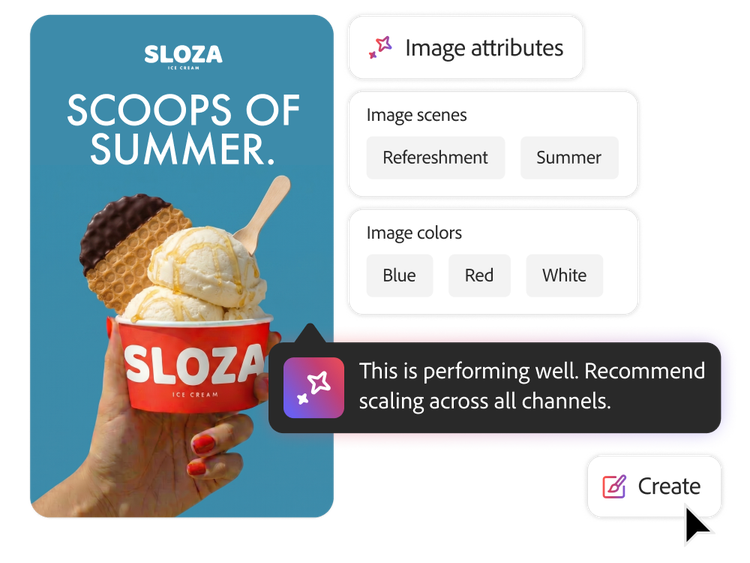
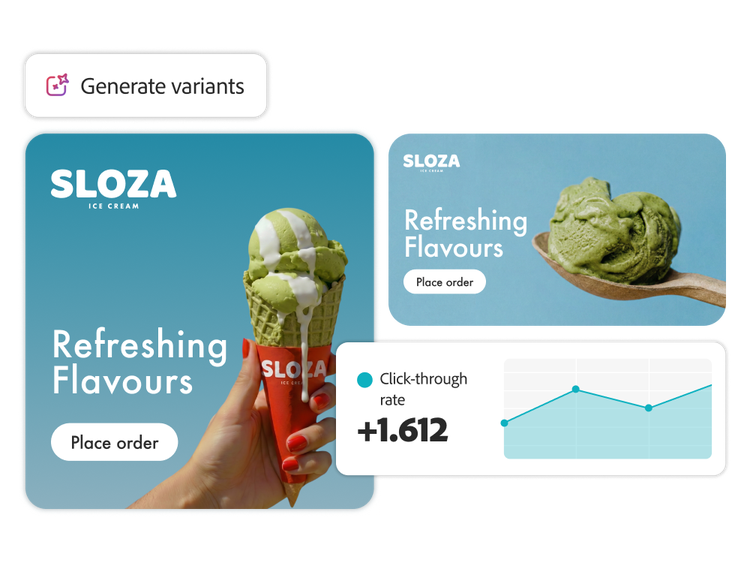
GenStudio for Commerce Media Networks pulls performance signals from connected media platforms into a single view so retailers and advertiser brands can evaluate results across campaigns, ad variants, and channels without switching between disconnected tools. What makes it different from standard reporting is the connection to ad-level attributes. Ads are tagged with creative metadata such as image type, headline, format, CTA, and color palette, so performance signals tie directly to what is in the ad. Teams can understand not just which ad performed, but which elements drove it, for which audience, and why. That insight feeds directly back into the next campaign brief, turning performance data into a compounding advantage rather than a report.
Retail media networks started by monetizing on-site ad inventory. Commerce media networks take that foundation further, activating first-party purchase data and audience intelligence across every surface a shopper touches, on-site, off-site, and in-store. The distinction is less about category and more about maturity. Most retail media networks are commerce media networks in practice, whether they use the term or not.