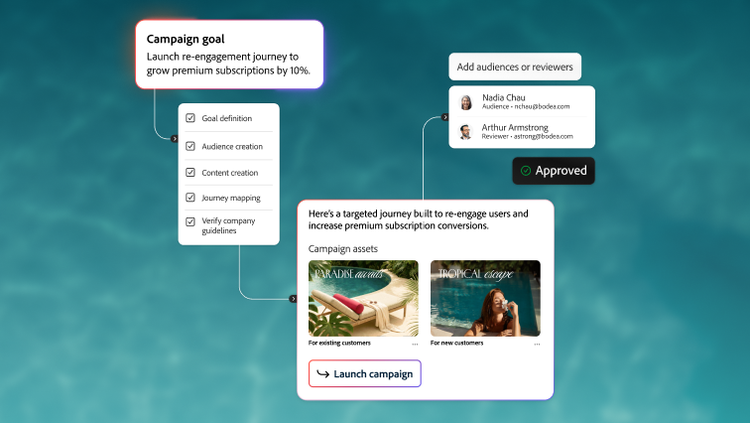
Semi-autonomous workflow execution.
Agents plan and execute multi-step workflows across systems, reducing manual coordination and accelerating time to outcome.


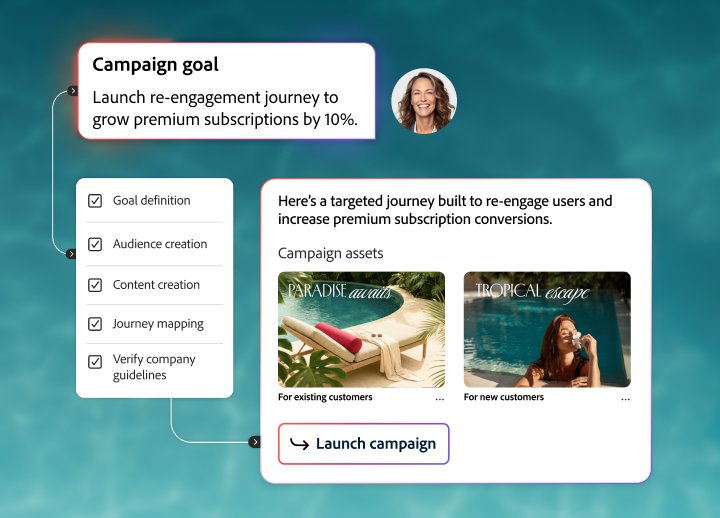
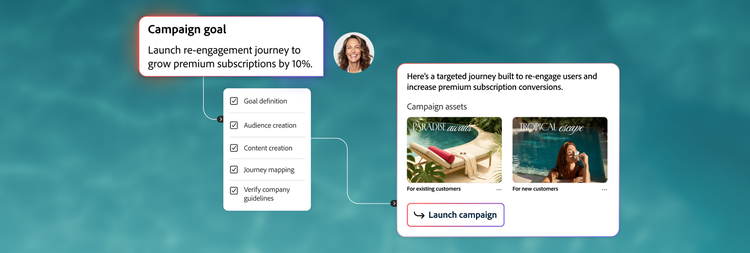
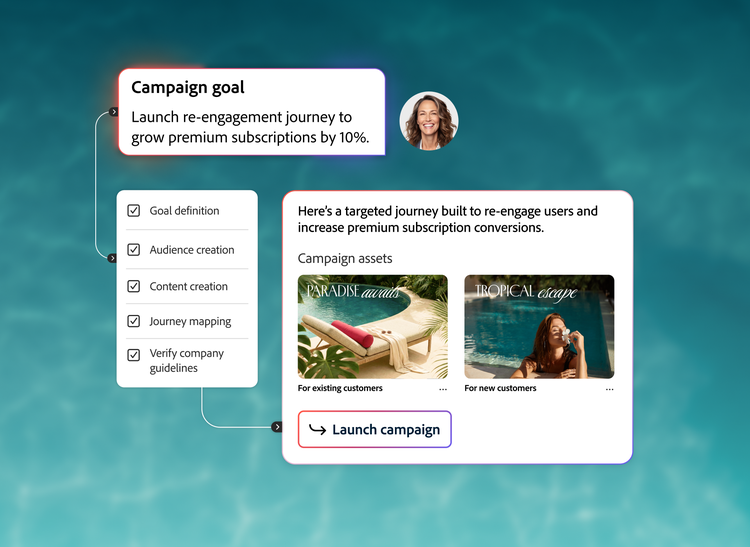
Most AI is limited to generating responses. Adobe connects your data, content, workflows, and business goals into a governed foundation where agents can take action within defined controls and deliver consistent business outcomes.
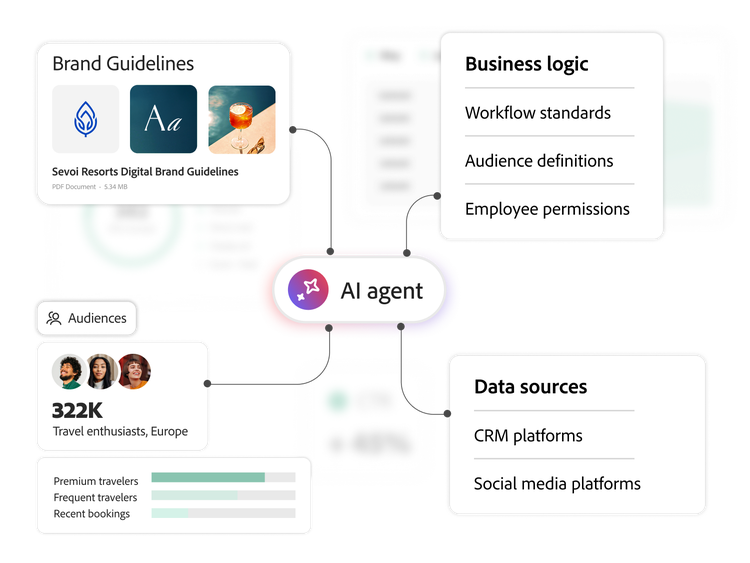
Deliver more relevant, personalized experiences with agentic AI that understands your customers, content, and business goals in real time, so every action is informed, on-brand, and continuously improving.
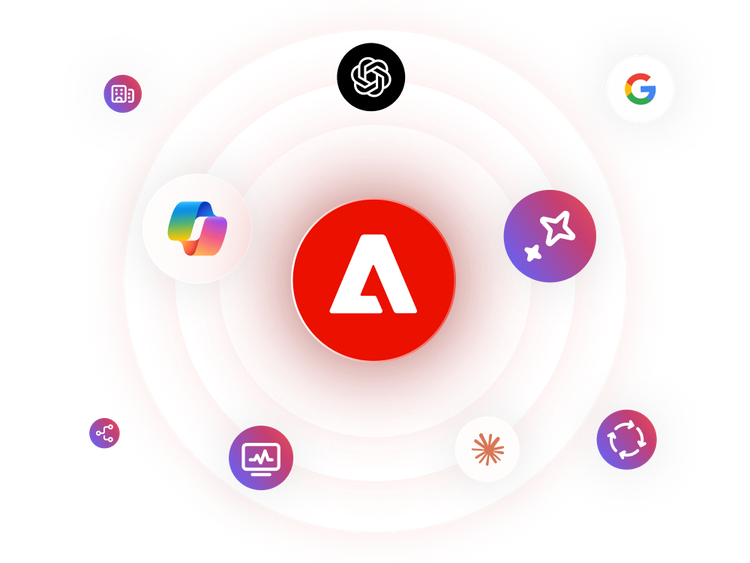
Extend agentic AI across your organization by connecting to the tools, platforms, and workflows you already use.
APIs, MCP servers, and skills enable agents to operate consistently and securely across environments — whether within Adobe applications, external AI platforms, or your own agentic environment — giving you flexibility without fragmentation.
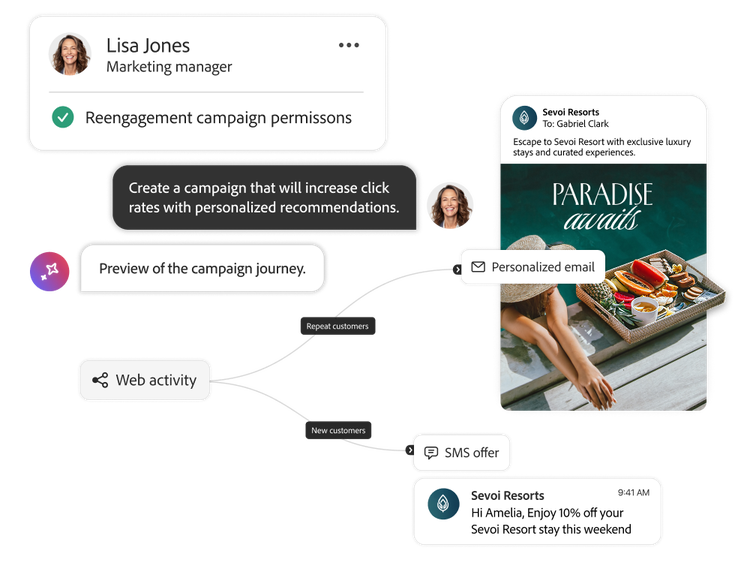
Built-in governance controls, with permissions, auditability, and traceability mean you can confidently scale personalized experiences across channels. Independent of where experiences are created or initiated, your teams will always get full visibility and control of agentic actions, ensuring compliance with your corporate guidelines.
Move beyond experimentation. Adobe’s agentic framework is designed to run in production environments where reliability, governance, and operational control are critical. These capabilities ensure AI can execute workflows, adapt to change, and operate within enterprise systems without introducing risk or fragmentation.
Agents plan and execute multi-step workflows across systems, reducing manual coordination and accelerating time to outcome.

Agents evaluate options, validate results, and adjust execution in real time to continuously improve performance.

Every action runs within defined permissions, with full auditability and traceability to ensure compliance, security, and brand alignment.

Agents operate with continuous awareness of your data, content, and workflows, maintaining context across interactions and reducing rework.

Skills define how work gets done, capturing workflows, rules, and best practices in reusable, extensible formats.

Adopt agentic AI in a way that fits within your architecture, whether you’re using Adobe applications, extending into other AI platforms, or integrating Adobe skills into your own environment.
Adobe agentic AI turns multi-step marketing, content, and operations work into automated, governed workflows. Agents plan and execute across the systems you already use — Adobe Experience Platform, Workfront, and beyond — coordinating tasks, approvals, and hand-offs so teams move from request to results faster, with full auditability.
CX Enterprise Coworker brings together agents, workflows, and enterprise context into a goal-driven system that executes end-to-end customer experience processes, enabling teams to move faster, reduce manual effort, and focus on higher-value work.
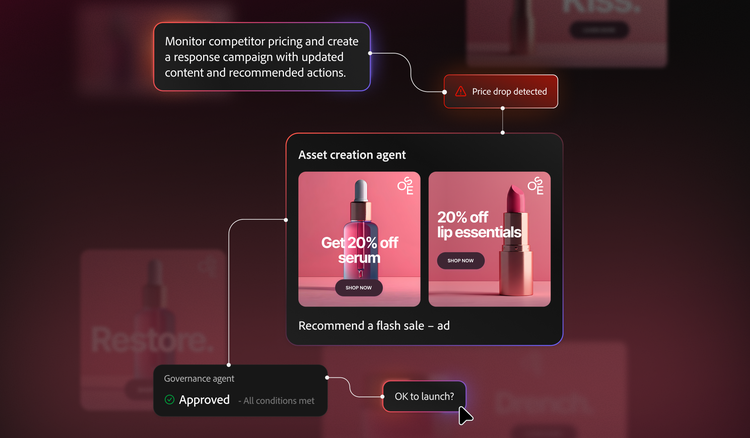
Move beyond task automation. Adobe's agentic framework automates end-to-end enterprise processes — from audience building to content production to journey activation — within defined permissions and controls. CX Enterprise Coworker unifies agents, workflows, and enterprise context into one goal-driven system that executes complete customer-experience processes.
Coordinate agents, data, and workflows across Adobe and third-party systems. Through MCP servers, skills, and APIs, CX Enterprise Coworker runs agents consistently and securely — whether inside Adobe applications, external AI platforms, or your own environment.