


Adobe AI Forum.
Join us at an event near you and discover what's next for marketing and AI.


Join us at an event near you and discover what's next for marketing and AI.

Adobe Experience Platform Agent Orchestrator powers the intelligence and reasoning behind Adobe Experience Platform Agents. It offers a unified approach to coordinating an ecosystem of AI agents, enabling organizations to address complex experience challenges with speed and scalability.
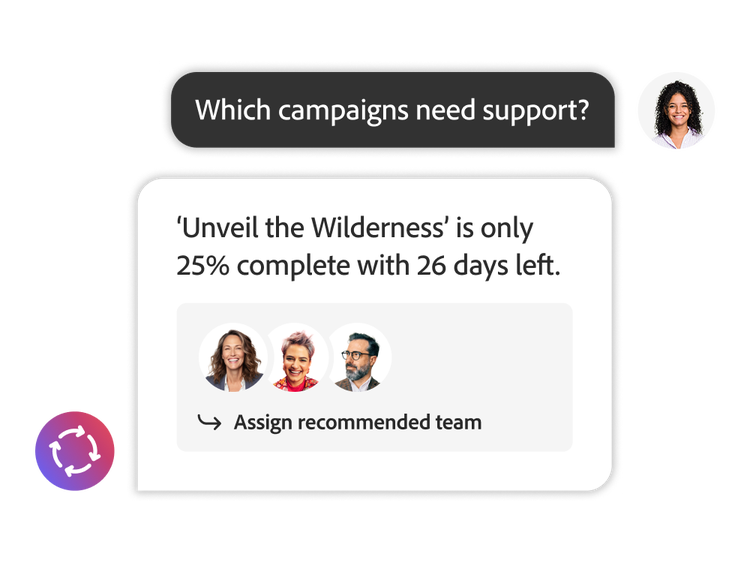
Ensure marketing projects and product workflows proceed according to plan. Organizations can move from strategy to execution faster with Adobe Experience Platform Agents that automate workflows, proactively surface and manage risks, and support product troubleshooting.

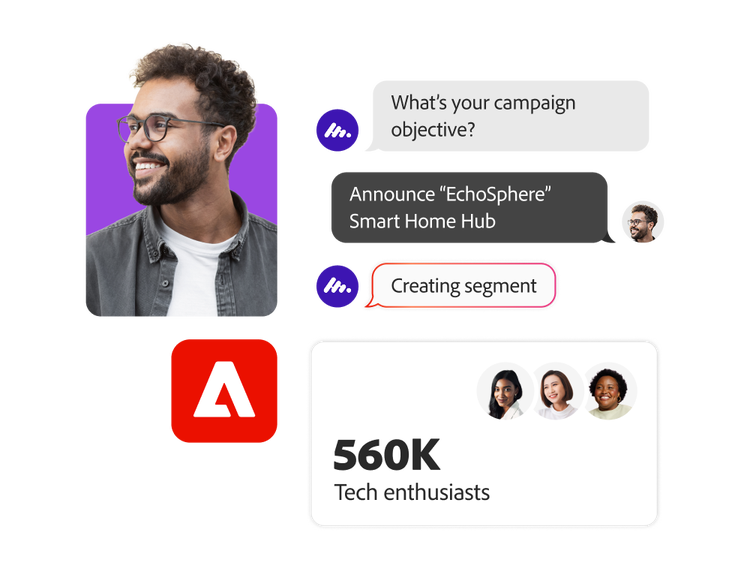
Create, manage, and optimize audiences with precision and at scale. Adobe Experience Platform Agents help organizations identify and reach the right customers, accounts, or buying groups with continuous intelligence — driving more relevant engagement and stronger conversion performance.
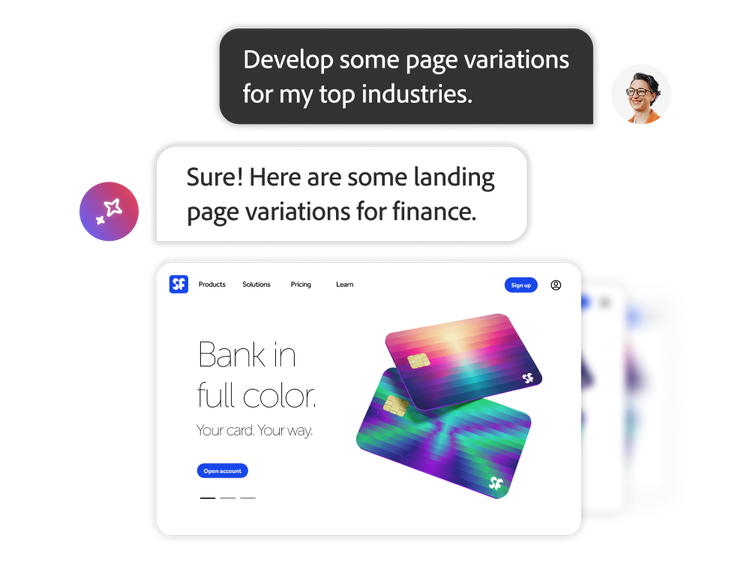
Operationalize content at an enterprise scale. Adobe Experience Platform Agents bring intelligence and governance into the production workflow, enabling organizations to prepare high-quality assets faster, align content with performance goals, and confidently activate campaigns across all channels.
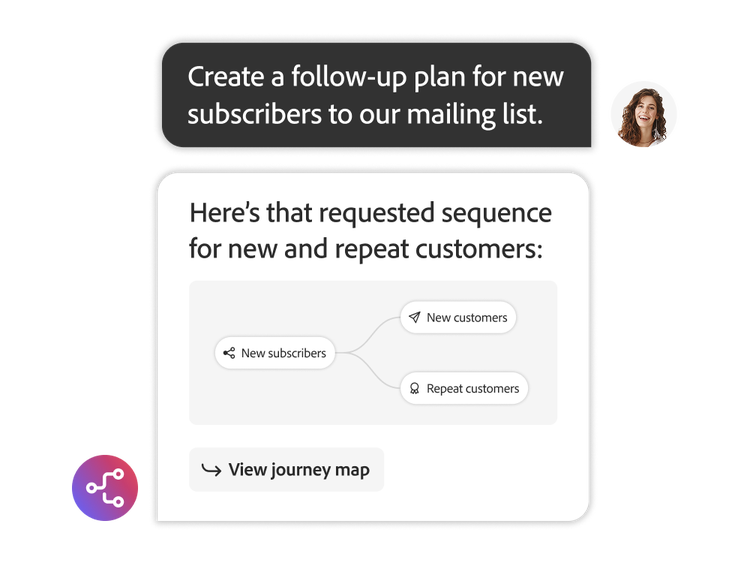
Orchestrate B2B and B2C customer journeys that dynamically adapt in real-time to behavior, context, and performance signals. Adobe Experience Platform Agents continuously optimize for progression and maximize the impact of every touchpoint.
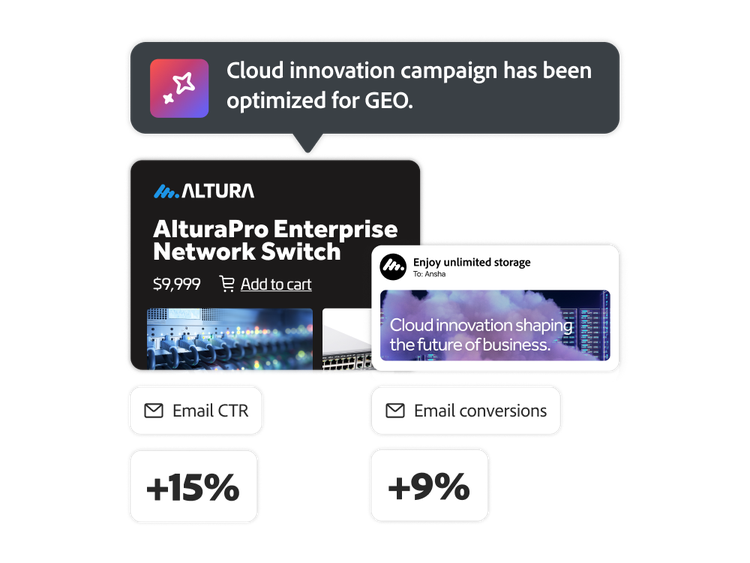
Optimize customer engagement across channels by automatically selecting, assembling, and serving the most relevant experiences for every interaction. With Adobe Experience Platform Agents, organizations gain greater brand visibility and governance, stronger engagement, and faster experience iteration.
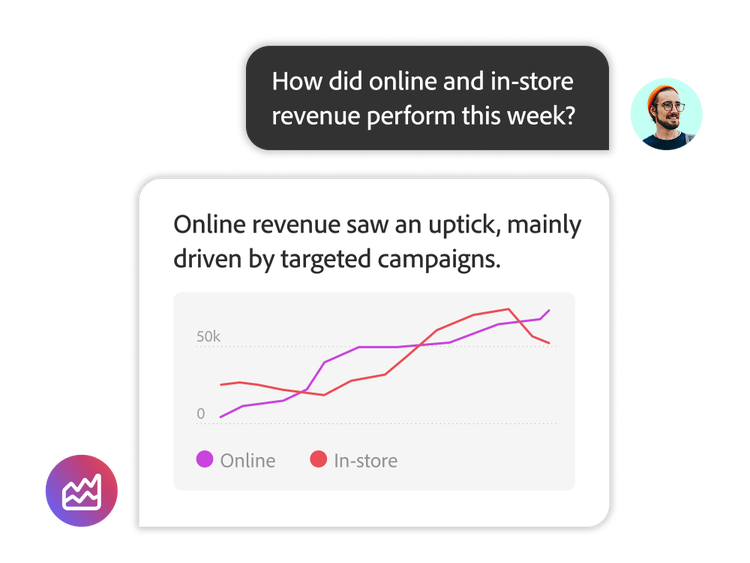
Accelerate data onboarding and convert complex data into actionable insights. Using Adobe Experience Platform Agents, organizations can streamline data management and gain clearer visibility into marketing performance to make faster and more confident marketing strategy decisions.
Learn how the four core components of Agent Orchestrator work together to ensure that Adobe Experience Platform Agents can execute complex tasks.

Adobe Experience Platform Agents are accessed and prompted to take action via our conversational interface, AI Assistant.
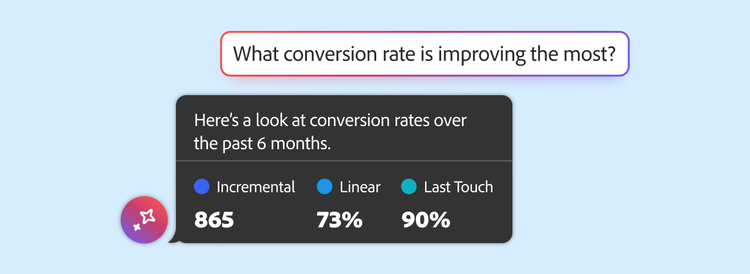
The reasoning engine interprets prompts and determines the necessary steps to accomplish a user’s objectives, while taking specified constraints into account.

The knowledge base provides essential context for the reasoning engine, so agents assign the right tasks to the right resources. It helps agents interpret requests accurately, support role-specific prompts, and prioritize key skill requirements.

With Agent Composer, users can monitor, configure, and customize Experience Platform Agents to achieve specific business goals.

With Adobe’s domain expertise, Adobe Experience Platform Agents can be coordinated to reduce complexity and accelerate time to value. They also support a breadth of use cases across practitioners and end customers.

Experience Platform Agents use comprehensive enterprise data, brand content, and consent information for enhanced decision-making and rich expression — and can be extended with data from third-party or enterprise sources.

Committed to responsible AI creation, Adobe has standardized design, development, and deployment procedures. These include training, testing, and a review process overseen by an AI ethics review board.

Adobe safeguards customer data through collection, storage, and usage. Experience Platform Agents leverage enterprise security, privacy, and brand governance controls within Experience Platform to adhere to your brand’s standards.

Experience Platform Agents can be tailored to meet specific business needs. Their capabilities can be customized and integrated seamlessly with both Adobe and third-party agents.
Adobe Experience Platform Agents can be accessed through a conversational interface — such as AI Assistant in Adobe Experience Platform — where a user can submit prompts in natural language to complete tasks. In the background, the reasoning engine steps in. It looks at the prompt, assesses what the task is, and creates a plan to complete the task. This plan may involve one or more expert AI agents, each specialized in specific skills required to execute the steps necessary for task completion, such as pulling data, generating insights, creating content, and more. These agents also tap into the knowledge base to gather any information they need to complete an objective.
Throughout the process, the Agent Orchestrator ensures that the agents’ work can be checked, validated, and is repeatable, so you get reliable results every time.
Adobe Experience Platform Agents are specifically designed to support workflows and tasks that deliver exceptional customer experience. Here’s what sets them apart:
Grounded in real-time customer experience data and content: Agents are powered by Adobe Experience Platform and leverage its semantic understanding of journeys, content, behavior, and performance signals. Their actions are context-aware and aligned with business goals.
Designed for orchestration at scale: Agents do not operate in silos. Through Adobe Experience Platform Agent Orchestrator, they coordinate with other Adobe agents or third-party agents across workflows, applications, and systems to deliver results in real time.
Extensible by design: The agent framework supports a wide range of use cases. Customers, partners, and developers can build, configure, or integrate agents to match the specific needs of their teams and industries.