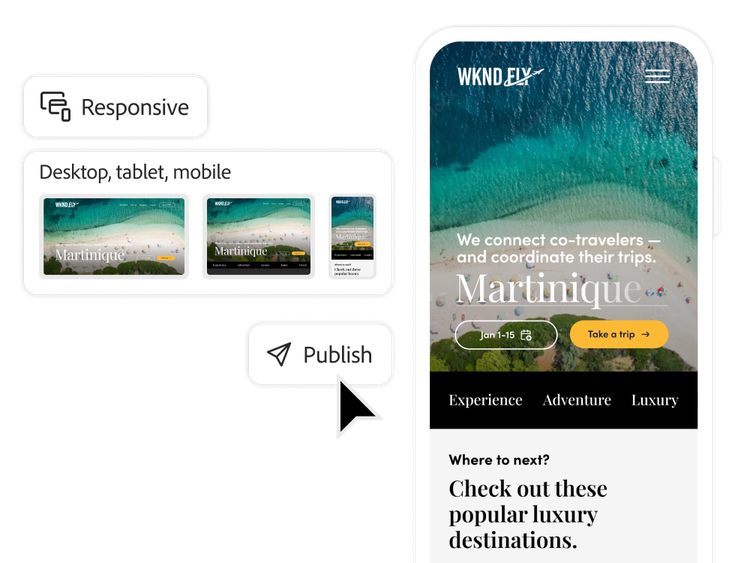
By creating content once and reusing it across websites, mobile apps, social, email, and more, marketers ensure brand consistency while reducing production costs. Built-in governance tools help protect brand integrity at scale.
Content can be delivered to virtually any digital touchpoint (including websites, apps, IoT devices, digital signage, and emerging channels) using HTML or JSON outputs. The system is designed to adapt to both current and future platforms.
No. Marketers can manage and deliver content without deep knowledge of repository structures. Developers, however, can extend functionality through APIs, including
GraphQL for high-performance applications.
Existing assets in Adobe Experience Manager can be repurposed across multiple projects, campaigns, and channels. This eliminates content silos and speeds up enterprise-wide rollout.
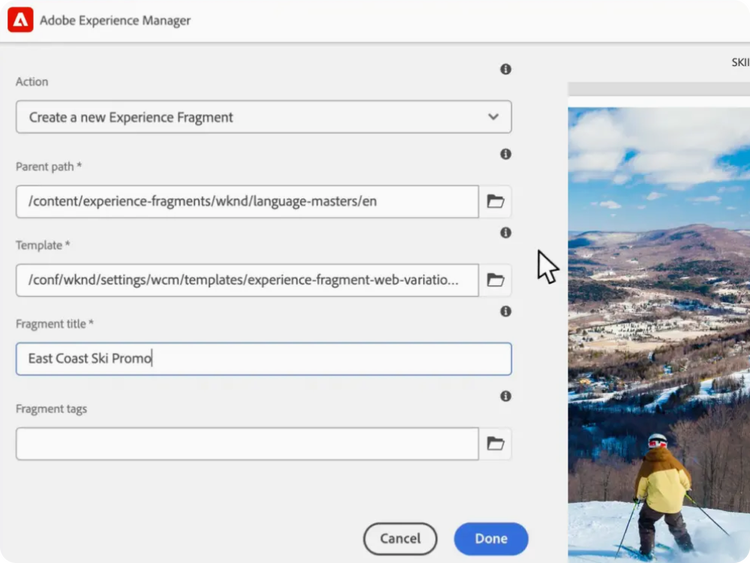
Experience Fragments are bundles of content + layout elements, optimized for delivering consistent experiences across channels.
Content Fragments are structured, reusable text/media components that are page-independent and ideal for modular content reuse. Used together, they allow marketers to
scale content operations while preserving flexibility and design integrity.
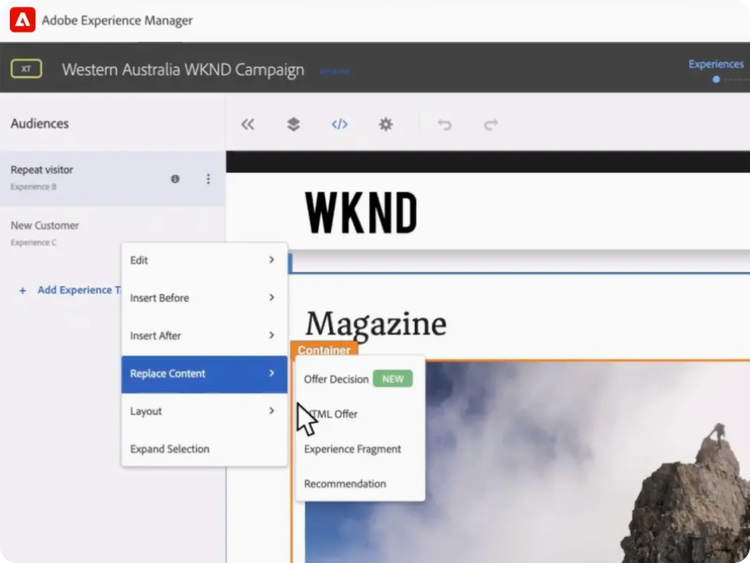
Yes. Variations can be created manually or with the help of AI-driven tools (natural language processing, automated shortening) to tailor messages to specific audiences or channels.
Forms can be built, styled, and embedded directly within Experience Manager Sites for a seamless customer journey. They include governance, validation, and integrations to ensure secure, compliant data capture.
Yes. Templates and styling can be applied once and deployed across multiple campaigns or microsites, saving time and maintaining consistency.
The platform provides built-in approval workflows, user permissions, and content tracking. This ensures only vetted content goes live, which is crucial for large enterprise teams.
Yes. Adobe Experience Manager Forms and Sites include secure data validation, role-based permissions, and integration with enterprise governance systems to protect sensitive information.