[Music] [Sujit Menon] Hello, guys. Thank you. Thank you for coming for this session.
I know it's been a long tiring day, but seeing all of you here, it's great, motivating for both of us here.
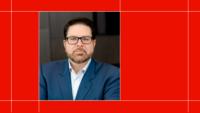
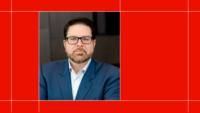
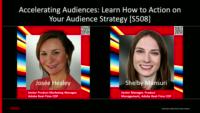
We're going to have a session that talks about a little bit about how Adobe is been powering the hospitality at MGM. I don't want to steal her thunder. She's going to talk about the session and what you're going to learn, but I'm sure you will learn something by the end of it. I'm pretty sure you'll end up with it, right? There is a Q&A planned towards the end, and if there is time, we will take those questions. And by way of introduction, my name is Sujit Menon. I am the global client partner for Cognizant. And Vegas happens to be one of the regions that I manage, practically every other week in Vegas, so I'm called a local here, and that's one of the reasons why I'm on the stage here. And I have my colleague with me, Giana. She manages the enterprise messaging platform for MGM. And let me invite her on the stage. She will give us a view of what the session is all about and then we'll go from there. Okay. Thank you. [Giana Zelaya] Fantastic. Thank you. Hi, everybody. My name is Diana Zelaya, and I currently serve as the Executive Director of Marketing Tech Products at MGM. So that's a mouthful, but specifically, I have executive, basically, direction over our offers management system, our messaging framework, which is our various different platforms, SMS, push notification, emails, as well as real-time communication. So basically, in a position to lead the efforts around our tech, what that infrastructure looks like, and what the future of MGM looks like around our personalization and our messaging.
So I think the main thing, I guess, that I want to get out of this session, I think it feels a little bit redundant. I feel like you guys have heard this message before. The data's got to be right, then we can get to the messaging framework. But I think part of the challenge is always that we have foundational legacy tech, right? And then we have the tech that we haven't maximized its capacity. And then we have tech that we want to go on to the future. So I think while we're planning this foundational data and foundational tech, I want to look into what we can do today while we do these in tandem and still drive new revenue streams, new creative ideas, and new spaces to harmonize, with our customers, so. Wonderful. Thanks, Giana.
While some of us might not know what MGM Resorts stands for, I'm going to have her give us a view of what it is. So do you want to talk about MGM Resorts? Yeah. Fantastic. So I guess welcome to the show. Welcome to the MGM experience as we like to say. Let's talk a little bit about the stats here, what you guys are seeing here, 20 entertainment venues, 350 food and beverage club experiences, 37,000 hotel rooms, 1 million square foot of casino floor, 4 million square foot of convention center across, Marriott 12 plus properties. And I think what I really want you guys to gauge from just this slide alone is MGM really isn't anymore about hotels and casinos. It's really about creating an ecosystem of entertainment that dazzles all these different personalities, these different age groups. And everybody's coming here for a different flavor, whether it's entertainment, whether it's high-venue restaurant. We're positioned at the center of core sports and entertainment growth, right? So T-Mobile Arena, 750,000 hockey tickets. We have some of the greatest performers that have come here. We have our Allegiant Stadium, home to our Raiders, 68% of the attendees are from out of town, and 90% of them say it's a trip driver, 8 million tickets sold for Adobe live theater, 24 headliners. And so I think, the main thing that I want you guys to gather from this is I really feel like MGM is redefining and reshaping what it means to come to Las Vegas. I think before and even as little as ten years ago, people would just come for the casino floor, the gaming experience, maybe hit a casual buffet, maybe a good magic show. But today, we have the luxury of experiencing a myriad of different entertainment, from something like going to the Mayfair, right, and having this, what I think is like the contestants of a Las Vegas show, fine dining with the fountains in the background. Going to one of your favorite Iron Chef, at Morimoto and having some of the best sushi you've ever had in your life.
Going to the Nomad library, for instance, if you guys ever get a chance to go there, they actually have the Rockefeller library there. And when you enter it and you open it, it literally looks like a scene from Beauty and the Beast. So imagine it's your anniversary for your girlfriend, and you peel the curtains back and she gets to see this elaborate library and experience this fine dining space, right? Something that I'm sure when I came here, I had never heard of before.
With Formula one, you can watch some of the fastest cars in the world now, zoom through the Las Vegas trip. And I got the chance to see it and seriously, I was really floored. If you guys ever seen or played Grand Theft Auto or you're familiar with that with your kids, it looks like a space from Grand Theft Auto. It's really incredible. So I think, like I mentioned, I feel like Vegas is being reshaped. Really, MGM is a true driver. And if ever I was a fan, I am definitely a fan now, I think of MGM, so. And if you guys haven't seen any of the MGM properties, you should add on this trip. Try and make it a point to stay there. If not, next trip it is, right? But I got to ask you, those F1 cars ripping through, did you really see them or you just heard the sound? No. No.
I mean, so I got some tickets to actually go to the event. - So I mean-- - So lucky. She's a lucky person, gets ticket for F1 events. - I got a little bit lucky there. - Come on. And they do their best to block it, but you can see it from various parts of the strip. And I think just the excitement of being there, meeting the different NASCAR. And I would have never had the opportunity to do that before. Right. Now it's here in Las Vegas in our backdoor. Right. I think that that alone is amazing, so. Just so that, Cognizant is also a sponsor for Aston Martin. So we are the title sponsors for Aston Martin. So our cars also run through those zip, so anyways. But, Giana, taking a sideway, look at what MGM has done over the last few years. I know you have been associated with MGM for the last few years. I know it has evolved. All the entertainment, digital transformation has evolved drastically, especially with AI coming into picture. This area has completely blown out. What's been your experience? What have you seen change in MGM? What's your road map? What do you think what's happening here? Okay. So let's go. Okay. So why am I sharing all of this? So I want to talk about what really led to wanting this bigger digital transformation, right? We have so much to offer. It's overwhelming. And frankly, I think most people don't even know about what we have to offer, right? I could probably think of a myriad of things aside from the stuff that I just mentioned, like wellness experiences, there's literally yoga with dolphins that we'd offered in the past. Things that probably would-- Did you say yoga with dolphins? - Yes. Yes. - Oh, my God. Okay. So I think what's happened is we want to understand how our technology can evolve to really understand the customer DNA, right? How do we help them discover, new experiences while still giving them a taste of their favorites? You might still want to watch a magic show, but you might want to go to a Michael Jackson show, or you might want to go see Bruno Mars, right? So I think this is where our technology and the need for digital transformation is coming from. Plus, there's a new segment of a population 25 to 35 segment of the population that is really interested in this growing segment of food. We grow up being foodies. They want to be wildly entertained, short attention span. We know that. So how do we cater to them with some of the legacy technology and some of the current technology that we have, right? So digital roadmap. Now the bigger digital roadmap is top secret, so I can't share that. But I'm just giving you kind of and like I said, I'm sure you guys heard this before. But I really want to talk about the experience that we have today, where our technology is today, and I think where a lot of companies' technologies are today, and where we want to be, right? So this idea of multichannel, the simplified journey orchestration, want to walk you guys through what that looks like, a disparate system where the messaging framework isn't necessarily cohesive or harmonized, and then versus what it would look like through an omnichannel experience. So I have my colleague here, John. John receives a birthday offer via email for a free night stay at a MGM property in Las Vegas. He later opens up the app, but doesn't see the same birthday offer. And he might see an advertisement for a previous restaurant that he went to. He browses MGM's website, but only sees standard roommates. Missed opportunity to give him a birthday deal, potentially a package for his restaurant that he really likes, or his favorite steakhouse. When he arrives at the property, he isn't necessarily reminded of his birthday offer. Maybe the data catches up later that day. No personalized incentives that he receives an SMS follow-up about his birthday. Not really understanding that he just got off the casino floor and he's been having a great time gaming, right? So it's like, we're receiving the data in different ways here at different times. Some is real-time, some is near time, some has latencies. And not having these different channels created in an omnichannel experience is just a disparate journey for the customer, right? We're not really giving them what they want, when they want, in real-time. So let's talk a little bit about where we want to be. So we want a customer to move seamlessly between channels. With their data, their engagement history, carrying across all these different multiple touch points. So let's look at what, I guess, this same situation would look like if we had created an omnichannel experience, right? John receives a birthday offer for a free night stay and $100 play credit. Fantastic. He gets on his mobile app and when he opens his app, the birthday offer is automatically displayed in his promotion tab. He goes on the website and when he logs in, the website sees a personalized banner reminding him of his birthday along with a package to go see his favorite artist. He gets an SMS reminder whether he's booked or not, he gets a different message, right? If he hasn't booked, he receives an SMS. "Hey John, come celebrate your birthday with us. Here's $100 of free play credit," or "a reminder to book with us," right? So the idea here is like you're seeing all these channels and now we have a cohesive story to tell. We are telling him the same thing in real-time as it happens. And the final portion of this, I think, is the AI predictive element. And so I think we have elements of AI already in all of our tech, but the idea here is that we want to anticipate the customer need. So if we know that John loves to eat steak, especially food, have food after you've been on the casino floor for a few hours, maybe we offer him a reservation, to the latest steakhouse, right on the casino floor. But we can't do that if we have a multichannel experience that's not seamless, that's not cohesive, and that's not omnichannel. So I think we're all headed towards, obviously, the same direction. We want hyper personalization. We want intelligent adaptive models, that create that seamless connected experience in real-time for our customers as they're on the casino floor or coming to Vegas or leaving Vegas, right? Right. That's a lot of journey that you guys have actually gone through. I think when looking at some of the things that your batch have achieved, I'm sure people in the room who might be on the journey I'm sure will learn from that. Let me go to the next most important question that we have all assembled here to here is talk about Salesforce. I'm sorry. I'm sorry. I'm at the Adobe Summit, right? It's okay. Fair enough. So talk about Adobe. I know they have been your partner for the last six years or so. How has been that journey? Okay. So this is a pretty simple, I guess, slide. And I want to talk a little bit about how we leverage Adobe today. So MGM utilizes various sources of data, right? And this data gets input from different systems, obviously. So we have hotel gaming data. We have tier, loyalty, restaurant, various different data sources. These systems deliver the data through Adobe Campaign through rather complex workflows that we use, but we leverage the product to create these workflows. And these are used to process and load the data into our Adobe schema. These guest identifiers Like, MFID are critical to stitch everything together. And so the idea here is create export logs that go into-- Export logs that have subscription, delivery, tracking logs that get sent to our dashboards, and get sent to our terra data. So to keep everything up to date, these are essentially automated jobs that happen hour by hour or day-to-day. They keep the data flowing between these external systems and our campaign instance, right? And to talk a little bit about how we actually use some of these pieces of our stat, we have Adobe Audience Manager here, Target, Analytics, Trigger. So I want to give you a simple idea of how we're using it. Like for instance, browsing behavior, right? Adobe Analytics and Target can collect the behavior of signals on the web. The campaign then ingest these behavioral signals and then these profile signals can get sent to something like Adobe Audience Manager, where we create the audience segmentation, build the segment, and then that gets activated and sent out as a messaging campaign.
We can also leverage target in that same instance. So that messaging campaign can either be email triggered, scheduled, pushed. We don't have geolocation yet, but SMS and so these are the channels that we're working with right now. A short answer, is Adobe a good platform to use or not? For campaign messaging, it has proved to be, what we've needed at this time. So yeah. I would say, yeah. Okay. Wonderful. Now while you have spoken a lot about the journey, the digital transformation journey, how we have leveraged Adobe...
None of these platforms, would have been easy to implement in an environment like MGM, right? Large organization with multiple disciplines, different stakeholders involved. If I were to ask you what were your top three challenges, right? Let's go one by one. Talk about your top challenge that you might have faced.
How did you mitigate it? How did you forecast the problem? How do you fix it? Sure.
Creating Seamless, Personalized Guest Experience Across Channels. So delivering a consistent personalized experience across all guest touchpoints. Now I think at face value-- This is a rather complex concept. And once again, I think without the identity resolution piece being in place, our data being cohesive, from all these data sources, whether that means, put it in one data mart or we have Databricks. We have all these different elements and I think navigating that, foundationalizing our data, that's going to take time, right? It's going to take time. And so I wanted to take a look at what we're doing in our messaging framework. What was the low hanging fruit that was creating a lot of friction? So I want to talk a little bit about, just a small example of something that created a ton of value and has decreased redundancy and has opened up the space for, what my support team would do before, which was 100% support, and now it's decreased. We've leveraged about 20% of our time to support, and 80% for creating new revenue streams, doing new A/B testing, trying new initiatives. So what we did was the idea of the scalable, intelligent, sophisticated template, right? Modular template. And I'm sure you guys have seen this concept before. But the idea here was, I really wanted to take, like I mentioned, low-hanging fruit and figure out how we can democratize this system. So the modular email templates that we have implemented are scalable, reusable. We have a content fragment library that marketers can pull from. And these different fragments have dynamic branding and content thoughts. So I just want to give an example of a template that we've built, just to give you an idea of-- It's something that you wouldn't think would cause such a great impact, but it did, right? Because we had a ton of people investing time in creating single deliveries and trying to create the cohesion across all these different properties. As we integrated the cosmopolitan, that created another source of friction. So this idea here with this template is, has a collapsible menu. So our customers can take a look at different options. We have a content fragment library that's draggable and droppable. And that helps unlock some of that marketer flexibility. Whether it's with promo codes, different tier incentives. On the left hand side we have dynamic content conditions. So this is more of the personalized portion here with a customer progress bar. And this is fed to the customer via their tier credits. So what's available to them? So this is like first step to getting personalized, with the customer without doing a huge lift. Right. We took the same stack that we have today and I took a look at, "Hey, where is the most friction being caused? And let's kind of eliminate that," right? So we've used the same concept over and over where we've optimized using Adobe in different workflows. Things like subscription, things like-- Even when we're enabling the customer to choose their preferences. So we've continued to optimize. And like I said, now I have a team that was 100% support. It's now about 20% support and 80% just dedicated to revenue generating ideas, so-- Thank you, Giana.
In an MGM like environment, where MGM is involved in not just, when I say entertainment, it's not just shows. It's about dinner reservations, birthday reservations, it's about hotel bookings, right? It's about games, F1, everything. Sure. Sure. Packaging is altogether would have been a big challenge. So again, I can see that you guys have already solved the challenge. So moving on, if you say, what would be your other next challenge that you might have faced around the journey? Gaining real-time guest insights. So once again, I don't think these are the biggest challenges. I think this is from the lens and framework of, "We have these big challenges. We're working through them in tandem on the backend here. But what can we do today?" Business has to run as usual. And we still have to create revenue and we still have to create an impact with the tools that we have. So gaining real-time guest insights. So we know that we need a unified real-time view of guest behavior, right? It's challenging. It's challenging to tailor these marketing efforts when our data is just not there. So what can we do today to unlock some of that flexibility for our marketers where they can get that data in real-time? And we don't necessarily have to wait for all this harmonization of our data pool.
Let's take a look at what that looks like. So what we did is, we took a look at what we can do out of the box with our Adobe instance here. And we did a integrated architecture here with Adobe Analytics and Campaign, right? The integrated architecture gives us a new data access flow. It allows for real-time capture based on behavioral cues, potentially like on the web. And it gives us an opportunity to create an automated personal outreach to our customers. So let's take a look at what the flow actually looks like. This is a very simple flow.
We have MGM customer signs into the web. The customer browses something like a Las Vegas property and abandons their session. They don't necessarily add to event cart. They don't necessarily book. And we give them a message. Now although this is a rather simple flow and it could be attributed to abandoned cart or anything that really has a behavioral insight on the web for our customers. The real value here is-- We took the same architecture and reintegrated in a different way. So let's take a look at what that architecture looks like. And it's rather simple, right? So we already had all of these components. We have tag management tool. That's Adobe Launch, which is our secret sauce. They capture the eVars that are then sent to through our analytics tool. The eVar data then gets shared to our triggers, which sends the eVar data based on various rules that we create to our marketing campaign instance. So if you send the eVar data based on various rules, we can create latencies in the journey, but in reality, it's a real-time framework. As we're capturing the eVars, as we're capturing the data, that actually available for our marketers to action on. So while we have this bigger pod of data coming to us from CDP, and maybe these are latencies, maybe these are more actionable. But a lot of them, they have issues, right? So we created a new way for our marketers to be able to action on real-time data as it's happening, as our customers are browsing the web. And just opening up this small pod gives us a way to create new revenue streams and create new ways to personalize the customer journey for our guests. So now I get it. So this is the reason why I get those marketing emails when my wife leaves the shopping cart unbooked, right? This is what is done. Okay. Now I get the now tag. It's okay. So moving on to the next challenge and just to clarify for everybody's sake here, she currently said, this is not the top three challenges. These are just the challenges that she is going through. - Yeah. - Or MGM is going through this one time. Right, because we have a bigger top secret digital road map obviously that everybody has, right? But I think just trying to figure out how we can get creative with our current stack because we've already invested in-- Some of these contracts are three years. - We got to do something with them, right? - Right. So challenge number three, Optimizing Marketing Investments. So I think about this in three major components really. And that is, we have the data, then we have our messaging framework, and then we have measurement, right? And if we don't have the data right, then the omnichannel orchestration doesn't work, then our measure isn't correct. So we tried to look outside of the box and figure out, where we can fix some of the elements that we need from the measurement perspective without necessarily tapping into this data foundation that we're working through, right? So we saw a great solution in Adobe MMM.
We needed to figure out a way to spend this media dollar efficiently. And I think Adobe MMM gave us a correct answer. It's this holistic measurement, it's data-driven budgeting, and it's removing a lot of the data silos that we see today. So I want to give you an example really quick just on what that really means. For example, if we have like a high-value player and typically they like to book their rooms, potentially like a host, right? And we're adamant that this high-value player needs to get messaging because we know that it's a revenue generating stream for us. So we're feeding them Facebook ads, we're feeding Google ads. But then Adobe MMM comes in and tells us, "Hey, I know you guys want to keep spending money on Facebook ads, but we're noticing there's little to no value or movement on any action item that he wants to do in Las Vegas or MGM specifically." So that gives us insight to understand, we're wasting our money erroneously here, right? Giving this money where it really counts and it's not counting here. So that's the idea of Adobe MMM. And we don't really need all the data integrated and all the identity resolution figured out to take care of this portion of the business. So these are just three challenges that we took a look at as we're creating the bigger road map. But I think they're impactful. They're resourceful and they're creative. And it didn't really-- At least the first two didn't cost us any extra more money, and I think Adobe MMM was a great component to add that. Okay. Thank you, Giana, for all the insights. And, guys, we are in Vegas, right? So we would be missing something if we don't play something here. So the next few minutes we're going to play myth versus reality and we would like you guys to participate in this. The question will come up on the screen. You guys can shout out what you feel whether it's a myth or reality, and then our expert on the stage will say what her opinion is. Obviously, your opinion don't matter much, but still say. Please say that. Please shout out what you feel. We go to this one. The AI can replace human-driven marketing in hospitality. What do you guys think? Come on, guys. It's reality, right? Giana? Absolutely not. Myth. Yeah. So AI can replace human-driven market? No, I think AI can enhance, but it could never replace. I believe with AI-driven insights, we can create a multilayer connectivity with the customer. Something as simple as knowing that, your parents' 40th anniversary for instance and they want a special touch, AI can inform our host to give them potentially a champagne or an upgraded room or-- Nothing can really replace that connectivity layer, but I certainly think that they could enhance it, so. Okay. Wonderful. We'll go to the next one. Anybody? What do you guys think? Come on. Nobody is going for the reality. What do you think, Giana? Absolutely myth. - Okay. - Absolutely myth. Fair enough. Yeah. I think about how some people are here, let's say like on a bachelor's party and somebody are here getting married, right? Like, you wouldn't want to give, "Hey, enjoy your last night of freedom to somebody that's getting married in Las Vegas tonight," right? We need catered personalized messaging because we do have such a variety of different people celebrating all kinds of things, I think here. In fact, people come here for multiple reasons, which they never want their family to know-- - Exactly. - When they come with the family, right? - Exactly. - Fair enough. Point taken. Okay. The next one here. Most guests don't engage with hotel emails or marketing messages. I don't know if you guys feel. What do you guys think? - Reality. - Okay. We have few realities there. I have a few myths here. What else? What do we have? Okay. We'll take Giana's opinion.
So my take on this is, there's always a need for a personalized message. And I'll give you an example of something that we launched as an A/B test when I first started here. Something as simple as. So we did A/B test with our gaming and non-gaming customers. And we did something as simple as a scratch-off for our emails, right? And you wouldn't think that-- I love scratch-offs. I always ask for them for my birthday, but you wouldn't think that something as simple as doing a digital scratch-off that reveals maybe an offer or some type of discount would actually get engagement. But, in fact, what we saw is that, our gaming core customers engaged with this three times more than our non-gaming. And then what we also saw is that our non-gaming engaged with this email two times more than the average email that wouldn't have the scratch-offs. Yeah. It's interesting. I think, maybe not as often as we think, but I think if the message is right to the right person, then we do see them engaged with our emails. So you think it's a myth 50-50 reality, that's what you think. Okay. Fair enough. Go to the next one. Email marketing is dead in hospitality. I agree. What do you guys think? Judy is going to kill me for saying that.
Okay. - There you go. - Yeah. Absolutely myth. Yeah. I think email will continue to evolve, it will never be dead in hospitality. Still our most lucrative probably revenue generating channel. We send 250 million emails probably a quarter Two fifty million in a quarter. - Yeah. - Oh, my God. So I think it's something that will continue to evolve.
But dead-- Yeah. I don't see that happening. Okay. For the next one, hospitality brands don't need real-time data to optimize campaign.
Okay. Fair enough. Yes. I think absolutely myth. I'll give you guys also a real-life example. So we have the Dolby Theater, and we get a lot of foot traffic. When we have shows, people come in and out of Park MGM, but don't necessarily stay at Park MGM. I think Park MGM is one of those hotels where, maybe people don't understand the brand concept. It's actually one of my favorite hotels from the MGM portfolio. So what we've seen is that, that the concept that, if we were able to target these people as they leave, like a Bruno Marshall, for instance, there's actually On The Record speakeasy right across that most people just walk right by. And actually you can have an intimate setting with Bruno Mars and party with him after this concert. I think the idea is most people don't really know, right? And if we were able to target them, maybe by geolocation or understand that they're leaving the Dolby Theater, then we can cater that experience to them and definitely heighten and elevate this show that they just had, right? So definitely real-time to optimize campaigns is essential. Okay. Thank you. Go to the last question. And guys, please hold your breath. This is the most important question. Hold your breath on this one. I didn't write that, guys. - Right. - No. Yeah. Of course. Cognizant has been a great partner to our crazy, sometimes creative ideas. And I think we throw a lot at them and they have been extremely flexible with us. So then you guys are Adobe partner. Thank you, Giana. We seem to be spending a lot of money on Adobe. That's why we are on the stage and other places. So thank you, Cognizant, who are spending the money. And again thank you. This thanks goes to the team on the ground. I happen to be the guy who takes the credit for everything on the stage, but the team on the ground is working with you. So thank you, Giana, on this one. Okay.
We're almost at the end of the session. We didn't plan this to be a one hour full session. We plan it to be around 40-45 minutes. At the end of it any final thoughts? Anything that these guys in the room should take away? I know this deck might go to other people too. So what should be their takeaways, Giana, from this session? Takeaways, I forgot about this. Okay. So this is pretty generic. But everybody's been beating the dead horse with this one. Start with the data. We know that. Personalization wins. That makes sense to me.
Omnichannel is non-negotiable. Yeah. I think to ensure seamless integration, consistent, connect, experience, that makes sense. You know what? I think from my perspective, the biggest takeaways probably this session is that, yeah, I think agility is essential. So we have a marketing landscape and tech landscape that's evolving. You want to embrace the tech that we have today, but also, I think, build your architecture in a way that's flexible. The way that I'm thinking about it is, right now we want to have that connective tissue in between that is plug and play, where we understand that Adobe is meeting the need. We got to be critical and brutally honest about our priorities and also what our business requirements are for today and for the future. So I think a lot of what I spend time doing is thinking about, where do we want to take this these experiences? And are these products and tools meeting the requirements of not just somebody on the marketing team, somebody on the engineering team? Is there flexibility between the integrations? Are we thinking about the components of, somebody like, a host or a salesperson on the floor, and how that would cater to their experience with the tech that we're using? So agility to me is essential to build something flexible, to be flexible about the tech as its evolving. So I feel like that's pretty-- It's a good takeaway. And then partnerships drive success. Yeah. Collaboration is key. I think there's always this thought process, engineering knows best, product knows best, strategy knows best. And frankly, we need that cohesion to understand where we want the tech to take us in the next 5, 10 years, right? We're never going to get it right, but I feel like as long as we stay flexible with how we build the integral systems that drive the data, then we can always bring in new products or think about how to elevate the current products that we have, the tools. The foundation though has to be right. And I think the foundation is always the data, so. - Okay. - Some of my takeaways from this. Wonderful. Thank you, Giana, for all your insights on this one. The last section is Q&A. So shoot your questions, guys, if you have any. We have the expert on the stage.
Awesome. Well, thank you guys so much for coming.
- Appreciate you being here. - Thank you. Thank you. Thank you. [Music]