How AI personalizes the entire customer journey.
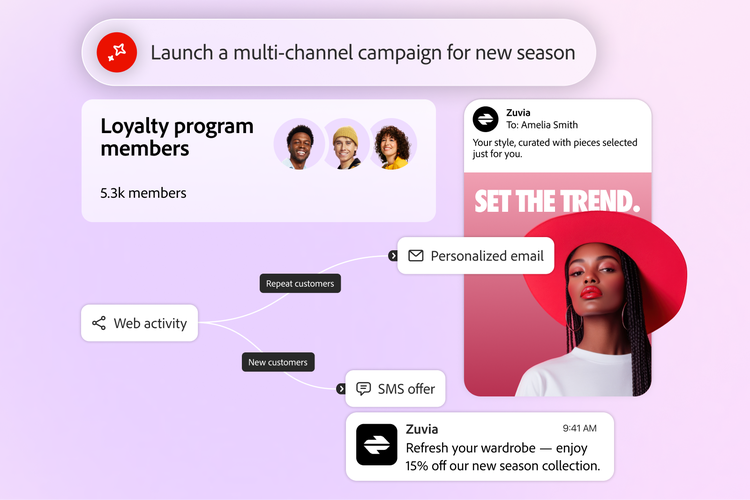
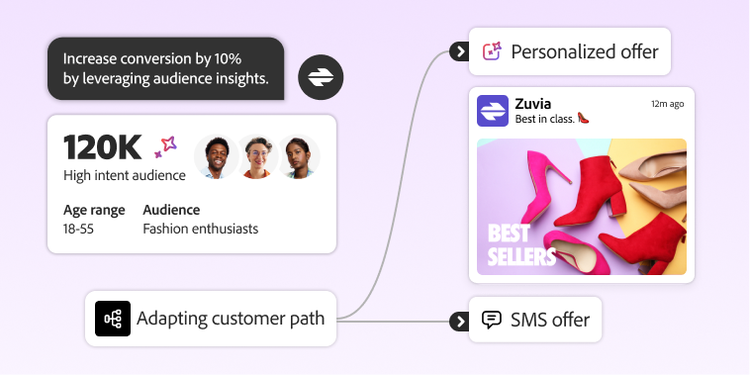
AI personalization is not limited to marketing campaigns. It can support multiple customer touchpoints across many industries, helping you move beyond channel-level personalization and toward journey-level personalization.
Content and experience personalization
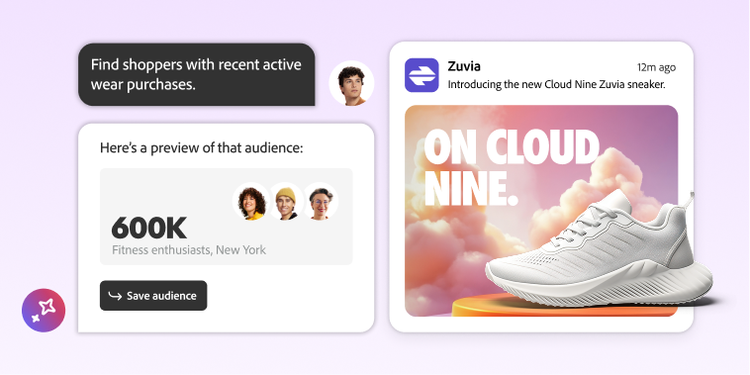
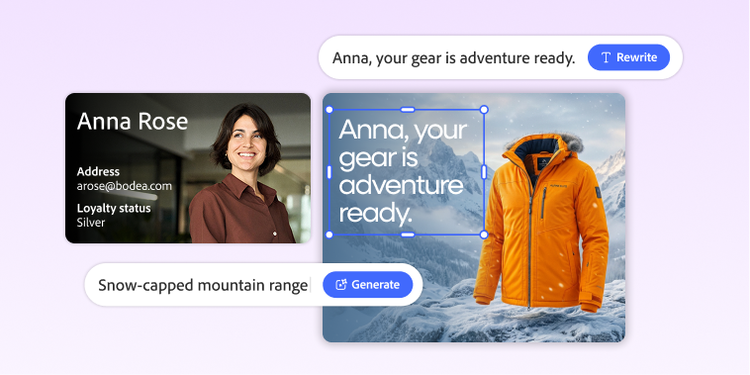
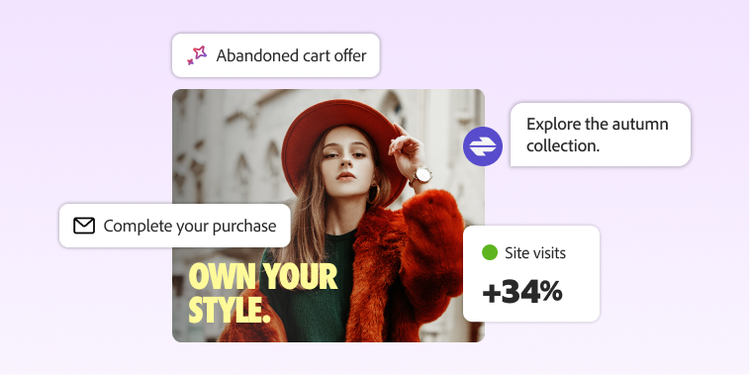
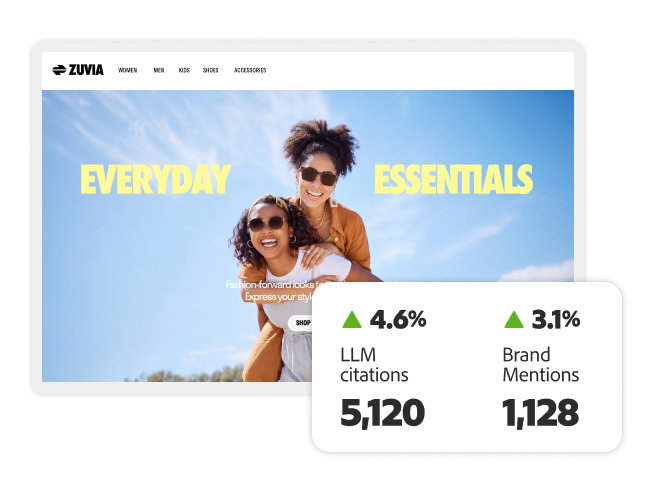
1. Content and experience personalization: Every customer arrives with different goals, interests, and intent. In digital marketing, AI helps tailor experiences in real time using signals such as a customer’s digital behavior, preferences, engagement history, and context, across the marketing funnel. Today, many customers arrive at your site through AI-powered search and discovery experiences, so it’s important that your page provides the information they need immediately.
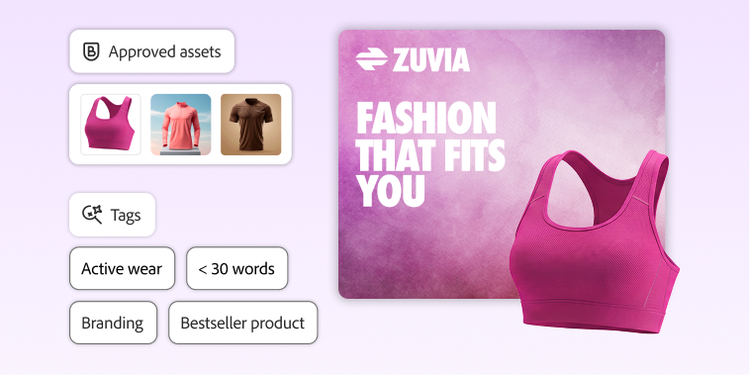
This can include personalized articles, learning modules, landing pages, creative assets, product recommendations, calls to action, and more. By using AI across email, websites, mobile experiences, and other digital touchpoints, marketers can help customers discover the information that matters most instead of navigating a one-size-fits-all experience.
2. Sales personalization: AI can help sales teams move beyond generic outreach and personalize interactions by using CRM data, account activity, engagement signals, and buying behavior. Teams can tailor prospecting messages, demo experiences, recommendations, and follow-up communications based on what matters most to each account. This allows sales conversations to feel more informed, relevant, and valuable throughout the buying process.
3. Customer onboarding and enablement: AI can personalize onboarding journeys based on customer goals, product usage, skill level, or role. Instead of giving every customer the same introduction, it can guide each customer toward the actions most relevant to their desired outcomes. This helps customers reach their first meaningful success faster, building confidence and long-term engagement from the start.
4.Product experiences: Increasingly, personalization happens inside the product itself. AI can customize dashboards, workflows, recommendations, notifications, and feature discovery based on customers’ product usage. The result is a more intuitive experience that helps them realize value faster and engage more deeply over time.
5. Customer support and retention: AI can make support experiences more contextual by personalizing responses, recommending relevant help content, predicting customer needs, and routing inquiries based on customer history or intent. This helps teams resolve issues more efficiently while delivering service experiences that feel more tailored and proactive.
Similarly, AI can identify engagement patterns, predict churn risks, recommend next-best actions, and deliver personalized adoption guidance to proactively strengthen customer relationships instead of waiting for issues arise.