CX Enterprise Coworker is an agentic engine that contains audience skills and enhances the creation of Audiences within
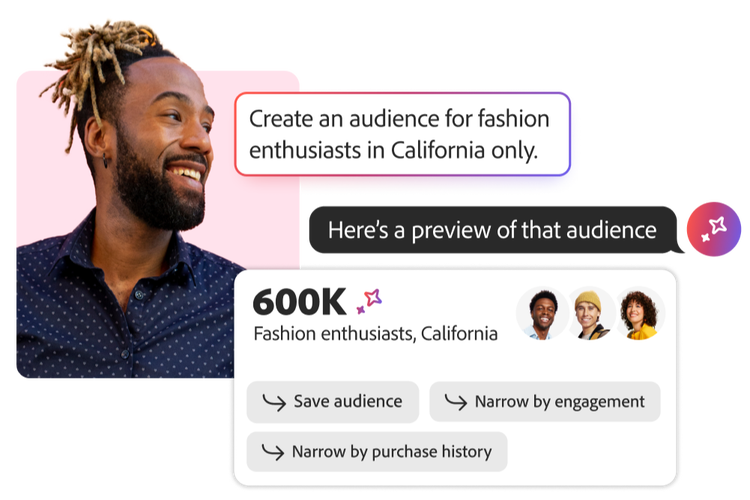
Real-Time CDP . Work within natural language to explore, understand, and create audiences, instead of manually configuring segment rules. Rather than hand-building a segment definition and guessing at its size, you can ask the agent to find audiences by attribute, surface the XDM fields you could segment on, estimate an audience's size before you create it, and flag audiences that have suddenly grown or shrunk. It is designed to remove the manual configuration, slow diagnosis, and onboarding friction that make audience work time-consuming, while you stay in control of what gets created.
Audience skills in CX Enterprise Coworker support a defined set of audience jobs: conversationally exploring your audiences, finding the size of existing audiences, looking up audiences by full or partial attribute, detecting duplicate audiences, discovering XDM (Experience Data Model) fields you can build on, detecting significant size changes, and creating an audience from attributes and events (including estimating its size before you commit). It does not currently support goal-based audience exploration (discovering datasets aligned to a business goal using propensity models), and it needs at least 24 hours to process your data before insights are reliable. Treat it as an accelerator for audience management and exploration, not an autonomous replacement for the analyst.
No, CX Enterprise Coworker acts only when you ask it to and only within your
permissions, so it does not silently alter audiences in the background (unless granted the permission to so). Viewing audience insights requires a View Segments permission, and creating an audience requires a Manage Segments permission, so a user who can only view cannot have the agent create anything.
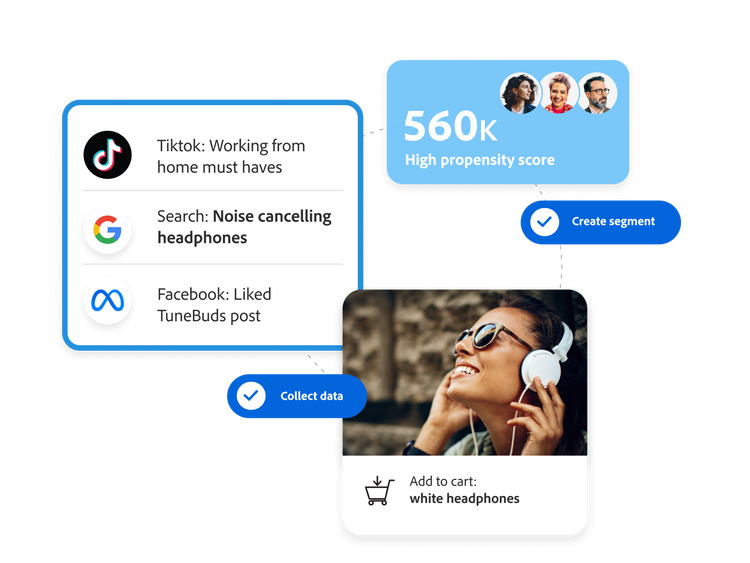
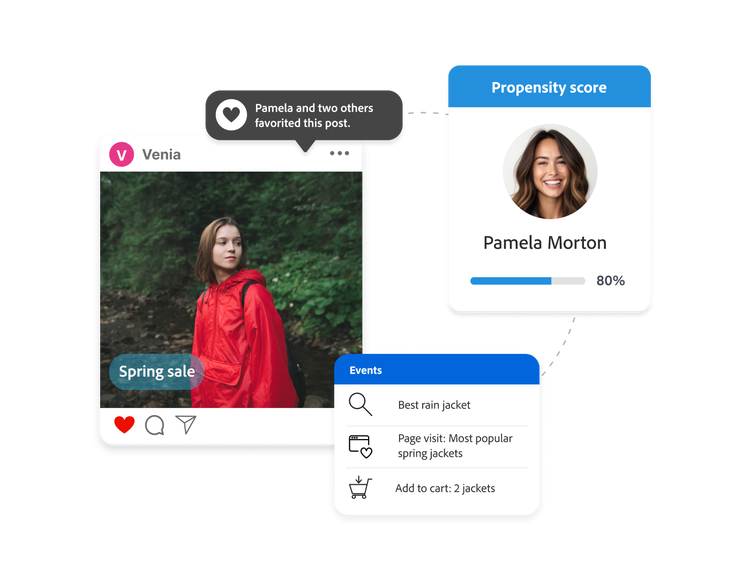
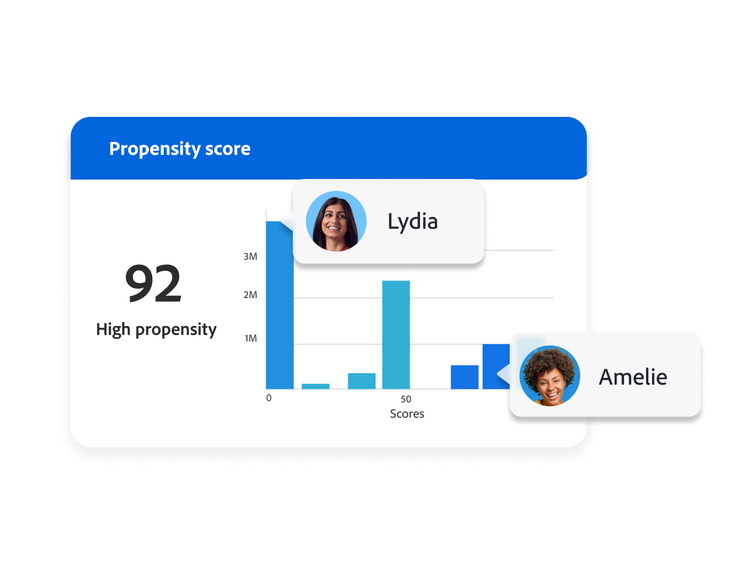
Beyond CX Enterprise Coworker, Real-Time CDP includes Customer AI, which predicts individual-level behavior such as propensity to buy, convert, or churn, with explanations of the factors driving each prediction, and look-alike modeling, which expands a high-value audience by finding profiles that resemble it. Together these let you
build audiences around predicted intent rather than only past behavior, and grow reach without lowering quality, so audience work moves from describing who customers were to targeting who is likely to act next.