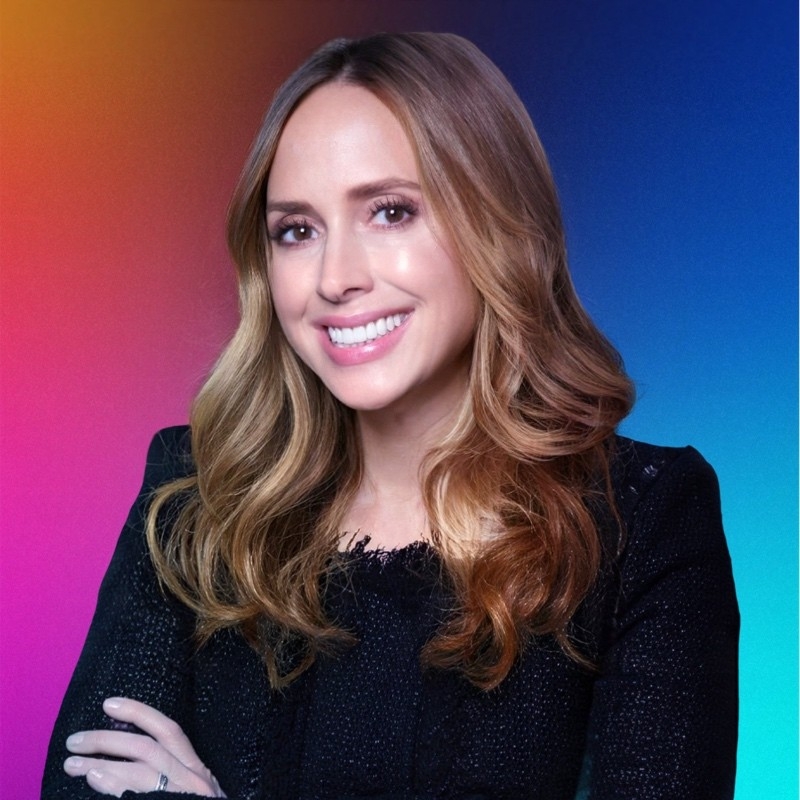
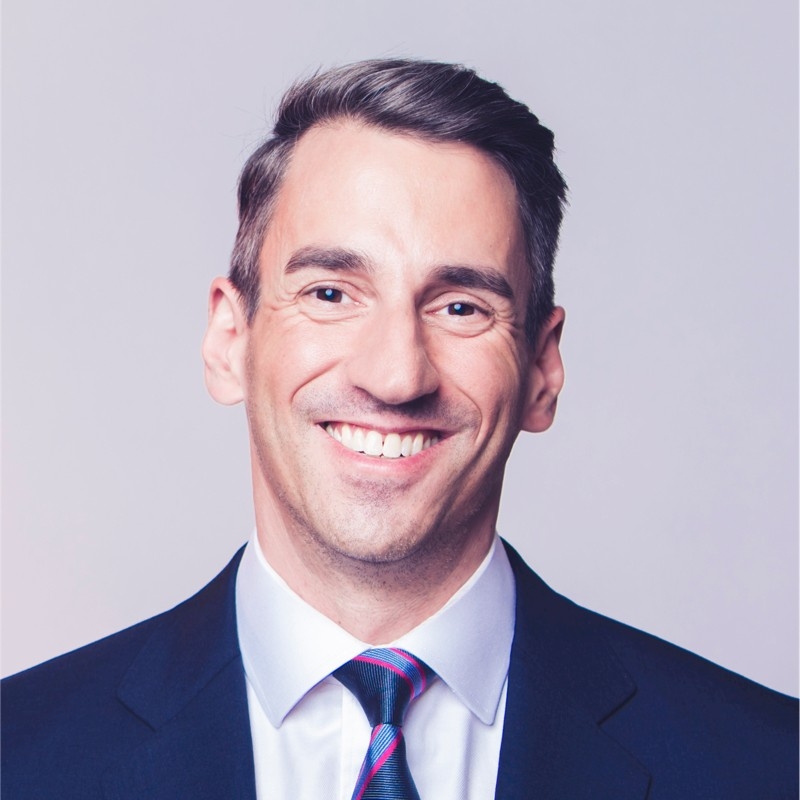
[Music] [Courtney Keating] All right. Welcome, everyone. Thank you. I know we're coming towards the ends of our journey, so I appreciate everyone being here. I will say we want this to be an active session. And what I mean by that is we've got some questions here, and I'll be doing some introductions in a moment. But towards halfway through, we'll ask you if you have questions. So feel free. It's a close group here. I'd like to say we're all friends, but I don't know everyone yet, but we will be by the end of this. How about that? So I am Courtney Keating, Chief Marketing Officer of Acxiom. Today, we're going to be talking about how we really take a look at harnessing data technology and platforms to have the best customer experience. Joining me today, I have two great leaders, two different journeys in terms of unlocking value. Jesal Parekh, thank you for joining me, Vice President, Head of Marketing Data Analytics and Privacy Platforms for Prudential Financial. Welcome. Bob Micucci, Managing Director, US Personal Bank, Head of Marketing Transformation and Delivery at Citi. So welcome, welcome.
As we take a look at the journey that we're all on, why we're here, I think what's interesting is to reflect on what is it we're trying to accomplish in this era of data complexity and transformation and technology and platforms? How do we decide what really matters in terms of unlocking value? Jesal, I'll start with you.
[Jesal Parekh] So I will-- First of all, thank you for having us here. And thank you to Adobe as well. So where I start is with our-- Where this journey began for Prudential, right? So it was a massive transformation that we took on about three years ago. And the three things that mattered to us the most when we started off this journey was, the first thing was getting the mindset of the people in the marketing organization, right? The mindset to put the customer in the middle and start thinking about how best you can leverage that to drive personalization. So that was part of the overall journey that we started with. And it came down to the-- I'm losing my thought here. But it came down to-- Your process is a lot what we talked about. It's the people, the process, and the platforms, then that sync together with a strategy in place. So the second piece that was critical in this transformation was the strategy piece, right? So you want to keep it simple enough so that it is achievable, measurable, and you can leverage that to break down and come up with the right level of use cases for your organization. And so those were the key pieces for us that helped us drive us to this point, I would say. You've been on a multiyear journey, so I hear people, processes, mindset, and creating simplicity so you can share that vision. Bob, what do you think? Where are you in terms of your start, and what do you think matters when you look at the whole landscape? [Robert Micucci] We're in a different place. And it's a good place. Again, context, some of the teams here, we run all of the activation, all of the channels, the data ecosystem, MarTech ecosystem planning for the consumer bank, marketing teams. It's a big universe. I came back to Citi two years ago, probably all bright-eyed and bushy-tailed. We're going to work on some cool tools. We're going to do some neat data stuff. And then I got a wakeup call real fast that maybe transformation wasn't going to start on day one. And the reality was listen, things are breaking every day. We're pumping out tens of billions of communications to consumers. If one of those goes wrong, I have to report that to the board depending on the tier violation, the reg violation. And so really that first 6, maybe it was 12 months, was just stopping the bleeding. How do we get this ecosystem in control? We had incredible logos that we had implemented, including a multitude of Adobe products and other logos that I won't mention here for obvious reasons. Great applications, very disparate ecosystem, and that just led to a hugely fragmented process ecosystem. Again, some of the team here has lived through that. And it was just like, just let's get that stabilized and then let's set 6, 12 months in. Let's set a really clear journey for how we're going to lay a foundation for change. And we're further along now, but it really was about two things. It's like 5 to 10 domains we could tackle, channels, offers, you name it. Two things if we don't get right, our data foundation, our content foundation. And we talked about it yesterday.
We have four CMSs sitting out there. That's just not going to work. We're never going to succeed. I can't create sustainable operations, efficient operations, if I'm dealing with that kind of ecosystem. And so their journey now is we've got it stabilized and what matters for change is having a clear view on those two foundational pieces for us could be different for other people, that's where we're at, and I think we're accelerating pretty quickly. You guys are further ahead. Numb.
He's being modest now-- We're at the tail end. I mean, tail end can be.
But I think from a foundation's perspective, I think, yeah, we're almost there. And that helps pop our way forward.
What does success look like, Jesal, in two to three years? You've got the customer at the center of this. What does success look like? Success for at least us would look like if we were able to get this right, there's a couple of things that we've always want to do. So one is get this tool in the hands of our marketers. So self-serve would be a big achievement if we can get through that. Get our marketers to use the tool to analyze populations, build segments, and activate on their own if the company allows.
And so that is the key driver for us, yeah. Yeah. Sounds great.
Bob, what do think? What's success look like? I know you're starting the journey, but you got to think of success in mind. On a personal level, two years ago, I'm like, "I didn't have any gray hair in that picture." So this isn't going well. You and me both, right? Yeah. No. You look great.
But seriously, so again, we run a very big operational team and, again, a sizable technology team. And success is I mentioned before. I got four of everything. You name the logo, I got it, right? Not a good thing, obviously. Success in the next one to two years. I think we know what we want to be in.
Full disclosure, we have an RFP out there on CDP, so I can't talk about that.
But we have an idea of the directions we want to go in, make those decisions, and start scaling very, very fast. That's success. I need to know definitively what that's going to be by the end of the year. I think we're pretty close to that. In some cases, be it channels or content, we know what that is, CMSs, we know what that is. So it's a matter of accelerating the path forward. And we have some good programs led by the team here.
Then the way we built things was very channel-specific.
It was we took a bunch of applications, and we made them do what Citi does, which isn't again, we're sending billions of communications, which isn't, I mean, and we're operating at four plus sigma. So it's not terrible, but it's not scalable, honestly. And so I got to get that collapsed because then I know what I'm hiring for, right? I can't hire for four different skill sets. Then I can know what my location strategy is going to be, and I can start building an organization in the centers of excellence. And I can partner with folks like Acxiom and Adobe or whatever the case may be in a more meaningful strategic way. Today, all of our investments are spread over 500 things. That's not a way to succeed. So that's something we're aggressively trying to fix, recalibrate, and make, again, our processes and capabilities very application-centric as opposed to the legacy way we've always done things. You're both unifying teams to bring this vision to life. There's challenges along the way. And one thing, just like you and I talked about this week is for people that are across the organization, how do you make this real to them? And what's the importance it's maybe a little more tactical, but what's the importance of having a business case? Something people can understand to start this off.
So I don't know how many of you all are familiar with some of the Adobe products, but everything works off of a business case, right? So I think the first question when you get into implementing these solutions is like, what's the business case? And that's where your strategy comes in, and the clarity in terms of how you break down what you want to achieve. Again, for us, it could be different across each businesses, but the use case is the most important thing that will help you drive value off your platforms.
That's a no-brainer right there. And that's important because you're unifying teams, bringing together, you need the advocates. What's it like from a leadership perspective and how do you lead the change with those advocates? And I'm going to talk to you a little about that. Sure.
Change management. - What the heck is that? - Yeah. It seems like I don't know there's 15 books up about it, but what does it look like practically on the ground? To me, it's a sign-- I'm a process guy. I'm an industrial engineer. That's my background. That's where I came from. I've always run transformation teams for years. And it's a science. It's a discipline. And yeah, there's art to it. But again, I'm not going to give you her name because you can't steal her because she's incredible.
We'll call her Jane. That's not her name.
There are two sides of this affecting the transformation, right? It's about your stack, the application stack, and having a great MarTech leader, which we do.
We'll call him Jim because you can't steal him either.
Someone who's been there and done it before multiple times. You've got to have that. And then the other side of that is the business architecture and having a very thoughtful, proactive, disciplined way of how to effect change because everything crosses 30 different functions in our organization. And the way we've done that is, again, we have a small group of folks, a transformation team that helps drive and really choreograph all the facilitation in a very agile way.
We're literally getting in the room week in, week out on specific topics with cross-functional teams, marketers, the analytics teams, operations, technology. And we are-- There's probably 10,000 sticky notes on the wall to map out process and organizational design from what we think we're going to get from the applications that we're going to implement. Historically, we hadn't done a good job. Great integration, maybe a little less thoughtful about how to bring the teams along and be ready on day one. And then I can't scale. We implemented an orchestration engine. I won't name the name. It's not an Adobe tool. It's not fully scaled. Sorry, Steve, right? But we literally just implemented it.
Another team did. And what am I going to do with this? I don't have anybody who knows how to use it. I haven't integrated into my operations.
That's not a recipe for success. The time we started thinking about the tooling, we should have started thinking about the people, the operating model, the associated process. And you got to do that with the teams in a room together battling it out and having the hard discussions.
Makes sense in bringing people together. Jesal, you're great at doing that. When we talked, I was inspired. You talked about mindset. It's important. You also talked about some surprise areas of opportunity and advocates around marketing and sales. Do you want to talk a little bit more about that what you're seeing? Yeah. So some of the use cases that we drove off the platform, one is quite unique and I'd like to talk a little bit about that use case. So where we went out and integrated our sales and marketing organizations, right? So we're basically using data that is generated on both platforms, manning the two to help our advisors either through lead gen or proper flags is, we flag them, what information the customer is looking for. So when they get this information, there's highly personalized treatments that can be offered to the end client that they're talking to.
I think, a very unique way that we've used the platform as opposed-- I don't know if you've heard a lot of, at the different sessions here, but they talk about most of it is a retail application. We're mostly in the B2B space, and this use case that has, I think, gone to market is quite powerful for our sales organization.
One thing I know about sales and marketing, we tend to be pretty verbal, vocal about these things. So there's some advocates built in right there. Yeah. Let's talk a little bit more about impactful ways of upscaling the different groups. We talked about Bob getting in a room, getting it done. Yeah. But when you think about augmentation of workforce and upscaling just different individuals' education learning, what's your approach? Ties into what I was saying before, right? We have to be very thoughtful about the people model that's going to ensue post-application integration.
A few factors there, right? Because it's like depending on the application, some of that talent's really hard to find. It can be really expensive. And it takes time.
I won't say this necessarily with great pride.
It's a good party favor here. I'm one of the largest customers in the United States Postal Service. I won't tell you what number, but it's single digit.
The point being is we have a lot of legacy ways of working.
And our intent is to try to bring the legacy team along with us to adopt the new applications. But it can't just be one way. And so a big part of that is, and even with Acxiom also with Adobe, like again, just like any big operation shop, which again, we are, staff augmentation is a huge factor. And so we're constantly out in the workforce partnering with folks like Acxiom, Adobe, and others to acquire talent. Folks have seen it and done it and know to the art of the possible to integrate them as part of my staff. Literally, a third of our team is staff aug from some of these partners that are experts have done it. Again, we have our legacy staff that we blend these two together to bring uplift the whole team into a new application and process ecosystem. That's been a big part of our strategy. And again, as same thing with the use cases, we're going to experiment, test and learn use case by use case. And that momentum will generate momentum, be it in orchestration, as we get into CDP, as we're doing omnichannel CMS with AEM, that's been our strategy. And again, I think we're getting a foothold. Yeah. So great ways of looking at this. Jesal, we talked about this as well, which is how are you helping with the adoption of data and technology with your teams? So we're taking a little bit of a different approach in terms of how we're driving adoption, obviously. We've been through the process. I think the organization gets some of the capabilities that we've installed. But I'd have to go back all the way to our stack, right? So we went through a massive process of rationalizing our entire MarTech stack. We had a buffet of platforms similar to what you guys are going through right now, but then we brought it down to a manageable ecosystem. And then the first, it started with obviously changing the mindset, and then got heavily into change management and training and stuff like that, as we were going through our implementation phase, I would say.
And we're still going through that. It's constant education that we're doing on a day in, day out basis with our partners across the various businesses. And we're obviously driving towards self-serve, which is where we're trying to upscale them and trying to build interfaces that are easy-to-use, no-code, low-code, whatever you call it. But at least our practitioners, our marketers should be able to handle at least basic stuff on the platform is where we're headed. Make it easy to use. - Yeah. - Right. And takeaway a little bit of the intimidation factor. We're constantly learning new tools, new techniques, new technology, how to apply it. It's daunting. It's continuous learning. And it sounds like you both have great ways of whether it's augmenting with different workforces or just the constant education of bringing people along with you. Sorry, keep going. So on the workforce side, I think we took a little bit of a different approach as well. So we pretty much have given that we were going down the agile path of delivery, we created small parts within the organization, wherein basically partners from different parts of the organization form small parts. And that's where, I mean, through that part, we've got technology at the table, we've got business at the table, we've got MarTech at the table. And then that's how we're driving a lot of our work incrementally through the course of the year. The agile process, I think that's the best practice right there as well.
You both mentioned partners. What's important when selecting a partner? Bob, what do you look at? It's probably a long list. To make it short, are you going to give me a good deal? I heard the RFP thing. These may be related. - Is this-- - Yeah. Yeah. No. It's got to be a good deal commercially and in terms of just to be frank about things. And we, Citi, drive a hard bargain.
There are limited dollars. The more I can spread those dollars to a multitude of capabilities and services, the better. So looking for that good deal that's also sustainable and economically viable. So I think that's number one. Two, honestly, is just trust.
Can I work with these guys? Is this somebody I want to be in business with and they're going to be a straight shooter? I think we work very closely with Acxiom and Adobe, and I think we have that. Otherwise, we wouldn't even-- I don't care how good the application is. If it's going to be a tough relationship, I don't want to walk in the building and deal with that, honestly. Life's too short. And so I think, especially with Acxiom and Adobe and some others, we're in a good place. Then again, I think we can have candid conversations about capabilities. And it's not all about selling something or extracting, trying to extract dollars from somebody. And yeah, absolutely, the functionality fit for purpose has got to be there. Last, they got to know something about us in that context. And because that context, knowing something about us, whether however muddy or perfect it may be and we're pretty muddy.
Am I being recorded? I like to say, Citi, we make harder sometimes.
But that's any big enterprise. But can that partner, can they understand where we're coming from, the challenges we're dealing with both technically and operationally, and provide me with an honest perspective of how to think differently? Because sometimes we just don't have that internally, especially if we're moving to a new tool set, like adopting a new CDP. Again, we have some great experts in the building.
But again, it's a big endeavor, and we need a lot of support to make that happen effectively. So that would be the other dimension.
It's trust. I noticed that it is also the value realization and meeting people where they are. You both are in different journeys in different places. Industry is highly regulated, but still insurance, banking.
What about you, Jesal? What are you looking for in a partner? So I'm going to take a little bit of a different approach here.
I look at the problem first, and then in the ecosystem or the supply chain.
And then, once we identify the gap or the opportunity, whatever you want to call it, but that's when we start looking for the right fit. In addition to the cultural fit, I think there's internal and external partners that we focus on. So obviously, internally, I think it's our partner organizations within technologies, within the business. I mean that's critical partnerships for us to maintain, but in addition to that, when we look for things outside, it's again, it's solving for the problem rather than because most of our teams are in house, so when we hit a specific problem, that's when we bring someone in to fix that particular piece. So I'm going to ask a follow-up because it's very related to this. We hear how do you pick tools? How are you applying AI? What I'm hearing from you is you got to figure out what the challenge, opportunity is, not just try to figure out how cool the tool is. That's exactly it. Is that pretty accurate? Because I mean, I think we landed in that process. And then this is early stage when we started our journey, right? We went from this buffet of platforms down to a manageable set. And that's where our learnings came from in terms of not pre-buy tools. We anticipate usage, we anticipate the problem, the challenge, and then get into the tool. Very pragmatic. Anything to add? I mean, you just can't get it wrong.
There's just not enough time. And if I'm going to spend a year plus implementing a new tool and it's the wrong tool, big trouble.
Again, the decisions that were made before my time, again, they were educated decisions. Folks thought they were doing the right thing. In many cases, they did. But there was also some collateral damage. In the wrong tool, it doesn't orchestrate. It doesn't play well with other logos. And maybe we didn't have a buttoned up plan to think about that three-year point of arrival. I think we do now. I know we do now, and we're on the path. But there's just not enough time.
And these roles don't last forever and you want to make an impact. So yeah, you're going to take a risk. You're going to take a shot at it. But again, we're trying to be very, very mindful about the plan upfront. So when we've signed that contract, we feel good about it. Yeah, it's purposeful. Yep. Absolutely. We talked also about this journey around connecting, how you're leveraging data and technology, but to really connect to content. Tell us a little bit about your content journey. I know that you were looking at how does this all fit together to connect it? I don't know. We're figuring it out. There we go. Hey. That's why we're here, right? Yeah. But if we explore that challenge and unpack it a little bit, is that the content component is the overall, I mean, hyper-personalization at scale, right offer at the right time to the right person.
But at the same time, how are you trying to look at that in terms of making the process different potentially and/or shortening the time to impact? Well, not only using the content space as an example, not only we have four whatever plus CMSs. I don't know. We can probably find content and shoe boxes under somebody's desk.
That's the DAM for us. It's everywhere. Again, just not a path to success. So I mean, just getting a rationalized taxonomy, trying to collapse that into a singular ecosystem. And again, using AEM, which we are absolutely in love with to really be the center of our omnichannel content tool. That's a huge leap for us. We're in the middle of that experimentation beyond our dot-com into email. Again, hopefully, hopefully in the next couple of months, we'll have some good proof points that it's going to work. Again, that's in partnership with Acxiom and Adobe directly.
A lot of hope. We'll move on to our direct mail channel, which we still love. It works. Yeah. I get no benefits from being one of the largest mail USPS cut-- You would think I would get a discount on stamps. I get nothing.
So I don't know if that answers the question, but like that's a little bit of the path. Again, if last thing I'll say is email campaign, we have trigger campaigns. We do a lot of those.
Healthy double-digit percent of our volumes through real-time triggers and journeys. But a lot's batch. Bespoke campaigns. That's just what we love to do. We like to, I don't know. Our content reuse rate isn't awesome, Tory. It's not awesome. It will be. It will be.
So I can't take, I won't say the number, but it's weeks to market for an email campaign.
Our goal is we call it the drive to five. How do I get it out in five days or less for a net new campaign, even if you're changing assets? So using tools like AEM, templatizing with marketers, using flexible tools to quickly change on the fly, we're starting to do. And so hopefully I think we've gotten it down in some cases to 10, 15 days from, well, like, double-digit weeks.
Part of that's through tooling. A lot of it's just through simple discipline and process and partnership with the marketers that, hey, we can create custom both audiences and content for you, and we can do it in speed. And that's a rally crime, drive to five, right? It sounds like this is something that internally people are really seeing. Trademarked. Seeing the path, right? Register.
Talk to me afterwards, I'll let you know how to do it. I'm just kidding. Anything like drive to five for you in terms of trying to shorten some of these timelines? Yeah, it's coming down. The numbers are coming down for us. But yeah, we were, I think, exactly in the same space. It used to take us months to get something out, right? We were dealing with Excel spreadsheets and data on people's computers and whatnot. So the way we were able to given the journey, given the rationalization, it was simple enough to integrate the ecosystem. That made it a lot more easier for us to get things out of the door once properly wired, right? So it took us the last three years to get everything wired the right way in terms of the ecosystem, but at this point I think we're getting a little better in terms of executing the campaigns out of the door. Our cycle times have come down significantly. And the level of personalization that we're doing is much higher. The level of experimentations that we're pushing out is much higher. So this has all been enabled based on the architectural and the tool stack that we've put in place, and the right connectivity and the data flows are in place right now. So that helps a lot. That's all foundational in nature, which is where we focused quite a bit to get that foundation right. And so now, at least we're reaping some benefit, and I'm hoping to do a lot more, probably through these platforms as we progress through the years. A reason to believe. Bob, what do you think about that? What was the question? I'm sorry. In terms of how you're going to drive to five and some of the different processes and tools that you're using, it takes a while, right? So what have you learned in terms of just the conversation? I know we've met a few times, and this has been probably the most enriching part of this meeting for me is the network that you make here and the people that you get to meet and what you've learned along. What helps me to get to my drive to five? Well, this has been incredible. I'm an Adobe Summit rookie.
I packed all the wrong things. And the panel sessions have been incredible.
Honestly, what's been happening between the panels to learn about like, all right, what's our next drive to five? How can we use AEM differently? What does CDP look like for you? How do we think about that? And so that has been invaluable. Again, those one-on-one personal meetings between sessions, not to say that panels haven't been great, but candidly, I'm coming here and we're coming here with very specific questions about very specific tools. Obviously, I can't disclose the world about what we're doing in a public forum, and neither can other folks.
But getting that personal connection one-on-one on the side has been invaluable. So we can attack those very specific questions on, again, omnichannel integration for CMS. Again, the fraught journey that CDP might be and what to do and not to do. So those have been key to help again formulate the next big thing for us. And there's camaraderie. Four-time, you've joined this event now. What are you seeing in terms of similar camaraderie? Where do you get most of your insights? Well, it's been four years or three years, whatever. But every year has been different, I would say. I think the first year was all about learning. I think that was the aha or the excitement coming here, going to the sessions, and that. The second year was more about networking, and getting to know who's who in the space, and understanding what new companies are coming. But this year has been a little different. I think I spent a lot of my time with the Adobe product people. Because again, I think I mentioned this, but we're a pretty heavy Adobe shop. So that time with those engineers unpacks a lot of-- I mean, every platform has some issues and nuances that we need to get fixed.
This time around, spending that time with these different engineers on the Adobe side has been quite helpful, like putting a face to the name. I feel like things will move much faster as we get out of here and start continuing to work with these guys. All right, well worth it. I'm going to pause here and say, "Do we have any questions from the audience?" We've got a couple folks, Eileen and Christine with mics, so don't be shy. Any questions for us up here? Thank you all for being here. I'd be remiss if I didn't show the Acxiom QR code, so take a photo if you'd like to learn more about us, right? And then also, I also want to say you can win something today. What means something to me? We're all about KPIs, right? Please go into the survey and tell us what you thought about the session. What can we do more of less of? But I appreciate you all being here to get in. Let's hear it for our panel.
All right, thanks, everyone. Thank you. [Music]