Optimizing account marketing.
Focus on buying groups within accounts to measure responses to campaigns, channels, and content for optimizing marketing orchestration and investments.


Understand every account, stakeholder, and interaction across the multi-layered B2B experience.
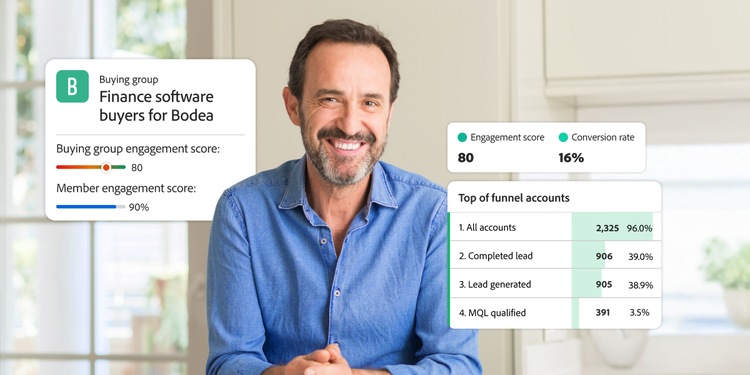
Learn how a purpose-built B2B analytics solution can provide full account-level visibility that traditional solutions miss.
There is a crucial gap in enterprises’ understanding of the B2B customer journey — one that lies at the center of customer analytics and business decisions. Many B2B companies are still relying on one size fits all analytics tools. While these tools offer broad visibility, they weren’t built with the B2B buying journey in mind — the complex web of accounts, buying groups, and multi-touch interactions that define how B2B companies engage and convert customers. It’s no surprise, then, that many organizations struggle to answer fundamental questions that drive customer growth and retention, such as:
If your team struggles to confidently answer these questions, you’re not alone. The truth is, most B2B analytics tools available today fall short, leaving marketing, sales, product, and customer success teams without the capabilities they need to drive smarter growth.
To grasp why traditional analytics come up short, it’s important to look at how B2B buyers progress through their research and purchasing journey — one defined by longer cycles, more stakeholders, and increasingly fragmented data ecosystems.
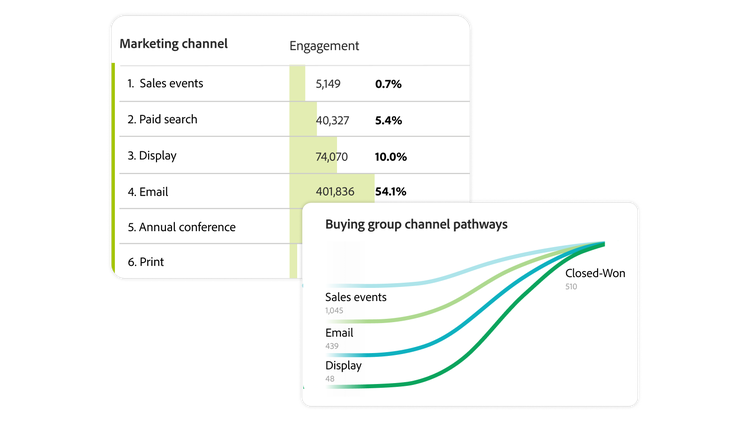
Without a B2B customer lifecycle-specific lens, organizations are left with fragmented data that makes it nearly impossible to fully understand account progression, optimize engagement, and drive predictable revenue growth post-sale.
On top of that, B2B organizations are never short on data — they’re short on alignment. Many companies struggle to coordinate marketing and sales because they lack a single, trusted source of customer analytics truth. Teams often don’t know what’s truly working: Is one digital channel driving traffic to another? Is content resonating with customers? Even when marketing qualifies leads, they may not know if sales finds those leads valuable.
To overcome these challenges, B2B companies need a purpose-built customer journey analytics solution — one that delivers multi-layered insights, supports collaborative workflows, and turns data into action across the entire customer lifecycle.
To truly understand the B2B customer lifecycle, organizations need a solution designed specifically for the complexities of B2B sales and marketing. These cycles aren’t just long — they’re layered, spanning countless online and offline interactions: attending events, logging calls, browsing product pages, consuming content resources, and engaging across channels.
For example, a multi-national software company can have multiple deals running at once — engineering negotiating an infrastructure contract, marketing evaluating a campaign platform, and finance reviewing an analytics tool — all tied to a single enterprise relationship. Each involves dozens of people, from users to decision-makers, each influencing the outcome. To make sense of this, analytics must go beyond individuals to capture buying groups, accounts, and opportunities.
Each of these touchpoints involves not just one buyer, but often dozens — from users to decision-makers to champions and influencers — each playing a unique role in the buying process. To make sense of this, analytics must move beyond tracking individuals to understanding buying groups, accounts, account clusters, and opportunities.
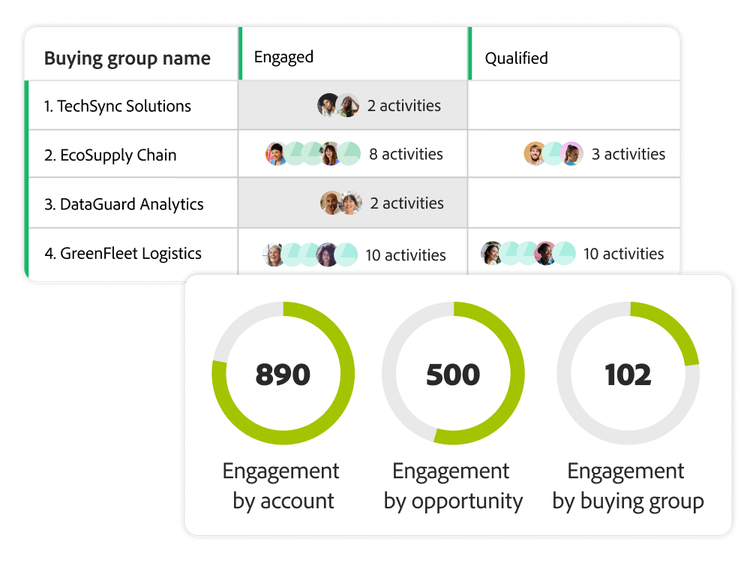
Adobe Customer Journey Analytics B2B Edition is the first purpose-built journey analytics application designed specifically to provide full visibility and actionable insights across the entire B2B customer lifecycle.
In conversations with customers, we’ve learned that most B2B organizations are looking for two critical outcomes from their analytics solution:
Focus on buying groups within accounts to measure responses to campaigns, channels, and content for optimizing marketing orchestration and investments.

Identify high-value touchpoints within buying groups of target accounts to drive next-best actions for revenue growth.

Track product usage and customer satisfaction at both account and user levels to prevent churn and inform future product development.
Whether your goal is to optimize marketing performance, deepen customer relationships, or accelerate revenue growth, Adobe Customer Journey Analytics B2B Edition helps connect the dots and turn insight into action.