




Win attention and trust.
Invest in AI that improves relevance with transparency and has a clear path for human support.




Section 1

Section 4
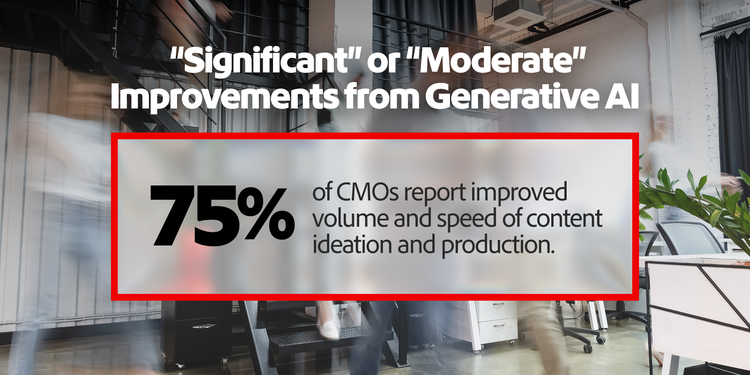
CMOs are already seeing an improvement in the volume and speed of content ideation and production with generative AI. But as AI reshapes how customers discover and interact with brands, the real opportunity lies in using agentic technology to deepen customer engagement and relationships. However, most organizations aren’t prepared to adopt agentic AI, with 78% of CMOs citing data integration and quality as the top barrier. To get there, CMOs must simultaneously unify their data foundation, upskill their teams, and earn customer trust.
This overview shares the Adobe 2026 AI and Digital Trends findings across three critical areas for CMOs: building brand visibility and trust, creating standout content at speed and scale, and turning customer interactions into long-term value.

Section 1
As AI-powered search reshapes how customers discover and engage with brands, CMOs must ensure their brands are visible in AI-generated results, stand out with relevant and differentiated content, and earn trust through clear human-in-the-loop experiences.

of customers cite AI-powered platforms as their primary tool when researching products and services.

AI tools now outperform brand websites and online reviews for early discovery.

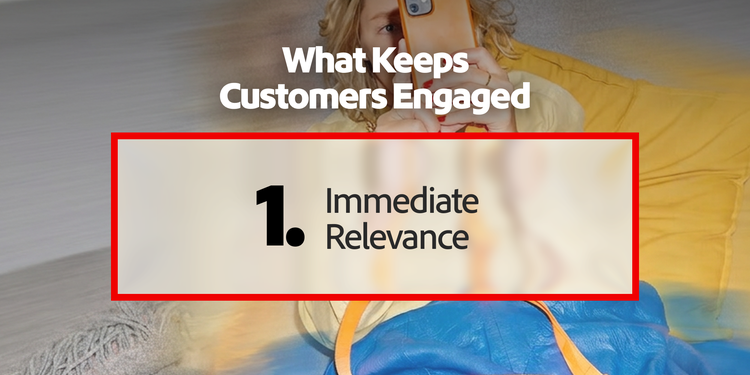

report AI-powered conversational platforms are important for their brand’s relevance.

indicate their organization is preparing to optimize content for AI-powered discovery tools.


Section 2
Winning brands don’t just produce more content. They orchestrate connected experiences. That shift demands unified data, integrated workflows, and the talent to connect the dots.
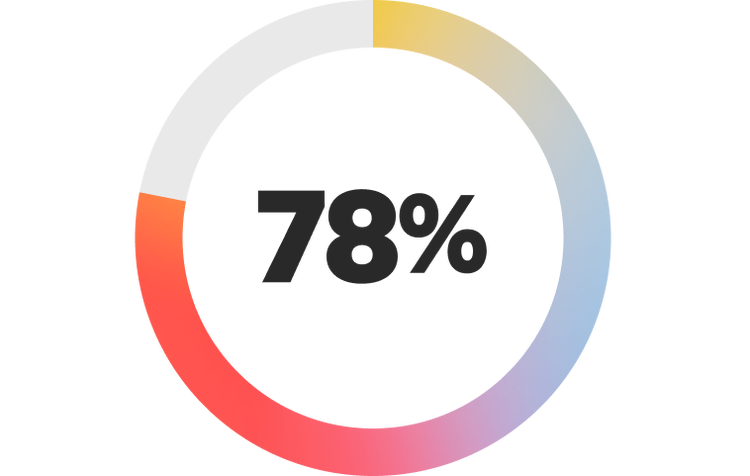
cite data integration and quality as a top barrier to implementing agentic AI solutions.
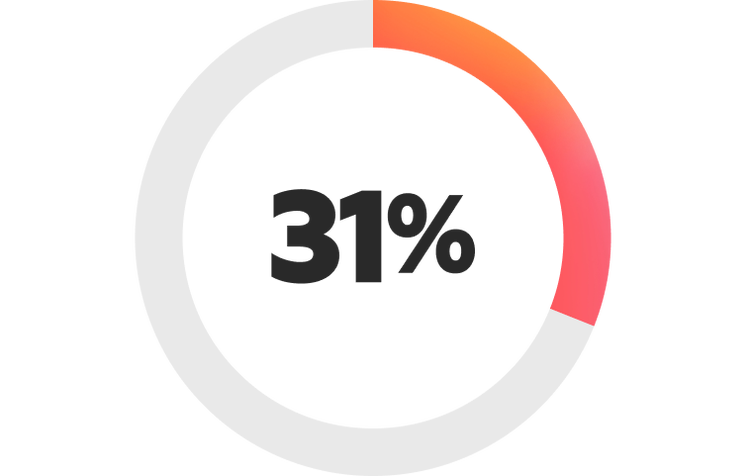
report having a unified customer data foundation for extracting insights from AI-generated data.
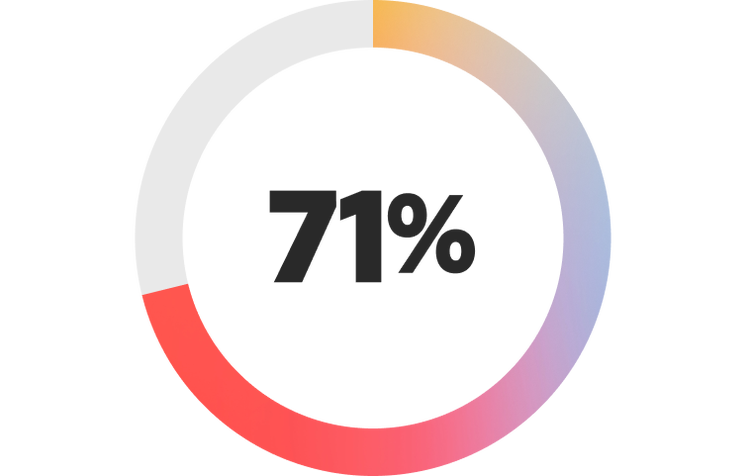
see talent and skill gaps as a major challenge for agentic AI.

Section 3
Agentic AI raises the bar for customer experience orchestration. CMOs must align their teams around strategy, operations, and customer trust to move from one-off AI pilots to impact.
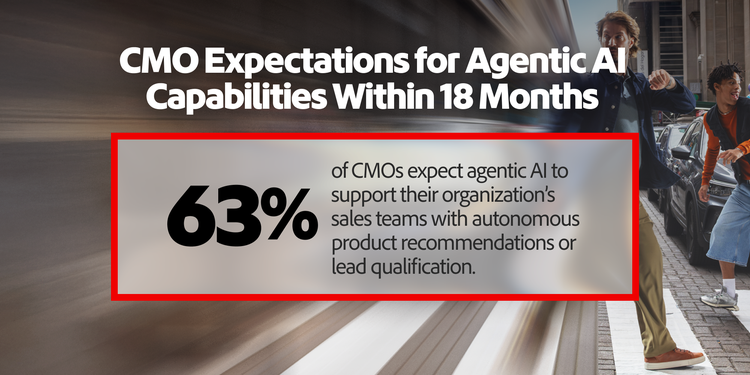

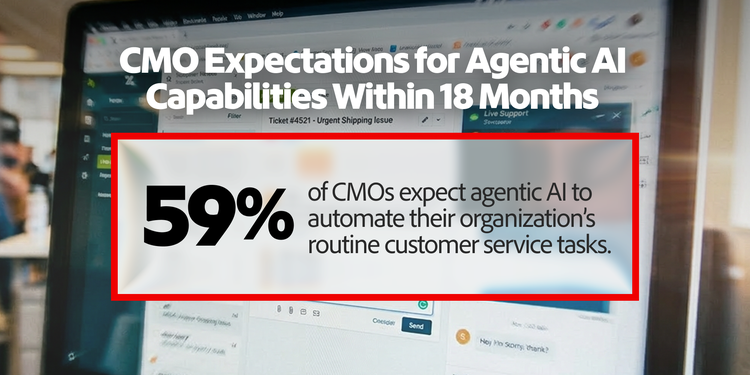
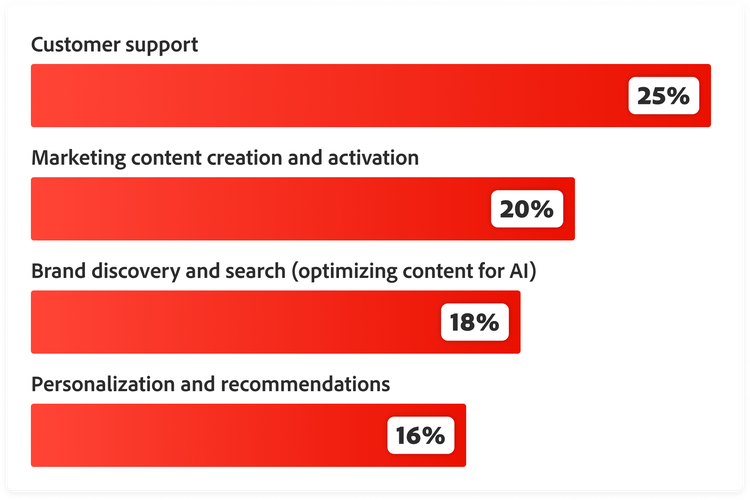
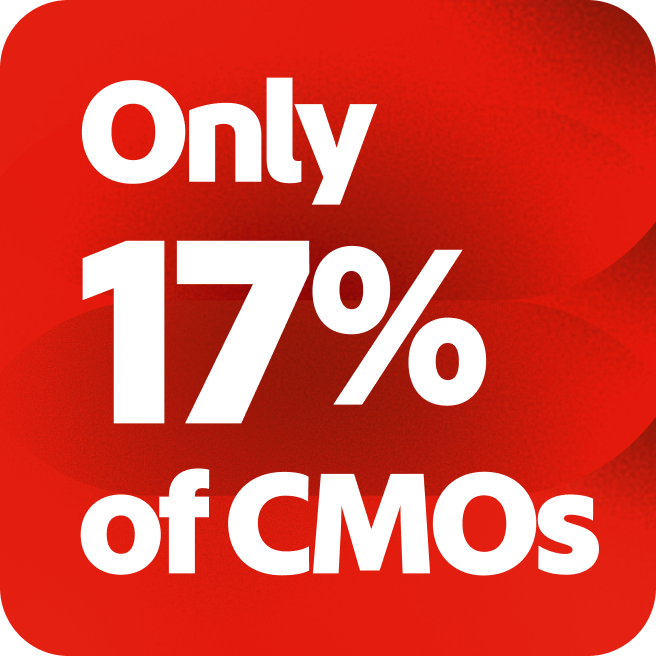
expect at least half of customer support interactions to be handled directly by agentic AI within the next 18 months.

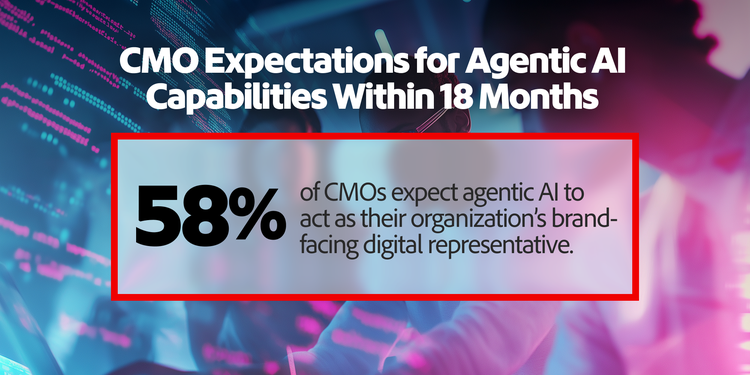
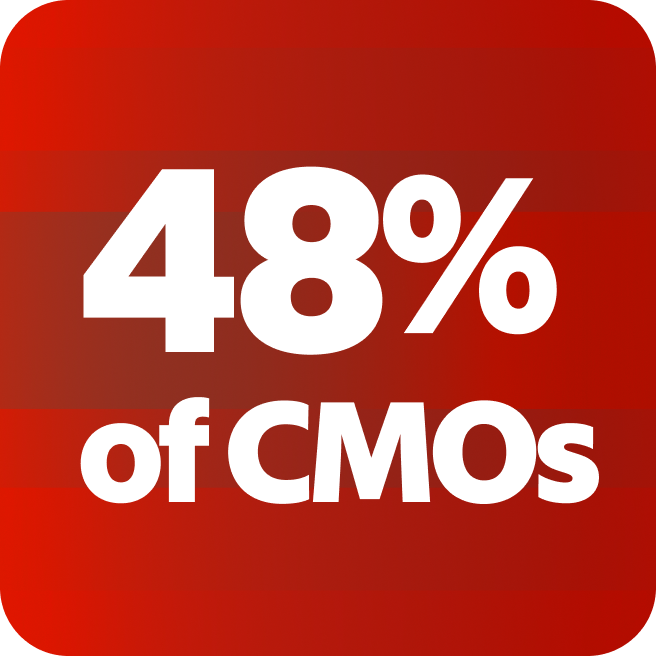
anticipate the same for post-purchase support.

Section 4
Win attention and trust.
Invest in AI that improves relevance with transparency and has a clear path for human support.

Scale on-brand content.
Unify data and operational workflows first. Then scale content while maintaining brand control.

Turn AI investment into measurable results.
Before agentic deployment, identify high-value use cases, align leadership and teams around them, and define success metrics.
Appendix
For Adobe’s 16th annual AI and Digital Trends research, Oxford Economics, in partnership with Adobe, conducted global surveys of 3,000 executives and practitioners and 4,000 customers to better understand how organizations are leveraging AI to capture customer interest, build brand loyalty, and augment customer experience (CX) workflows — and how customers are responding to these changes. The surveys were fielded online and via computer-assisted telephonic interviewing (CATI) from October through November 2025. "CMOs” refers to a global set of chief marketing officers. This group makes up 8% of respondents and represents a wide range of industries and business sizes.
View the Adobe 2026 AI and Digital Trends report for more on the full research methodology.