




Section 1
Content as a Service v3 - thought-leadership - Thursday, July 17, 2025 at 13:36



Section 6
AI-powered products and services are increasingly being integrated into everyday digital experiences, fundamentally reshaping how people search, shop, and make decisions. From automating routine tasks and tailoring recommendations to generating content and even supporting health needs, AI is putting more control and convenience in the customer’s hands — sometimes without them even noticing the technology at work.
Yet customer behaviors and preferences around AI, especially newer developments like agentic AI, do not map neatly to traditional demographic personas — they vary based on how comfortable individuals are with new technology. Our global survey of 4,000 customers for the Adobe 2026 AI and Digital Trends report shows cautious optimism about AI. Customers appreciate the conveniences and personalization offered by AI-generated brand interactions, but they are not ready to cede control of their sensitive information or important decisions. At the same time, experiences that fail to pique their interest within five seconds — or feel misleading, poorly timed, or irrelevant — prompt quick disengagement. Organizations that understand the nuances of their customers’ comfort with AI-driven experiences will be better equipped to design interactions that actually resonate.

Section 1
Customers expect brands to deliver messages and offers that are relevant, convenient, well-timed, and unique. Experiences that fall short of these expectations risk quick disengagement, with many customers even willing to turn to unfamiliar brands if the offer is right.
A single meaningful interaction is rarely enough to prompt action. Just 12% of customers feel ready to purchase after one personalized message, chat, or recommendation from a brand. The tipping point seems to be three to five interactions, influencing buying decisions for 40% of customers.
At the same time, brands have little room for error. For instance, 69% of customers say brands have five seconds or less to capture their attention in a promotional email, ad, or social media post. What drives engagement is not necessarily brand trust or familiarity, but factors like immediate personal relevance, unique content, special offers, and authenticity (Figure 1).
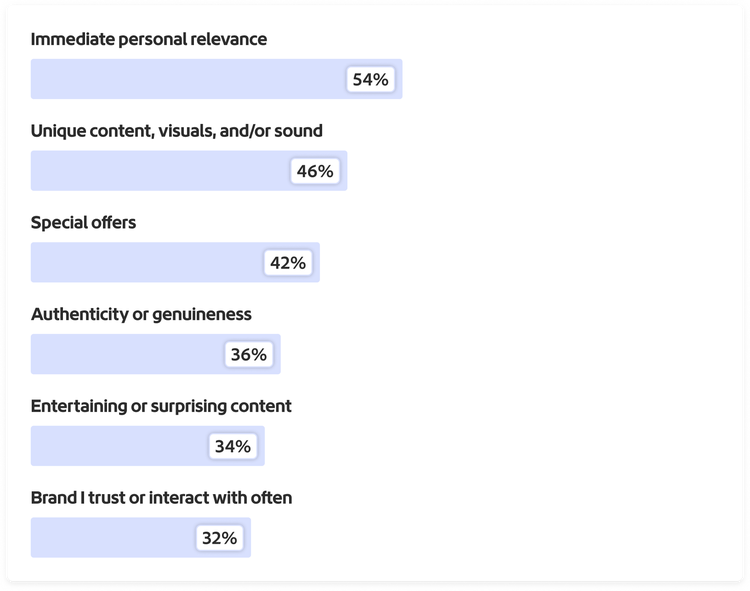
Yet tailored content is not enough to secure engagement, and this creates a narrow balancing act for brands. Thoughtful pacing is crucial: Nearly half of customers (45%) say they are likely to stop interacting with a brand if they receive too many promotions, even if the content is relevant. Context matters as well. Half will disengage when personalized experiences feel off or irrelevant, and roughly 40% do so when promotions do not match their place in the buying journey or their budget.
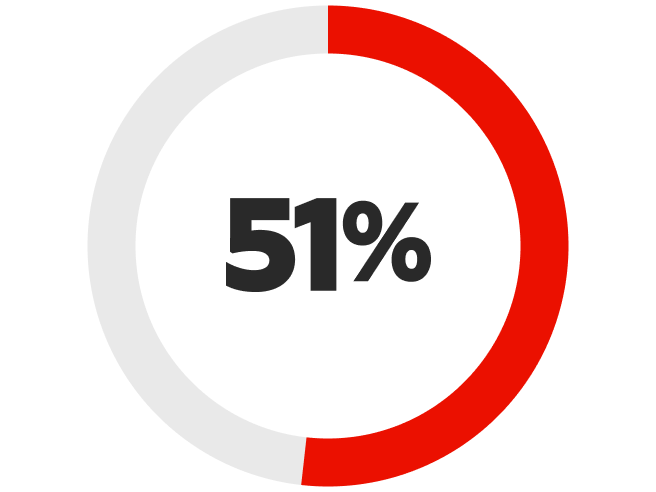
These dynamics are intensified by shifting notions of brand loyalty. For most customers, trust in a brand is defined pragmatically. Value for price is the top factor shaping trust, selected by 51% of customers — ahead of more traditional factors like brand reputation, consistency of experience, and values. But trust alone does not always secure loyalty. Just 18% say they purchase only from brands they fully trust, even when more convenient or affordable alternatives exist. The rest are willing to explore alternatives, including those from brands that do not meet their criteria for trust, if the offers are more compelling. For brands to stand out in this environment, they must balance price with distinct, personalized experiences that are also appropriately timed.

Section 2
Research conducted by customers is an important component of the buyer journey, and AI is now more influential in shaping that experience compared to some traditional advertising methods. Customers are more likely to rely on their own information gathering to inform their purchasing decisions than on promotional content, which can feel overwhelming or irrelevant to many.
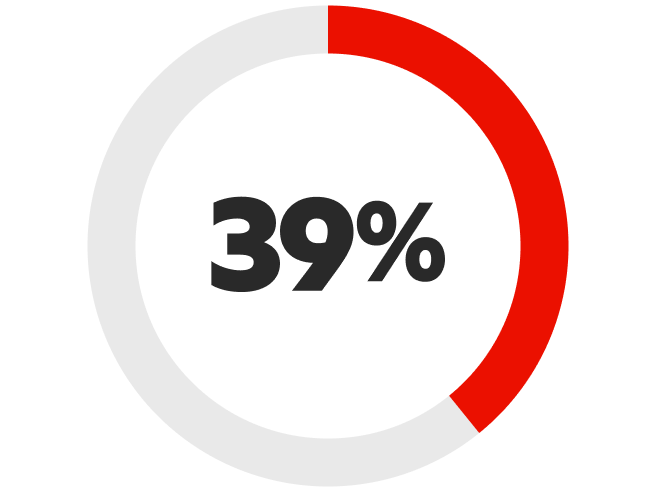
Confidence at the point of purchase is hard won. While roughly half of customers say they ultimately have a high degree of confidence in their purchases, 39% report having to do extensive research and comparison shopping before committing to a product or a service. This may explain the limited influence of promotions on their own. Just 29% of customers say they often purchase products or services they see promoted online, and a similar share say they make purchases when they see an ad that interests them while doing something else online unrelated to shopping. Volume alone does not move the needle. In fact, many customers (39%) often feel overwhelmed by the amount of promotional content they receive from a single brand. Promotions capture attention briefly, but they must be timely, relevant, and unique to maintain engagement.
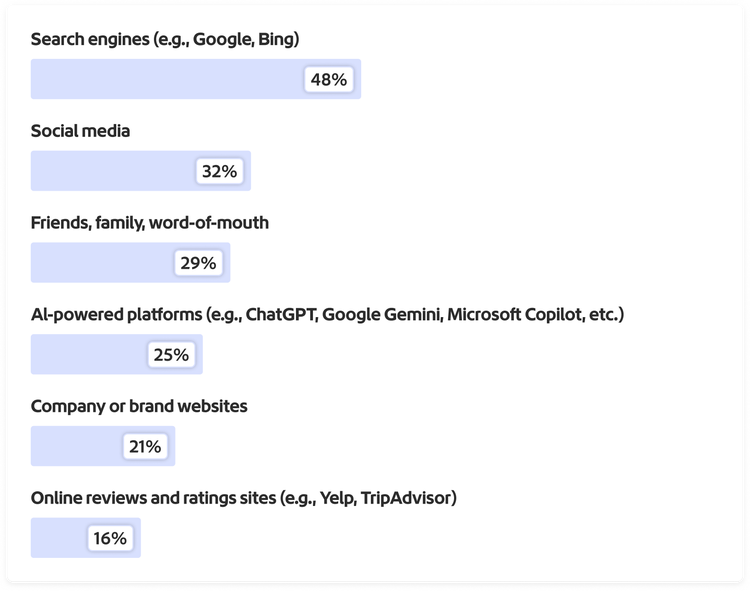
When it comes to research, traditional search engines still dominate. Roughly half of customers turn to them as their primary source for researching information, making purchase decisions, or finding recommendations — ahead of approaches like social media and word-of-mouth (Figure 2). But AI-powered platforms are beginning to change this aspect of the customer journey.
About a quarter of customers now cite AI-powered platforms like ChatGPT as their top research tool, making these newcomers more popular than other sources, including brand websites and online reviews and ratings (Figure 2). Among customers who already use AI-powered platforms for research, reliance is high: 42% say they always or frequently rely on AI-powered assistants, conversational platforms, or AI-powered search as their primary source for advice, shopping, or troubleshooting.

Section 3
Convenience sits at the center of how customers evaluate brand interactions, including when AI is involved. More than half (58%) say convenience plays a large role in their willingness to share personal information with a brand, and only about a third feel more hesitant to share their information with a brand’s AI agent than with a human representative. Customers recognize the trade-offs involved in these interactions. A little over half (54%) say they often notice that their experiences improve — through better deals and more relevant recommendations — after they have shared their personal information with a brand.
Overall, customer reactions to brand experiences that incorporate AI are positive. Customers are far more likely to agree than disagree with predictions about AI improving their customer experience (56% vs. 17%), saving them money (49% vs. 20%), and delivering recommendations that are more relevant than those from other sources (46% vs. 25%).
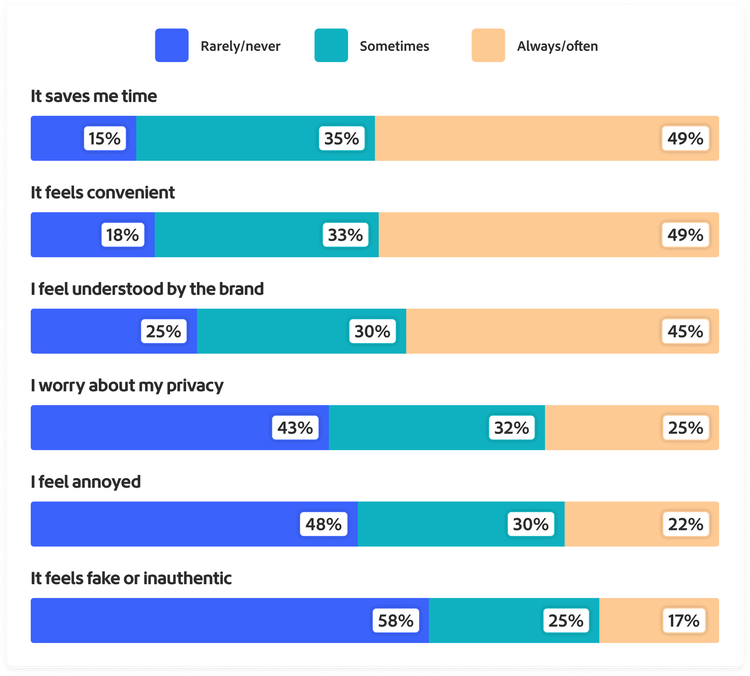
For most, the perceived benefits of AI outweigh persistent concerns. About half say their brand experiences with AI always or often result in time savings, greater convenience, and a stronger sense of being understood. Few report regularly feeling annoyed, uneasy, or worried about their privacy when engaging with AI-generated brand content (Figure 3).

Improves the customer experience

Saves them money

Delivers more relevant recommendations

Section 4
Customers draw clear lines around where they are willing to let AI play a role, especially when experiences move from convenience into privacy and decision-making. Comfort is highest for routine, low-risk uses like live customer service, personalized recommendations, automated routine processes, personalized promotions, and even tailored visual or video content. But this comfort is uneven and highly situational: the majority describe themselves as “somewhat” rather than “very” comfortable. Openness drops significantly when AI is applied to sensitive health or financial information.
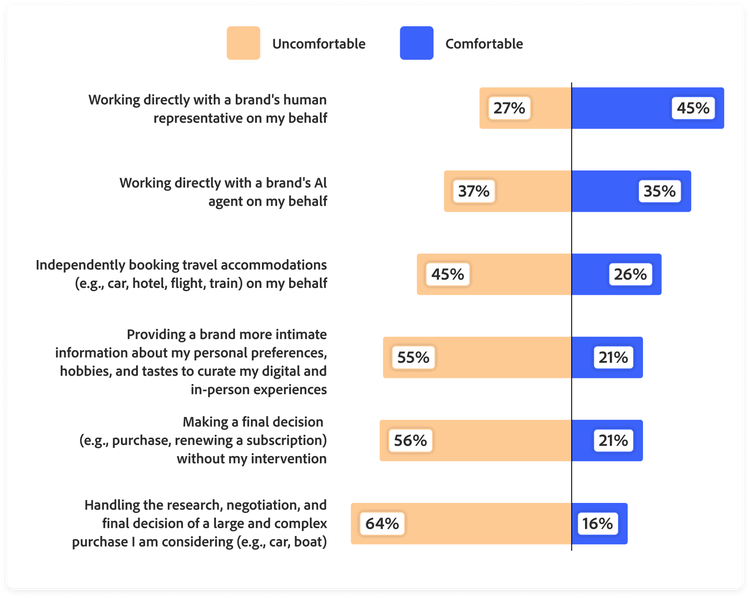
These boundaries extend to AI agents that complete tasks independently, where trust remains a major hurdle. One in five customers are not open to creating their own personal agent, and close to 40% have not even considered the idea. When asked about specific scenarios, customers show a clear preference for keeping humans in the loop. While roughly half would be comfortable having their personal agent work with a brand’s human representative, far fewer would let their agent work with a brand’s AI agent, book travel, hand over personal information, or make final purchasing decisions (Figure 4).

Section 5
Comfort with technology shapes how customers perceive and adopt AI. We asked customers to describe their approach to adopting new digital tools and technologies and identified three personas with unique preferences and behaviors:
Early adopters, who make up 22% of our survey sample, tend to be the first to try new tools and technologies, expressing confidence with their experimentation. Two-thirds say they use AI regularly — more than double the survey average — and none report avoiding AI entirely. About a quarter already have their own AI agent, and roughly half are interested in creating one. This group is also far more confident in AI’s impact: 73% believe it will improve their overall customer experience, and 62% expect AI to deliver more relevant recommendations than other sources.
Secondary adopters represent the majority of our survey sample (61%). They are open to new technology when it proves useful but prefer to wait for broader adoption. Only about a quarter say they use AI regularly, while a third say they never or rarely use it. Their interest in AI agents is modest: 7% already have one, and 33% would consider creating one.
Holdouts, 17% of our sample, either avoid new technology whenever possible or only use it when they absolutely have to. None report regular AI use, and the vast majority either oppose creating their own AI agent (56%) or have not considered it (36%). They are also far less comfortable with brands using AI for common tasks like customer service, routine processes, or personalized recommendations. Compared to early adopters, their skepticism is strong. Just 37% of holdouts believe AI will improve their overall customer experience, and 30% say AI will make more relevant recommendations than those from other sources.
Yet early adopters and holdouts express caution about AI at similar rates, pointing to the overall complexity we are seeing in customer comfort with the technology. Just over a third of both groups say they will be highly critical of brands that use AI or less trusting of information from AI.
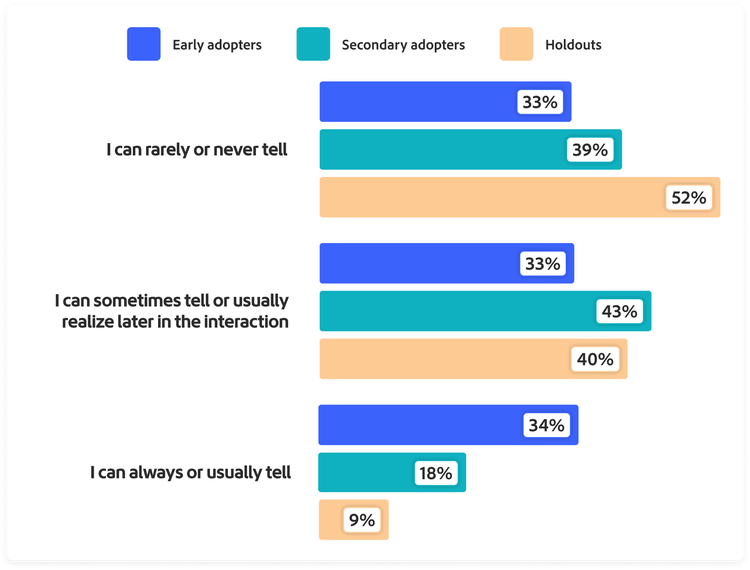
Differences in comfort tie into confidence in ability to detect AI interactions. Most customers cannot reliably tell when an interaction with a brand involves AI, and this is especially the case for holdouts (Figure 5).

Section 6
Customers are approaching AI with a practical mindset. They respond positively to AI-enabled brand experiences when those interactions feel relevant and timely, and disengage when they do not. Our research into customer experiences with AI finds:
For Adobe’s 16th annual AI and Digital Trends research, Oxford Economics, in partnership with Adobe, conducted global surveys of 3,000 executives and practitioners and 4,000 customers to better understand how organizations are leveraging AI to capture customer interest, build brand loyalty, and augment CX workflows — and how customers are responding to these changes. The surveys were fielded online and via computer-assisted telephonic interviewing (CATI) from October through November 2025. This report focuses on the key takeaways from our customer survey.
To learn more about our business survey insights, visit the AI and Digital Trends report.