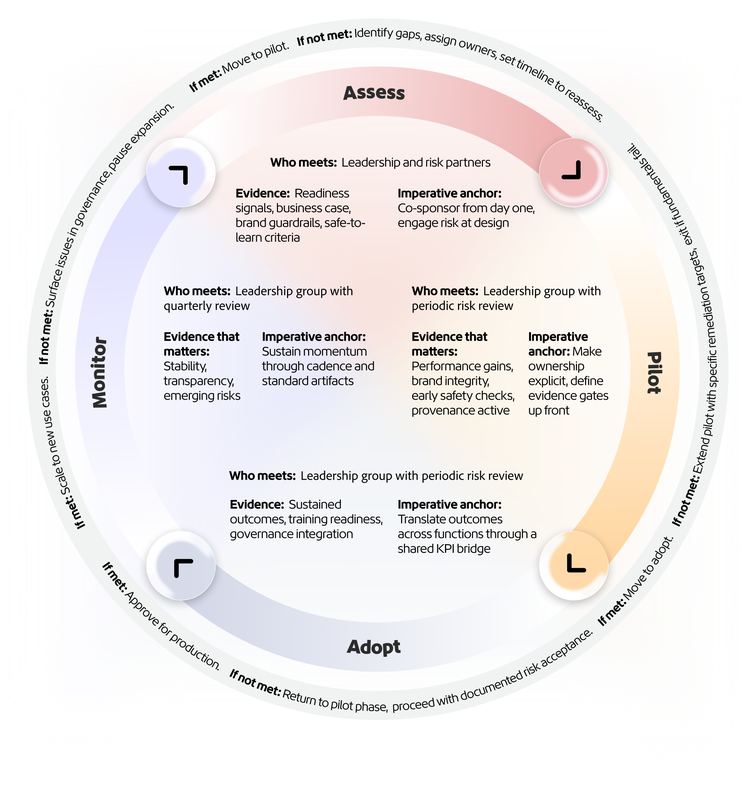
Imperative two: Make ownership explicit with a lifecycle RACI.
Most organizations have AI governance documented somewhere, but the breakdown in accountability occurs when leadership asks, “Who owns this once we scale?” Only about half of organizations actively track bias in AI outputs, and only a third monitor for harmful content, even as most track accuracy. Not because leaders don’t care, but because ownership of the evidence trail was never designed end-to-end, especially once early deployments become business-as-usual.
Early deployments can seem deceptively simple. One small team handles everything, including data, models, outputs, and monitoring. Ownership is clear because it’s concentrated. Then scaling begins, and responsibilities spread across multiple teams, platforms, and partners. Accountability blurs as the stakes and scale increase. Questions that once had a single durable answer — who owns provenance, who monitors outcomes, who approves scale, who responds when something goes wrong — start bouncing between functions.
That’s where risk compounds, not because the deployment becomes irresponsible, but because the process becomes ownerless at the handoffs. Marketing, technology, and risk can each produce valid progress in isolation, but without explicit ownership across phases, effort doesn’t convert into enterprise momentum. The organization slows down right when it’s trying to accelerate.
Organizations that scale well intentionally assign ownership, phase by phase. The ones that don’t usually didn't decide against it. Rather, no one is explicitly accountable for the evidence trail (metrics, controls, monitoring) once it crosses from pilot activity into operating capability.
External partners amplify the issue. When AI depends on third-party data, models, or delivery platforms, ownership questions multiply fast: Who’s accountable for data provenance? Who monitors testing and reliability of the models? Who owns the response when a customer flags problematic AI content?
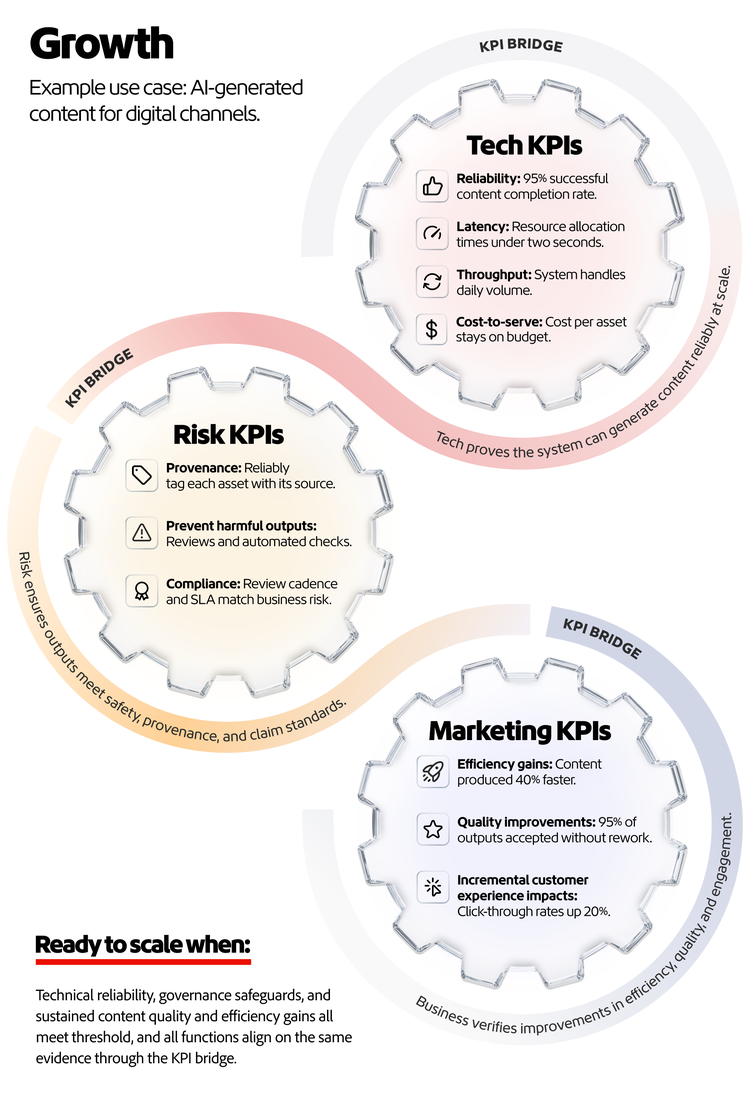
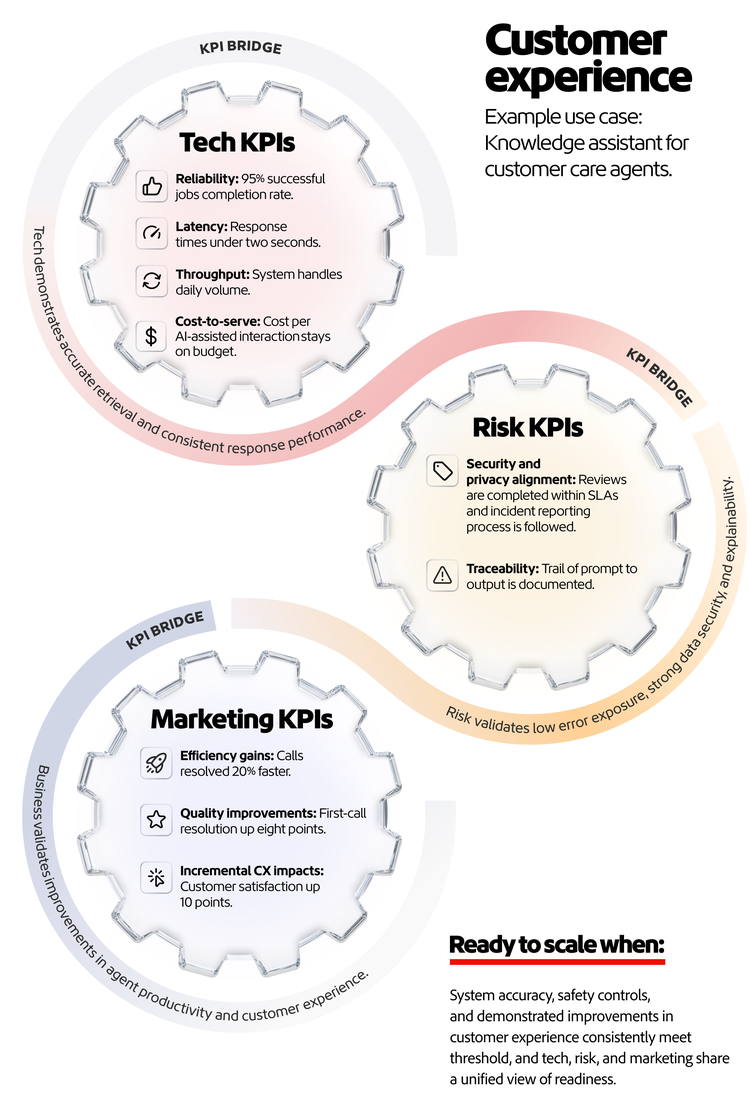
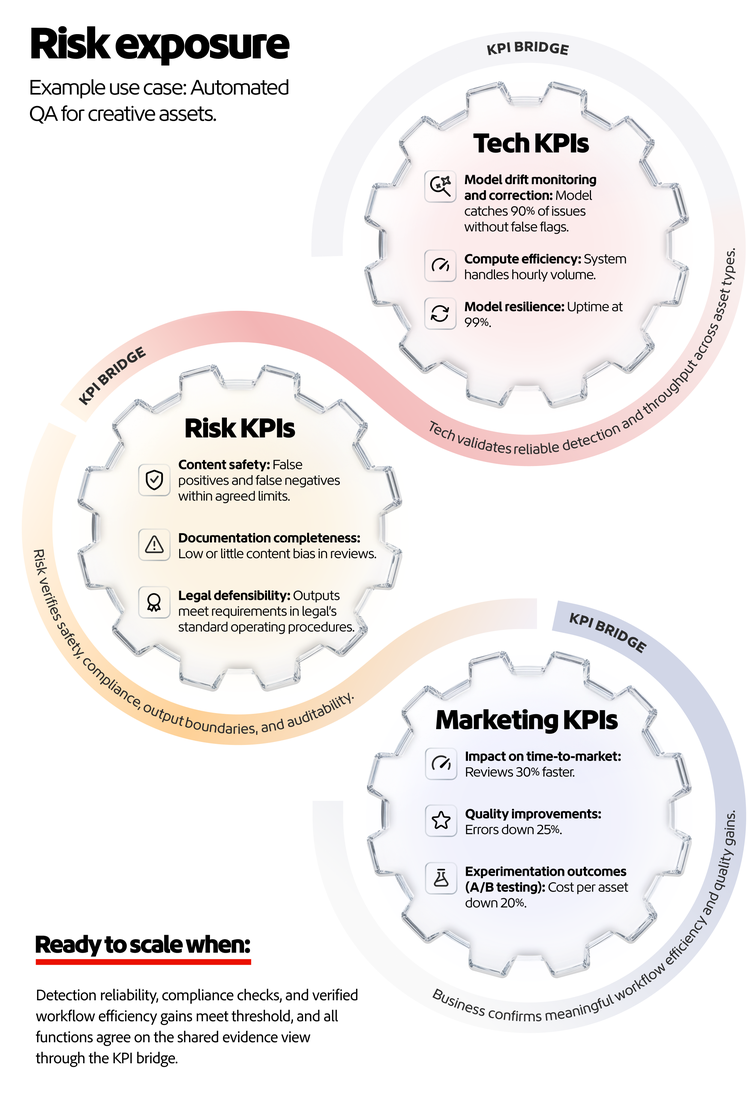
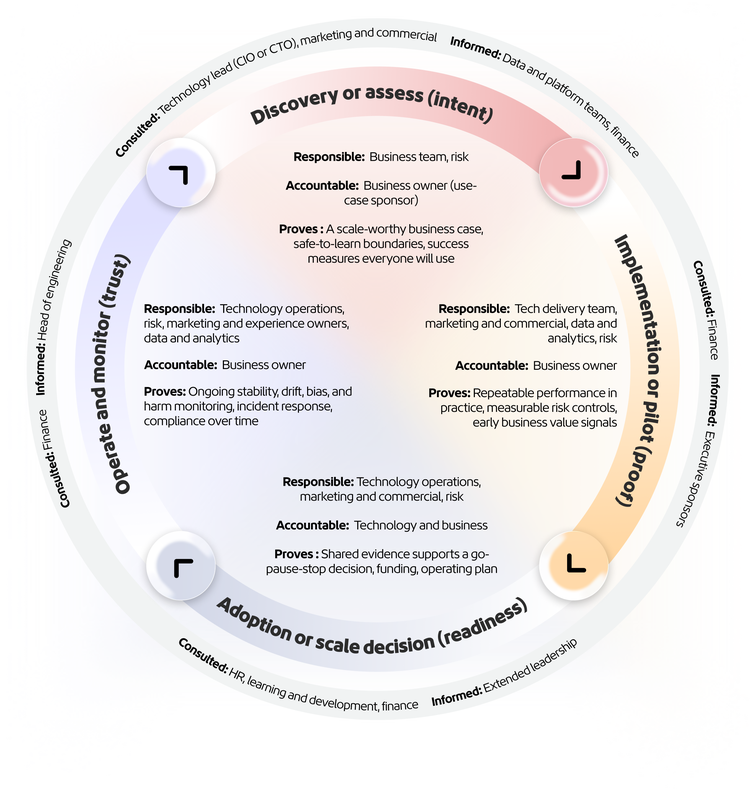
A lifecycle RACI shifts the focus from governance documentation to operational ownership, ensuring accountability doesn’t evaporate when a pilot scales. The table below illustrates how responsibility and accountability should transfer as initiatives move from intent to proof to scale decision to sustained operation, so ownership is designed into the journey, not renegotiated at each checkpoint.