Real-Time CDP is the customer data platform application;
Adobe Experience Platform is the foundation it runs on, so a Real-Time CDP license includes the platform services it depends on rather than being a separate purchase you bolt on. Experience Platform provides the shared data plumbing: ingestion, Experience Data Model schemas, Identity Service, the Real-Time Customer Profile, segmentation, and governance. Real-Time CDP is the application that turns those services into a marketer-facing workflow for unifying data, building audiences, and activating them. If you are comparing Adobe against standalone CDPs, Real-Time CDP is the product to compare, and it inherits the platform's identity, governance, and AI rather than reinventing them.
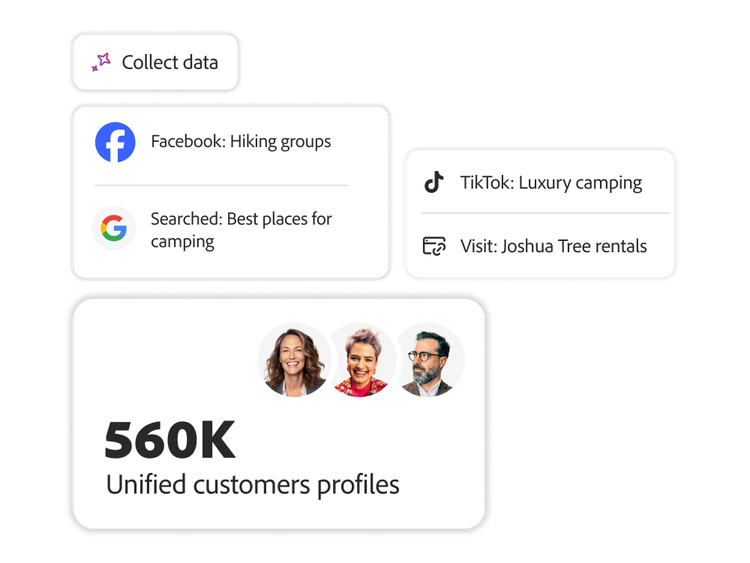
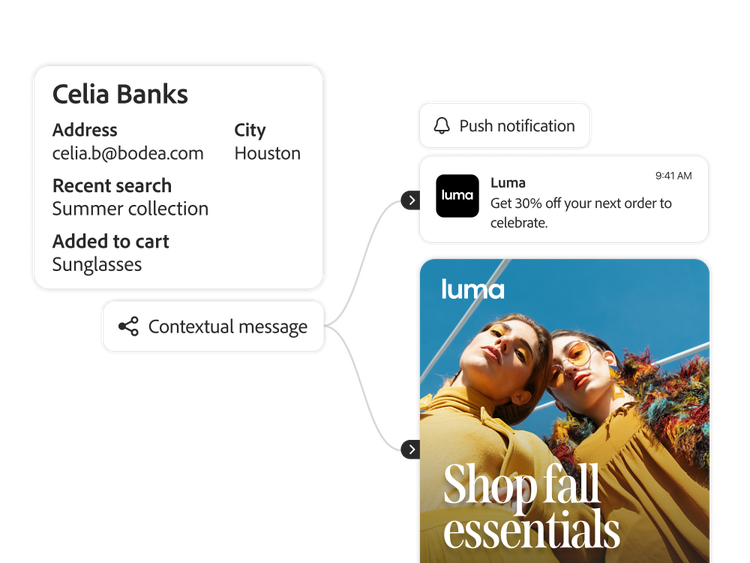
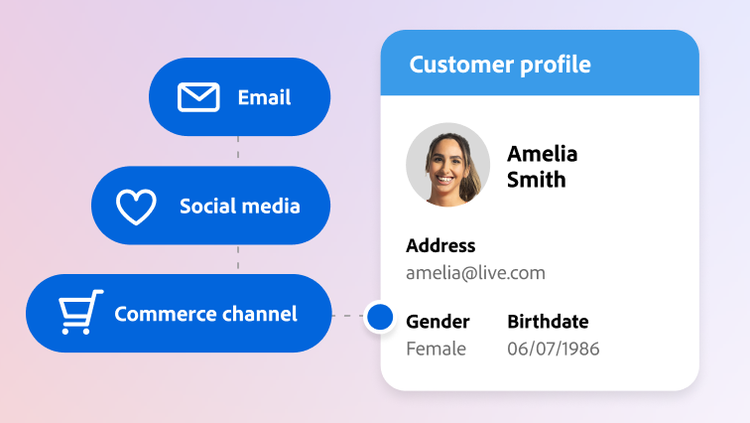
Real-Time CDP standardizes, validates, and connects data from online, offline, and pseudonymous sources into one real-time customer profile that every team can act on. Incoming data is structured to a common
Experience Data Model, validated as it is ingested, and resolved to a person or account through Identity Service, so records that arrive from your website, mobile app, call center, point of sale, and CRM become one profile rather than five disconnected ones. That unified profile is what makes downstream audience building and activation consistent, instead of each team working from its own copy of the customer.
Usually yes, because they do different jobs, and Real-Time CDP is designed to unify their data rather than replace them. A CRM manages relationships and transactions with your known customers and leads; a DMP works with anonymized third-party audience data for advertising; a CDP builds a persistent, unified profile by harmonizing data from across all of those systems and your own channels. In practice Real-Time CDP ingests CRM data and other sources into one profile, then activates audiences from it, so your CRM stays your system of record for customer relationships while Real-Time CDP becomes the system that makes that data actionable across channels.
The three are sibling applications on Adobe Experience Platform, and they divide the work: Real-Time CDP unifies data and builds and activates audiences,
Journey Optimizer orchestrates the multi-step journeys and messages those audiences receive, and Customer Journey Analytics analyzes how those journeys performed. Because all three share the same Real-Time Customer Profile, an audience you build in Real-Time CDP is directly available to Journey Optimizer for orchestration and to Customer Journey Analytics for measurement, with no export and re-import between them. You can start with Real-Time CDP alone and add the others as your use cases grow into orchestration and cross-channel analysis.
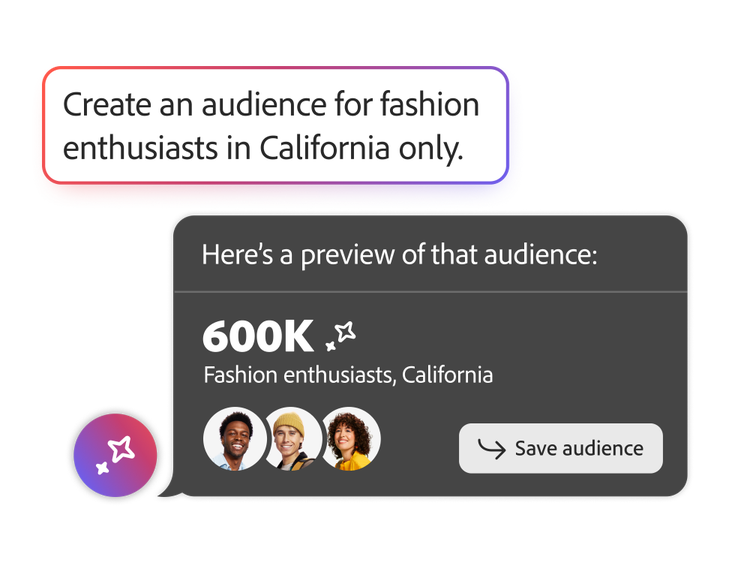
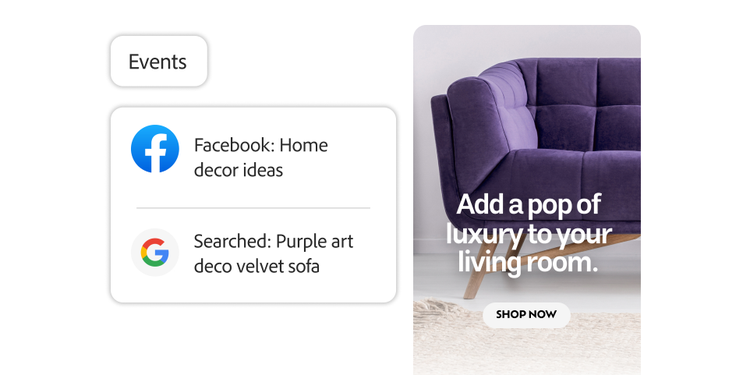
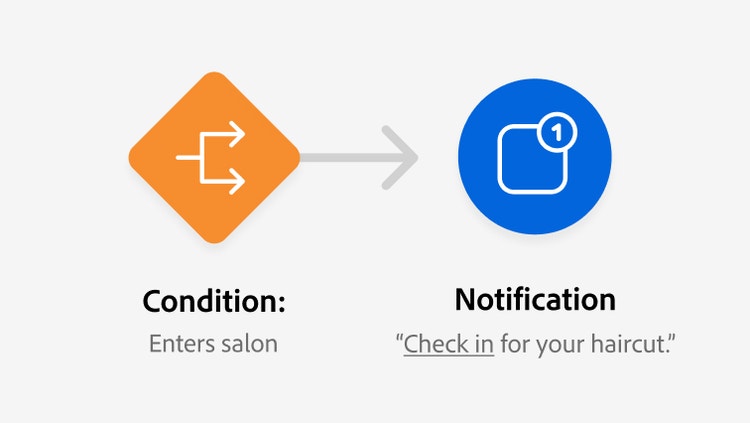
Real-time segmentation qualifies a person into or out of an audience the instant their behavior or attributes change, rather than on a batch schedule that can be hours or a day behind. Traditional segmentation evaluates against static or historical data on a recurring run, so a visitor who abandons a cart is not reachable until the next batch completes. In Real-Time CDP, streaming segmentation can qualify that visitor in the moment and make them available for same-session personalization or immediate activation, which is what makes "in the moment" use cases possible rather than next-day ones.
Choose by the kind of profiles you manage: B2C for consumer profiles, B2B for account-based profiles (people and the accounts they belong to), and B2P (Business-to-Person) when you need both in a single CDP to target the same person across all lines of business. All three are editions of the same product, each offered in a Prime and an Ultimate package, so the choice is about data model and use case, not about buying a different platform. The B2B edition adds B2B-specific schemas, account and people identity resolution with account hierarchies, and a purpose-built Marketo Engage connector; confirm the exact edition and package with your Adobe account team, since guardrails and included capabilities vary by tier.
They are additional Real-Time CDP offerings for two specific jobs.
Real-Time CDP Collaboration is a data clean room application that lets you discover, activate, and measure high-value audiences with advertising and publisher partners in a privacy-safe environment, without relying on third-party cookies and without exposing underlying customer data (it is currently in limited availability by region, so confirm availability for your market). Connections is the data-collection side, capturing streaming behavioral data through Adobe's Edge Network so profiles update in real time. Both extend the same Real-Time CDP profile rather than being separate platforms.
Getting started centers on
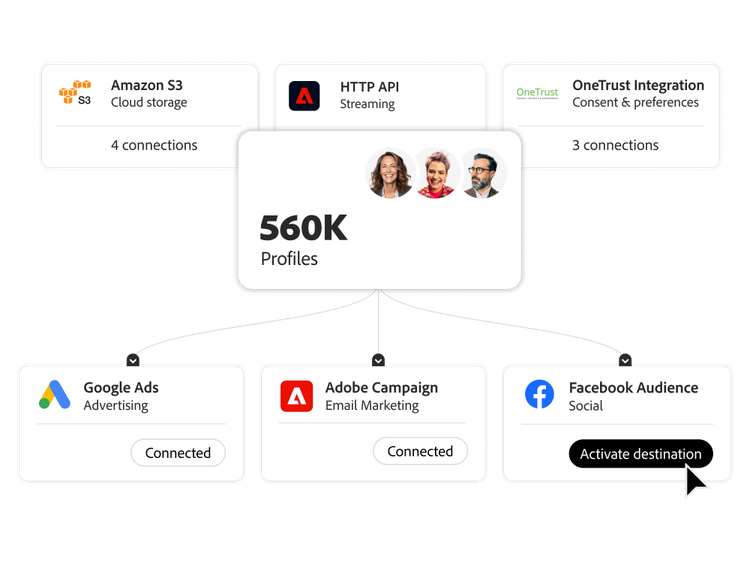
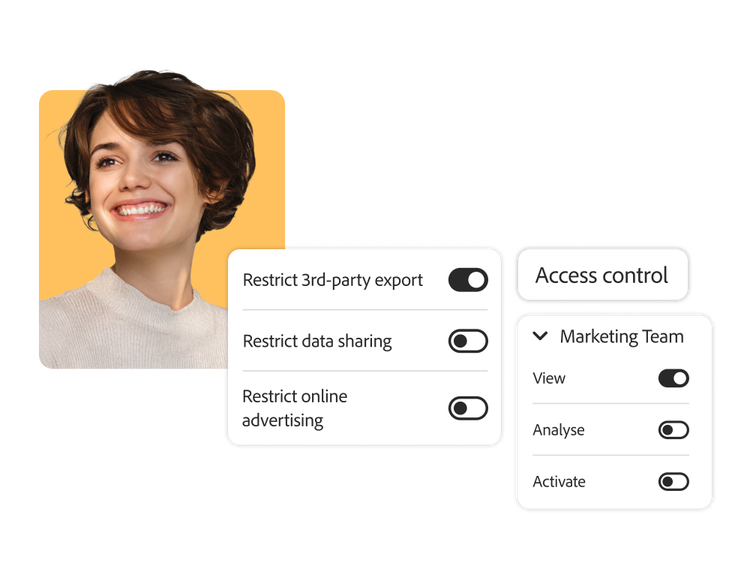
connecting your data sources, mapping them to Experience Data Model schemas, configuring identities and merge policies to build the real-time profile, and setting governance labels and policies, after which you build audiences and connect destinations for activation. You do not have to move everything at once: Real-Time CDP supports ingesting the data you need for real-time use cases while federating other data from your warehouse, so most programs start with one or two high-value use cases and a subset of sources and expand from there. Teams typically pair a data engineer or architect on the connection and identity setup with the marketing owners of the use case.