AI readability and structure.
Add a 40-60 word summary to the top of your long-form content that addresses what it is and who it’s for.
Establish a scannable H2/H3 hierarchy, FAQ blocks, short sections, and consistent product terminology.





Search and discovery have changed. Customers are no longer scrolling through a list of weblinks. Now they’re turning to AI tools and chatbots, asking them direct questions and expecting answers, solutions, and recommendations.
Marketing and creative teams need to tailor their content for AI-powered search and discovery, without sacrificing core SEO principles or human connection. As a CMO, you have the power to lead an AI-first strategy by understanding the shift in how customers interact with your brand and how to successfully audit and adapt your content to capitalize on this new world of discovery.

The digital space is shifting. Rather than an endless scroll of links and half-answers, customers are looking for personalized responses to specific questions. Large language models (LLMs) like ChatGPT and Google Gemini are driving this change, and it’s impacting every industry.
AI is becoming the primary gateway to product discovery. Consumers are using it to filter, evaluate, and make recommendations based on individual needs and preferences. For example, instead of searching, “Best hotels in Costa Rica,” people are asking questions like, “Where are good places to stay in Costa Rica for under $200 a night?" — and receiving specific answers in return.
Over the past year, AI-powered shopping has skyrocketed by 4,700% while travel sites have experienced a 3,500% surge in AI-driven traffic. By narrowing the field and addressing specific user needs, it’s clear that AI-generated results aren’t just surfacing options — they shape opinions. This is why LLM-driven traffic appears to be more high-intent and purchase-ready than traditional channels.

Source: McKinsey

Generative Engine Optimization (GEO) and SEO share the same goal of connecting your brand’s expertise to customer intent, each giving your brand greater control over its narrative. Individually, each influences different parts of the customer journey, but together, they account for a broader digital ecosystem where customers and AI agents form impressions of your brand and offerings. SEO ensures your content is structured so AI agents can retrieve it, while GEO expands how your brand is consistently represented, in your words and others’, across third-party sites where customers increasingly seek validation for their purchasing considerations.
Essentially, your brand needs both to make your content discoverable and to account for all the places your brand is discussed, cited, and compared. From decision to loyalty, an integrated SEO and GEO approach guides traffic, shapes perception, and reinforces consumer confidence.
SEO
GEO
If your brand can utilize both SEO and GEO strategies, you can create a more consistent brand narrative. For example, imagine you're a major hotel brand and someone asks an LLM for a comparison of budget-friendly Costa Rica hotels. AI agents aren't necessarily basing their answers off your blogs and content. They are also searching how your brand is mentioned on Reddit, Wikipedia, YouTube, TikTok, and more. This changes your brand from being mentioned to being recommended.
Since LLM-powered AI tools monitor customer sentiment and sources across the internet, optimizing for third-party sites is an essential long-term marketing strategy. How your brand responds to feedback influences recommendations and can inform future product descriptions and advertising campaigns.
Your owned channels still play a major role in the discovery stage, but they will need to be revised to be friendly for AI and humans. According to IDC’s “From Gateways to Gatekeepers” report, since AI crawlers ingest structured data and decide what gets cited, brands need to think beyond user interface and consider static rendering, clear architecture, and consistent signalling.
When executed together, SEO and GEO allow your content to serve multiple purposes, so your brand can get the most mileage out of your assets. SEO makes your expertise findable and scannable. GEO makes your expertise relatable and aligned to the phrasing customers actually use. Content written in a Q&A format, with clear and concise answers, satisfies both — improving discoverability and increasing the likelihood that AI will surface and trust your information.
TAKEAWAY

As AI becomes a default discovery tool, users increasingly resolve their questions inside summaries rather than clicking through the provided links. This means that when customers click through, they’re more prepared to make a purchase or decision, as research shows that visitors who arrive at a website from an LLM-generated response convert over four times better than visitors from traditional search.
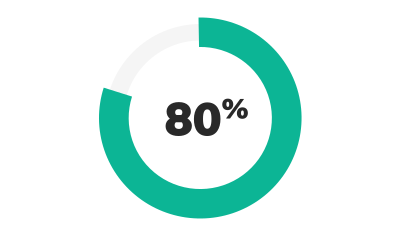
Without a GEO strategy to get key messages within AI-generated answers, brands risk a 20-50% decrease in organic traffic because they are not being cited in summaries or referenced by AI at the point of decision. This shortfall forces expensive backfills to your pipeline, like overspending on paid traffic and sponsored content, and increases your overall customer acquisition cost (CAC). Even then, higher spend doesn’t guarantee the same intent quality as traffic earned from AI citations.
Measurement will also get murkier without a clear GEO strategy. As AI reshapes the customer journey, ranking and clicks become weaker demand signals. More specifically, conversational queries and answer-first experiences introduce volatility in how your narrative is told. Since LLMs pull from a wide range of sources beyond your website, your brand position can shift daily, requiring teams to continually monitor forums, social media, and review sites to authentically engage with customer sentiment.
Source: Bain
If CMOs don’t act now, they are ceding narrative control to external voices, weakening brand authority in high-consideration categories where trust, clarity, and expertise drive conversions. Over time, the absence of GEO removes critical feedback loops on how AI interprets your brand, depriving your teams of data that informs personalization, targeting, and future strategies.
GEO restores control and search efficiency to your brand. By shifting KPIs to what gets mentioned and cited in AI, CMOs can allocate budgets to assets that shape decisions, reduce dependence on paid media, move from cost-per-click to cost-per-decision, and turn marketing from a reactive cost into a more capital-efficient growth engine.
KEY TAKEAWAY
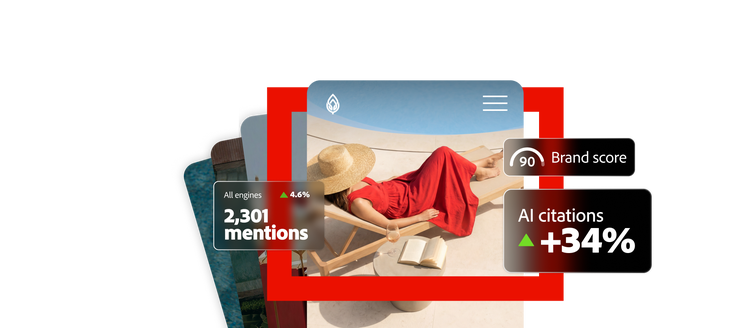
As AI reshapes how customers research, compare, and choose brands, CMOs can adapt with a structured, cross-functional plan for influencing how their companies show up in AI-directed discovery.
Starting with quick fixes and building towards more long-term strategic reframing, here are some actions CMOs can take to coordinate this shift confidently.
If your brand doesn’t know where or how it appears in AI-generated answers, your discovery phase is operating with a blind spot. LLM optimizer tools will scan domains and websites and analyze your content for readability, checking to see if it’s too lengthy or difficult to understand.
Once you’ve identified your top-performing content, you can direct your team to turn blogs into FAQ and explainer hybrids, and spin supporting videos and how-to visuals that can be embedded and cited.
As you review existing content, here are four things to keep in mind and actions you can take towards optimizing for an AI audience.
AI readability and structure.
Add a 40-60 word summary to the top of your long-form content that addresses what it is and who it’s for.
Establish a scannable H2/H3 hierarchy, FAQ blocks, short sections, and consistent product terminology.

Message consistency.
Push the same definitions and positioning to PR, review sites, listings, and partner pages.
Provide approved Q&A blocks to customer experience and social teams for consistent responses on Reddit, YouTube, and forums.

Answer-first format.
Rewrite H2/H3s as question‑style prompts customers actually ask or insert FAQ sections.
Ensure the subject of your content either compares your product to alternatives, highlights use-cases, explains prices, or guides users through how-to-use.

Chunkability.
Break dense paragraphs into subsections (150–200 words) and use bullets, tables, and checklists.
Implement content outlines, jump links, and table of contents and have pages render static, lightweight HTML and minimize JS‑dependent content.
To sustain momentum, it will help to establish a governance cadence to standardize brief generation, the creative process, and content output. This includes:
Having a clear framework in how to produce and measure content is critical because decisions are increasingly shaped inside AI-generated answers. Brands increase discoverability when they build a durable and repeatable content system where every page is chunkable, offers clear answers, and is consistently phrased. Creating authority and increasing citations and recommendations will reduce your organization’s reliance on paid media, improve conversion efficiency, and give continuous insights into how your brand is described and perceived.
Length and depth are still important, but your content needs to answer your audience’s most pressing questions.
A forward-thinking GEO strategy turns search and discovery into an integrated and coordinated effort among a variety of teams.
CMOs need to consider how to lead their teams to work together more seamlessly, which can be done in a few ways.
Operating a cross-functional system helps teams detect, explain, and improve how AI represents your brand. External changes will result in faster narrative corrections, smarter budget allocation, higher AI share-of-answer, and lower blended CAC.
When teams operate from the same insights and sources of information, the creative output becomes more strategically focused and backed by data.
A successful GEO implementation rests on creative, SEO, PR/brand, developer, and marketing teams working in sync to build a content production system that focuses on generating assets that can be used for multiple channels. For example, if your PR team conducts a survey on a specific trend, your creative team can leverage the results for your website by creating a long-form blog post based on the insights, or specific consumer phrasing could inspire ideas to be filmed as TikTok videos. This approach reinforces a creative process that’s informed by real-time insights, authentic customer language, current sentiment, and clear narratives.
As a CMO, you have the power to further integrate your creative and marketing teams to capitalize on the AI era.
Building a single operating system will get the most mileage out of your content. The result is higher visibility, stronger brand authority, and a more efficient use of creative and media budgets to create a consistent and relevant customer journey.
As AI discovery continues to overtake traditional search, CMOs will need visibility from different angles. Success in an AI-mediated market is getting GEO and SEO to work together, so your brand is found and chosen. This requires continuous visibility into where your brand appears in AI answers, how it’s described, and which off-site signals are shaping those answers.
Following the CMO action plan and checklist will help your team correct narratives fast, double-down on the assets that move buyers, and establish authority before a click.
Adobe Brand Visibility gives marketing teams a single tool from which your GEO strategy can be built and managed. Rather than juggling disparate tools or scattered insights, marketing teams gain a unified hub that shows how their brand is interpreted, summarized, and recommended across major AI platforms. By providing targeted, prioritized recommendations — from structural fixes to clarity improvements — Brand Visibility empowers marketing leaders to act decisively, focus resources where they matter most, and continually strengthen their brand’s performance within the emerging generative ecosystem.